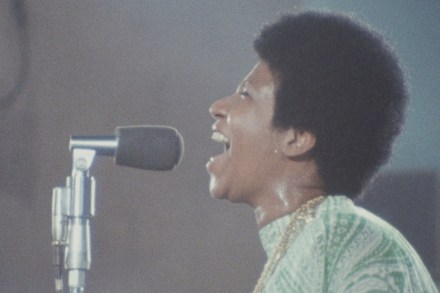
Aretha Franklin

The popularity of ‘Amazing Grace’ owes much to its melody

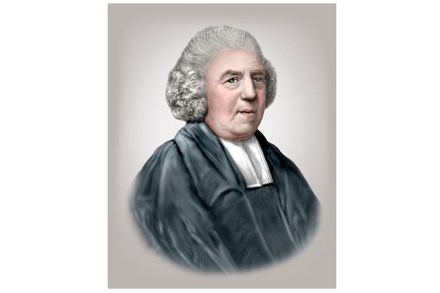
Type ‘Amazing Grace’ into YouTube and you can cancel any other plans you might have had for the day. Page after page serves up everything from Elvis Presley to Pavarotti, Gospel choirs and winsome Celtic lovelies, folkies in fabulous knitwear and X Factor finalists strenuously proclaiming their surgically enhanced faith; even an American president. There are arrangements for electric guitar, steelpan orchestra, bagpipes or (God help us) beginner flute ensemble. Saved from the storm, Newton was aware of ‘a sense of the amazing grace that snatched me from ruin’ All of which suggests that James Walvin’s Amazing Grace is a book landing in fertile soil.
Religion provides the rhythm

Music is an art of time: songs play to a rhythm, giving shape to the seconds as they pass, charging the present with a pulse we can feel. But as music takes us forward through time it also takes us back – to the moment of its composition or recording; to a particularly resonant time in our own past; and yet further, summoning the echoes of older music contained within a song. In new books by David Remnick and Michel Faber we get two different approaches to writing about something ephemeral yet emotionally adhesive. One of them made time fly, and one of them made time slow until the only beat I could hear was the sound of my own head against the desk.

Why legacy students aren’t a civil rights issue

From our US edition

I just caught the news that four pages in a notebook dated 2014 and stuffed into a couch cushion have been accepted as a valid will for the late singer Aretha Franklin. The jury that decided this enriched two of her sons and disappointed a third son, who was favored in an earlier will. This is what I call a legacy. But America is all worked up about another kind of legacy. I refer, of course, to the endearing habit of colleges and universities to give a leg up to the kinder of their alumni. Why do they do this? And why are so many people worked up over it?  These aren’t hard questions. Colleges have two reasons for their legacy programs.

legacy

The amazing grace of Aretha Franklin

From our US edition

Aretha Franklin recorded her best album, the live Gospel performance Amazing Grace, over two nights in January 1972 at the New Temple Missionary Baptist Church in Watts, Los Angeles. The Queen of Soul had crossed over, and perhaps too far, with the Live at the Fillmore West album, a play for the white rock audience that included covers of ersatz Soul and Gospel hits like ‘Love The One You’re With’ and ‘Bridge Over Troubled Water’. Amazing Grace was Franklin’s musical and spiritual homecoming to the Baptist church. One of her mentors, the Reverend James Cleveland, presided over a full gospel choir, and the rhythm section with which Franklin had recorded the Young, Gifted and Black album in 1971. Her father, the Reverend C.L.

aretha franklin amazing grace