Apple tv+

How to win MasterChef

‘Warmer, sharper and funnier than ever,’ claims one reviewer of ‘the BBC’s disgraced cookery show’ MasterChef. But this is nonsense. First, MasterChef was never ‘disgraced’. It was just the victim of some desperate sub-#MeToo media insinuations about the mildly laddish shenanigans of its two ex-presenters John Torode and Gregg Wallace. These insinuations were likely not unconnected with a) the show’s need for some publicity; and b) an excuse for a revamp after 20 years with those presenters now starting to look about as fresh and inviting as the trays of congealing fried eggs and uncrispy bacon you get in a hotel breakfast buffet. MasterChef was never ‘disgraced’.
HBO Max isn’t worth subscribing to

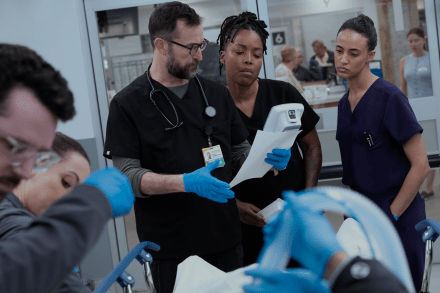
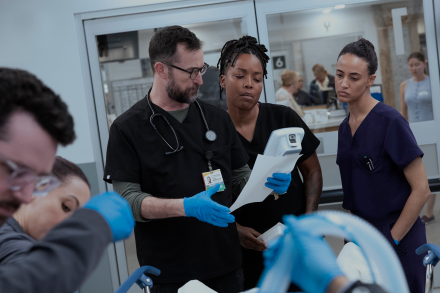
HBO Max is the latest streaming channel trying to lure you into yet another of those £10 a month subscription contracts you only remember having signed up for about three years later when you’re trying to work out why you are so skint. Its showpiece series is The Pitt which attracts ten million viewers per episode and has been called ‘the best medical drama on television in years’. This is a category of excellence I find about as enticing as ‘most amusing form of cancer’ or ‘most ineradicable variety of testicular lice’. But, just for you, I watched to see what the fuss is about.

Gripping: Amazon Prime’s The Tank reviewed

I don’t know how it got past the increasingly powerful ‘All Germans were evil Nazis’ censors but Amazon has released a sympathetic portrait of a Tiger crew on the Eastern Front, translated, clunkily, as The Tank. It has been criticised in some quarters for its weird twist at the end, which the genre-literate will see coming a mile off. But don’t be put off by its structural and narrative shortcomings. This is still a very watchable, gripping and sometimes moving portrait of men at war, and likely the most realistic ever depiction of a second world war tank crew. It’s far superior to the ludicrous Fury, where Brad Pitt plays an implausibly elderly tank commander, and where a single Sherman successfully takes on virtually an entire SS Panzer Grenadier regiment.

Pluribus is a mess

Pluribus is another drama set in the dystopian future. But on this occasion the integrity of the entire human race depends not on someone ordinary and likeable who could almost be you, but on a bolshie, misanthropic middle-aged lesbian called Carol. Carol (Rhea Seehorn from Better Call Saul) is so grumpy that when in flashback we see her wife Helen treating her to an expensive jaunt to a romantic ice hotel in Scandinavia, she refuses to snuggle beneath the fur bedspread, sip designer vodka and gaze at the Northern Lights above. Instead, all she wants to notice is that sitting on a bed made of blocks of ice makes her want to pee. But now Helen is gone and Carol is one of only 12 people in the entire world who remain normal.

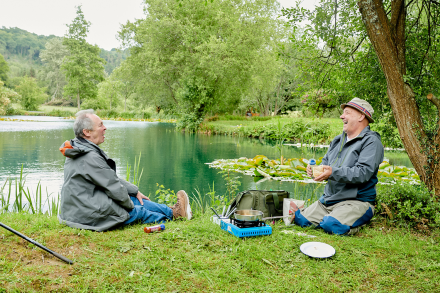
The joy of Mortimer and Whitehouse: Gone Fishing

If you didn’t already know that Down Cemetery Road was based on a novel Mick Herron wrote before the Slough House series – later adapted into TV’s Slow Horses – it mightn’t be too difficult to guess. After all, main character Zoë Boehm (Emma Thompson, no less) is a cynical sixty-something with a dodgy hygiene regime, who works in a ferociously shabby office and communicates mainly through the medium of the heartless yet undeniably funny wisecrack – but who nonetheless shouldn’t be underestimated by the arse-covering intelligence services she’s up against. She is, in other words, a female version of Slow Horses’ Jackson Lamb (also played by an Oscar-winning Brit).

Worth watching for Momoa’s gibbous-moon buttocks alone

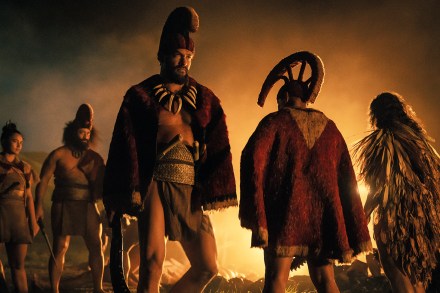
If you enjoyed Apocalypto – that long but exciting Mel Gibson movie about natives being chased through the jungle with (supposedly) ancient Mayan dialogue – then you’ll probably like Chief of War, which is much the same, only in Hawaiian. Like Apocalypto, it even has sailing ships appearing mysteriously from Europe with crews that serve the role of dei ex machina, rescuing endangered native protagonists at key moments. This time our based-on-a-true-story hero is Ka’iana, the 18th-century Maui chieftain who succeeded in uniting the four warring island kingdoms (Oahu, Maui, Molokai and Lanai) and turned them into the kingdom of Hawaii.

The Simpsons may be genius – but it’s also evil

Marge Simpson is dead. But does anyone care? I’ve written loads of pieces over the years about the genius of The Simpsons – how extraordinarily prescient it is (most famously when, in 2000, it predicted a Trump presidency), how delightful the subplots are, how it works on so many levels – but I’m now beginning to suspect that all along it was a honeytrap designed to seduce you and your children into screen zombiedom. Obviously I don’t want to push the ‘TV is bad for you’ argument too hard because I might be out of a job.

Dope Thief is a cut above your usual inner-city crime-drama porn

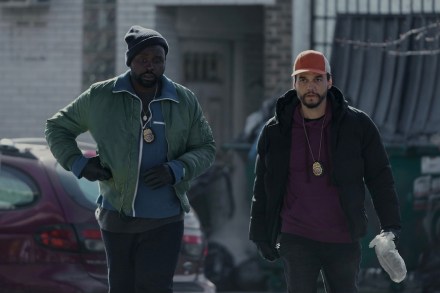
I really had no interest in watching Dope Thief. It’s another of those crime dramas set in a bleak-looking city – possibly there are some pretty parts of Philadelphia but we only get to see the bad bits – where everyone seems to be on welfare or a drug dealer, or both, everything looks washed out, grimy and grey, and where you could die horribly any second. And I get quite enough of all this on my increasingly rare trips to London. But I was desperate. I’ve finished the second season of Severance (very good; definitely worth the effort); White Lotus will only see you through one night a week; season three of Reacher is so dismal it doesn’t even qualify as ‘so bad it’s good’. So I needed something else and the online reviews for Dope Thief looked decent.

I think I’ve found the perfect TV series

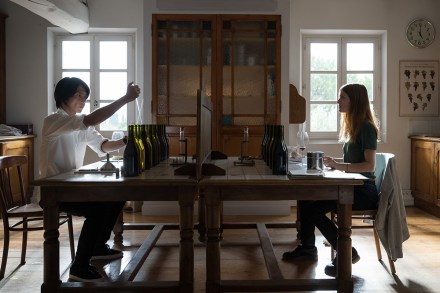
Drops of God is one of those gems of purest ray serene that cable TV prefers to keep hidden in its deep unfathomed caves because it thinks you want something more lowbrow. Try finding it by accident: you won’t. When I looked for it on Apple – which doesn’t have all that many shows – I had laboriously to type in its name. It wasn’t offered to me in the recommendations. If I hadn’t been tipped off by my friends Candy and Diarmuid, I would never have seen it. I had been lamenting, as I often do, the dearth of stuff to watch on TV that doesn’t put you through the emotional wringer.

Certainly intriguing: Apple TV+’s Prime Target reviewed

Needless to say, there have been any number of thrillers that rely on what Alfred Hitchcock called a MacGuffin: something, however random, that the goodies have to find before the baddies do. Less common are those where the MacGuffin is the mathematical formula for prime numbers – which is where Apple TV+’s latest show comes in. His first thought on seeing a 204 bus was that 2042 is the sum of three consecutive cubes Prime Target began in ‘Baghdad, Iraq’ – and therefore in a bustling market. Or at least it bustled until a large gas explosion opened up a hole in the ground leading to a spectacular medieval chamber. For a while, the chamber went unexplained as we cut to ‘Cambridge, England’ – and therefore to eight strapping young men rowing on the river.

A fashion series made by people who hate fashion: Apple TV+’s La Maison reviewed

I’m a bit disappointed – déçu, as we Francophiles like to say – with La Maison. When French TV drama is good it can be very, very good, as we saw with Spiral, Les Revenants, and, maybe the best series ever made about spies, Le Bureau. But La Maison is not in their league. This is a shame because its milieu is not one that has been explored that often in TV serials – and it’s something that a French production really ought to have handled brilliantly: haute couture. Judging by the fancy Parisian settings and general patina of Succession-style luxe, it hasn’t been short of a reasonable budget. What lets it down is that it appears to have no real love for or understanding of its subject matter. This is a fashion series made by people who hate fashion.

Must-watch TV: Apple TV+’s Pachinko reviewed

Pachinko is like an extended version of the Monty Python ‘Four Yorkshiremen’ sketch (‘I used to have to get out of shoebox at midnight, lick road clean, eat a couple of bits of coal gravel’) relocated to mostly 20th-century Japan and Korea. There’s so much misery it makes Angela’s Ashes look like Pollyanna. And there’s so little by way of laughter or a redemptive pay off you might be tempted to end it all like one of the numerous doomed characters do – off camera, fortunately – in the almost relentlessly catastrophe-laden season one.

Why you should never watch sci-fi series on streaming channels

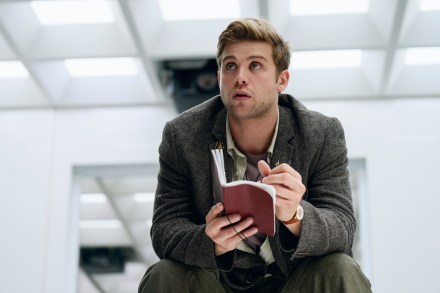
Jason Dessen, the hero (and, as you’ll discover shortly, anti-hero) of Apple TV’s latest sci-fi caper Dark Matter, is a physics professor at a second-rate university in Chicago. You can tell he’s not that good at his job because he introduces the concept of Schrödinger’s cat (surely the only interesting bit in the entirety of physics) five minutes before the end of a lecture. ‘Oh and the cat dies,’ he says to the uninterested students as they file hurriedly out of class. With no time constraint, sci-fi series on streaming channels can keep spinning you along for all eternity Still, at least he’s happy. His teenage son might have been genetically engineered to fit the phrase ‘but he’s a great kid’ and his hot wife Daniela is beyond perfect.

Compelling and somewhat heartbreaking: Girls State, on Apple TV+, reviewed

Here’s a fun thought experiment: instead of entrusting the future of American democracy to one of two old men, what if you put it in the hands of 500 teenage girls? Girls State, the sister documentary to Amanda McBaine and Jesse Moss’s award-winning 2020 film Boys State, follows the events of a week-long civic engagement camp where high-schoolers create an all-female democracy from scratch. A feminist manifesto is much easier to compose than a real solution to culturally ingrained inequality Girls State and Boys State programmes have given argumentative American teens an education in the necessary evil of politics since the 1930s.

Still the best thing on TV: Apple TV+’s Slow Horses reviewed

Slow Horses is the best thing on television. And it’s now so successful and popular it can afford to launch series three with a sequence worthy of James Bond: Istanbul location budget; spectacular chase sequences involving cars and speedboats with some thrillingly dangerous manoeuvres round a huge container vessel; a beautiful, immaculately dressed female agent meeting (spoiler alert, though to be fair you can see this one coming a mile off) a tragically sticky end. Except it’s better than Bond – not that difficult these days, it must be said – because it is missing all that grim portentousness, over-earnestness and pomposity. The cars are beaten up and gadget-free; the stunts look plausible; and the agents behave like real human beings.

Spooky, classy dystopian sci-fi: Apple TV+’s Silo reviewed

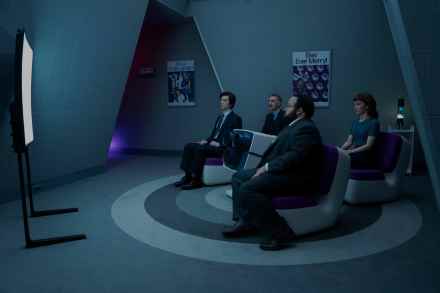
Back once more to our favourite unhappy place: the dystopian future. And yet again it seems that the authorities have been lying to us about the true nature of reality. This time – in Silo – the lie concerns the nature of the world outside the enormous silo in which our heroes and about 10,000 other survivors have been hiding for the past 100-odd years since some nameless apocalypse. Is it really as dangerous as the Powers That Be say? Or is this an illusion, maintained over a century of relentless official propaganda, designed to keep the enclosed populace frightened and in check? Silo began life in 2011 as a self-published short story by Hugh Howey – called Wool, not Silo – which he put out through Amazon’s Kindle Direct.

The dark side of Ted Lasso

You’ll know where you are with Ted Lasso – the third season of which has just started on Apple TV – as soon as you hear the Marcus Mumford co-written theme song. It peddles a sort of sub-Coldplay uplift, with a lot of big, meaningless anthemic 'yeah's in the chorus. Bright, accessible, catchy and instantly forgettable, you still enjoy hearing it every time you watch a new episode. And that’s the show in microcosm: cheery, amusing and utterly inconsequential. Yet somehow the Jason Sudeikis vehicle has become not only Apple TV’s biggest hit to date, but the most Emmy-nominated comedy in recent years.

Didn’t deserve an Oscar: Coda reviewed

This year the Oscar for best film went to the drama Coda – ‘Child of Deaf Adults’ – but the ceremony will now probably only be remembered for Wsscrfmhw (‘Will Smith Slapping Chris Rock For Mocking His Wife’). And we thought that mix-up over envelopes was exciting! But back to the film, which beat the favourite, The Power of the Dog, although Jane Campion did win best director, making her the third woman ever to do so. That’s three women in 93 years of the awards. If we carry on at that rate, by the turn of the next century it may even be five. Coda is only viewable on Apple TV+, the first streaming service to scoop the big prize.

The best TV spy drama since Smiley’s People: Apple TV+’s Slow Horses reviewed

How thriller writers must miss the Cold War! Early John le Carré and Len Deighton had it easy when trying to create a convincingly menacing enemy: the Soviets, obviously. But their successors are forced to go through all manner of desperate contortions to generate their bad guy McGuffin. They can’t do Muslims because that’s Islamophobic; they can’t do the Chinese because the entertainment industry (like everywhere) is too in thrall to the CCP. So they end up promoting paper tigers like ‘right-wing extremism’, as Mick Herron does in the first of his Slow Horses series. Herron has been rightly hailed as the new Le Carré.