Apple

Making Tax Difficult: another Whitehall farce

From our UK edition

Welcome to the new tax year, with its overflowing hamper of half-baked, growth-eating, enterprise-crushing Labour measures. And if you happen to be one of the 4.4 million self-employed who scrape an independent living despite rising costs and red tape, welcome to what must surely be one of Whitehall’s longest-running but least funny sitcoms, Making Tax Digital (MTD). If your income from self-employment (or rents as a landlord) exceeds £50,000 a year, you must henceforth submit quarterly digital updates to HMRC; next year the threshold will drop to £20,000. You’ll have less time to pursue your trade but your costs will rise, because you’ll need new software and more professional advice.

Is Martin Scorsese America’s greatest living director?

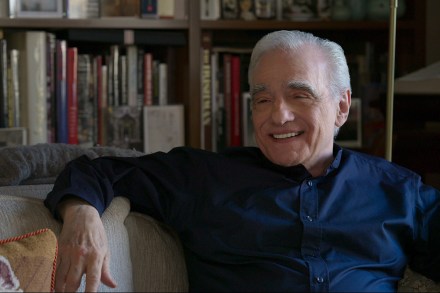
Who’s the greatest living American film director? Many would say Steven Spielberg, and that can’t be dismissed, but he hasn’t made a really good film since Munich (2005). There are many younger pretenders – such as David Fincher, Paul Thomas Anderson, Quentin Tarantino – and the more esoterically inclined might make the case for anyone from Terrence Malick to Spike Lee. Yet it’s hard not to feel that the don of contemporary American cinema is Martin Scorsese, whose career over the past five-and-a-half decades has existed, sans pareil, thanks to a vast dollop of talent, a considerable degree of good fortune and, crucially, an ability to lure both A-list collaborators and deep-pocketed moneymen into financing his films.

scorsese

I’m a slave to my Apple Watch

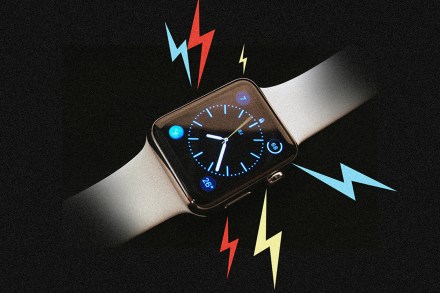
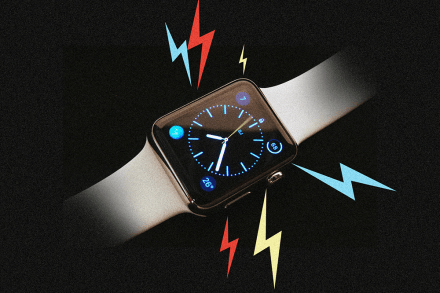
Aside from streaming on an iPad, when riding a stationary bike one of the few entertainments on offer is tracking your heart rate. Breaking 150 beats per minute provides a fleeting (and doubtless misplaced) sense of achievement. Yet the wearable heart monitor that came with my exercise bicycle proved unreliable; one’s BPM never truly drops from 137 to 69 in one second. This is all to explain why I bought the fitness freak’s fetish: an Apple watch. Its heart rate monitors are accurate. I opted for a reconditioned older model, not only half the price of the new ones but inclusive of the pulse oximeter function, which a medical technology suit has forced Apple to eliminate in current American models until the litigant’s patent runs out in 2028.

apple watch

Live-translation AirPods are the future

I have arrived in Naples, Italy, after an arduous flight from a chaotic London Gatwick Airport. I’m settled in a glamorous top floor apartment in the Quartieri Spagnoli – the romantic old “Spanish Quarter” – where Vespas fizz over cobbles and laundry hangs across alleys like flags of endless surrender. Most importantly, I’m clutching my Apple AirPods3 in their shiny new capsule. Because I’ve come here to do a grand, futuristic experiment using their much-heralded “live translate” function. Does it really work as smoothly as Apple says? Can I actually slot them in my ears and have them translate the Italian speaker in front of me, in real time? Is it really like the sci-fi Babel Fish from The Hitchhiker’s Guide to the Galaxy?

I’ve been enslaved by my Apple watch

Aside from streaming on an iPad, one of the few entertainments on offer when riding a stationary bike is tracking your heart rate. Breaking 150 beats per minute provides a fleeting (and doubtless misplaced) sense of achievement. Yet the wearable heart monitor that came with my exercise bicycle proved unreliable; one’s BPM never truly drops from 137 to 69 in one second. This is to explain why I bought the fitness freak’s fetish: an Apple watch. Its heart-rate monitors are accurate. I opted for a reconditioned older model, not only half the price of the new ones but inclusive of the blood oximeter function, which a medical technology suit has forced Apple to eliminate in current American models until the litigant’s patent runs out in 2028.

Why is Apple hosting an assassin’s app?

ICEBlock is an app that uses real-time information to pinpoint the location of ICE agents in the field. Launched in April in response to Donald Trump’s immigration crackdown, it now boasts more than one million users across the country. Among them, until recently, was self-styled “anti-fascist” sniper Joshua Jahn, who killed one person – a detainee – and critically injured two more at an ICE facility in Dallas. The FBI has discovered that Jahn used the app, or one like it, to track his intended victims. In a handwritten note, Jahn, who took his own life, wrote, "Hopefully this will give ICE agents real terror.”ICEBlock claims that its purpose is to help illegal immigrants evade arrest by alerting them to the presence of ICE agents.

ICEblock

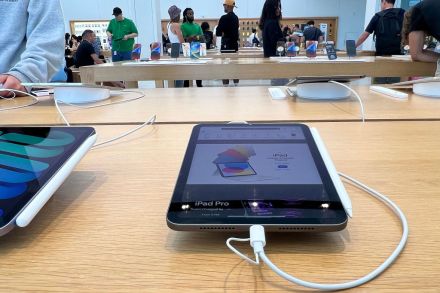
The iPod reboot

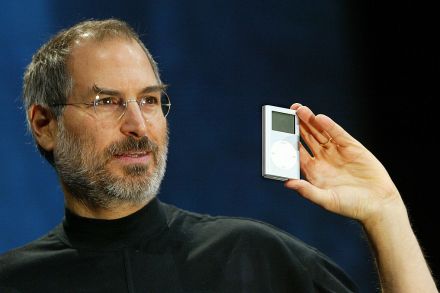
Dig into your desk drawers or the recesses of your closet and there’s a decent chance you’ll find an iPod you haven’t powered on since Michael Jackson’s last live tour. With Apple selling over 450 million since their inception in 2001, iPods were once the hottest tech item and fulfilled Steve Jobs’ promise of being able to carry an audio library in your pocket.How times have changed. Today, the average zoomer is likely to draw a blank when you say iPod, probably mishearing the word for the AirPods line of Bluetooth headphones. But, for a plethora of reasons, the iPod is once again becoming desirable. The r/iPod subreddit has over 70,000 readers and retro tech enthusiasts like Australian YouTuber DankPods attract millions of views.

iPod

F1 is forgettable, but a lot of fun

In a largely patchy summer for blockbusters – the excellent 28 Years Later aside – Joseph Kosinki’s F1 stands out for two distinct reasons. The film has arrived at an interesting time for the sport, which is finding increased popularity in the United States among demographic groups that previously may have ignored it – such as younger women – due to the success of the Netflix show Drive to Survive, accordingly name-checked in the movie. That show gives a behind-the-scenes look at Formula One racing and is now onto its seventh series.

f1

Is Trump killing the American dream for mom-and-pops? 

He’s survived an assassination, bounced back from bankruptcy and – so far, at least – avoided all attempts to jail him. But Donald Trump’s most audacious feat is yet before him: to persuade Americans to pay more for their goods as their beloved businesses struggle – and then be grateful to him at the polls.  While tariffs threaten to raise prices across the board for consumers, small businesses with lower margins than their larger competitors are struggling. “Whether or not you support tariffs, or whether or not you think certain offices should be cut, I think overall, any kind of economic turbulence is uniquely burdensome for small businesses,” says Molly Day, the National Small Business Association’s vice president of public affairs.

A crisp and refreshing account of the apple

In Food for Life, Tim Spector’s book on the science of eating, the author gives the chemical makeup of a mystery food, listing more than 30 scary-sounding E numbers, sugars, acids and chemicals, before revealing that it is an… apple. Sally Coulthard’s book, The Apple, shows that it’s the apple’s complexity as well as its familiarity, that makes it the ideal punchline for Spector, and, for Coulthard, a perfect vehicle to carry the history of how we grow, trade, cook and eat together and take responsibility for each other and the environment (or not).

apple

These $1,549 Bluetooth headphones might just be worth it

On a sunny Wednesday morning in August, I arrived at the London flagship store of Bang & Olufsen. But, of course, it’s not just a regular shop; it’s an “atelier,” or so I’m told. On the ground floor, you can peruse their range of chic, expensive speakers and headphones, but head upstairs — complimentary coffee in hand — and you can dive into their tailoring service. Do you want all the speakers in your home and office to match the materials and colors of their surroundings? Or match your car? Or what about a particularly beloved artwork? This is where you do that — and their sound will be as moving and astounding as their price tags. But downstairs, one floor below the main sales area, there’s a little preview room, hidden away from the world.

headphones bluetooth

Harris Tweed, the miracle fabric

From our UK edition

To understand the development of technology, you may be better off studying evolutionary biology rather than, say, computer science. A grasp of evolutionary theory, with the facility for reasoning backwards which it brings, is a better model for understanding the haphazard nature of progress than any attempt to explain the world by assuming conscious and deliberate intent. One useful concept from evolutionary thinking is the idea of the ‘adjacent possible’. As the science writer Olivia Judson explains: ‘Evolution by natural selection only works if each mutational step itself is advantageous. There’s no such thing as advantageous in a general sense. It’s advantageous in the circumstances you’re living in.

Apple downplays the value of human achievement

In January 1984, Blade Runner and Alien director Ridley Scott shot an Apple computer Super Bowl commercial mocking Orwell’s Nineteen Eighty-Four — and it changed the television advertising landscape forever. It featured a woman in a white tank top and bright red shorts destroying a monochrome screen with a sledgehammer. This week, Apple CEO Tim Cook promoted a new ad titled “Crush” that gave the exact opposite message and led to a furious backlash on social media. The ad begins with lights coming on in a factory setting with cultural items and artifacts stacked on top of each other, all gathered on a giant industrial press. Then the press begins to lower as a Sonny and Cher song plays.

The arrogance of Apple

From our UK edition

Can flexible working get the best out of what a ministerial press release calls ‘hardworking Brits’ – or is it a couch potato’s charter? As of 6 April, employees have had the right to ask for flexibility – including remote working and hours to suit – from their first day in a job; employers can reject unworkable requests, but are obliged to consider and consult. If you’re an optimist, you’ll think workers whose family lives are accommodated by enlightened employers will be happier, more loyal and more productive: ‘5 a.m. will be the new 9 a.m.,’ declares the HR Director, for parents who choose to ‘tackle work before attending to childcare commitments’ then ‘wrap up earlier… prioritising family time’.

How on earth does Rishi Sunak keep going?

From our UK edition

It’s my birthday this week and the end of my seventh decade (mathematicians will note that this does not make me 79). Looking at my long and generally happy life, I do wonder quite how we arrived where we are with this all-pervading sense of gloom and despondency. Gaza, Ukraine, Putin, Trump, Islamic State, Brexit… whichever way you look, there’s something you don’t want to see. The doomsday clock now stands at 90 seconds to midnight, the closest we’ve ever been to complete annihilation. Happy birthday to me. It’s not all bad though. Last week my son came home with a borrowed Apple Vision Pro, the wrap-around headset which retails at around £3,000.

The tech I’m looking forward to in 2024

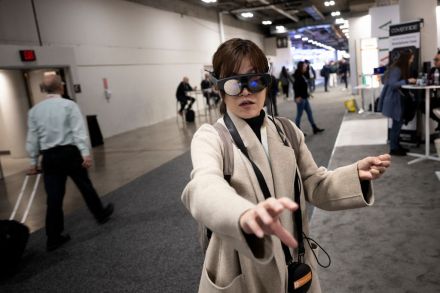
The Consumer Electronics Show in Las Vegas, the first and biggest tech convention of the year, took place earlier this month, where the strangest, newest products were shown off. As usual, there was a lot of fluff — pointless gizmos that work on a show floor but never make it to stores — but there were also core signs of the technology trends we’re going to see this year, and products I’m excited to try. Screens are always a strong point at CES, and this year proved no different, from pure quantum dot prototypes, translucent televisions and yet another laptop with a glasses-free 3D display; but it’s the arrival of great OLED screens to mainstream laptops that truly excites me.

tech

When you Wish upon a star: is the Disney shine fading?

Did you see Wish last weekend? Chances are, according to the box office receipts, you didn’t. The latest big-budget Disney extravaganza, with the voices of Ariana DeBose and Chris Pine, was expected to be a hit, grossing a decent $50 million on its opening weekend. Instead, to the studio’s chagrin, it came in third with a comparatively measly gross of $31.7 million, bested not only by the second weekend of the Hunger Games prequel, The Ballad of Songbirds and Snakes, but, considerably more surprisingly, Ridley Scott’s Napoleon, which soared past early estimates to come in with an impressive $32.5 million. Not bad for a film without any bankable movie stars (sorry, Joaquin), mixed reviews, a B- CinemaScore rating and a subject with which American audiences are not intimately familiar.

wish

Is Taylor Swift ushering in a new era for movie theaters?

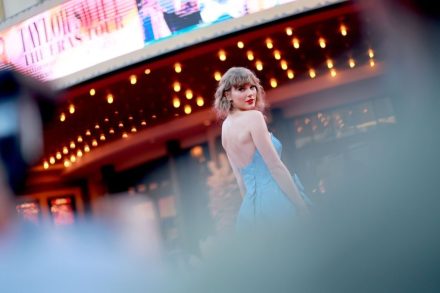
After a relatively quiet few weeks at the US box office, now that the Barbenheimer phenomenon has finally receded from view, it has fallen to another all-conquering icon to drag audiences back to theaters in their millions. Yes, Taylor Swift is no longer content with conquering stadia, but has now managed to establish herself as an unparalleled draw for the big screen as well, with Taylor Swift: The Eras Tour opening in American cinemas. With a first weekend gross of $97 million, it will either be the highest October launch since Joker in 2019, or even surpass it. Not bad for something made on a budget of no more than $20 million, self-produced by Swift herself and bypassing studios to be distributed directly to theaters.

taylor swift

Apple’s foray into streaming

On September 9, 2014, Apple users found an unrequested gift in their iTunes: a new U2 album. Songs of Innocence was supposed to jump-start a new wave of engagement with Apple’s music products, introducing their enormous user network to it for free. And it worked: Apple announced that it was “the largest album release ever.” But just because something’s free doesn’t mean people will use it. The following Monday, Apple released instructions for how to remove the album. Bono has subsequently, and repeatedly, apologized. Five years later, in March 2019, Apple announced its entrance to the streaming game: Apple TV+.

apple

Nothing makes technology transparent again

Consumer technology is, usually, profoundly dull. I love technology, but even I must concede the undeniable. A new pair of light gray, plastic cupped, noise-canceling headphones are functional, and often great, but they hardly get the blood rushing. Yet another gray Windows notebook has released! I struggle to stifle a yawn. And then — worst of all — are the phones. In the sixteen years since the first iPhone debuted, smartphones have become ubiquitous; the market is so large and flooded that innovation is no longer worth the risk. Phones are not cool new devices, but tools. You don’t care how a hammer looks; you care about the price and if it can hit a nail. The latest iPhone is a tool for accessing the internet and taking selfies. Most Android phones are the same but cheaper.

Photo courtesy of Nothing