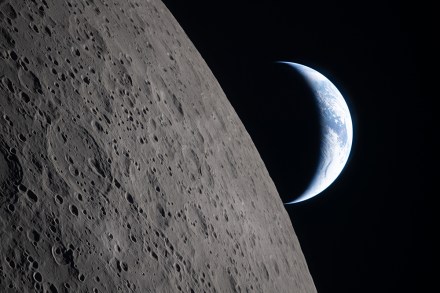
Space travel, ancient Greek style
Apollo, Artemis, and Orion have not been named at random. The first two are brother and sister, and all three are known in myth as hunters – which is what the astronauts are. Ancient Greeks would have been very envious of them. The satirist Lucian (c. AD 125-180) had great fun with space travel. In his True History, he describes how he sets off with his companions to sail the Atlantic when suddenly a typhoon whirls them up to the Moon, but after many adventures he is able to return and describe what he saw. There are no women, but men act as wives. They produce children in the calf of the leg. The children are born dead but brought to life by breathing in the wind. Men then become husbands. Their noses run with honey and when they exercise, they sweat milk.