Anger

Hot and bothered: Trouble Was, by Charlotte Edwardes, reviewed

From our UK edition

Child narrators are tricky little beasts. Misjudge their vocabulary and they lose all credibility or are unreadably twee. Even the brightest young minds can’t penetrate the nuance of adult life, which limits their perspective and reliability. That, though, can be a positive in the right hands. Throw them into an unstable family (show me a stable fictional family?) and they really start pulling their weight. Enter Frank Dart, Charlotte Edwardes’s first-person protagonist in Trouble Was, her debut novel. He is nine years old, something Edwardes makes us work out for ourselves, which is a neat taster of everything Frank has to figure out for himself.

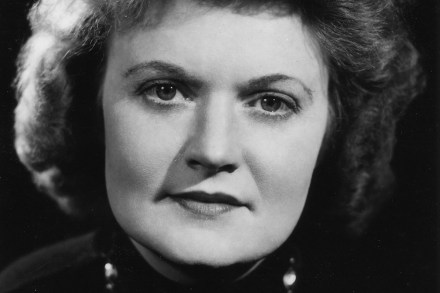
‘I’m tired of your ridiculous lies’ – the wrath of Muriel Spark

From our UK edition

Few among Muriel Spark’s circle of friends would have disputed the judgment of Storm Jameson when recommending Spark to the publisher Blanche Knopf in 1963: ‘I warn you, or remind you, that you are taking on a tartar. She has worn out two Macmillan directors already.’ Even tartars are forgiven, however, when they exhibit a touch of genius. ‘On the credit side, she is a good writer.’ Spark was a good writer of letters, too. They were often a joy to receive, as this fascinating first volume of her correspondence shows. (Jameson to Knopf is quoted in an editor’s note.

Looking on in anger: Happiness and Love, by Zoe Dubno, reviewed

From our UK edition

The fantasy of telling disagreeable friends how awful they really are is a relatable one. But rarely does it find such extravagant, relentless expression as in Zoe Dubno’s debut novel Happiness and Love. The narrator is a nameless woman who finds herself among former friends in New York. While she never succumbs to an outburst, her interior monologue issues forth like a furious esprit d’escalier. The dramatic scenario – modelled on that of Thomas Bernhard’s 1984 novel Woodcutters – is a dinner party in the loft dwelling of an ‘art world’ couple with whom the narrator used to live, following the funeral of one of their cohort.

Seeking forgiveness for gluttony, sloth and other deadly sins

From our UK edition

Professor Guy Leschziner writes that he was raised in a secular household that was ‘entirely irreligious’ yet with ‘a strong sense of morality, of right and wrong’. As an eminent neurologist and a rational atheist, it’s striking that his study of the extremes of human behaviour should reach for such Biblical terms. Is there an element of ghoulishness here? Seven Deadly Sins has a structure of which David Fincher, director of the gruesome film Seven, might approve.  To zero in on the sins is undoubtedly a darkly entertaining approach, if not for the squeamish. Having been a consultant at Guy’s hospital for more than 25 years, Leschziner has seen ‘the full spectrum of human morality’: inexplicable altruism, generosity, kindness, love.

The Book Club: Josh Cohen

From our UK edition

38 min listen

My guest in this week’s Book Club podcast is the psychoanalyst and writer Josh Cohen. With anger seemingly the default condition of our time, Josh’s new book All The Rage: Why Anger Drives the World seeks to unpick where anger comes from, what it does to us, and how it might function in the human psyche as a dark twin of the impulses we think of as love.

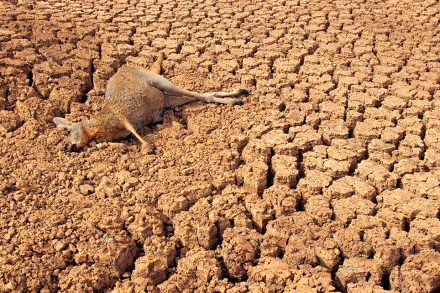
A scorched Earth: Juice, by Tim Winton, reviewed

From our UK edition

Late last year in Australia’s The Monthly, Tim Winton wrote an essay on the urgent need for writers to look the climate crisis in the eye. Quoting Amitav Ghosh’s observation about the ‘patterns of evasion’ that continue to conceal the scale of the catastrophe, he argued that writers must overcome the habits of mind that treat the natural world as an inert externality. Instead, they must find ways to recognise that we are part of nature, and our fate is inseparable from the world around us. ‘We have difficult work to do,’ he declared. ‘And we’re late to the bushfire.’ Of course, Winton is not someone who could ever be accused of treating the natural world as mere window-dressing.

The diary of a dying man: Graham Caveney’s poignant cancer memoir

From our UK edition

Reading this third memoir by Graham Caveney, a knot in my chest tightened. It wasn’t only because it’s a cancer memoir; it was because the unfolding of history so often shows that abuse begets self-destructive behaviour. To parody Auden: I and the public knowWhat all healthcare staff learnThose to whom evil is doneDestroy themselves in turn. Caveney’s two previous memoirs, The Boy with the Perpetual Nervousness and Agoraphobia, outlined his working-class childhood in Accrington, Lancashire, and his winning of a place at a Catholic grammar school. But where the school succeeded in helping him achieve his aim of becoming a writer, it also screwed with his head, because he was not only taken to plays but also played with by a member of staff.

Behind the anger of the young American Hamas apologists

“Goddess, sing of the cataclysmic wrath,” opens Emily Wilson’s new translation of The Iliad. The goddess Homer summoned isn’t named, but it is usually assumed he meant Calliope, the muse of epic poetry —and much later, circus music. But Homer might have meant Lyssa, the Greek goddess of mad rage and frenzy. She was well known to the ancients. The Romans called her Furor or Rabies — which gets the idea across fairly well. The Norse had two versions: Odr, who represented fury and frenzy, and Fenrir, a giant wolf who represents uncontrollable savagery.    By whatever name she may have been called, Lyssa appears to have been active in human affairs for a very long time.

anger pro-palestine hamas

Sheila Hancock takes pride in her irascibility

From our UK edition

This book begins with Sheila Hancock wondering why she is being offered a damehood. I must say I slightly wondered too, but it seems that most actresses become dames if they live long enough: vide Joan Collins, Penelope Keith, Joanna Lumley etc. And Hancock, as well as acting and making brilliant appearances on Radio 4’s Just a Minute, also does lots of charity work. She considers refusing the honour because ‘it’s hardly in keeping with my Quaker belief in equality’, but decides ‘no, it would be dreadfully rude and ungracious’. Anyway, she admires the Queen, and also Prince Charles, who left flowers and a handwritten note on her doorstep when her husband John Thaw died in 2002. So Dame Sheila it is.

A flag under foot

On my way to work in Midtown Manhattan each day, I pass down 50th Street. Near the corner of Broadway, not long ago someone glued an American flag to the sidewalk and set fire to it. The scorched remnants cry out in resistance to the attempted insult and erasure. I have no idea what protest prompted this indignity, or whether the person who sealed the flag to where pedestrians would trample it was the same who decided to set it on fire. I haven’t noticed any passersby taking special note of Old Glory reduced to such an inglorious state, surrounded by cigarette butts and other debris. This isn’t New York City’s fault. We are amid more pressing crises. The subway entrance nearby — one of the main points of access to Midtown — reeks of urine and sometimes worse.

flag

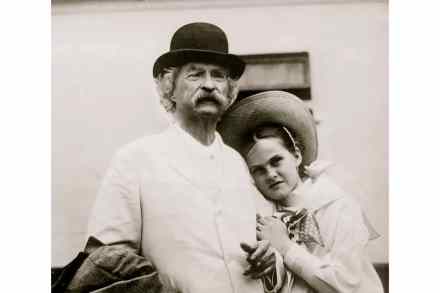
Is Mark Twain’s old age best forgotten?

From our UK edition

Mark Twain conquered almost every challenge that came his way except old age. Living well into his seventies, he was a printer, an investigative journalist, a riverboat captain, a government functionary, a bestselling novelist, an imperialism-defying political essayist, a successful playwright and a devoted father and husband. He travelled the world giving lectures that made him many fortunes, which he often used to replenish the fortunes he lost from his madder and most poorly managed investment schemes, such as the Paige Compositor, a self-justifying printing press which worked briefly for a few days in 1894 and then, just as mysteriously, stopped.

Why discord delights

Finding fault takes finesse. Oh, anybody can complain. We are a nation of complainers, carping at everything from breakfast vittles to late-night TV. We complain about our politicians, our prognosticators and our pop stars. But these complaints run like water down a windowpane in the same old channels to the same wet destination. Finding fault — finding new faults in a familiar subject — is much harder. It takes talent. It takes a critic. I am well aware that these days a lot of Americans complain that we are too divided. The nation bristles with parti pris. We revile the exponents of political views opposed to our own. We sneer at their provincialism, their pissant pettiness and their lack of civility, for which they should rightly be crushed.

discord

Old Glory, new anger

America is no longer just angry. We have become a nation of wrath. It is a risky emotional condition, recognizable by our desire to obliterate our opponents. Wrath doesn’t seek reconciliation. It wants revenge. Nor does wrath want to accommodate what it can’t control. It wants to rub the slate clean. There is a wrathfulness of the political left, stemming from visceral hatred of Trump and his supporters. But as the left is ascendant in the seats of power, it can pursue its effort to extinguish its opposition via the instruments of state. The wrathfulness on the political right is another story. Wrath reaches its zenith when people feel not just abused but hopeless in the pursuit of any redress.

anger