Angela merkel

For real political chaos, take a look at Germany

From our UK edition

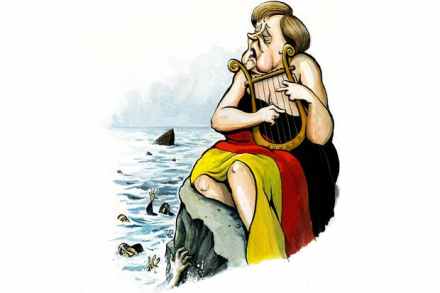
The female leader of a prominent European country fails to win a majority in an election and then struggles to form a coalition. Meanwhile, her government limps from crisis to crisis and finally negotiations break down, leading to another general election just weeks later. Not Theresa May, obviously, because she had little difficulty in forming a workable coalition with the DUP. But it is the situation in Germany where today Angela Merkel said that she has given up on trying to create a workable government with the Free Democratic Party, the Christian Social Union and the Greens. There will now almost inevitably have to be another general election, with Angela Merkel – rather than Theresa May – likely to be out on her ear by Christmas.
Angela Merkel throws Theresa May a lifeline

From our UK edition

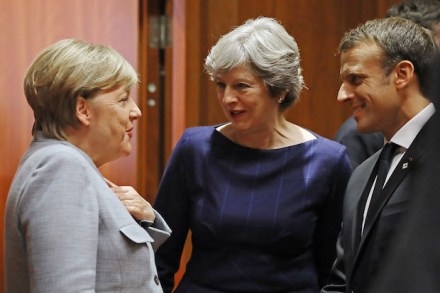
Few in Whitehall believed that Theresa May's trip to the EU Council summit this week would result in Britain being given the green light to move onto the second stage of Brexit talks. Instead, it has all been about setting the tone and planting the seeds so that when the EU27 meet again in December, they decide that it is finally time to talk about trade. So, Theresa May ought to be able to leave Brussels a moderately happy woman today. This morning EU leaders agreed to start internal discussions on their approach to the 'second phase' of talks on trade and the transition period. This isn't a green light – but it is a suggestion a green light could be granted the next time they meet.

The Spectator’s Notes | 28 September 2017

From our UK edition

You can see why Theresa May said in Florence that the British wished the European Union well in its plans for greater integration, while choosing a different path ourselves. There is no point in causing antagonism over what we cannot prevent. But in fact greater European integration will do great harm to all Europeans, including us. The rise of AfD in the German elections was caused almost entirely by Mrs Merkel’s extraordinary decision to admit a million Middle Eastern migrants in a year. The spread of the Schengen area — proposed by Jean-Claude Juncker — combined with recrudescent migrant pressure can only confirm freedom of movement as the impossible issue of our time.

Alternative für Deutschland’s success tells the tale of Germany’s forgotten East

From our UK edition

Back in the early 1990s, a few years after the Berlin Wall came down, I went back to the house in Dresden where my father was born. The house was on the outskirts so my father and grandmother survived the bombing – they got the last train out of Dresden before the Red Army arrived. The family I found there had been there since 1945. They’d been expelled from Silesia when Stalin handed the region over to Poland, and had ended up in Dresden along with so many other displaced Germans. They’d been living there for half a century, three generations under the same roof. They didn’t own this house – like almost everything in East Germany, it had been owned by ‘the people’ (i.e. the government).

A beginner’s guide to the AfD

From our UK edition

The German public have, as predicted, kept ahold of nurse. But it is the breakthrough of the AfD into the German Parliament that is causing headlines around the world. Of course the four-year old party’s electoral success is also unsurprising. In elections last September the AfD were elected to representative roles in most of the country’s regional assemblies and beat Merkel’s party into third place in her own constituency. Nevertheless, yesterday’s electoral breakthrough is stunning and the success of this four-year-old party is among other things now causing a predictable rash of 1930s analogies.

The real winner of Germany’s election is Jean-Claude Juncker

From our UK edition

Even if Germany had Britain’s first-past-the-post electoral system, Angela Merkel would be struggling this morning to form a government. With 33 per cent of the vote, her Christian Democrat and Christian Social alliance has suffered its weakest showing in 68 years – tempered only by the equal failure of the socialists. It might have been a moment for Emmanuel Macron to seize the crown of de facto leader of Europe were it not that he, too, suffered a lower-profile though no less significant electoral reversal over the weekend – in Senate elections the La Republique En Marche party won only 23 of the 171 seats up for grabs. With his popularity ratings plummeting and his labour market reforms hardly begun, the Macron bubble has well and truly been burst.

Germany’s shy AfD voters hand the Bundesrepublik a seismic shock

From our UK edition

The German Embassy in London threw an election party yesterday, but as the guests gathered round the big screens to watch the exit poll the mood became subdued. Of course diplomats are supposed to be neutral and even German journalists strive to be objective, but off the record everyone here in Belgrave Square was saying the same thing: ‘Anyone but AfD.’ [caption id="attachment_9940622" align="aligncenter" width="620"] The exit poll from Germany's election[/caption] Alternative für Deutschland, Germany’s anti-immigration party, has been a thorn in Angela Merkel’s side ever since it was founded four years ago. In Germany’s last election, in 2013, it polled 4.

Merkel limps to victory as AfD surges in German elections

From our UK edition

Angela Merkel has won, for the fourth time, but on her party's worst election result since 1949. Her main rivals did just as badly and the main winner looks like Alternative for Germany (AfD), now Germany's no3 party. Here's the national picture: [caption id="attachment_9940622" align="aligncenter" width="620"] The exit poll from Germany's election[/caption] So the centre-left Social Democratic Party is heading for just 20pc, its worst result since the Second World War.  Martin Schulz, SPD leader, said it has been “a difficult and bitter day for German social democracy”. By which he means that AfD are set to break through into the Bundestag with 13.5 per cent of the vote, a result that differs sharply in east and west.

Britain may have lost faith – but Germany still believes in the EU

From our UK edition

Theresa May’s Florence speech may have been welcomed with cautious optimism by Michel Barnier, but the reaction in Germany has been decidedly more downbeat. ‘In substance, May is bringing no more clarity,’ tweeted German MEP Manfred Weber. ‘I am even more concerned now.’ Weber is Chairman of the centre-right European Peoples Party, the biggest grouping in the European Parliament, and a rising star in Angela Merkel’s Christian Democratic Union. So does he speak for Merkel? Well, that would be pushing it, but while ‘Mutti’ maintains her deafening silence about all matters Brexit, it’s probably the closest we’re going to get.

Angela Merkel’s foreign policy proposals should worry Brexiteers

From our UK edition

With the German election a fortnight away, and Angela Merkel’s Christian Democratic Union enjoying a commanding lead, you might suppose the German Chancellor would be tempted to play safe and keep her head down. However as Theresa May has shown, that’s a risky strategy for an incumbent. Far better to come out fighting, take the battle to your opponents – and choose the ground upon which you wish to fight. Merkel’s favourite battleground has always been foreign policy, and with her conservative CDU on course for a resounding victory, yesterday’s interview with the Frankfurter Allgemeine Zeitung gives the clearest outline so far of what her priorities will be when she returns for a fourth term as Chancellor in two weeks’ time.

The Merkel supremacy

From our UK edition

 Berlin Under the PR system we gave them, it's inevitable that Merkel will have to govern in some sort of coalition ‘Capitalism is armed robbery,’ reads the graffiti on the subway wall, but here in Berlin, German capitalists are doing what capitalism does best — creating new jobs and new industries. Berlin used to be regarded as ‘poor but sexy’(as Berlin’s former mayor Klaus Wowereit put it), but last year the German capital boasted the highest growth in the country — 2.7 per cent, 0.7 per cent above the national average. A city of squats and bombsites has become a city of high-tech start-ups, and now tech giants such as Google and Microsoft are moving in. Cheap rents and a lively nightlife attract smart millennials from across the globe.

Theresa May could learn a lesson from Angela Merkel’s debate performance

From our UK edition

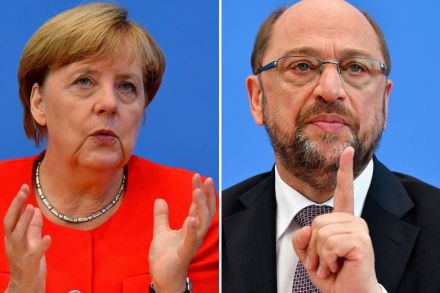
Last night’s TV debate between Angela Merkel and Martin Schulz poses a nagging question for British conservatives. No, nothing to do with Brexit – the subject wasn’t even mentioned. Rather, why was Theresa May so afraid of going toe to toe with Jeremy Corbyn before the General Election? If only she’d done a Merkel and faced off her main rival on television, she might have won a decent majority - just as Merkel looks set to do in three weeks’ time. Like May, Merkel is widely (and quite rightly) regarded as an uninspiring public speaker. Like Corbyn, Schulz is an assured performer, with a polished ‘man of the people’ shtick.

Germany’s booming economy paves the way for another Merkel victory

From our UK edition

With the German elections now barely a month away, the Bundesrepublik remains beset by worries about terrorism and immigration. Yet, just like the river in the song, the German economic juggernaut just keeps rolling along. The latest GDP figures are even better than expected – 0.6 per cent growth in the second quarter – the best year on year rate since 2014, and the twelfth consecutive quarter in which the German economy has grown. Other Eurozone countries have reported healthy figures, too. France grew by 0.5 per cent, and Spain reported a rise of 0.9 per cent - its strongest result for three years (the British economy grew by 0.3 per cent in the same period).

Trump, Putin and Erdogan. The G20 should be quite something

From our UK edition

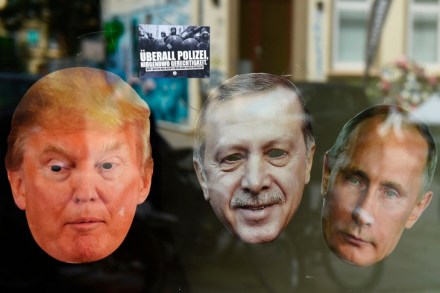
G20 summits are usually dreadfully dull affairs, but this week’s global chinwag in Hamburg should be refreshingly feisty. No conference with Donald Trump, Vladimir Putin and Recep Tayyip Erdogan in attendance could ever be described as boring, and although President Trump’s first meeting with Putin will provide the main photo opportunities, there are plenty of other potential flashpoints – not least the toe-curling relationship between Trump and his host, Angela Merkel. Merkel will discuss trade and climate change with Trump – two subjects about which these two leaders seem destined to disagree. No US President has been so dismissive of climate change; no US President has been so hostile to German trade.

Liberals should not be surprised Angela Merkel voted against gay marriage

From our UK edition

Liberal Brits got a welcome wake-up call yesterday, when the woman they’ve been calling the leader of the free world voted against Gay Marriage. ‘For me, marriage in law should be between a man and a woman, and that’s why I didn’t vote in favour of this bill,’ said Angela Merkel, after the German parliament voted to legalise same-sex unions by 393 votes to 226. All the usual suspects have been on Twitter, voicing their right-on indignation, but for anyone who knows anything about Merkel, the wonder is that anybody should be in the slightest bit surprised.

Why we should care about the German elections

From our UK edition

German parliamentarians used to pride themselves on being boring, but the past two years have turned Teutonic politics upside down. After a decade of dreary stasis under Angela Merkel, a system designed to run on tramlines has become a rollercoaster ride. So why has the political scene in Germany suddenly become so volatile? And what are the implications of this change of pace for Britain, and the EU? The drama began when Merkel welcomed a million migrants into Germany, a decision which almost destroyed her political career. ‘Wir schaffen das!’ she told Germany. ‘We can do this!’ Unfortunately for her, a lot of Germans disagreed. Her ratings slumped, while those for Germany’s anti-immigration party, Alternative für Deutschland, soared.

The Euro’s badly-needed reform could finally be on the cards

From our UK edition

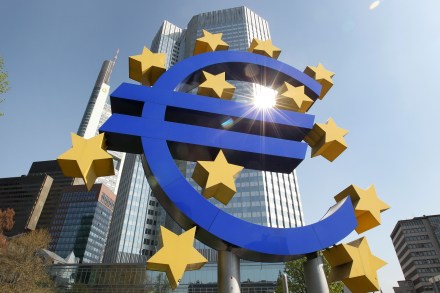
Has Germany finally started to shift its position on the future of the Eurozone? Speaking today, at a conference for the German equivalent of the CBI, Chancellor Angela Merkel appeared to open the door to a new form of governance for the 19-country bloc. Since the financial crisis, the common currency zone has bounced from crisis to crisis, surviving by kicking the can down the road at each critical moment. It has long been obvious that major institutional changes were required to ensure the currency’s long-term viability.

Merkel is right about Trump – so where does that leave Britain?

From our UK edition

Angela Merkel has never been a showboating politician. Public speaking isn’t her forte – she prefers to work behind the scenes. That’s why her latest speech has made such big waves, on both sides of the Atlantic. The Washington Post said it marked the beginning of a ‘new chapter in US-European relations.’ The New York Times called it a ‘potentially seismic shift.’ Seasoned US diplomat Richard Haas described it as ‘a watershed’ in America’s relationship with Europe. So what did Merkel say? What did she mean by it? And what are the implications for Germany, and for Britain?

What the papers say: Labour’s nasty manifesto shock – and Merkel’s Nato blunder

From our UK edition

Jeremy Corbyn defied his critics by coming across well during last night’s debate and Labour is continuing to enjoy a revival in the polls. But the Labour leader is still facing a tough time in the press: Take a look in the small print of Labour’s plan for government, says the Daily Mail, and there’s a nasty shock waiting for you. The ‘Land Value Tax’ - which has been ‘highly praised by Jeremy Corbyn’ could ‘add more than £2,500 to the annual council tax bill’, according to the Tories. And it’s clear, says the Mail, that LVT would hit those with gardens the hardest. More worryingly though, the proposal ‘would inevitably cause widespread hardship to help fund a massive expansion of the State’.

Donald Trump will rejoice if Jeremy Corbyn becomes Prime Minister

From our UK edition

If, as seems increasingly likely, Jeremy Corbyn becomes British Prime Minister in June, his victory should be greeted not simply with incredulity in the United States, but also elation. A Corbyn triumph should arrive as soothing balm to Donald Trump’s wounded feelings. Corbyn stands for much of what Trump has espoused. Both men revile NATO, favour protectionism, admire Russia and want to upend the traditional political establishment. And both men were long dismissed as having zero chance at winning. And now? A Corbyn victory would help put wind in Trump’s sails. Take foreign policy. Trump was manifestly uncomfortable during his brief visit to NATO, shoving aside the Prime Minister of Montenegro and hectoring the allies about their niggardly defense outlays.