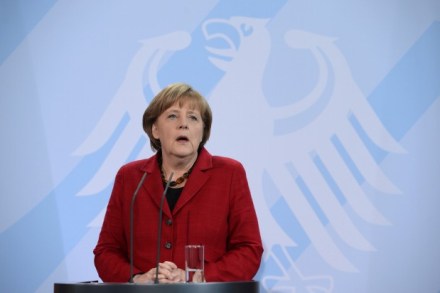
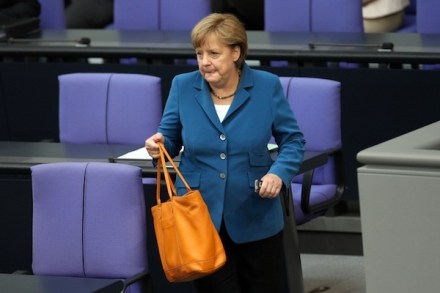
Angela merkel

Cameron calls on his ‘Northern Alliance’ to help stop Jean-Claude Juncker

From our UK edition

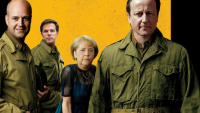
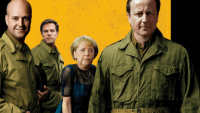
David Cameron visits Sweden today to discuss the future of the EU with the German Chancellor Angela Merkel, the Swedish Prime Minister Fredrik Reinfeldt and the Dutch Prime Minister Mark Rutte. The Prime Minister is attempting to block former Luxembourg prime minister Jean-Claude Juncker from securing the top job in Brussels. Earlier this year, Fraser Nelson explained how Cameron's 'Northern Alliance' may reshape Europe. If David Cameron were to divide Europe up, he’d make some crude distinctions. There would be the basket cases, like Italy, Spain, Greece, France — examples, by and large, of how countries should not be run.
Has Merkel blinked in Juncker row?

From our UK edition

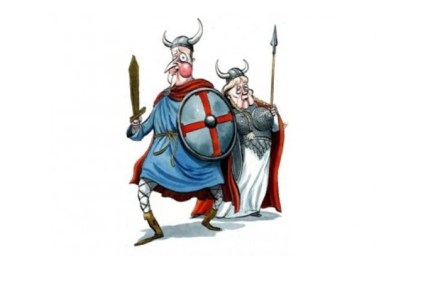
Angela Merkel has reportedly blinked in the row over Jean-Claude Juncker's candidacy for president of the European Commission and is now mooting IMF boss Christine Lagarde. The Reuters report cites two French sources who say the German Chancellor has asked France whether it could put forward Lagarde. If this is true, then it does explain or at least justify the very bullish tone that government sources took this morning when briefing Coffee House about the prospect of Juncker being blocked. And it would be a good sign that David Cameron is indeed getting his way if Merkel was prepared to raise the idea with François Hollande. But it would be odd if Hollande were enthusiastic about this.

Paul Johnson’s diary: Boris would make a great PM – but he must strike now

From our UK edition

I feel an intense antipathy for Vladimir Putin. No one on the international scene has aroused in me such dislike since Stalin died. Though not a mass killer on the Stalin scale, he has the same indifference to human life. There is a Stalinist streak of gangsterism too: his ‘loyalists’ wear masks as well as carry guns. Putin also resembles Hitler in his use of belligerent minorities to spread his power. Am I becoming paranoid about Putin? I hope not. But I am painfully aware that he would not matter if there was a strong man in Washington. As it is, President Obama is a feeble and cowardly man who makes even Jimmy Carter seem bold by comparison. He is running down America’s strategic capabilities while giving anaemic moral lectures.

Ukraine: Cameron and Merkel continue to focus on ‘de-escalation’

From our UK edition

David Cameron and Angela Merkel held a working dinner last night in Hanover ahead of their visit to a digital trade fair today. Naturally, they discussed Ukraine, and Number 10's readout of the call this morning says 'they both agreed that the priority is to de-escalate the situation and to get Russia to engage in a contact group as swiftly as possible'. Cameron also spoke to Vladimir Putin yesterday, with the Russian President telling the Prime Minister that 'Russia did want to find a diplomatic solution to the crisis' - although presumably in Putin's mind that doesn't involve quite the same level of compromise as those words might initially suggest.

Merkel visit: now it’s time for David Cameron to tell us want he wants

From our UK edition

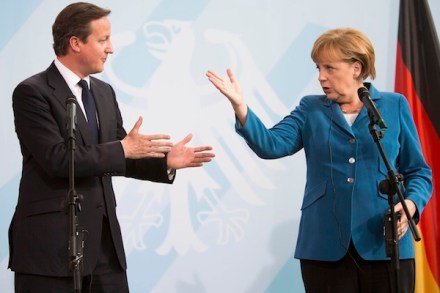
David Cameron pulled out all the ceremonial stops for Chancellor Angela Merkel’s visit to London and the way in which she played along is testament to her desire for the UK to remain within the EU. The lengthy passage of her speech dedicated to British sacrifices during both world wars was a polished diplomatic gesture that played well with Britain’s ideas about itself and its own historical role in Europe. It was a gesture that she did not have to make. However, as she said herself, Merkel’s address could never live up to the hype. This speech was never going to give us all of the answers to the EU’s future, or the viability of David Cameron’s reform and referendum strategy.

Net migration wobble caused by rising EU immigration

From our UK edition

How fitting that on the day Angela Merkel pops in to London to natter about EU reform, new figures show a big increase in net migration driven by a rise in immigration from within the European Union to the UK. Net migration in the year to September 2013 rose from 154,000 the previous year to 212,000. This morning, the Prime Minister's official spokesman said that it was 'absolutely the objective' to reduce net migration to below 100,000 by 2015. But today's figures are a blow to the government's chances of doing that. The problem is that while the Home Office is doing its best to control what it can control - non-EU migration fell to 141,000 last year - what it cannot control is out of control. The chart below shows a big rise in EU migration, with numbers doubling in a year.

Coffee Shots: Ever closer union?

From our UK edition

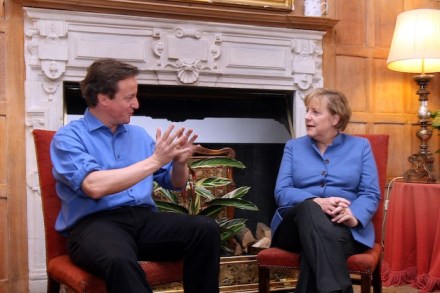
Things certainly seemed cosy between Angela Merkel and her favourite 'naughty nephew' when David Cameron greeted the German Chancellor in Downing Street earlier. So what on earth was said between that greeting and this sofa moment? I'm happy to welcome Angela Merkel to my Downing St flat, after her excellent address to Parliament. pic.twitter.

Why Angela Merkel is part of Cameron’s ‘Northern Alliance’

From our UK edition

[audioplayer src="http://traffic.libsyn.com/spectator/TheViewFrom22_27_February_2014_v4.mp3" title="Fraser Nelson and Stephen Booth discuss Cameron's Northern Alliance"] Listen [/audioplayer]For a Prime Minister seen to have no real interest or clout in Europe, David Cameron is doing pretty well – and far better than this morning’s newspapers suggest. He has built around him an alliance of reformers, which I describe in my Spectator cover piece today (and discuss in this week’s podcast). It is what Cameron calls a ‘Northern Alliance’: the Scandinavian states, plus the Dutch and Germans. His friend and conservative leader, Fredrik Reinfeldt of Sweden, is all up for reform.

Podcast: Cameron’s Northern Alliance, Christianity and the left, and the end of two-party politics

From our UK edition

Is David Cameron's new gameplan to look to the northern states for allies? Fraser Nelson is joined on the podcast by Stephen Booth of Open Europe, to discuss the influence that people such as the Dutch PM Mark Rutte – who has a clear and impressive reform plan – and Angela Merkel are having on our PM. Could Cameron really be serious about making Britain an honorary member of Scandinavia? And could this strategy really be enough to pull him through the next election? Ed West and Andrew Brown of The Guardian also discuss the church's left-wing bias. Ed has written frequently about this issue in the Catholic church. But is this, in fact, an ecumenical matter? And if so, why is this?

How helpful can Angela Merkel be?

From our UK edition

Angela Merkel is, as James explains in this week's magazine, central to David Cameron's hopes of getting anything meaty at all from his renegotiation and reform of the European Union. Her address to Parliament later this week will be scrutinised for every hint that she might support one reform or another - and for her enthusiasm for supporting Cameron in his quest. So it would be helpful if Merkel said some encouraging things in her speech. But can the Prime Minister suggest anything that would be particularly helpful for the German Chancellor to say?

Angela Merkel is the key to reform – but David Cameron still needs a European strategy

From our UK edition

Angela Merkel is getting the full red carpet treatment when she visits next week. In a 24 hour visit, she'll address both Houses of Parliament and meet the Queen. These honours are being heaped on her because she is Cameron's indispensable ally. Merkel is so vital to Cameron because as the most important person in the most important country in Europe she holds the key to his plan to renegotiate the terms of Britain's EU membership. If she is prepared to offer encouragement to this, then Cameron's plan is credible. If she's not, then it isn't. Several of the other big European players, notably the French, would be happy to cut Britain out of any future treaty talks by simply using an inter-governmental treaty rather than an EU one to define the governance of the Eurozone.

Only Angela Merkel can save David Cameron now

From our UK edition

[audioplayer src="http://traffic.libsyn.com/spectator/TheViewFrom22_20_February_2014_v4.mp3" title="James Forsyth and Isabel Hardman discuss Cameron's relationship with Merkel" startat=1204] Listen [/audioplayer]British politicians still prize a visit from the President of the United States above all others. Yet no American President has been as important to a British Prime Minister, in domestic political terms, as the German Chancellor is to David Cameron. Angela Merkel is the person who can both help him keep his party together as it approaches the next election and then, with luck, deliver his promised renegotiation of Britain’s EU membership. For Cameron, Merkel — far more than Barack Obama — is the indispensable ally.

Podcast: Julie Burchill vs. Paris Lees, Putin’s plan to rule the world and Cameron’s love for Angela Merkel

From our UK edition

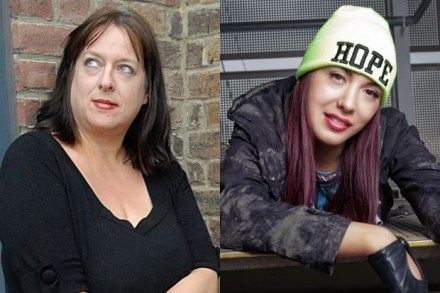
What is intersectionality and why is it ruining feminism? On this week’s View from 22 podcast, Julie Burchill and Paris Lees debate the current state of feminism and whether intersectionality has been damaging to the left. How are the feminists of today different from those in the past? What does the treatment of Julie Bindel show about feminism infighting? And is there any chance of returning to a more traditional strand of socialism? Mary Wakefield and Freddy Gray also discuss Vladimir Putin’s new plan for world domination. What do the Sochi Winter Olympics tell us about Russia’s hard and soft power in the world today? Why are social conservatives looking to Putin as a voice against the tide of social liberalism from the west?

Obama: “There are European governments that we know spy on us”

From our UK edition

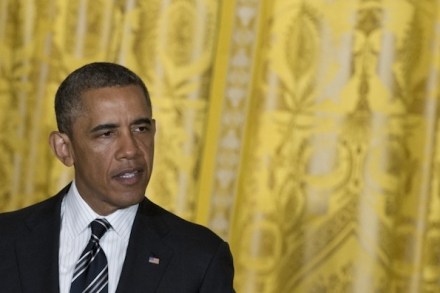
In an interview with The New Yorker, Barack Obama has hit back at European reaction to the Snowden revelations. He tells the magazine that “there are European governments that we know spy on us” and compares many of the European figures complaining about the allegations to the Vichy police officer in the film Casablanca. It’ll be fascinating to see wow those in the European Parliament who want to use this scandal to derail the talks on an EU-US free trade deal react to Obama essentially calling them out on this. Obama does, however, concede that the allegation that the US spied on Angela Merkel’s mobile phone is serious. He concedes that if it happened it was “a breach of trust and I can’t argue with her being aggravated about that.

British journalists lock each other up and throw away the key

From our UK edition

In the past few days, my colleagues on the Guardian have been publishing stories of national and international significance – indeed, if truth be told, they have been publishing them for most of the autumn. The international scoop was that America’s National Security Agency tapped Angela Merkel’s mobile phone (along with the phones of many more world leaders). As the shock of the revelation has sunk in, most observers have grasped that the shrug-of-the-shoulder explanation that 'spies spy', doesn’t really work in this instance. Spies in democratic countries are meant to be under democratic control. Elected politicians have few problems authorising surveillance on their country’s enemies.

Women think that David Cameron is out of touch for good reason

From our UK edition

Well, the great breadmaking debate hots up. David Cameron neatly sidestepped the heffalump trap that Nick Ferrari put in his path in an interview on LBC when he asked him the price of a Value Loaf in Tesco or Sainsbury. As you and I know, dear reader, Mr Cameron would no more eat that stuff than his own fingernails, and I for one applaud his good sense. If you can afford not to, don’t. But his elegant solution to the problem of not knowing that loaf-shaped carbohydrate costs 47p (he thought bread costs ‘north of a pound’, which is true of the kind he eats, only double that) was to say that he makes his own bread, from flour milled in the Cotswolds, a process which takes all of 30 seconds in a breadmaker as a way of getting his children to eat granary loafs.

The German Greens might do so badly they end up getting in

From our UK edition

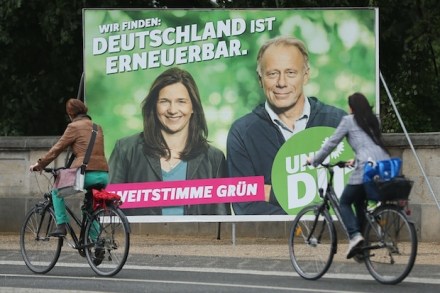
The German Green Party is having a torrid time. In an election campaign remarkable for static polls, come what may, the collapse of a third of the Green vote has been the most pronounced swing to be found. If in Sunday’s vote they do as poorly as it now looks like they will, this makes it more likely, not less, that they will end up in government. As it gradually became clear that Angela Merkel is staying put, and the real question was who she would end up with as coalition partners, the Greens looked like an unlikely option. For months they’ve put a wide gulf between themselves and Merkel’s Christian Democrats by calling for higher taxes and more redistribution.

Angela Merkel’s Christian Democrats could still lose. It all comes down to the maths

From our UK edition

Just over a month before election day, Angela Merkel’s Christian Democrats (CDU) are in a commanding position. The latest polls give them over 40 per cent support – fully 16 points ahead of main rivals the Social Democrats (SPD). You might think they’d have little to worry about. However, Germany’s electoral system is so scattered with technical and arithmetical traps that they are not safe yet. Five per cent is a magical figure in German politics. Like many of its other national institutions, the voting system was designed with the country’s previous sins in mind; it is essentially proportional representation, but to stifle the rise of extremists, a party must gain 5 per cent of the popular vote to be awarded any seats.

Number 10 should beware accidentally briefing EU renegotiation shopping list

From our UK edition

This is how the Downing Street spin machine works: a Bad Story that may make your core vote very upset appears in the papers. You brief that you are doing something Very Serious in response to said Bad Story and hope that when it comes to the meeting where you have to raise said Very Serious measure, the media will be getting worked up about a will or the latest pronouncement by a leading light in Ukip about women in the workplace. Today's example of this rule is the briefing to The Times that Downing street wants to put 'curbing the right of EU migrants to benefits at the heart of impending discussions with Brussels aimed at winning back powers for Britain'. This followed yesterday's story about a rise in the number of Romanian and Bulgarian migrants working in the UK.