Angela merkel

Border lands, 200 years of British railways & who are the GOATs?

From our UK edition

38 min listen

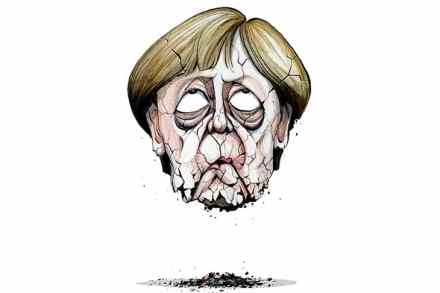
First: how Merkel killed the European dream ‘Ten years ago,’ Lisa Haseldine says, ‘Angela Merkel told the German press what she was going to do about the swell of Syrian refugees heading to Europe’: ‘Wir schaffen das’ – we can handle it. With these words, ‘she ushered in a new era of uncontrolled mass migration’. ‘In retrospect,’ explains one senior British diplomat, ‘it was pretty much the most disastrous government policy of this century anywhere in Europe.’ The surge of immigrants helped swing Brexit, ‘emboldened’ people-traffickers and ‘destabilised politics’ across Europe. Ten years on, a third of the EU’s member states within the Schengen area have now imposed border controls. Can freedom of movement survive in its current form?
Europe is giving up on free movement

From our UK edition

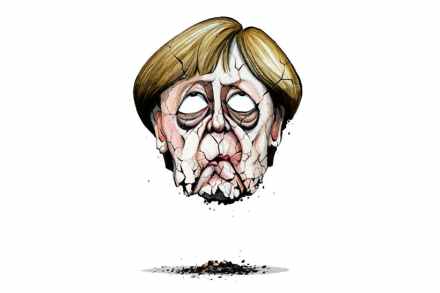
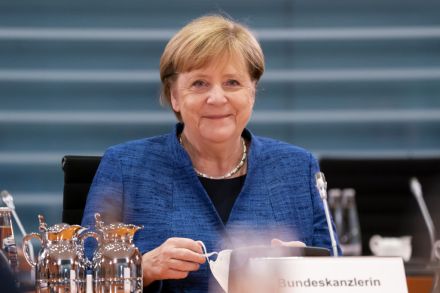
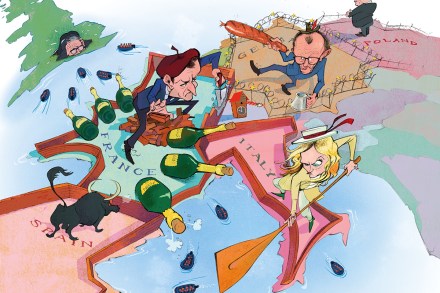
Ten years ago on 31 August 2015, Angela Merkel told the German press what she was going to do about the swell of Syrian refugees heading to Europe. With the three fateful words ‘Wir schaffen das’ – ‘We can handle it’ – she ushered in a new era of uncontrolled mass migration, not just for Germany but for the rest of the European Union too. The then chancellor, so often described by her supporters in the press as the ‘queen of Europe’, was adamant that Germany was a ‘strong country’, which had the resources to support the sudden influx of migrants. ‘We will provide protection to all those fleeing to us from wars,’ she insisted. Whether or not other European leaders shared her confidence was immaterial.

Trump’s war on Europe should not surprise anyone

Has there been a more cataclysmic year for US-Europe relations than 2025? It began with J.D. Vance’s “sermon” to EU leaders at the Munich Security Conference last month, in which he berated Western Europe for its policies on immigration and free speech. This year has also seen the growing threat of NATO falling apart after 76 years of peace in Western Europe, with the White House seemingly tilting toward Russia and Trump demanding that alliance members such as Germany, France, and the U.K. dramatically increase their defense spending. This week, as the Trump administration imposes tariffs on Europe and Europe retaliates, there are even signs of a full-scale trade war.

Europe

Why I’m voting for the AfD

From our UK edition

On 23 February, I will vote for the Alternative for Deutschland (AfD) party in the German general election. As someone with an immigrant parent, a postgraduate degree, and who works in the liberal world of film and TV, this is the last thing I’m supposed to admit to in public. My fellow Germans might understand my not wanting to vote for the Social Democratic party (SPD), the left-wingers who lead our deeply unpopular coalition government. But as an ‘educated’ millennial, surely I ought to vote Green? After all, our shamelessly non-neutral public broadcasters ARD and ZDF acclaim them the ‘party of youth’.

The end of the Orbán era

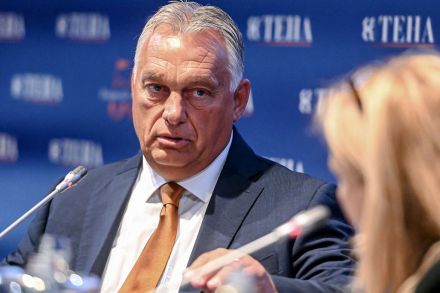
Over the headline “Peace Mission,” a recent cover from the conservative Hungarian periodical Mandiner shows an awkwardly photoshopped Viktor Orbán mediating between a bemused-looking Vladimir Putin and a grim Volodymyr Zelensky. Behind Orbán, a map of the world connects Kyiv, Moscow, Beijing, Washington and Budapest. One of these capitals, as they say, is not like the others. Even before Ukraine’s Kursk offensive, the chances of Orbán’s July trips to Kyiv and Moscow producing a peace settlement were slim. The Mandiner cover, however, is a revealing window into the mindset of Orbán’s conservative fans. The idea of a Hungarian prime minister mediating between squabbling great powers is both attractive and plausible to many of Orbán’s fervent supporters.

Orbán

Is Europe ready for Trump 2.0?

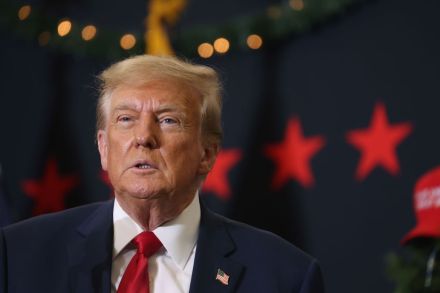
The 2024 presidential race between Joe Biden and Donald Trump is a dead heat. At most, a few percentage points separate them in the polls. Thousands of miles away, however, European leaders are operating as if Trump has already won, not wanting to be caught flat-footed yet again. When Trump defeated Hillary Clinton in 2016, European officials scrambled to establish contacts with the incoming administration. This time, the same wonks are proactively reaching out to Trump-friendly lawmakers and think-tankers, not only to understand what Trump’s foreign policy would look like in a second term but to press their own priorities. The Europeans, of course, are right to be worried.

Trump

Why are the German authorities so reluctant to believe in neo-Nazi attacks?

From our UK edition

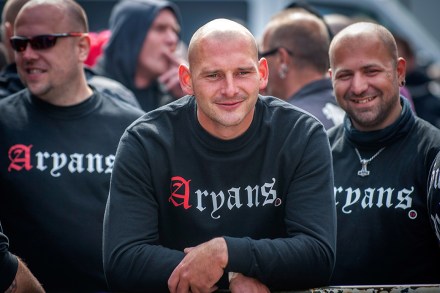
Enver Simsek’s life story was one familiar to many migrants. He moved from Turkey to a small town in Germany, then worked hard in a factory during the week and as a cleaner at weekends before starting his own business as a florist. By the turn of this century, he employed almost a dozen people selling his blooms from stalls and stands across Bavaria. So in the summer of 2000, he took his wife and two teenage children back to his native land for a break. Soon after returning, the 38-year-old was shot eight times in the head and shoulder, left dying in a pool of blood amid the bouquets of baby’s breath, daisies and roses in his van parked in Nuremberg. As Simsek’s life ebbed away in hospital, his distraught family faced a barrage of questions from police.

Has Germany finally shaken off its dark past?

From our UK edition

In 1982, a board game appeared in West Germany. If you landed on square B9 you were sent to a refugee camp in Hesse where you became ill from loneliness, unfamiliar food and not being allowed to work. Worse still, you had to miss a go and spend the free time thinking about ‘how you would feel in such a situation’. Even if, like me, your childhood was spent crying over lost games of Monopoly, nothing could quite prepare you for the cheerless experience of playing ‘Flight and Expulsion Across the World’. It’s unlikely an updated version has been commissioned for our home secretary, with players assigned counters representing the Bibby Stockholm, inflatable life rafts and Rwanda-bound jets, but you never know.

How the British intelligentsia fell out of love with Germany

From our UK edition

An economic slowdown, the far right on the rise, even apocalyptic hailstorms – what on earth is happening in Germany? Is Europe’s industrial powerhouse on the slide? Well, yes and no. Germany is in recession, and Germany’santi-immigration party, Alternative für Deutschland (AfD), is growing stronger, but the bad news coming out of Germany indicates a more lasting sea change: liberal Britain has finally fallen out of love with the Bundesrepublik. It’s not just British Teutonophiles who are troubled by the rise of AfD. This week Germany’s domestic spy chief, Thomas Haldenwang, warned about growing right-wing extremism within the party and German President Frank-Walter Steinmeier has echoed these concerns. ‘Ban the enemies of the constitution!

Germany’s folly: Berlin has miscalculated on Russia and China

The notion that closer trade connections with the West will necessarily set less enlightened nations on a course toward prosperity and liberty is nonsense, but convenient nonsense. Germans have a phrase for it — Wandel durch Handel, change through trade — often given as a justification for their business dealings with Russia and China. Unfortunately, the change they triggered was in Germany. In one case it has been for the worse; in the other it appears to be headed that way. To start with Russia, it’s true that Germany’s ultimately disastrous dependency on natural gas from the east has its origins in the Ostpolitik years: by 1989 the Soviets were supplying West Germany with around a third of its gas.

germany

Angela Merkel’s legacy crumbles

Angela Merkel is one of the most recognizable names in modern politics and probably the only German chancellor since post-war leader Konrad Adenauer that Americans will remember. Merkel was the leader of the center-right CDU party and head of the German government for a full 16 years, making her one of the longest-serving chancellors in German history as well as the first woman to hold the post. Now the full scale of her disastrous reign is becoming clear. Following the nuclear power plant incident at Fukushima in 2011, Merkel began Germany's "Energiewende" (energy shift), intending to phase out of all of Germany's nuclear plants in favor of renewables.

merkel retirement

Germany has rejected Merkel’s military legacy

From our UK edition

‘We are witnessing a turning point… the world is not the same anymore,’ said German Chancellor Olaf Scholz yesterday in a speech that will be remembered as the country’s biggest military shift since 1945. Staring down the barrel of Putin’s gun, Scholz announced a massive and immediate cash injection for Germany’s armed forces as well as a long-term commitment to higher defence spending. Russia’s unprovoked attack on Ukraine has pulled Germany out of decades of complacency and misguided pacifism. Foreign minister Annalena Baerbock seemed genuinely shocked at the discrepancy between Putin’s words during her visit to Moscow last month and his actions in Ukraine. She has said she feels betrayed: ‘stone-cold lied to.

Europeans are still free-riding off American security

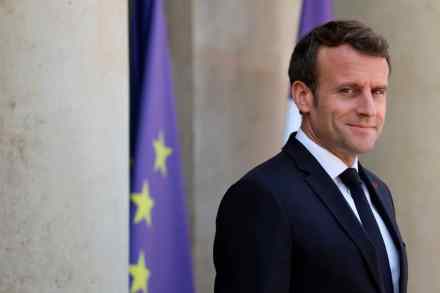
Remember how Washington’s foreign policy establishment and their media echo chamber bashed the “isolationist” President Donald Trump for abusing, humiliating and making life miserable for our close European allies, in the process obliterating the “liberal international order”? Remember how some of the Europeans responded? Germany’s Angela Merkel declared “a new chapter” in US-European relations, saying that Europe “really must take our fate into our own hands.” France’s Emanuel Macron stated that Europeans need to stop “being naïve,” and assert their strategic independence from the US. What happened? Nothing. Here we are, three decades after the end of the Cold War, and it is déjà vu all over again between Washington and Moscow.

angela merkel

Covid could paralyse the new German coalition

From our UK edition

An iron curtain has descended on Europe, and once again, it goes right through the middle of Germany. The average national infection rate is currently exploding, but the real story is not the average, but the vast gap between east and west, with another gap between the north and south. The north-west of Germany is like the rest of the western EU, cases growing but not at such an alarming rate. But the south-east is like central and eastern Europe. Hospitals are overflowing. Berlin has ceased all non-emergency operations. Germany’s formidable and numerous intensive care units are now for the first time in the pandemic experiencing bottlenecks, for which they have made no emergency planning. The politics behind this is potentially quite dangerous.

The dictator behind Europe’s next migrant crisis

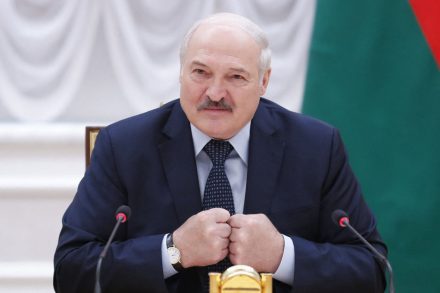
Belarus, the former Soviet satellite state, isn’t exactly a global heavyweight. Alexander Lukashenko, the country’s authoritarian president, is an international pariah who is better at concocting conspiracy theories than he is at running a country. At $60 billion, the Belarusian economy is about the size of Rhode Island’s. Other than petroleum, cheese and dump trucks, Belarus doesn’t offer much in the way of exports. A once promising information technology sector is now gutted, as Lukashenko’s crackdown on dissent forces highly educated talent to flee the country for the Baltics. Lukashenko, however, is smarter than he looks.

lukashenko

Merkel knows how to stop Polexit. The EU won’t listen

From our UK edition

The EU is notoriously bad at learning from its own mistakes, mostly because it is unable to recognise these mistakes in the first place. A notable exception is austerity. There is now a consensus that it was a disaster, which blighted Europe’s economic resilience for a generation. A mistake the EU has not recognised yet is its role in Brexit: how it negotiated with David Cameron, and how it sided with the second referendum after the election, thus helping to create the political backlash that has destroyed even the faintest hope of a rapprochement with the UK. In what may be her last European Council, Angela Merkel yesterday spoke truth to power when she warned her fellow leaders not to treat Poland in the same way.

The German elections are good news for Macron

From our UK edition

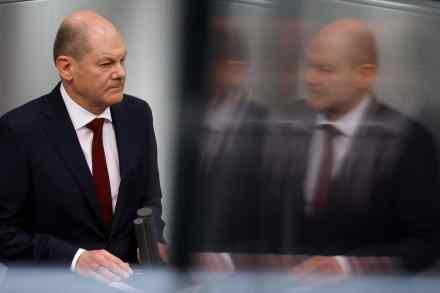
The German election result means that a three party coalition will almost certainly be needed to form a government. Olaf Scholz, the SPD leader, has made clear just now that he is going to try and form a coalition with the Greens and the Free Democrats. Whoever succeeds her will take time to build up the authority that Merkel had in these meetings Scholz has a strong claim on the chancellery. The SPD came first in the election and polls consistently showed that he was Germans’ preferred choice for candidate. Despite being from a different party, Scholz successfully positioned himself as the Merkel continuity candidate. The results might suggest a shift to the left among the German electorate. But German voters clearly want more Merkelism.

Who will succeed Merkel?

From our UK edition

The results of the German election have shifted somewhat since last night's exit poll. What we know for sure is that a red-red-green coalition — between the centre-left SPD, far-left Die Linke and the Greens — is short of a majority, which is contrary to what every single opinion poll projected in the last few weeks That is the single biggest news from the German elections. It deprives SPD leader Olaf Scholz of what he would have needed to force the free-market liberals of the FDP and Greens into a coalition, also known as the traffic light coalition. A coalition involving Die Linke could have been leveraged to sharpen minds, the threat of socialists and anti-capitalists having access to the chancellery. That threat is now gone and Scholz's negotiating position is weakened.

The stalemate election: can Germany move beyond Merkel?

From our UK edition

Germany’s election campaign has taken many unexpected turns. In January, Angela Merkel’s Christian Democrats (CDU/CSU), were leading by about 20 percentage points. By April, the Greens were ahead. By July, the CDU/CSU had bounced back, and then all of a sudden, the Social Democrats (SPD) came out of nowhere to a solid lead by last weekend. The gap has since closed a little ahead of Sunday’s election — and the joyride is still not over. What is also different about these elections is that, based on current polling, four, five or even six coalitions might be arithmetically possible. So the real battle will likely start only after the election.

Germany is facing political stagnation

From our UK edition

Jamaica, Germany, Kenya or traffic lights? The names of the potential German coalitions — and their corresponding party colours — can be quite exotic. But as the vote has begun to split in the run up to the federal elections next month, the possible combinations that will make up Germany’s government have grown. The race is still wide open. Coalitions were purposefully built into Germany’s post-war democracy — the voting system mixes first-past-the-post with proportional representation to ensure a workable splintering. With one notable exception in 1957, no political party has received the votes of over half of the electorate outright. It usually falls to the party with the most votes to find a coalition partner to form a majority government.