American literature

Books you shouldn’t read in public

From our US edition

Headed to the hospital recently for a rather unpleasant surgical procedure, I figured I’d bring a book to pass the down time. I was about to grab Ron Hansen’s Mariette in Ecstasy, the novel I’d been reading about a nearly 20th-century Catholic postulant who may or may not have seen a vision of Christ and suffered stigmata on her hands and feet. But the thought of nurses and order-lies glancing at the title, thinking ‘pervert’ and perhaps surmising that my demise really wouldn’t be all that great a loss for human-kind dissuaded me. Instead I brought along the Buffalo News sports section. I told a Kentucky woman about this titular discretion.
books
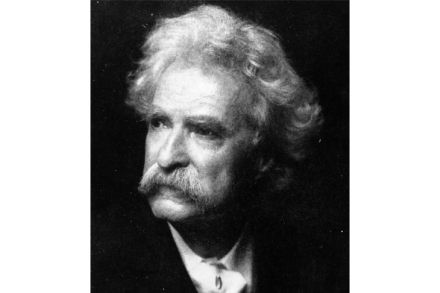
twain

Ever the Twain

From our US edition

Mark Twain’s work contains in itself pretty much all of 19th-century America. This is America as she was when still, geographically and socially, more a frontier society than not; before she became heavily industrialized, urbanized and suburbanized: increasingly convergent upon the European societies from which she was descended. Twain’s America is, in short, America when she remained a unique place; even as she was evolving with lightning speed from her earlier self into something approaching her present one. Mark Twain made an international reputation for himself with the publication in 1869 of The Innocents Abroad, a travelogue that recounts a trip of many months through Europe and the Middle East.

No writer was better suited to chronicle the Depression than John Steinbeck

John Steinbeck didn’t believe in God — but he didn’t believe much in humanity either. When push came to shove, he saw people as cruel, selfish, dishonest, slovenly and, at their very best, outmatched by environmental forces. Like his friend, the biologist Ed Rickett, Steinbeck considered human beings to be no better and no worse than any community of organisms: they might aspire to do great things, but they always ultimately failed. In The Grapes of Wrath, the hard-working Joad family travel west, seeking a good life, and get taken apart by poor wages, malignant farm cooperatives and company stores. In Cannery Row, Mack and his boys want to repay their friend Doc for all his generosity, and end up burning down his lab after a drunken party.