America

The mask slips at Socialism 2025

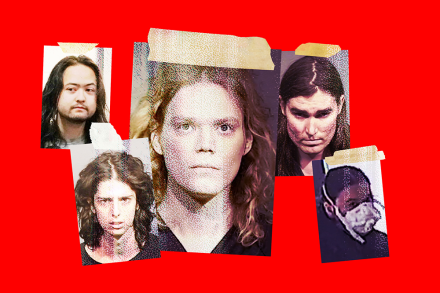
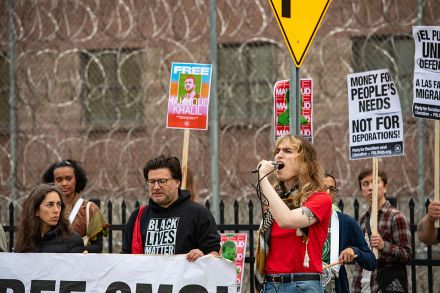
From college campuses to the media, socialism is increasingly getting repackaged as a solution to every problem: homelessness, housing, policing and education. For a generation grappling with high rent, student debt and political distrust, the collectivist utopia may sound like the moral, modern choice. But it isn't – and this year’s Socialism 2025 conference in Chicago proved just why it is doomed to failure. The conference brought together scholars, activists and self-styled revolutionaries to sketch out what a “just” society might look like. The vision was as radical as it was impractical.

Socialism

Tucker tosses softballs to Iran

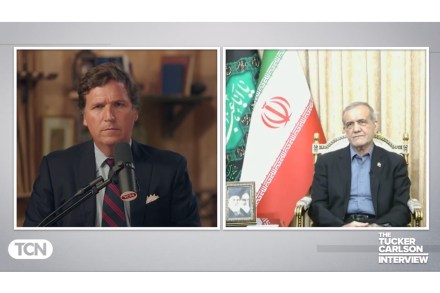
“I didn’t ask hard questions because I knew I wouldn’t get an honest answer,” said Tucker Carlson, our edgelord Barbara Walters, in the hype-video run-up to his dull interview with Iranian President Masoud Pezeshkian. But he didn’t get any honest answers in the interview anyway, so why bother asking in the first place? Carlson doesn’t seem to grasp that America’s geopolitical opponents grant him special access precisely because he won’t ask the hard questions. Carlson’s interviews are valuable because they give us a glimpse into what it would be like if we had an actual state-run media. Our journalism has its ideological biases.

tucker carlson shills iran
roundabout turning circle

Europe’s favorite novelty is causing pile-ups in the US

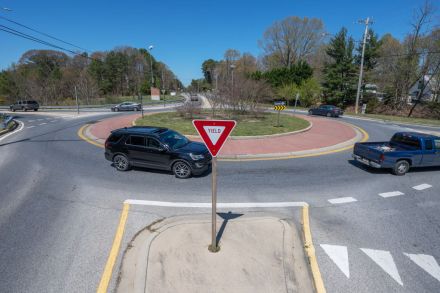
Talk to a Brit about their preference in social structures, and the first thing they'll likely tell you, as an American, is that you’re wrong. Whether it’s healthcare or guns, public transport or urban walkability, the American way of being is often at odds with our English cousins, and indeed the rest of the Europe. While we mostly resist conforming, the quietly irksome traffic circle – or, yeesh, “roundabout” – is quickly taking root in America’s vast suburban sprawl. And you could soon find yourself in a pile-up before you even know it. Europe’s favorite novelty is still relatively rare in America, but they are springing up fast. The UK has over 25,000 roundabouts, while the entire US has only about 11,000. Yet that figure has doubled over the last ten years.

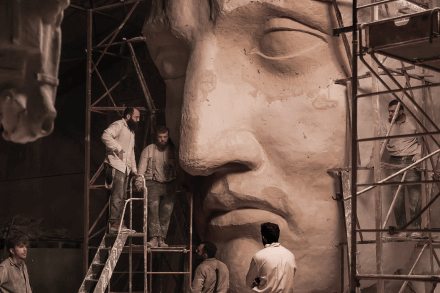
The French sculptors building the new Statue of Liberty

From our UK edition

At a miserable-looking rally for the centre-left Place Publique in mid-March, its co-president, MEP Raphaël Glucksmann, made international headlines calling for the Trump administration to return the Statue of Liberty, gifted by the French in 1886 to commemorate the Declaration of Independence: ‘It was our gift to you. But apparently you despise her. So she will be happy here with us.’ The predictably sensationalist headlines dissipated in a flurry of Republican outrage against ‘the low-level French politician’ as quickly as they had arrived. But Glucksmann’s demand – sincere or not – caught the attention of a group of sculptors who, in their words, have ‘taken up the dream of civilisation’ to produce monumental civic sculpture.

What else could Israel do?

From our UK edition

Over the past few days British readers have been able to enjoy a number of hot takes on the situation in the Middle East. First, there have been all the politicians, such as the Scottish First Minister John Swinney, who have called for our government to step in and ‘de-escalate’ the conflict between Israel and Iran. But even leaving aside whether the mullahs in Tehran can be swayed by Britain or Scotland, ‘de-escalation’ is the only surefire way to ensure that they continue to pursue a nuclear capability. Elsewhere, the BBC has been playing a blinder. When the conflict began, it decided that its audience would be well served by having the celebrity chef Hugh Fearnley-Whittingstall give his thoughts on the matter.

Has Trump been taking inspiration from the royals?

From our UK edition

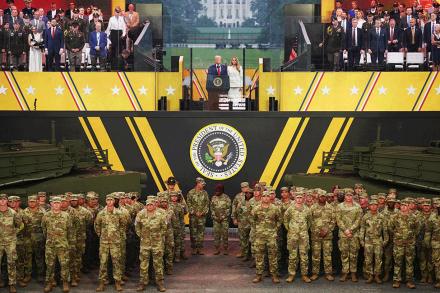
One of the objections to the military parade in Washington, DC last Saturday – supposedly to mark the 250th birthday of the US Army – is that it was a breach of democratic norms. The real reason it took place, say Donald Trump’s critics, was because he wanted to celebrate his 79th birthday with a display of military might – which is ‘what dictators do’, according to a general who advised him against it. Trump’s opponents gleefully pointed out that the number of attendees – around 200,000 – was dwarfed by the millions who took part in simultaneous ‘No Kings’ protests in dozens of American cities, a reference to his habit of describing himself as a ‘King’.

Under Trump, there is no G7 – only a G1

President Trump moved through the G7 Summit in Alberta like a blowsy uncle swinging by the house for a drink on Thanksgiving on his way to Vegas. He didn’t accomplish much, but, as always, he was the perpetual pot-stirrer in his real-life As The World Turns. He began yesterday by criticizing the G7 for tossing Russia out of the group, “even though I wasn’t in politics then. I was very loud about it.” Fact check: true. This expulsion was a “mistake,” Trump said, adding, “Putin speaks to me, he doesn’t speak to anyone else.” What was Italian Prime Minister Giorgia Meloni rolling her eyes at in a moment soon to become a GIF? Probably that statement. Almost definitely that statement. But that was just the canapé, with the actual meal yet to come.

Trump

Has deporting illegals become illegal?

From our UK edition

The circus around Kilmar Armando Abrego Garcia – whose full name the New York Times likes to trot out as if citing an old-school English aristocrat – speaks volumes about the immigration battle roiling the US. Our friend Kilmar is what we fuddy-duddies insist on calling an illegal immigrant. The Salvadoran crossed clandestinely into the US in 2012. As for what he’s done since, that depends on whom you ask. According to his GoFundMe page, Kilmar is a ‘husband, union worker and father of a disabled five-year-old’. Left-wing media portray ‘the Maryland man’ – a tag akin to Axel Rudakubana’s ‘a Welshman’ – as an industrious metalworker devoted to his family.

How to ruin a city

From our UK edition

Why would you choose to make a city crappy? Plenty of cities don’t have much going for them. But when they do, it takes a certain amount of skill to actively wreck them. Take London, for instance. Anyone in charge of our capital needed only to maintain it, if not improve it. Yet in almost a decade as mayor, Sadiq Khan has overseen a decline which is obvious to any resident or visitor. That first sign of rot – the tolerance of minor crime – is everywhere. It might be graffiti on the Tube. Or it might be the fact that it is risky to hold a mobile phone in the street or park a bicycle. Khan’s police aren’t interested in minor crimes such as phone and bicycle theft. And they’re not much interested in major crimes either, such as stabbings.

Who started the Cold War?

From our UK edition

Over a few short months after the defeat of Nazism in May 1945, the ‘valiant Russians’ who had fought alongside Britain and America had ‘transformed from gallant allies into barbarians at the gates of western civilisation’. So begins Vladislav Zubok’s thorough and timely study of the history of the Cold War – or, as he nearly entitled the book, the first Cold War. For the themes that underpinned and drove that decades-long global conflict – fear, honour and interest, in Thucydides’s formulation – are now very contemporary questions. ‘The world has become perilous again,’ writes Zubok, a Soviet-born historian who has spent three decades in the West: Diplomacy ceases to work; treaties are broken. International institutions, courts and norms cannot prevent conflicts.

Is the Pope a Marxist?

From our UK edition

Charleston, South Carolina H.L. Mencken, long a hero of mine, wrote: ‘Democracy is the theory that the common people know what they want and deserve to get it good and hard.’ That surely explains the apparent surge of Americans who have been enquiring into the possibility of emigrating to Britain. I wish them well. I have no wish to leave America myself, but fully understand the motivation causing this surge. It is, of course, because the common people wanted and are receiving Donald Trump good and hard. Years from now, probably when I am gone, a fortunate historian will describe the Trump era in the detail and with the skill with which Robert Caro is describing the career of Lyndon Baines Johnson.

Kemi shouldn’t play the Trump card

From our UK edition

I doubt I’m alone among Spectator readers in feeling a certain slight but nagging discomfort when I hear those on the left in British politics tearing into the present President of the United States. Why so? one asks oneself. Have I a shred of sympathy with this monster? No. Can I do other than deplore the attitudes and personal behaviour of this moral toad? Of course not. Do I for a minute agree with the way he’s handling the presidency – that machine-gun fire of executive orders and constitutional improprieties?’ By no means. Could I by any stretch of the imagination endorse the preposterous policy goals Donald Trump is wont to shout at us in capital letters? Don’t be ridiculous. And yet.

My high-speed bus chase

From our UK edition

My youngest daughter and her husband moved to New York last October. Three days after they arrived, she tripped on a step and broke her ankle. ‘So annoying, I was wearing such a good outfit, Mumma.’ They didn’t know anyone. In a boot and on crutches she tackled umpteen flights of stairs in search of permanent accommodation, avoided crazy people in the street and faced up to taciturn bank and phone-shop employees. The unfriendliness of the city upset her more than the pain and inconvenience of the break. I couldn’t afford to visit then – so when a friend, American Cathy, who’s got a second home near me in Provence, offered to buy flights and organise a trip for me and my daughter to visit her in D.C. last month, I accepted.

Conservatives all over the Anglosphere are paying the price for Trump

From our UK edition

It is the great good fortune of Britain, Canada, Australia and New Zealand to be united by a common language, and a misfortune of even greater magnitude that they share that language with the United States. America is a very different country to the four Commonwealth realms sometimes brigaded together under the ugly acronym ‘Canzuk’. It has a different constitution, a different culture and a very different history. Where for many years the four were partners (if hardly equal partners) in the common project of the Empire, the United States was, from its foundation, a determined and eventually successful enemy of the same.

Freedom is still the Revolutionary War’s legacy

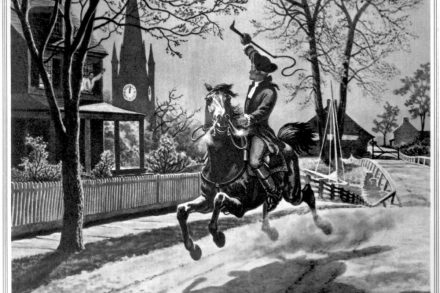
When the first shot rang out at dawn on Lexington Green, a decade of frustration and growing alienation between the American colonies and the British government boiled over into armed conflict. By the time the British staggered back into Boston on the evening of April 19, 1775, having fought a running battle for twenty-five miles from Concord’s North Bridge and losing at least 73 killed, the American Revolution had begun. Like many turning points in history, the encounter at Lexington Green was not planned. British troops acting on the orders of General Thomas Gage were on their way to capture arms and munitions stored by the Massachusetts militia when they ran into Lexington’s “Minutemen” drawn up on the Green.

Activist-academics push to Make America Teetotal Again

What constitutes a safe level of drinking? For some activist-academics there is none – and they are loudly lobbying for alcohol to be treated like tobacco in official US health advice. The Dietary Guidelines for Americans are under review and will be updated this year. Currently they recommend moderation: two drinks or less in a day for men and one drink or less in a day for women. Pressure, however, is being applied for a new recommendation: no safe level.But that would fly in the face of decades of evidence that has shown those who drink in moderation live longer than those who do not, mostly because alcohol consumption lowers the risk of heart disease, stroke and diabetes. The current guidance from 2020 is roughly where the sweet spot is from a health perspective.

pregnancy

No one wants American cars

From our UK edition

The weekend’s Scunthorpe drama was a distraction from endless chatter about Donald Trump and his tariffs. Perhaps Downing Street’s spinners stage-managed it with that in mind. Or perhaps the heroic tale of shop stewards confronting villainous Chinese managers while rescue teams scoured the horizon for emergency shipments of iron ore and coking coal was a different kind of smokescreen – to hide the fact that British steelmaking has been doomed for decades and what just happened is a job-saving nationalisation that will be a massive drain on public funds for as long as it takes to admit that the last British blast furnaces belong to history. I’m sorry to take such a downbeat view.

Can Trump keep me on side?

From our UK edition

I’m in danger of falling out of love with Donald Trump. I was ecstatic when he beat Kamala Harris, delighted with his flurry of executive orders, particularly the one entitled ‘Keeping Men Out of Women’s Sports’, and thrilled by his appointment of Elon Musk as head of the Department of Government Efficiency. But his flip-flopping over tariffs and the resulting market turmoil has led to a smidgen of buyer’s remorse. At the end of last week, my pension pot was worth 10 per cent less than it had been a couple of weeks earlier. But then he does something that reminds me of what it is that I like about him. I’m talking about the executive order he signed last week to ‘make America’s showers great again’.

Portrait of the week: Trump’s tariffs, a theme park for Bedford and a big bill for Big Macs

From our UK edition

Home In response to President Donald Trump’s global tariffs, Sir Keir Starmer, the Prime Minister, said: ‘This is not just a short-term tactical exercise. It is the beginning of a new era.’ He wrote in the Sunday Telegraph: ‘We stand ready to use industrial policy to help shelter British business from the storm.’ The FTSE100 fell by 4.9 per cent in a day, its biggest such fall since 27 March 2020. The government published a 417-page list of US products upon which Britain could impose retaliatory tariffs after 1 May. Figures from the Office for National Statistics showed that, although in 2023 the UK imported £57.9 billion of goods from the US (10 per cent of all goods imports) and exported £60.4 billion’s worth (15.3 per cent of all goods exports), it exported £126.

Trump shock: is there method behind the madness?

From our UK edition

A ‘black swan event’, as defined by the risk analyst Nassim Nicholas Taleb in 2007, is a surprise occurrence that has a major impact on the global financial system and is rationalised after the fact as something that ought to have been expected all along. The 9/11 terror attacks are one example, the Covid pandemic another – shocks that rocked the world and made us wonder if freedom works. Since Wednesday last week, however, the gods of the marketplace have been wrestling with a new and more mind-boggling creature: the ‘orange swan’, a cataclysmic Donald Trump-induced happening that is at once entirely predictable and baffling, an event that is rationalised post hoc as a shock when in fact everybody saw it coming a long way off.