America

Britain needs a Rearmament Isa

From our UK edition

The City’s self-styled ‘cheerleader in chief’, Lord Mayor Alastair King, on a recent visit to Beijing and Shanghai found leading Chinese banks keen to expand in London. What with Chinese diplomats also keen to establish a fortress-embassy at Royal Mint Court on the City’s eastern edge, that may ring alarm bells with those who regard Xi Jinping’s neo-Maoist regime as anything but friendly. But as King also observes, ‘the tectonic plates are shifting’. All geopolitical relationships are up for review – though what follows is my own analysis, not the Lord Mayor’s.

Letters: Where to find Britain’s best dripping

From our UK edition

Open arms Sir: The latest magazine (29 March) has two references to American military capabilities, from Rod Liddle and Francis Pike. Mr Liddle suggests that the prevalent attitude over there is that we ‘Yerpeans’ should have contributed more to the recent strike on Yemen (‘America first, Europe last’). He may not have known it was RAF tankers which enabled the US fast jets to attack. (This also escaped the Signal group chat.) Mr Pike suggests that the US navy’s carriers are suddenly vulnerable to modern weapons (‘Carriers of bad news’). As an excellent historian, he will concede that commentators have been writing off naval carriers’ effectiveness for decades. He is right to say that the Americans will have to evolve new technologies to defend their ships.

The paradox of West Virginia

From our UK edition

West Virginia. There is a paradox. A state of natural beauty, glorified by mountains and watered by rivers – including the Shenandoah (surely the most beautiful word in American) – carved out of reluctant nature by hard human labour, then divided by slavery and war, but ending on the Union side – it ought to be an honoured political jurisdiction. But the West Virginians broke away from the rest of Virginia. In its early days, it was governed by cultivated gentlemen, who filled their cellars with fine wine and their libraries with fine books. Yet the way of life which managed this transplant of European civilisation was sustained by slave labour in the cotton fields. It is as if the West Virginians have never been forgiven for abandoning the lost cause Another paradox.

JFK conspiracy theories won’t die

From our UK edition

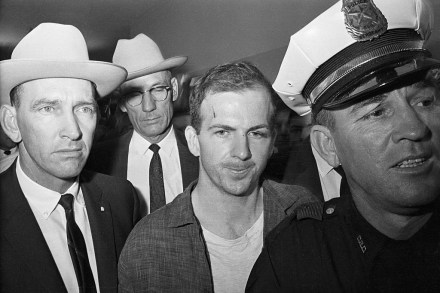
One of the most controversial things that can happen at any American table is to start talking about the JFK assassination and then say: ‘I think Lee Harvey Oswald acted alone.’ Thanks to decades of theories, counter-theories and Hollywood movies, a majority of the American public have for many years believed that there was a conspiracy to kill the 35th president. In their view, even if Lee Harvey Oswald was the gunman (which some dispute) then he must have been acting as part of a larger plot involving the CIA, FBI, LBJ, KGB, KKK or KFC. OK, I threw in the last one to check you were still with me.

How Dr Seuss took on American isolationism

From our UK edition

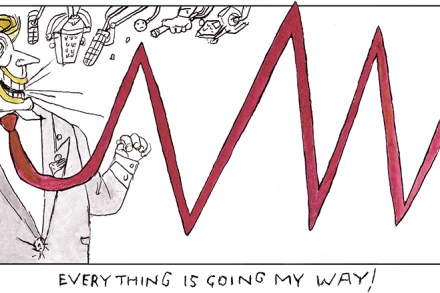
A cartoon is doing the rounds online, critiquing American isolationism and the reluctance to engage with the war in Europe. It lampoons the head-in-the-sand myopia of the America First movement – and feels highly relevant today. But this cartoon isn’t new; it is from 1941. And its targets aren’t Donald Trump and J.D. Vance, but Charles Lindbergh and Joseph Kennedy. The cartoon, while acerbic, has a cosy, familiar quality reminiscent of children’s books – for good reason. It was drawn by Dr Seuss.   He was particularly critical of Lindbergh – an aviator hero, appeaser and possible Nazi sympathiser Long before the Cat donned his Hat and the Grinch stole Christmas, Dr Seuss – real name Theodor Seuss Geisel – was a political cartoonist.

Has the Assisted Dying Bill been killed off?

From our UK edition

The reported decision to postpone the implementation of the Assisted Dying Bill until 2029 might, one must pray, turn out to be a form of legislative euthanasia. MPs, looking at the process, began to resemble a patient who, having first of all declared his wish to end it all, then begins to worry that it will not be as simple or painless as he had been led to expect. It is one thing to express a fervent wish to release people from unbearable suffering and quite another to frame safe procedures which involve the state, the judiciary and the medical profession in helping people kill themselves. It was a bad mistake, too, for Labour, under Keir Starmer’s leadership, to indicate that although MPs would have a free vote, assisted suicide was a modern, cool, Labour idea.

What Five Eyes does – and doesn’t – see

From our UK edition

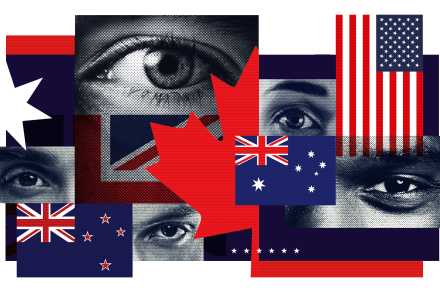
In the famous ‘Rainbow Portrait’ of Elizabeth I her gown is embroidered with eyes and ears, a reference to her efficient surveillance of the threats to the emerging nation state that was Tudor England. ‘Five Eyes’ is the modern equivalent of the concept but applied to the general security of the Anglosphere: the UK, the US, Canada, Australia and New Zealand. For an alliance that was originally one of listeners more than watchers, it might have been more correctly called ‘Five Ears’, but that name would hardly have conveyed its permanent vigilance.

Who lives in the countryside?

From our UK edition

The recession relationship There are fears that the US and UK may both be heading for a recession. Has the US ever suffered a recession which did not spread to Britain? Since the Great Depression of the early 1930s there have been 16 identifiable periods in which the US met the usual definition of a recession (two consecutive quarters of negative growth), the most recent being in 2022. Britain has seen only ten such periods – even though its economy has grown by less overall. Periods when the US saw a recession but Britain did not include 1937-38, when the US economy shrank by 18 per cent over a year, 1945, 1949, 1953, 1958, 1969-70, 2001 and 2022. The UK suffered recessions not shared by the US in 1956 and 2023.

The MAGA movement is wrong on Ukraine

From our UK edition

How can the right be so wrong? Or at least portions of the right – especially the American right – when it comes to Ukraine? To begin to grapple with this you have to go way, way back to Donald J. Trump’s first term in office. In that time Ukraine came to the public’s consciousness just twice. The first occasion was when Trump and other Republicans began to make hay over the business dealings of Hunter Biden. Since 2014 the then vice-president’s son had been sitting on the board of Ukrainian energy company Burisma. He was earning around $1 million annually to advise a company in a sector about which he had zero expertise. Why might a foreign company want the son of the vice-president on their board?

Letters: American support to Europe has come at a cost

From our UK edition

Rules Britannia Sir: Your rules for national survival in the realist world which we are now entering (‘Get real’, 22 February) make sense. However, they do not go far enough. Rule 1 (enhancing our military lethality) rightly identifies the need for better trained and equipped personnel, but it does not include the need to regain military mass in numbers of troops and battle-winning equipment. A fifth rule, covering the need to make durable alliances with friendly countries – essential for survival in a volatile multipolar world – could also usefully be added.

It’s time to scrap the asylum system

From our UK edition

Whatever you think of the blizzard of executive orders howling from the White House, at least the new President doesn’t succumb to the seductive gravitational pull of the status quo. This is therefore a fitting juncture at which to not simply think outside the box, but in some cases to chuck the box. For example, Donald Trump wants to chuck the US Department of Education. Yet can’t he set his sights higher? Like, set an example for the rest of the West: chuck the asylum system. Having long ago predicted that the subject would dominate this century, I’ve written about immigration for 35 years. Although repeatedly approaching the radioactive issue with a certain frankness has incurred considerable reputational damage, I’ve no regrets.

Brace for an outbreak of Trumpist investor activism

From our UK edition

If the new Trump era has a theme, it’s one of quixotic disruption with random consequences. In that spirit, stand by for more interventions from activist shareholders seeking to electrify sluggish businesses while making fast bucks on the way through. The first episode over here was the attack by the New York investor Boaz Weinstein on seven London-listed investment trusts, in which he acquired stakes and forced shareholder votes to replace board members, with the aim of taking the trusts’ assets under the management of his own firm, Saba Capital. ‘Go home! You’re selfish and wasteful,’ shouted one headline after Weinstein was emphatically defeated in all seven polls.

The Great American State Fair could be the best Trump spectacle yet

We mustn’t let the policy whiplash of the new administration’s first few months distract from what could be the best Trump spectacle yet: the Great American State Fair which will descend on the Iowa State Fairgrounds on Memorial Day 2025 and conclude on July 4, 2026, when the United States of America turns 250 years old. In the very early days of his second stint as president, I listened to Trump lay out his vision for America and was struck with a thought so brilliant, it turns out Trump had already had the same idea himself. “The golden age of America begins right now,” Trump said in his inaugural address. “During every single day of the Trump administration, I will very simply put America first...

fair

Let Trump buy the Chagos Islands

From our UK edition

Forgive me for returning in this column to Diego Garcia. The issue is too important to shrug aside: important not only in itself, in defence terms and in the immediate, but in the longer-term lesson this has for Britain in our relationship with the United States; and there is a new rumour to report, and more to say. America is having a laugh. Washington – not China, not the International Court of Justice, not Mauritius and not particularly Donald Trump – is the problem here, and the author of Britain’s present difficulty. America is hiding behind our skirts and leaving Britain to face the flak. But it is they, not we, who need the territory and it is they who should pay for it.

Why don’t Yale students want to drink?

From our UK edition

They say it is good to learn new skills as you get older. Well here goes. I am about to arrive in New Haven, Connecticut, to teach as a senior fellow at Yale University. Last time I taught anything to a class it was at Sunday school more than half a century ago. Arriving late at night I see little of the town but then next morning when I draw up the blinds – wow, it’s just like Oxford! In a sense it was meant to be, as Yale’s buildings were to some extent modelled on Oxford and Cambridge. One thing is very different though: there is only one student bar in the university. In my day at Oxford every college had its own bar. Is this a sign of the sobriety of the USA or the sobriety of the young today?

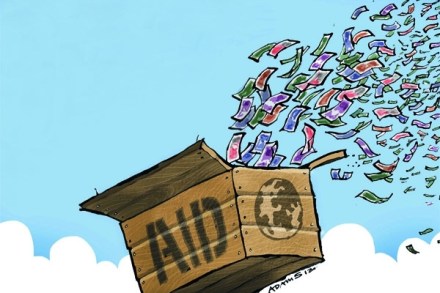
America has seen sense on aid. When will we?

From our UK edition

The new administration in Washington has somewhat startled its critics by issuing a blizzard of executive orders during its opening weeks in office. So far the reaction from the American left might be summed up by the sentiment: ‘That’s not fair – it’s only us that are allowed to do things when we are in power.’ The American left are in a particular funk about the Department of Government Efficiency (Doge) – as though railing against the proposed reduction of federal spending and reduction of the American deficit is a natural vote-winner. But good news does just keep on coming. On Monday, Elon Musk said that President Donald Trump had agreed to shutter USAID – the US government money spigot that sprays money around the world, much of it to people who hate America.

MAGA Kids: How America’s youth went right

From our UK edition

Washington, D.C. ‘What made you open a restaurant?’ I ask Bart Hutchins, the owner of Butterworth’s, a French-style bistro turned Republican hangout, frequented by the youthful wings of the Grand Old Party. It’s home to figures from the intellectual right such as Curtis Yarvin and darlings of New Right media including Natalie Winters, the increasingly slim White House correspondent for Steve Bannon’s War Room podcast. ‘Have you read Death in the Afternoon?’ Bart says. ‘No,’ I say. ‘It’s by Hemingway.’ ‘I know.

Britain could learn from Trump’s approach to foreign policy

From our UK edition

The Foreign Secretary describes his approach to diplomacy as ‘progressive realism’. One can legitimately ask what is progressive about a closer accommodation with the slave-labour-deploying Leninists of Beijing or what is realistic about ceding the UK’s sovereignty over the Chagos Islands to China’s ally Mauritius. But David Lammy seems happy in his work. His choice of words serves to give an updated gloss to what most observers would readily recognise as the Foreign Office’s traditional approach – appeasement of our enemies and embarrassment at anything which appears to be a reminder of our colonial past. Whatever the aptest description of this government’s foreign policy, it is fair to say Donald Trump is piloting a different approach to international affairs.

What economists don’t get about Trump’s tariffs

From our UK edition

We already knew that most economists are quite bad at economic policy. Unfortunately, foreign policy appears not to be much of a strength either. Indeed, it appears most financial experts may not even know the difference, based on their criticism of Donald Trump’s recent tariff threats against Mexico, Canada and China. Of course, a nation can introduce tariffs to generate revenue, promote domestic production, shift international supply chains and ‘decouple’ itself from an undesirable trading partner. But a nation can also use tariffs as powerful leverage to make other states change their behaviour. That is a negotiating tariff, not an economic one, and it is designed not to minimise potential domestic pain but to maximise potential cost for the counterparty.

How to solve a problem like the Chagos Islands

From our UK edition

Very soon – as soon as the mutual courtesies now being exchanged between the new American President and his British counterpart are over – our government is likely to be at loggerheads with Donald Trump over our plan to cede the British Indian Ocean Territory (BIOT), the Chagos archipelago, to Mauritius, then take out a long and expensive lease on the island of Diego Garcia so we can secure the operational status of our base there. This accommodates an American base of great importance to US defence. The agreement with the new Mauritian government has yet to be signed.