Alcohol

They call me the ‘problem teetotaller’

From our UK edition

My guts went on strike last July. I was staying in a hotel and I spent several days sprawled on the bed, vomiting occasionally, eating and drinking nothing and barely able even to wet my lips with water. Meanwhile, a bottle of Prosecco offered by the management stood untouched next to the widescreen TV. I started to wonder if this was my Frank Skinner moment. My farewell to booze. In his memoirs, Skinner describes how he gave up drinking by accident in his twenties when a virus confined him to his bed for a week and destroyed his interest in alcohol. Restored to health, he went back to the pub to meet his friends but he shunned drink because he’d realised it was superfluous. As rehab stories go, Skinner’s is bizarre because it’s so quiet and unassuming.

Another tragic case involving medical incompetence and cover-up

From our UK edition

It was only eight lines into O Brother that I realised I was in the hands of a good writer. John Niven’s landline phone has rung. His partner hands it to him. ‘I take the phone from her as she watches me in the intense, quizzical way we monitor people who are about to receive Very Bad News.’ I can’t recall a writer noticing that before (I presume a few have), but we have noticed it ourselves. And the narrative masterstroke is that now the reader is looking at the page in an intense, quizzical way, for we want to know what the Very Bad News is. The VBN is that Niven’s younger brother Gary is in a coma, following a suicide attempt.

In defence of drunken freshers’ weeks

From our UK edition

I don’t remember much of freshers’ week at Edinburgh. Friends have helped to fill in the blanks. I vaguely recall a police officer handing out vodka shots to show how easy it was to fail a breathalyser test. A famous DJ had his set in the union cut short because he played the song ‘Blurred Lines’. It had been banned by student politicians. I have hazy memories, too, of my first interactions with posh English women. One assumed I must be gifted since I’d made it into university from a Scottish state school. Another asked if I was limping because I’d overdone it at the ‘introduction to reeling event’ (I have cerebral palsy). Posh English men were no better. At a party exclusively made up of Old Harrovians, I was laughed at when I got out my Android phone.

A trip down Ronnie Lane: from child busker to international star

From our UK edition

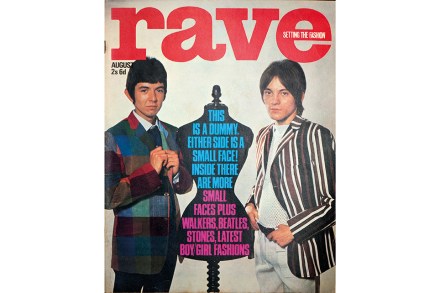
Thirty years ago, I worked for a while in a shop in Soho selling vintage newspapers and magazines. The holy grail for some customers might be the 1955 Playboy featuring Bettie Page or the 1976 Daily Mirror with the Sex Pistols’ ‘Filth & the Fury’ headline. But those of a born-again Mod persuasion were usually looking for 1960s publications with the Small Faces on the cover – preferably the August 1966 copy of the teenage music and fashion bible Rave, showing Ronnie Lane and Steve Marriott from that most style-conscious of bands, complete with a double-page poster of the group inside.

New takes on the Negroni

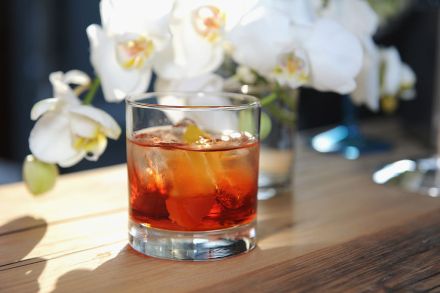
Cocktails, for all their pleasures, rarely become memes. And yet, a variant of the Negroni did that last year, during the press tour for the Game of Thrones spin-off, House of the Dragon. When Olivia Cooke asked her co-star, Emma D’Arcy, what their favorite summer drink is, they replied: “Negroni sbagliato,” before flirtatiously adding, “with Prosecco in it.” Cooke’s response — “Ooh, stunning!” — turned the charming interaction into a viral moment. Bars were subsequently inundated with orders for them. For those unfamiliar, the Negroni is a classic Italian summer cocktail consisting of equal parts of gin (I recommend Bombay Sapphire), Campari and sweet vermouth (preferably Martini & Rossi). A dash of orange aromatic bitters is also a nice touch.

negroni

A farewell to alcohol

From our UK edition

Laikipia Some are saved by Jesus and they are sober. For others, drunkenness is as natural as love-making, roasted meat and weekend football. In northern Kenya we brew a honey mead called muratina; then there’s a millet beer and strongest of all is a moonshine, changa’a, which you can smell from several huts away and it tastes like battery acid. Our neighbour Gilfrid produced an alcohol so pernicious the hangover hit as soon as it crossed one’s tongue Booze soaks into the corners of life in the village or the slum. I’ve been in places, on paydays for example, where the scenes resemble Pieter Bruegel the Elder’s tableaux of peasants committing all the seven deadly sins. A changa’a drinker isn’t just drunk, he’s catatonic with the onset of blindness.

In defence of the boozy office party

From our UK edition

I’m not big on nostalgia – if the past was so great, how come it’s history? - but I allowed myself a smirk of reminiscence on reading recently that Ann Francke, chief executive of the Chartered Management Institute (‘a professional body focusing on management and leadership’) has put the damper on the age-old tradition of getting blotto at work parties. Francke told the BBC that while hanging out after-hours with workmates is ‘a great team-building opportunity’, managers have a responsibility to keep inappropriate behaviour in check. ‘That might mean adding additional activities alongside alcohol, limiting the amount of drinks available per person or ensuring that people who are drinking too much are prevented from acting inappropriately towards others,’ she said.

Our nanny state holds back Britain’s young

From our UK edition

Clever people often believe that their cleverness gives them the right to control other people. Nowhere is this more manifest than in nanny state Britain.  So fixated was Public Health England on shielding us from our own bad decisions that when an infectious disease arrived on our shores the quango was woefully unprepared. Junk food advertising bans were prioritised over protecting us against an epidemic.  And so determined are politicians to insulate us from hardship that they attempt to regulate anything that moves. Arguably the most troubling recent development concerns the tacit raising of the age of majority. Since 1969 it has been accepted that we are treated as adults by law from 18. The age had broadly trended down over the years.

A drinker’s guide to flasks

During a recent chat with my twin brother, I told him about a wholesome community event I was preparing to attend. Being the evil twin, he joked, “You should bring a flask.” This idea got us talking about just how, when, and where one is supposed to use a flask. Is one supposed to use a flask? My experience has often been that flasks are shady things, carried by alcoholics or sipped from covertly at events that would be intolerable without a numbing agent. Yet I wonder sometimes if any public behavior these days is really off-limits. America’s major cities all reek of weed, a cohort of busy moms recommends micro-dosing psychedelics, it’s socially acceptable to self-identify as a cloud, and people actually vape in public.

Can booze break the gridlock in Congress?

Need a hit on Capitol Hill? Take your pick. Members and staffers alike are addicted to Twitter, where they log on for their daily stims of outrage. Cable news has also become a kind of drug, as congressmen stampede to the Fox News and CNN green rooms rather than go about the irritating business of legislating. But if we're looking for a way out of the present congressional gridlock, I think we need to turn to an older and wiser substance. "Alcoholism is as much of an occupational disease among politicians as black lung is among coal miners," Herman Talmadge once wrote. Talmadge, who served as a Georgia senator from 1957 to 1981, would know: he once took a month off from his senatorial responsibilities to get treated for alcoholism.

Does Taylor Swift have a drinking problem?

Being an eclectic chap, Cockburn has sampled his fair share of music. And he’s not ashamed to admit, contrary to Al Michaels’s suggestion that Taylor Swift only appeals to teenage girls, that he considers himself a “Swiftie” — not least of all because Swift makes repeated reference to one of his favorite activities: drinking alcohol. Swift just released her new album, Midnights, along with an official music video to accompany her catchy and oh-so-clever song, Anti-Hero. The video tells you all you need to know about Swift’s preferred method for dealing with her problems. Though she never mentions booze by name, she appears in the video taking shots and desperately shaking the last drop from a bottle of wine directly into her mouth.

taylor swift

Smoking is more hassle than it’s worth

From our UK edition

I gave up smoking one year ago this week, as part of a series of pitiful capitulations to the forces of coercive conformity. As far as I see it, the path to the grave is lined with compromise after compromise until, at the moment of the final rattle, one has become a travesty, physically and spiritually, of the person one used to be. Not that I would want to overdramatise the whole thing, mind. I more usually tend to present my dis-avowal of smoking as a kind of glorious epiphany. One moment I smoked, the next I didn’t. And in a sense that is true: no doctors were involved, there were no health scares, nor was I nagged to give up by those close to me. I went to bed one evening – at 23.

In praise of liquor stores

Pennsylvania’s liquor laws are... vintage. But not in a single-malt Scotch kind of way that means they improve with age. The state legislature did move the needle to the right side of draconian in 2016, but the Philadelphia Inquirer’s 1983 assessment of “Pennsylvania’s backwardness” being “a hangover from the administration of Republican governor Gifford Pinchot, who was elected on a ‘dry’ platform in 1930,” remains accurate. The Inquirer reported that after Prohibition was abolished in 1933, Pinchot led a special session to establish the Pennsylvania Liquor Control Board and “state stores” to make the purchase of alcoholic beverages “as inconvenient and expensive as possible.

liquor

Japan’s cult of safetyism

From our UK edition

The Japanese government has launched an initiative to encourage young people to drink more alcohol. Yes, really. The national tax agency’s ‘Sake Viva’ campaign is an appeal for ideas to get youngsters boozing after taxes on alcohol products, which accounted for 5 per cent of total revenue back in the hard-drinking 1980s, fell to just 1.7 per cent in 2020. So, at a time of economic hardship, Japan’s youth are being asked to do their patriotic duty and get hammered. The falloff in social drinking is being attributed in part to the pandemic. Japan didn’t have a full-blown lockdown imposed from above, but the more subtle bottom-up lockdown that demonised anyone frequenting bars and restaurants worked pretty well.

Is losing God making America miserable?

The number of Americans who believe in God has reached an all-time low, according to a Gallup survey that’s been tracking our nation’s “values and beliefs” since 1944. For a God fearin’ woman such as myself, it’s a disheartening statistic. But we are told never to abandon hope, and recent events — the Supreme Court rulings against abortion and in favor of prayer, a million swing voters switching their registrations to Republican, Keeping Up with the Kardashians finally airing its last season — betoken a more God-centered future. Gallup reports: The vast majority of US adults believe in God, but the 81 percent who do so is down six percentage points from 2017 and is the lowest in Gallup’s trend.

god

Why we drink

From our UK edition

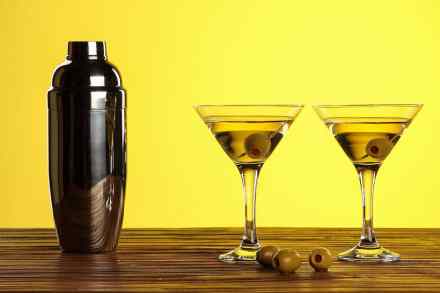
‘I like to have a martini,/ Two at the very most./ After three I’m under the table,/ After four I’m under my host.’ I never fully appreciated the brilliance of that spurious quote of Dorothy Parker until I visited Dukes Bar in Mayfair. It used to be the case – it probably still is – that you may order no more than two martinis there owing to their potency. Had she not preferred whisky to gin, Parker might well have banged her fists on that table for a third. After one-and-a-half before dinner, however, this critic would be more inclined to dance on it. Humans may respond to drink in different ways, but we are, in fact, better at processing it than most other primates. In ‘Why do we use intoxicants?

Liz Truss: ‘It’s raining men’

From our UK edition

It’s the final day of Tory party conference today, with all eyes on Boris Johnson’s speech at midday. But will all the cabinet be there to watch it, bright-eyed and bushy tailed? Judging from last night’s antics, Mr S suspects that the answer may be: no. Truss, wearing a striking green number, stood out a mile in a sea of identikit Tory boy blue suits Work and Pensions Secretary Therese Coffey was seen belting out ‘The Time of My Life’ at the legendary inHouse comms karaoke party while many of her fellow ministers attended The Spectator’s own champagne-fuelled shindig.

The blind spot in the SNP’s ‘war on drink’

From our UK edition

Scotland’s grim reputation for abnormally high drug fatalities has become embedded in the public consciousness over the past year. The fact that fake benzodiazepines (‘street valium’) can be procured for 50p a pill on the streets of Dundee and Glasgow is now common knowledge, as is Scotland’s unenviable place at the top of Europe’s drug deaths league table. However, belated attention to this crisis should not allow signs of another to slip below the radar. New figures from National Records of Scotland (NRS) show a 17 per cent surge in alcohol-specific deaths between 2019 and 2020, a rise from 1,020 to 1,190 in the space of 12 months, what NRS terms ‘a marked increase’.

The need for mead

I used to be terrified of homemade alcoholic drinks. Someone would bring out the elderflower champagne at a picnic, and I’d wave it away: ‘I’d love to. But I’m driving...’ Bottles of homemade cabernet would be pressed on me with irrepressible warmth at Christmas time; I’d accept them with a lying smile on my lips and an inward resolution to boil the contents for seven hours with sugar, oranges and cinnamon sticks and fob it off on guests as mulled wine. And for my narrow-minded ways I now repent. As I must, because with maturity comes the realization that, as Solzhenitsyn said, there is no us and them. The line dividing good from evil, the poised socialite from the homemade-liquor inflictor, cuts through the heart of every man.

mead

A taste inquisition on Stink Street

From our UK edition

Walking up through the Stink Street medieval arch with a bag of shopping, I spotted Michael between the oleander branches seated in front of his ancient cottage having a drink. Stink Street is so called because it is just without the old town walls and in medieval times pigs were kept there. At this time of year it’s not easy to walk up Stink Street after midday without one or other of the cottagers inviting you to join them for a glass. And it was just after six and I deserved one. Stink Street runs uphill steeply and has only recently been dressed with its first layer of tarmac. Michael’s little front terrace nestles close by to the road.