Afghanistan

Iron in the soul

From our UK edition

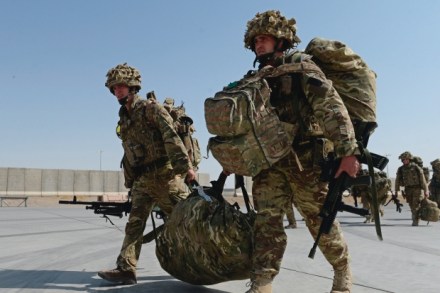
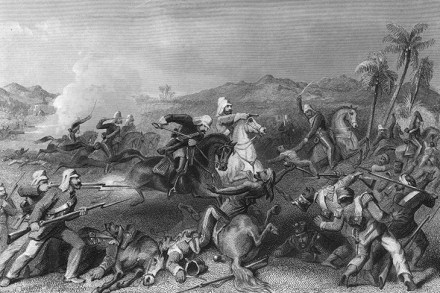
‘I hate Indians. They are a beastly people with a beastly religion’, said Winston Churchill as prime minister in 1942, to his secretary of state for India, Leo Amery. Like John Nicholson, Churchill had soldiered on the subcontinent as a young man, and both men saw fighting on the North-West Frontier. Nicholson was a career officer in the East India Company army. ‘I dislike India and its inhabitants,’ he said as a young man, and never changed that opinion. Duty, obligation and a career kept both men in a country they loathed; the graves of more than two million Britons in India demonstrate that it was not simply a place to get rich in, but a place, too often, to die in at an early age.
Ten years on: My life after death

From our UK edition

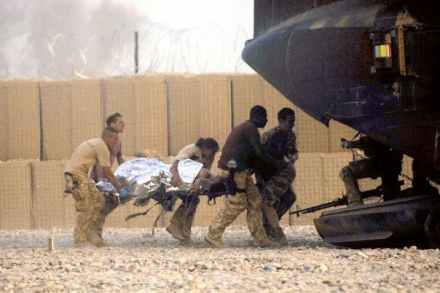
Ten years ago today, I was pronounced dead on the front line in Afghanistan. I had collapsed with acute heatstroke in temperatures of 52°C during a military foot patrol. I am a reporter not a soldier, but for four minutes, as a medic attempted to restart my stopped heart, I was a category A. That’s Army speak for ‘goner’. Six days later, as much to my own surprise as to that of the incredible soldiers who saved my life, I walked out of Selly Oak Hospital in Birmingham on my father’s arm and into the cool of an English late summer’s evening. It was starting to rain. Cars were beeping on a nearby dual carriageway. The smell of cut grass mingled with that of an overflowing bin on which a seagull was solemnly picking at a kebab. I thought it was wonderful.

The shame of Iraq

From our UK edition

‘If it falls apart, everything falls apart in the region’ — Note from Tony Blair to George W. Bush, 2 June 2003.   Instead of asking why we fought the war, we should ask why we lost The extraordinary length of time that we have had to wait for Sir John Chilcot’s report into the 2003 invasion of Iraq has not made the end result any more satisfying. For some, nothing less than the indictment of Tony Blair on war crime charges would have sufficed. As for Blair himself, and many of those who surrounded him when the decision was made to remove Saddam Hussein from power, they will go on believing until their dying day that not only was the war just, but there was nothing much wrong with the way in which it was sold to the public and to Parliament.

Diary – 1 February 2018

From our UK edition

It never occurred to me, when I was interviewed for Desert Island Discs back in November, that I’d actually be on one when it aired last week. The plan had been to laze in a hammock under a palm tree in Ko Yao Noi in the Andaman Sea, with waves lapping against the white coral beach, read books and recharge for the year. These days, however, it’s hard to be totally cut off. I’ve read about ‘digital detoxes’ but never understood how you deal with the avalanche of messages on your return. So I left my phone on and soon it was pinging with notifications from WhatsApp, Twitter et al. Most were lovely. There were messages from people I hadn’t heard from for years, who’d listened to the programme.

As time goes by | 25 January 2018

From our UK edition

If you were to ask me by the end of the week what I had written about in this column at the beginning I would probably look blank, fumble desperately through a foggy recollection of plays, news items, snatches of interviews and then reply, ‘I’ve no idea.’ This business of forgetting so soon what was once so clear in the mind is, says Francis O’Gorman in this week’s The Essay on Radio 3 (produced by Lisa Needham), very much part of our modern world. Too much information to take in, too little time to process it. The result, too much forgetting. It’s virtually impossible to remember what you once put down as ‘your favourite meal’ on an online shopping site.

Paradise lost | 2 November 2017

From our UK edition

Anybody who wants to maintain a strong and untroubled stance against mass migration to Europe should probably avoid BBC2’s Exodus: Our Journey Continues. In theory, the case for limiting the numbers may be more or less unanswerable — but this is a joltingly uncomfortable reminder of what it can mean in practice. Any viewers suspicious of the BBC’s pinko tendencies will presumably have noticed that all the refugees we’ve met so far are completely lovely. Yet, faced with Thursday’s episode, even they might have found it tricky to preserve a steely primacy of head over heart. Or not to notice that these are people very much like us — only a lot unluckier in where and when they were born.

Nancy Hatch Dupree, 1927-2017: the preserver of Afghan culture

From our UK edition

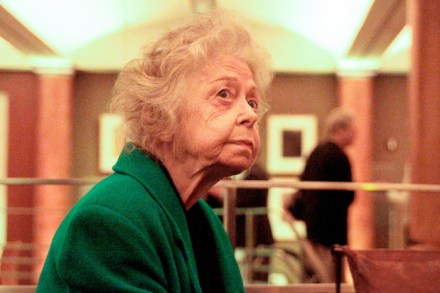
Nancy Hatch Dupree died in Kabul on Sunday, 10 September.  Nancy Hatch Dupree is sitting in the Gandamak Lodge, the Foreign Correspondents hang-out in Kabul. Most of the other diners, and almost all those propping up the bar, are shaven-headed, gym-going young men in their twenties and thirties: a scrum of adrenalin-surfing hacks and cameramen who grew up watching movies like Salvador and The Year of Living Dangerously and who now fill the bar room with their tales of derring-do in Helmand and close-shaves in Lashkar Gah. None of them, however, have half as good a seem of stories as this tiny, bird-like 86 year old woman, picking at her burger at the corner table.

The Spectator Podcast: Campus tyranny

From our UK edition

On this week's episode of The Spectator Podcast we look at the issue of 'safe spaces' on campuses and beyond. We also discuss Donald Trump's military strategy, and look at Indian independence, 70 years on. First up: In this week's Spectator cover piece, Brendan O'Neill slams British universities for what he sees as a burgeoning liberal conformism within their walls. Is he right to despair? Or is this just a grumpy older generation railing against change? He joins the podcast along with Justine Canady, Women's Officer for UCLSU, and Madeleine Kearns, who writes about her experiences at NYU in the magazine. As Brendan says: "In the three years since The Spectator named these Stepford Students, the situation has become far worse.

Damage limitation

From our UK edition

One of the most pitiful sights in conflict areas is the local prosthetics store, with its rows of artificial limbs, sized from adult down to tiny child. A poignant reminder that, whether fleeing a war or injured in one, the human body and mind are subjected to extreme damage. Imagine triggering an improvised explosive device (IED) that shreds your leg and sends shrapnel, soil and debris deep into your body. Would you be able to apply a tourniquet to your injured leg, to prevent bleeding out from severed arteries? Soldiers are trained to do this. Some wear tourniquets in position, ready to wind tight should the worst happen. Your village is shelled and every member of your family killed.

Marine A: the shambles that shamed us

From our UK edition

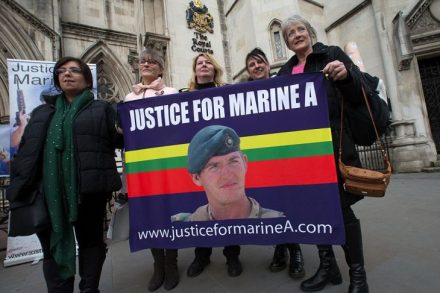
Like it or not, and many in high places will loathe it, what we may now call The Blackman Affair is not going to go away. It will be recalled as a shambles and a glaring miscarriage of justice. Also remembered will be the ferocious, self-serving and vindictive role of the establishment in permitting this injustice to occur. Posterity will say that a Royal Marine sergeant on an exhausting assignment in Northern Helmand, Afghanistan, in the late summer of 2011, shot and killed a Taliban terrorist who, though undoubtedly dying and wholly unsaveable, was not yet quite dead.

Soldiers of the Queen

From our UK edition

It’s not immediately obvious, but the silhouette on the dust jacket — soldiers advancing in single file, on foot (‘boots on the ground’) isn’t one squad, but five soldiers from different campaigns. From left to right, first comes the British infantryman of the second world war; next is a ‘jock’ from (I think) the Korean war; then a jungle fighter from the Malayan Emergency or the Borneo ‘Confrontation’; then, unmistakably, the long-suffering foot soldier of Operation Banner, the 38-year counter-insurgency (or police action, no one ever quite knew which) in Northern Ireland; and finally, the technology-festooned warrior of Iraq and Afghanistan.

There is more to life – and Government – than just Europe

From our UK edition

There was a commotion by the back gate. I grabbed my rifle and headed over. The week beforehand I was shooting in through the hinges at insurgents trying to over-run the base that was now my home for another hot summer in the Afghan desert. The gate was covered by a sentry. I shouted up to him. He told me there was a man at the back gate seeking medical help for something in his arms.  I opened the gate cautiously. The young Afghan man started shouting at me in Pashtun. I caught the odd word, but was comforted by the presence of my translator who had appeared behind me, having been summoned by the sentry.  The man dumped the bloody rags in his hands into my arms. I peeled them back to find a dead baby girl in my arms, her face almost entirely removed.

Lessons in the surreal

From our UK edition

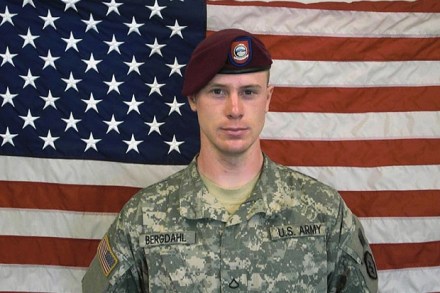
The new season of the Serial podcast (produced by the same team who make This American Life) was launched last month, releasing one episode a week as the investigative reporter Sarah Koenig looks this time into the strange story of Bowe Bergdahl. He’s the US army soldier who walked out on his platoon in 2009 while stationed on a remote outpost in Afghanistan, close to the Pakistani border. Unsurprisingly, he was captured by the Taliban and held captive for five years before being released, in a prisoner exchange with those held in Guantanamo Bay.

Iran has been at war with Britain for some time – it’s time that we took notice

From our UK edition

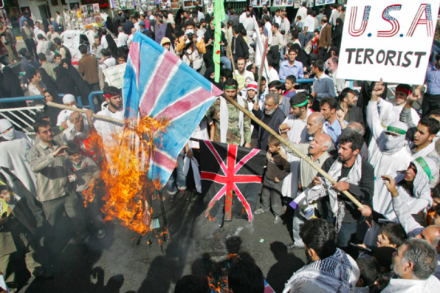
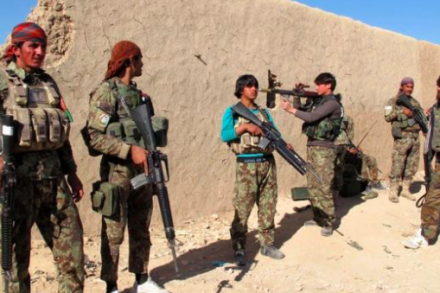
When British troops were on patrol in Iraq and Afghanistan, we faced many enemies, from jihadis to press-ganged civilians. But he most terrifying ones lay buried. Bullets usually miss. Improvised explosive devices – IEDs — don’t. They are frighteningly simple. Old munitions wired together or plastic bottles packed with fertiliser and ball-bearings could destroy a vehicle and kill its passengers. During the four years I served in Afghanistan, I saw IEDs evolve: first came remote triggers, then pressure plates and then low-metal-content devices. Curiously, IEDs evolved in a similar way in Iraq. This should be no surprise, since the groups trying to kill British troops shared one common resource: Iranian support. For years, Tehran has armed insurgents.

If the Taleban takes Helmand, then Afghanistan could go the way of Syria

From our UK edition

Even by Afghan standards, it is an unorthodox cry for help. The governor of Helmand province, Mohammad Jan Rasulyar, has posted on Facebook tagging in Ashram Ghani, the Afghan president, to tell him that some 90 members of the security forces have killed in the past month fighting insurgents and that the province - under British control for so long - may be about to fall to the Taleban. He apologised for using Facebook, but said he was unable to make direct contact with the President by other means. He had this to say:- “Your Excellency, Facebook is not the right forum for speaking with you, but as my voice hasn’t been heard by you I don’t know what else to do. Please save  Helmand from tragedy.

Afghanistan’s new agony

From our UK edition

Amid all the chaos in the Middle East, the breakdown of borders and states, a new threat is fast emerging. The key strategic bulwark to stabilise the region is a strong Afghanistan. But after 15 years of occupation by western troops and a trillion dollars spent, it now appears to be going the way of the Levant. A weak government in Kabul has proved unable to forge a political consensus. The Taleban is resurgent, while other similar groups control much of the Afghan country-side. And this — with the potential spread factor of Isis — means that Afghanistan is probably worse off today than when foreign forces intervened in 2001.

The caliphate strikes back

From our UK edition

[audioplayer src="http://rss.acast.com/viewfrom22/jeremyhunt-scatastrophicmistake/media.mp3" title="Douglas Murray discusses what Isis might do next" startat=1814] Listen [/audioplayer]When the creation of a new caliphate was announced last year, who but the small band of his followers took seriously its leader’s prediction of imminent regional and eventual global dominance? It straddled the northern parts of Syria and Iraq, two countries already torn apart by civil war and sectarian hatreds. So the self-declared caliph, Abu Bakr al-Baghdadi, appeared to be just another thug and opportunist ruling over a blighted no-man’s land, little known and still less revered in the wider Islamic world.

Iran’s hidden war with the West – and what we can do to fight back

From our UK edition

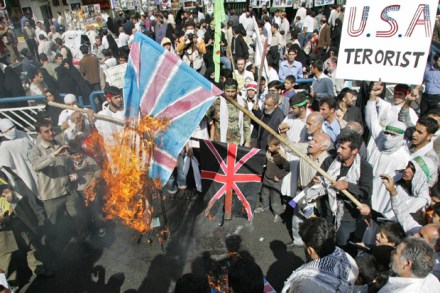
When British troops were on patrol in Iraq and Afghanistan, we faced many enemies, from jihadis to press-ganged civilians. But for me, the most terrifying ones lay buried. Bullets usually miss. Improvised explosive devices – IEDs — don’t. They are frighteningly simple. Old munitions wired together or plastic bottles packed with fertiliser and ball-bearings could destroy a vehicle and kill its passengers. During my four years in Afghanistan I saw IEDs evolve: first came remote triggers, then pressure plates and then low-metal-content devices. Curiously, IEDs evolved in a similar way in Iraq. This should be no surprise, since the groups trying to kill British troops shared one common resource: Iranian support. For years, Tehran has armed insurgents.

The royal road to peace

From our UK edition

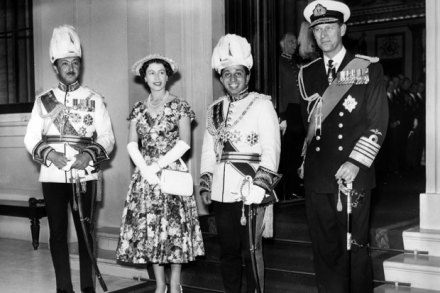
Watch the videos of 1950s Iraq on YouTube and you glimpse something close to an idyll. It’s true that Pathé News was not big on gritty realism, but history relates that here it was not using a heavily rose-tinted lens; Hugh Trevor-Roper even went so far as to describe Iraq at the time as a Levantine Switzerland. Or you can go to Google Images, tap in ‘1960s Afghan women’ and be offered photographs of a mixed university biology class, and others of young women with short skirts, long hair and smiling faces. This was life under the kings, and knowing what followed is enough to make a grown man weep. But let’s be hard-headed and forward-looking: the creation of new constitutional monarchies is a sensible solution to such clear and present dangers as Isis.

When the boys come home

From our UK edition

Matthew Green, former Financial Times and Reuters correspondent, remains unimpressed by officialdom’s response to casualties who aren’t actually bleeding: Ever since October 1914, when ‘Case One’ arrived in Myers’s care, the system for tending to the mental wellbeing of soldiers has grown up in a piecemeal and ad-hoc fashion, overshadowed by the Army’s stubborn ambivalence towards psychological injury (Dr Charles Myers was the Cambridge psychologist seconded to the Royal Army Medical Corps who first used the term ‘shell shock’.) Green acknowledges that ‘experience teaches that the psychological wounds of war have proved stubbornly difficult to treat’.