Advertising

Vital signs

From our UK edition

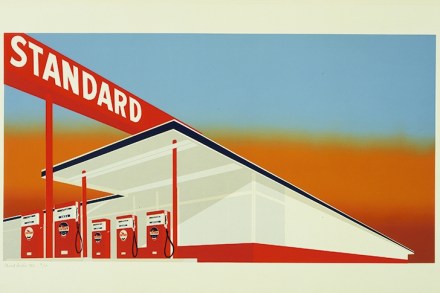
Exhibit A. It is 1958 and you are barrelling down a dual carriageway; the 70 mph limit is still eight years away. The road signs are nearly illegible. You miss your turning, over-correct, hit a tree and die. The following year, graphic designer Margaret Calvert is driving her Porsche 356c along the newly built M1. The motorway signs are hers. It is information design of a high order, possibly even life-saving. The clarity and intelligence of Calvert’s British road signs remain unmatched nearly 60 years later. And the font she created became the NHS, and later rail and airport, standard. Exhibit B. The French are worried about nuclear waste. Given the half-life of radio-active detritus, warning signs must be legible in 100,000 years when written language may be redundant.
Is the ASA brave enough to ban adverts for children?

From our UK edition

We all know that advertising is the work of the devil – creating entirely spurious wants, including in small children – but making it gender neutral doesn’t help. The Advertising Standards Authority is extending its brief to ensure that advertising does not confirm unhelpful sex stereotypes. That is to say, it is going to ban advertisements suggesting that little girls want to be ballerinas (Aptamil) or showing Lynda Bellingham at the stove (Bisto). Guy Parker of the ASA says, 'advertising standards can play an important role in tackling inequalities and improving outcomes for individuals, the economy and society as a whole'; the ASA will make sure it does by stigmatising the offenders.

Why we need paper promises

From our UK edition

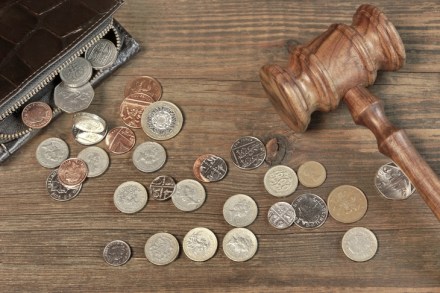
When you get into a taxi, there’s usually a framed sheet of paper describing what you pay for your trip: the cost of every mile travelled at different times of day, and the price of waiting time. As digital screens become ever cheaper, it won’t be long before someone suggests that there is no need to have these things any more. Instead a button will appear on the taxi’s new seatback touchscreen which will reveal the tariff when pressed. All very sensible, you may think. Except for this. The nature of a promise displayed on paper is subtly different to a promise displayed on a screen. Anything writ in liquid crystal should always be viewed with a little added suspicion. There is a reason why we use phrases such as ‘tablets of stone’ to refer to promises.

Paradise lost | 9 March 2017

From our UK edition

The American dream was a consumerist idyll: all of life was to be packaged, stylised, affordable and improvable. Three bedrooms, two-point-five children, two cars and one mortgage. The sense was first caught by Alexis de Tocqueville in Democracy in America (1835–40), where he talks about a people more excited by success than fearful of failure. We all know when the dream died: on 9 November 2016. People in Brooklyn were crying. In Manhattan they couldn’t breathe. A national angst had been revealed: the land of plenty had become the land of the plenty cross. But when did the dream start?

Thank God for overpriced lawyers!

From our UK edition

When you buy a house in Britain, there is an extensive and well-established series of checks you must perform to ensure the property is suitable for habitation. When undertaking a survey, you should ensure that the boundaries of the property conform to those recorded at the Land Registry, and that the property does not lie on a flood plain or risk structural damage from coastal erosion or subsidence. Unfortunately, there seems to be no mechanism to protect householders from the worst possible eventuality — which is to find out that you have a lawyer living next door.

The Brits behind Trump

From our UK edition

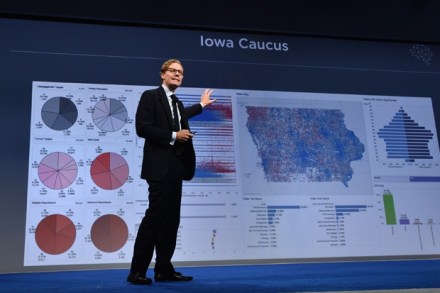
It’s the Brits wot won it. That is, the US presidential election was won for Donald Trump with the help of a bunch of British nerds — data scientists from a company called Cambridge Analytica. This was the claim, at least, made by the company in a press release a couple of days after the election. ‘No one saw it coming. The public polls, the experts, and the pundits: just about every-body got it wrong. They were wrong-footed because they didn’t understand who was going to turn out and vote. Except for Cambridge Analytica…’ Frank Luntz, a famous pollster and one of those so embarrassingly mistaken, said: ‘They figured out how to win. There are no longer any experts except Cambridge Analytica.

Why the John Lewis Christmas advert is a mess

From our UK edition

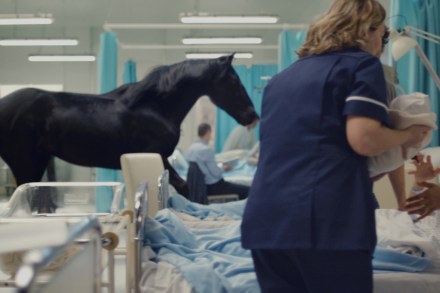
It used to be the Coca Cola advert that signalled Christmas was on its way. Holidays were coming, and Coke would deliver joy to the world. These days, it’s the John Lewis advertisement that everyone looks forward to. There’s a running theme to these Christmas adverts. A schmaltzy song, a sickly sweet storyline (often with a few animals thrown in, just to make it that bit sweeter), and a happy, Christmassy ending. Hurrah!! This year’s, which was released today, is no different. Personally, though, I’d say that whoever came up with this advert needs a serious dose of reality – and quick.

We need to be more sceptical about financial adverts

From our UK edition

Scepticism has a solid place in the history of British philosophical enquiry. Back in the 18th century, empiricists such as David Hume dedicated their lives to the importance of suspending belief in things for which there is insufficient evidence through experience. On the whole, it’s a tradition our culture has maintained. Scepticism rears up in daily life all the time - for example, when your mother-in-law asks how you are, and you think: 'Is the asking of this question sufficient evidence for me to believe that you really are genuinely interested in how I am?

Low life | 3 November 2016

From our UK edition

‘Look at them, they’re all fat,’ he said. I’d slowed the car to allow four children to cross the zebra crossing. One of them secretly signalled thanks on behalf of them all as they trooped across. Polite. But they were all indeed a little on the plump side. ‘Even in France they’re getting fat now,’ he lamented, leaving unsaid the conclusion that if the French were getting fat, then that’s that, game over. ‘Of course it’s the working classes who get fat first,’ he explained. ‘Eating all that sugar and salt.’ I thought I detected blame and took exception. ‘Well, if anyone is to blame,’ I said, ‘it’s you.

Why ‘my’?

From our UK edition

It used to be ‘Your M&S’. That was presumptuous enough. Now, when you drive past Earls Court exhibition hall, pathetically covered in plastic sheeting while being demolished to make way for a high--quality, mixed-tenure residential neighbourhood, the hoarding tells you you’re going past ‘My Earls Court’. You can read all about it on myearlscourt.com. No, it is not my Earls Court. And nor will I like it more if you try to tell me it is mine. The same with Church Street, London NW8: there’s redevelopment here, too, and it’s being flaunted as ‘mychurchstreetnw8’. No it’s not. Stop trying to make me take psychological ownership of your so-called urban renaissance. This is what I call ‘the aggressive first person’.

Bursting the bubble

From our UK edition

The conventional history of modern art was written on the busy Paris-New York axis, as if nowhere else existed. For a while, nowhere else did. People wondered, for example, whyever the mercurial Whistler volunteered for the unventilated backwaters of Britain. But London was eventually allowed into the international conversation following successful pop eruptions that began in the Fifties. Germany followed. Now, perhaps as a response to a wired and borderless planet, where images can be instantaneously transmitted and sacred cows may be frivolously slaughtered, there is a revisionist and more inclusive policy for entrance to art’s pantheon. The braided cord has been lifted. Everyone can join the club.

Children shouldn’t be expected to receive sponsorship for child’s play

From our UK edition

Can there be anyone curmudgeonly enough to take against Save the Children’s Den Day, a heartwarming event? – actually, make that an entire week, 29 May to 6th June – in which little children are 'being sponsored to transform their sofa, school desk or even a boring cardboard box into magical super dens. And the money they raise will help to save lives around the world.' What could be nicer and more harmless than to inculcate philanthropy in the young? Especially to help children like little Annie Mae in the Philippines, on the Save the Children website, made homeless in a typhoon and presumably obliged to make a den of her own, though not at all for fun.

When did the advertising industry get so obsessed with swearing and innuendo?

From our UK edition

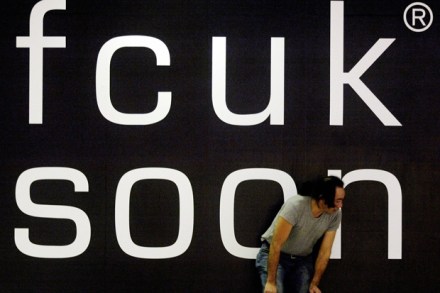
When did the advertising industry decide that swearing sells? Look around you, and you’ll start to see rude, unfunny double entendres everywhere. The latest company to jump on the bandwagon is Toyota — currently flogging cars with the catchphrase, ‘Go Fun Yourself’. Try not to split your sides laughing. I blame French Connection. In 1991, the once respectable clothes shop started referring to itself as fcuk. The company began knocking out T-shirts, saying nasty things like ‘Too busy to fcuk’ and ‘fcuk fashion’. The campaign was such a hit that, God help us, Conservative Future — formerly the Young Conservatives — called itself ‘cfuk’ for a while, until French Connection threatened legal action.

Even the people who make political adverts aren’t sure they work

From our UK edition

It is a common prejudice about modern politics that it is all focus groups and spin, all public relations and advertising. The rather heartening conclusion from Sam Delaney’s history of advertising in politics is that this is a calumny on the political trade. Delaney has spoken to everyone involved in political advertising since the phenomenon began in earnest with Wilson in 1964 and can hardly find a soul who is certain that advertising does anything more than varnish good ideas. Maurice Saatchi, for example, credited Margaret Thatcher’s proposals, rather than his talent for a pithy slogan, for her electoral victories. Chris Powell, a leading figure in Labour’s Shadow Communications Agency, also doubts whether advertising can really change popular opinion.

How consumer habits are subject to the law of unintended consequences

From our UK edition

Some time in the 1960s, a group of people in an advertising agency (among them Llewelyn Thomas, son of Dylan) found themselves debating the direction of causation in the purchase of electric drills. Their dispute revolved around one question: do men a) conceive a need for making a hole and therefore go and buy a drill or b) buy an electric drill in a shop because it looks cool and then wander around the house desperately looking for any excuse to make holes in things. (One joy of working in advertising is that you get paid to have the kind of conversations when sober which other people are only allowed to have when drunk or stoned.) Yet the question is not quite as silly as it sounds: your approach to selling drills would differ depending on which of these two theories is true.

Why does Amazon think my friend is a kidnapper?

From our UK edition

About four years ago, an irate father in Minneapolis walked into his local Target shop with a complaint. He wanted to know why they were sending his daughter, who was still at school, vouchers for baby clothes and cots. Were they trying to encourage her to get pregnant? When they telephoned to apologise a few days later he was more diffident. His daughter had fessed up: a child was due in a few months. But if dad hadn’t spotted any telltale signs of pregnancy, the shop had: she’d been rumbled by her recent purchases, in particular unscented lotions and certain dietary supplements. Some algorithm had spotted the significance of a sudden change in her buying habits, and triggered the ‘bombard with new‑baby offers’ subroutine.

The fightback against wackiness starts here

From our UK edition

[audioplayer src="http://traffic.libsyn.com/spectator/TheViewFrom22_30_Oct_2014_v4.mp3" title="Henry Jeffreys and Sarah Coghlan from Movember discuss wackiness" startat=1491] Listen [/audioplayer]At Glastonbury in 2000 I noticed two young men both wearing enormous Y-fronts and carrying an even bigger pair with the word ‘pants’ written on it. They both looked miserable as you would if you’d come up with the idea while drunk and then found yourself stuck like that for the duration of the festival. Some of the more thuggish elements jeered and threw beer cans. Seven years later, at another festival I attended, they wouldn’t have attracted a second glance, because dressing up had become ubiquitous.

Calorie-counting six sweets at a time

From our UK edition

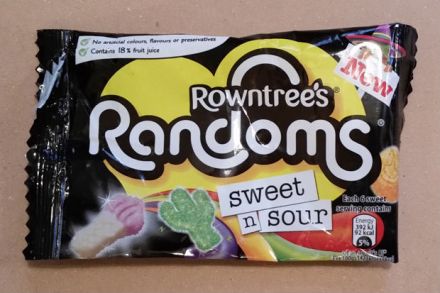
Anyone who is trying vaguely to control their weight and still eats tasty, nasty processed foods — me, for instance — gets used to playing the game of 'guess how many calories there are in the packet'. Today I bought the bag of sweets pictured above, and discovered a new difficulty level. The rules of the guessing game go like this: Manufacturers print two calorie counts on the front of a typical packet - one for 100g, in small type, and one for 'one typical serving', in bigger type. The typical serving size, as far as I can tell, is determined by how large a fraction of the packet you can consume before passing some psychologically significant number of calories.

The insidious re-normalisation of smoking

From our UK edition

The NHS has long since been smoke free, banning smoking on-site for patients and staff alike back when I was a nursing student. Of course this is ignored pretty much universally by patients and visitors, and every time you enter a major hospital it is usually through a cloud of tobacco smoke whilst the poor nurses must change out of their uniform and leave the hospital site in their rest break. It was with great surprise then, whilst sipping my morning coffee recently and trying to recover from the hacking smokers cough acquired entering the building, that I noticed a patient nearby sat merrily smoking away. I was incredulous. Outraged. I stared open mouthed, and, being British, said absolutely nothing.

We get the message: smoking is bad for you. Now leave fag packets alone

From our UK edition

What form do you reckon the government’s consultation on cigarette packaging is going to take? Given that health minister Jane Ellison has said that the government’s intention is clear and the consultation short, I rather think it’s going to be like the gay marriage consultation – which ignored half a million objections to the thing in principle, and just focused on asking how to implement a decision already made. So this business of seeking out the views of ‘stakeholders’ is, I rather think, entirely cosmetic. I don’t know whether you could call me a stakeholder because I’m not exactly a smoker – I’ve never got the hang of inhaling – but I do like a nice cigarette packet.