Renaissance

Echoes of Italy

From our UK edition

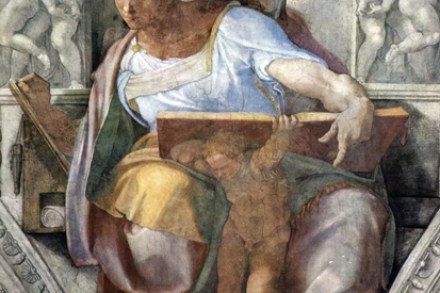
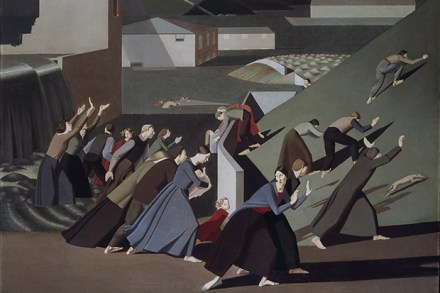
‘Hidden beauty is best (half seen), faces turned away.’ So noted a young English painter named Winifred Knights in 1924. Until recently, the power of her own work has been thoroughly concealed. After her death in 1947, indeed even before it, Knights was forgotten. By the 1950s her reputation had sunk so completely that both the Tate and the Fitzwilliam Museum refused to accept one of her masterpieces as a gift. However, artists who disappear into oblivion are sometimes rediscovered — and that is what has happened to Knights, who is now the subject of an admirable exhibition at Dulwich Picture Gallery. It is, as the cliché goes, a revelation. One of the things it reveals is how English painters continued to love the Italian Renaissance well into the modernist era.
Shakespeare’s crowning glory

From our UK edition

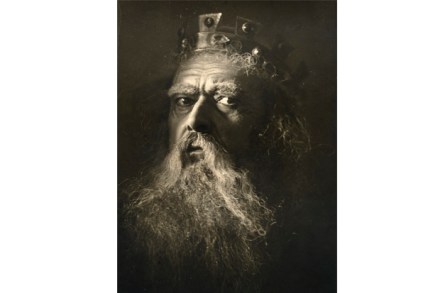
In the 18th century, as Shakespeare began to take on classic status, editors began to notice differences between the texts of the plays preserved by his fellow actors in the posthumously published First Folio of his Comedies, Histories & Tragedies and those that had been published in the playwright’s lifetime in the cheap pocket editions, analogous to modern paperbacks, known in the trade as Quartos. In the case of King Lear, the subject of Sir Brian Vickers’s new book, the Quarto of 1608 is strikingly different from the Folio of 1623. The Quarto has nearly 300 lines that are not in the Folio; the Folio has over 100 lines that are not in the Quarto; there are more than 800 verbal variants in the parts of the play that the two texts share.

Dante’s egomania

From our UK edition

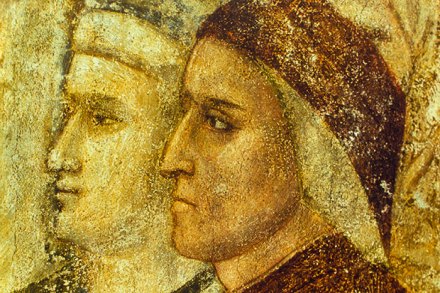
Unlike Shakespeare, who kept himself out of all his works, except the Sonnets, Dante was endlessly reworking his autobiography, even when supposedly writing on politics or arranging love poems to his dream-women. The core of this new book about him can be found in a sentence following Dante’s banishment from Florence, and his setting out as a poverty-stricken exile, deprived of all power, separated from his wife and family and stripped of his wealth. Marco Santagata writes: One of the typical features of Dante’s personality, which qualifies him as an ‘intellectual’ in the modern sense of the word, is his endless reflection on what he is doing, both as an author and as a man.

Florence | 31 March 2016

From our UK edition

Once, it seems, Sandro Botticelli played a trick on a neighbour. Next door was a weaver who possessed eight looms. He and his assistants kept these in constant use, creating such a judder-ing racket that the poor painter was unable to concentrate on his pictures. Botticelli implored this fellow to reduce the noise, but to no avail. So eventually the artist carried an enormous rock on to his roof, poised so the slightest vibration would bring it crashing through the noisy weaver’s premises. The man then saw reason. You can easily imagine the problem today as you walk down Botticelli’s street, Via del Porcellana. It’s a long, narrow thoroughfare running down to the Arno, tightly packed with three- and four-storey buildings.

Topsy-turvy

From our UK edition

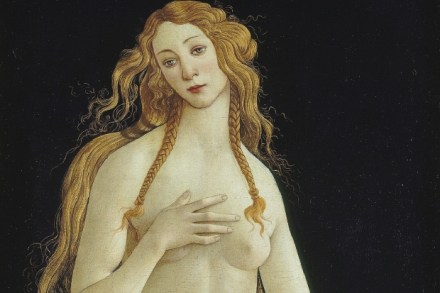
When Tom Birkin, hero of J.L. Carr’s novel A Month in the Country, wakes from sleeping in the sun, it is to a vision: the vicar’s wife Alice Keach in a wide-brimmed straw hat, a rose tucked into the ribbon. ‘Her neck was uncovered to the bosom and, immediately, I was reminded of Botticelli — not his Venus — the Primavera. It was partly her wonderfully oval face and partly the easy way she stood. I’d seen enough paintings to know beauty when I saw it and, in this out of the way place, here it was before me.

On the trail of Piero

From our UK edition

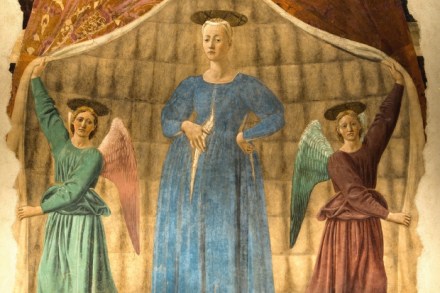
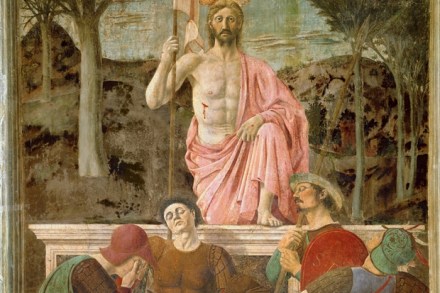
Piero della Francesca is today acknowledged as one of the foundational artists of the Renaissance. Aldous Huxley thought his ‘Resurrection’ ‘the best painting in the world’. His compositions marry art and science with cool precision and a sophisticated grasp of perspective — he was, after all, a mathematician. But he was only rediscovered in the mid-19th century after centuries of relative obscurity. Following his death in 1492, his artistic achievements faded in the memory and he became known chiefly as a geometer (his numerous writings include an innovative treatise on solid geometry and perspective). This is not wholly surprising.

All things to all men | 25 February 2016

From our UK edition

The ocean that Christopher Oldstone-Moore has set out to chart is as broad as it is shallow: what it has meant to be bearded or shaven in the western world, from before Alexander the Great until the present day. Practicalities — shaving technology and the like — are mentioned from time to time, but only so that their importance can be minimised. His thing is the semiotics of beards. And the range of signals that a beard could send out, over so many years, is bewildering. To be clean-shaven is to be a god, a priest, Louis XIV, a French conservative of the early 19th century or a 20th-century organisation man. To be bearded is to be a philosopher, a warrior, a Renaissance prince, an extreme French radical of the early 19th century or a respectable Victorian paterfamilias.

War on Mount Olympus

From our UK edition

It is a curious fact that the modern Hebrew for ‘atheist’, Tim Whitmarsh notes in passing, is apikoros. The word derives from Epicurus, who set up shop as a philosopher in Athens around 306 BC, but it became so domesticated in Hebrew that the medieval thinker Moses Maimonides, till he found out better, thought it was of home-grown Aramaic origin. In ancient Jewish usage, however, I think apikoros meant someone who denied that God takes care of the world, which was indeed the claim of Epicurus. Though Whitmarsh sets out to show that atheism was quite normal in ancient (Greek) history, atheism turns out to be a slippery notion. Epicurus declared that the whole boundless world was made up of an infinite number of indestructible atoms in unpredictable motion.

Whodunnit?

From our UK edition

On 7 February 1506, Albrecht Dürer wrote home to his good friend Willibald Pirckheimer in Nuremberg. The great artist was having a mixed time in Venice: on the one hand, as Dürer explained, he was making lots of delightful new acquaintances, among them ‘good lute-players’ and also ‘connoisseurs in painting, men of much noble sentiment and honest virtue’. However, there was also a very different type lurking in the early 16th-century Serenissima: ‘the most faithless, lying, thievish rascals such as I scarcely believed could exist on earth’. Dürer hints that among these latter were painters, perhaps including some whose works will be seen in a forthcoming exhibition at the Royal Academy, In the Age of Giorgione.

Away with the angels?

From our UK edition

I remember the shock, like a jolt of static electricity. One day, between taking my degree and beginning my first job, while looking through a 16th-century book about numerology that had once belonged to John Dee in the British Library, I came upon an annotation in his own neat italic hand casting up the numerical values of the letters of his name. The total he wrote down came to 666. John Dee (1527–1609) was a magus, but we must not think that this made him a loony witch. An early Fellow of Trinity College, Cambridge, teaching Greek, he acquired a reputation for learning in mathematics, navigation and astronomy. But his long pursuit was of something he knew was dangerous and which I am not convinced he always thought licit: angelic conversations.

Artificial life | 19 November 2015

From our UK edition

One day Julia Margaret Cameron was showing John Ruskin a portfolio of her photographic portraits. The critic grew more and more impatient until he came to a study of the scientist Sir John Herschel in which the subject’s hair stood up ‘like a halo of fireworks’. At this point, Ruskin slammed the portfolio shut and Cameron thumped him violently on the back, exclaiming, ‘John Ruskin, you are not worthy of photographs!’ He was indeed smackingly wrong to dismiss her work, as visitors to an exhibition at the V&A celebrating the 200th anniversary of her birth will be able to see for themselves. There are multiple ironies underlying this spat (they happily made up by lunchtime). Ruskin disapproved — officially speaking, at least — of photography.

Is this the greatest sculpted version of the Easter story? It’s certainly the strangest

From our UK edition

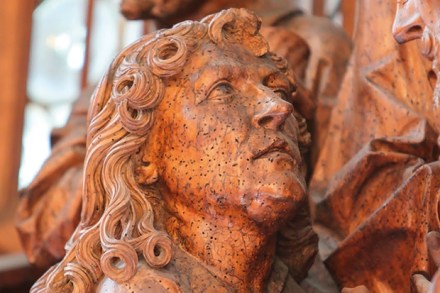
In April 1501, about the time Michelangelo was returning from Rome to Florence to compete for the commission to carve a giant marble David, a very different sculptor named Tilman Riemenschneider agreed to make an altarpiece in the small German town of Rothenburg ob der Tauber. Since then, things have not changed much in Rothenburg. Though battered during the war, it has been restored to postcard perfection (or rather turned into a perfect place for tourists to take selfies of themselves against a Disneyesque medieval background). And the Altar of the Holy Blood is still there, in the place for which it was made, at the west end of the church of St James or Jakobskirche. This is a sculpted version of the Easter story both great and strange.

Elizabeth I, queen of the waiting game

From our UK edition

Women are ‘foolish, wanton flibbergibs, in every way doltified with the dregs of the devil’s dunghill’. So a cleric reminded Queen Elizabeth I. His sermon reassured her that her personal qualities made her exceptional. But Elizabeth was not merely an ‘exceptional woman’, snorts Lisa Hilton. She was also ‘an exceptional ruler’ — one who refashioned her kingdom as ‘a modern monarch, a Renaissance prince’. Elizabeth’s accession in 1558 coincided with the publication of John Knox’s notorious blast against the ‘monstrous regiment’ or ‘rule’ of women. Happily such views were ‘based more on hostility to Catholicism than to female rule per se’, we are told.

The mathematical revolution behind ‘the greatest picture in the world’

From our UK edition

It seems odd to enter a room dominated by what Aldous Huxley famously called ‘the greatest picture in the world’ to find not another soul there. Looking down from an end wall of the mediaeval civic hall in the quiet little Tuscan town of Borgo San Sepolcro, Piero della Francesca’s ‘Resurrection’ is an image of astonishing power, showing a stern-faced risen Christ stepping out of his tomb in the dawn light of the first Easter morning like an unstoppable force of nature, exuding supernatural authority as he turns the leaves on the trees behind him from wintry death to the new life of spring. This is a painting like no other in the history of art.

Upside down and right on top: the power of George Baselitz

From our UK edition

It’s German Season in London, and revealingly the best of three new shows is the one dealing with the most modern period: the post-second world war era of East and West Germany and the potent art that came out of that split nation. In Room 90 is another immaculately presented British Museum show of prints and drawings, focused this time around Georg Baselitz (born 1938). Of the 90 works on display, more than a third has been donated to the BM by Count Christian Duerckheim, the remainder lent by this assiduous collector. The show begins with Baselitz’s contemporaries and I was surprised to find myself quite liking some things by Gerhard Richter, currently the most overrated artist in the world.

Clarissa Tan’s Notebook: Why I stopped drinking petrol

From our UK edition

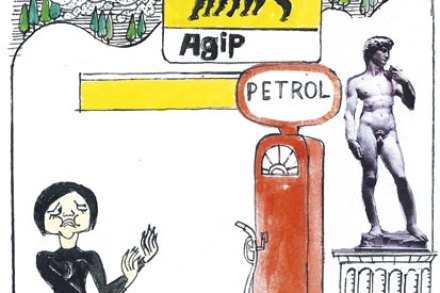
Florence was in fog the day I arrived. Its buildings were bathed in white cloud, its people moved as though through steam. The Arno river was a dense strip of dew. At the Piazzale Michelangelo, the statue of David was etched by the surrounding murkiness to a stark silhouette, the renaissance defined by gothic cloud. I peered through a telescope that overlooked the city and saw nothing for miles. My friend Alessandro told me this was unusual for sunny Tuscany, which made me feel quite pleased. Perhaps with each day that passed I would see less of Florence — the ultimate tourist experience. At a nearby cemetery, the milky arms of stone angels reached out through the brume, while creaking old Fiats disappeared into the ether.

How honest was Bernard Berenson?

From our UK edition

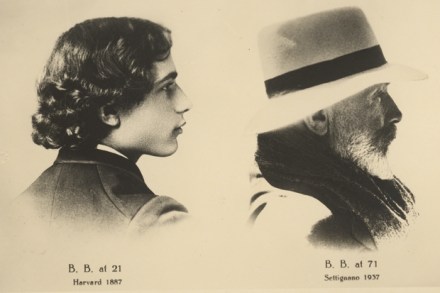
When the great Jewish-American art expert Bernard Berenson died in 1959, he had acquired the status of a sort of sage. He was the relic of a prewar culture that had vanished. He was an embodiment of the idea of connoisseurship that had at once given birth to a great boom in art collecting and yet that was, by the end of his life, being superseded. When Berenson embarked on the career that would see him widely accepted as the world’s foremost authority on Old Masters, the painters of the Italian Renaissance were barely regarded in the US. He died — at 94 — in the age of Andy Warhol. The very span of his life gives his story resonance.

A life of Michelangelo on the grand scale

From our UK edition

Early on in this dazzling new biography, Martin Gayford compares Michelangelo, with his daunting artistic tasks, to Hercules, the subject of an early (and now lost) sculpture. A Michelangelo biographer is likewise faced with an intimidatingly Herculean task. ‘Few other human beings except the founders of religions,’ acknowledges Gayford, ‘have been more intensively studied and discussed.’ Such was Michelangelo’s fame — he became ‘something approximating to a modern media celebrity’ — that in his own lifetime he was the subject of three biographies. And he does not make things easy for biographers.

Niccolo Machiavelli, by Corrado Vivanti; The Garments of Court and Palace, by Philip Bobbitt

From our UK edition

One more anniversary, one more cache of commemorative books. This time we are celebrating the half-millennium since Niccolò Machiavelli produced his notorious work, The Prince. He wrote it after a significant career blip in 1512, when the Florentine Republic fell and the Medici regained power. Machiavelli was not merely sacked from his job — secretary to the Republic — but also accused of conspiracy, imprisoned and horribly tortured. In 1513, he was released into exile, and went to live on his family farm, south of Florence. There he walked, consorted with ‘vulgarity’ (the locals) and read classical writers, including Livy, Tacitus, Sallust, Plutarch, Suetonius and Procopius.

Built for eternity

From our UK edition

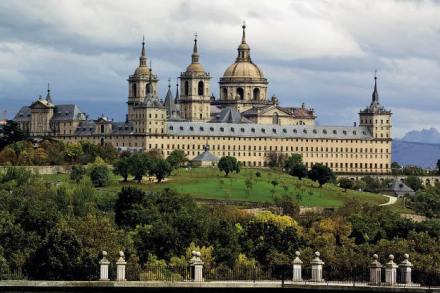
The Escorial, as a monastery and a royal palace, was the brain child of Philip II of Spain. Built in the latter half of the 16th century, about 30 miles north-west of Madrid, the huge granite complex with 4,000 rooms, 16 courtyards, a basilica, a library and picture gallery as well as the king’s private apartments, came to be regarded as the creation of a cold-hearted despot cut off from the outside world. For Richard Ford, whose 1850 Handbook for Travellers in Spain is the most learned guidebook ever written, the Escorial ‘was as cold as the grey eye and granite heart of its founder’.