Renaissance

The difficult pursuit of happiness

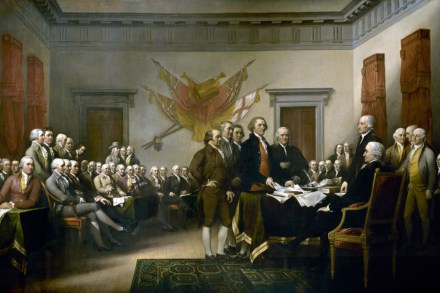
For six centuries, from the Renaissance forward, the architects and creators of modernity have promised and predicted a new world, one which, in Thomas Jefferson’s immortal words, would be dedicated to “the pursuit of happiness.” The birth of that world in its political aspect is being celebrated this year in the United States, as well as, to some extent or another, throughout the West. This phrase, so vague and rhetorical as to be meaningless, is also the best definition there is of the modern project. Hence the 250th anniversary of the birth of the US is an obvious moment to consider how far America, and with it the world it has so radically influenced, have advanced since 1776.

The next Renaissance is coming

From our UK edition

When we think of the Renaissance, our minds naturally drift to figures such as Leonardo da Vinci and Michelangelo – and rightly so. These are individuals who transformed our understanding of art, science and human potential. What we tend not to consider, however, is how close we might be to another cultural revolution.  That is the argument now circulating on parts of the internet: that after a prolonged period of digital saturation – defined by algorithms, passive consumption and an overabundance of content – we are approaching a point of correction. Just as the original Renaissance followed a period of stagnation and upheaval, this new phase will be marked by a renewed emphasis on creativity, craft and intellectual depth.

Ovid puts today’s radicals to shame

It’s a crisp afternoon, and in a darkened room in central Amsterdam a woman is being smothered in snakes. Projected on to three walls is a massive video close-up of her face. She is young and beautiful  and remarkably composed: just a nose twitch here, an eyelid flutter there, as a python wriggles across her mouth or languidly caresses her cheekbone with its tail. In the room behind me, another woman stares fiercely back. Her shoulders are bunched with muscle, arms stiff at her sides, like a nightclub brawler about to nut someone. But it’s the bull’s horns sprouting from her forehead, and the mane of matted fur marching down her back, that make it hard to meet her gaze.

Was Serbia the real birthplace of the Renaissance?

From our UK edition

Where did the Renaissance begin? There has been an official answer to that question since 1550, the date that Giorgio Vasari’s Lives of the Artists was first published. According to this version, it all began in Florence and the first painter in the long line that ended with Leonardo, Raphael and Michelangelo was named Cimabue. But here’s another suggestion: you could just as well try looking in the rolling hills of Serbia. My wife and I went travelling there earlier this year. For a couple of nights we stayed in the town of Novi Pazar in the south-east of the country. From the religious point of view this town is a remnant of the Ottoman Empire; according to the census of 2022, nearly 80 per cent of the population is Muslim (with just 71 atheists).

The Renaissance master who rescued polyphonic music

From our UK edition

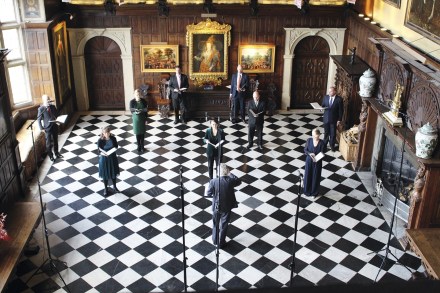
Last month I watched conductor Harry Christophers blow through what sounded like an arthritic harmonica but in fact was a pure-toned pitch pipe, which handed the singers of his vocal group the Sixteen their starting notes. Then the Kyrie from Giovanni Pierluigi da Palestrina’s Missa Regina coeli unfolded inside the resonant splendour of St James’s Church in Mayfair and, 500 years after his birth, I grasped why Palestrina, maestro di cappella of St Peter’s Basilica in Rome from 1551-5, still has the capacity to surprise. Christophers and the Sixteen are celebrating this greatest of the late Renaissance composers in his anniversary year with three concerts promoted by the Wigmore Hall but held at St James’s: this music lives or dies by the acoustic in which it is heard.

The Da Vinci world of known unknowns

From our UK edition

When Leonardo da Vinci’s ‘Salvator Mundi’ was sold in 2017 for $450 million it caused a sensation. Dismissed as an anonymous ‘wreck’ just 12 years before, it had become the single most expensive artwork ever to come to auction. Newspapers – goggle-eyed at the price – hailed the discovery of a ‘lost’ Leonardo. The Louvre wanted to make it the centrepiece of a major exhibition. There was even talk of showing it alongside the Mona Lisa. It seemed almost too good to be true. And it was. Doubts were soon raised about the painting’s attribution. Amid a storm of controversy, it was quietly whisked away to a secret location. It hasn’t been seen since. The ‘Salvator Mundi’ is in many ways a parable of our obsession with Leonardo.

The true birthplace of the Renaissance

From our UK edition

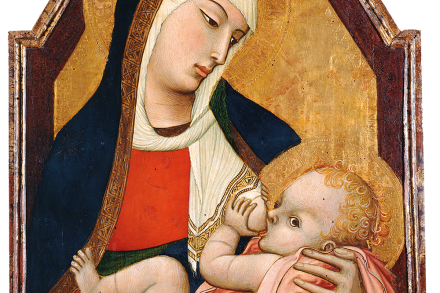
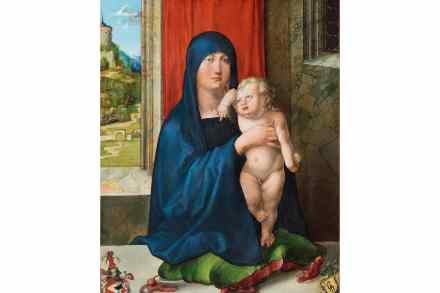
The baby reaches out to touch his mother’s scarf: he studies her face intently, and she focuses entirely on him. There is connection; there is familiarity; there is love. It could be one of the pictures on my phone from last weekend of my daughter with her six-month-old. In fact, it dates from Tuscany c.1290, and the mother and child are the Virgin Mary and Christ. It’s a small painting, tempera on wood; it’s the opener of the National Gallery’s new blockbuster, Siena: The Rise of Painting 1300-1350; and it’s there to make the show’s fundamental point, which is that its creator, the Sienese Duccio, introduced many of the painterly innovations that paved the way for the Renaissance. With this ‘Virgin and Child’, emotion takes centre stage.

Fascinating insight into the mind of Michelangelo

From our UK edition

You’re pushing 60 and an important patron asks you to repeat an artistic feat you accomplished in your thirties. There’s nothing more daunting than having to compete with your younger self, but the patron is the Pope. How can you say no? Besides, it’s an excuse to get away from Florence, where your work for the republicans who expelled the Medici has become an embarrassment since their return. So you tell Pope Clement VII that, yes, you will move to Rome and paint a Last Judgment on the altar wall of the Sistine Chapel.

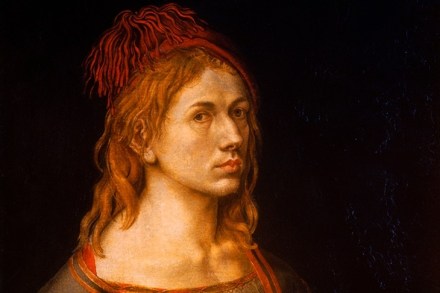
The life of the revolutionary Albrecht Dürer

Great books make genres jump. It happened with W.G. Sebald’s The Rings of Saturn, which looked like a travelogue, claimed to be a novel and felt like neither. Albert and the Whale by Philip Hoare, which recalls and converses with Sebald, is such a work. An antic and original creation, it is not exactly a biography of the revolutionary Renaissance printmaker, painter and theorist of geometry and perspective. For the fuller story of Albrecht Dürer, turn to Erwin Panofsky’s mighty monograph, as Hoare does frequently. Instead, Hoare has made a book as much for Dürer as it is about him. Dürer’s life and art are thrillingly encountered.

Dürer

Fascinating forgeries: Art and Artifice – Fakes from the Collection, at the Courtauld, reviewed

From our UK edition

In 1998 curators at the Courtauld Institute received an anonymous phone call informing them that 11 drawings in their collection were fakes. The caller intimated that he was an associate of the notorious forger Eric Hebborn, who had claimed in his 1991 memoir, Drawn to Trouble, to have sold the institute a fake Rowlandson. The Sienese turned their training as restorers of Renaissance paintings to more profitable use The Courtauld had, in fact, already rumbled the Rowlandson before Hebborn boasted of putting one over on it; now it looked like it could be more than one. The other ten included three sketches by Tiepolo, three by Guardi and a drawing by Michelangelo.

A visit to the Renaissance Faire

There exists a magical place where not only are you free to identify as who or whatever you wish, but you’re also encouraged to adopt a persona that defies reality. You aren’t restricted to the narrow LGBQTIA+ choices our unimaginative liberal elites have imposed, either. Nay, in this ultra-diverse, inclusive land, you’re expected to dream beyond this century — this planet even — and transition uninhibited into whatever strikes your fantasy. No, not the “metaverse”; I’m referring to the time-honored American tradition of the Renaissance Faire, where history buffs, fantasy nerds, down-and-out actors, and normal suburban families converge to create a giant freakshow that is innocent fun at its best.

renaissance

Beyoncé’s new album kind of sucks

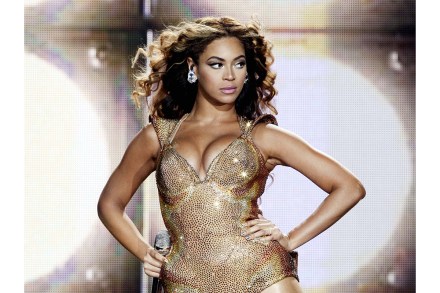
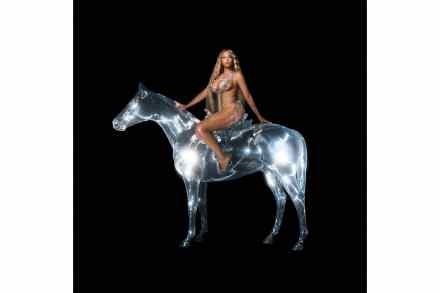
Renaissance, Beyoncé's first solo album in six years, dropped at the end of July. Critics raved about the genius of Queen Bey. Pitchfork gave the album a 9/10, calling it "immaculate." The Guardian referred to it as a "breathtaking, maximalist tour de force." "America Has a Problem and Beyoncé Ain’t It," the New York Times declared. Thematically, Renaissance is courageous. It's a departure from the pop-laced R&B songs we typically hear from Beyoncé. It leans heavily on club music; it subverts expectations. However, Beyoncé's clear desire to make a statement means that the entire project comes across as trying way too hard. It's an album a listener is supposed to "get" rather than enjoy.

beyoncé

She’s pop’s Damien Hirst: Beyoncé’s Renaissance reviewed

From our UK edition

You feel a little sorry for Renaissance, the first solo album by Beyoncé in more than six years. It just wants to dance, but will anybody let it? Such are the claims made for the singer as a cultural figure – superwoman, warrior queen, saviour of Black America – that everything she does carries a weight of expectation which would crush granite, let alone a pop record. The songs on her last album, Lemonade, released in 2016, spun out from the infidelity of her husband, Jay-Z, linking a personal breach of trust to fissures in her family history and racial divides in the United States, past and present. It was impressive but stern.

Raphael – saint or hustler?

From our UK edition

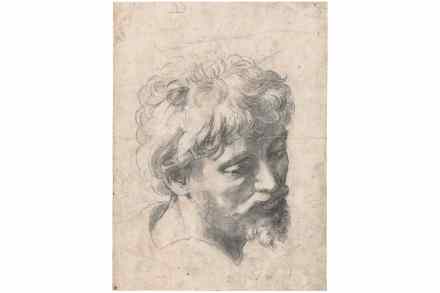
For tourists to Rome, the must-see event of 1833 was the exhumation of Raphael from his tomb in the Pantheon. For years the city’s Accademia di San Luca had been claiming possession of the artist’s skull and running a profitable line in souvenirs. That September, the question would be settled. Was the ‘most eminent painter’, lauded in his friend Pietro Bembo’s fulsome epitaph as having ‘lived virtuously 37 virtuous years’, really buried there? And did his skeleton have a head? Hans Christian Andersen was one of 3,000 ticket holders for the six-day lying-in-state. The skeleton was there all right, complete with head, but its dignity, reported Andersen, was somewhat dented by the rattle of bones when it was returned to the tomb.

Renaissance radical: Carlo Crivelli – Shadows on the Sky at Ikon Gallery reviewed

From our UK edition

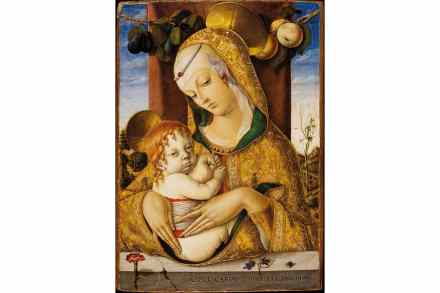
‘Camp,’ wrote Susan Sontag, ‘is the paintings of Carlo Crivelli, with their real jewels and trompe-l’oeil insects and cracks in the masonry.’ She didn’t even mention the renaissance painter’s curious cucumber fetish. Nor the unwittingly comedic homoeroticism of his portrait of Saint Roch, one stocking rolled down coquettishly to reveal a decorous inner-thigh wound. Nor the extraordinarily ugly baby Jesus clutching an apple as big as his head while his mother, understandably, averts her eyes. ‘Camp is playful, anti-serious,’ argued Sontag. Sontag wasn’t alone in not taking Crivelli (c.1430–95) seriously.

Beautiful and revealing: The Three Pietàs of Michelangelo, at the Museo dell’Opera del Duomo, Florence, reviewed

From our UK edition

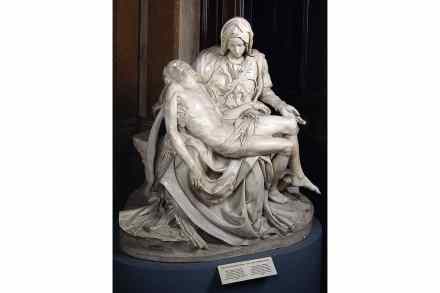
The room is immersed in semi-darkness. Light filters down from above, glistening on polished marble as if it were flesh. This is the installation for Le Tre Pietà, a remarkable micro-exhibition that has just opened at the Museo dell’Opera del Duomo in Florence. It is low in quantity, containing just three works. But stratospherically high in quality, since it comprises Michelangelo’s three versions of the Pietà – that is, the Madonna mourning the dead Christ. He carved these over almost 70 years: one in his early twenties, the next in his seventies, the last in his eighties. Admittedly, the first and the last are present only in a rather old-fashioned virtual form: high-quality plaster casts.

A celebration of natural wonders: the best of the year’s art books

From our UK edition

If one of the purposes of art is to help us see the world around us, then Sebastião Salgado’s photographs in Amazônia (Taschen, £100) does so in the most spectacular way imaginable. Not only are they ravishing in themselves; they show us sights that very few have ever seen. To take these shots, Salgado trekked deep into the rainforest, sailed the rivers, visited remote tribes and flew over the vast terrain in the helicopters of the Brazilian air force. During those flights he saw immense vistas over trees, billowing cloudscapes and snaking rivers covering an area larger than the EU.

Albrecht Dürer was a 16th-century Andy Warhol

From our UK edition

On 6 January 1506, Albrecht Dürer wrote from Venice to his friend Willibald Pirckheimer, who was at home in Nuremberg. The artist had already been in the city for a little while, and like many people who visit Venice he had spent a good deal of time shopping. Pirckheimer had asked him to buy some jewellery for him, ‘a few pearls and precious stones’, and the artist had been looking out for something suitable. There were, however, difficulties. For one thing, he says: ‘I can find nothing good enough or worth the money; everything is snapped up by the Germans.’ For another, Dürer complained, there were a lot of swindlers around. These ‘always expect four times the value for anything, for they are the falsest knaves’.

Josquin changed musical history – why don’t we hear more of him?

From our UK edition

Stepping into the Sistine Chapel, the choir loft is probably the last thing you’d notice. ‘Loft’ is, frankly, a stretch for what amounts to a small alcove with a wooden bench, carved out of the chapel’s wall. But if you made your way up there and ran your hand over the stone you’d feel something unexpected. Etched into the wall in haphazard graffiti are hundreds of names. In most cases the carvings are all that remain of centuries of singers from the papal choir. But one is different: ‘JOSQUINJ’. Chances are it’s the only surviving signature of Josquin des Prez — a composer whose name and legacy are carved just as deeply into the history of music itself. This August marks the 500th anniversary of Josquin’s death.

How we became a nation of choirs and carollers

From our UK edition

Between the ages of 15 and 17 I had a secret. Every Monday night I’d gulp down dinner before rushing out to the scrubby patch of ground just past the playing fields, where a car would be waiting. Hours later — long after the ceremonial nightly locking of the boarding house — I’d sneak back, knocking softly on a window to be let in. I’d love to say that it was alcohol or drugs that lured me out. It wasn’t even boys — or, at least, not like that. My weekly assignation was with Joseph and Johann, Henry, Ben and Ralph. My addiction? Choral music.