Prince harry

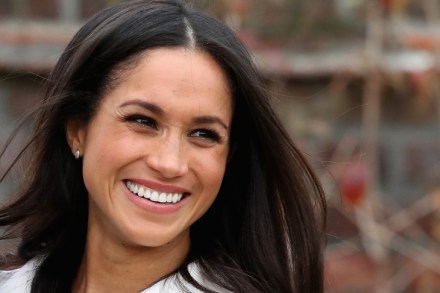
Meghan Markle has rescued her prince

From our UK edition

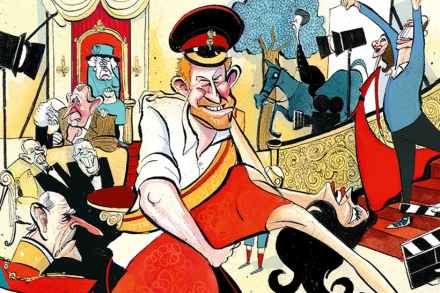
Of all the interesting combinations which sexual geopolitics has come up with, that of the American girl and the English man is one of the most enduring, giving a saucy spin to the phrase ‘Special Relationship.’ It started with cold hard economics when the second half of the 19th century saw the creation of the American billionaire - Vanderbilt and his railways, Carnegie and his steel, Singer and his sewing machines. The daughters of such men became known as The Dollar Princesses; girls who came to cold old England bringing million-dollar dowries to reboot ruined stately homes in exchange for the one thing money couldn’t buy them in the brave New World - a title.

The trouble with Miss Markle

From our UK edition

‘The thing is,’ said my friend, after the broadcast of the engagement interview with Meghan Markle and Prince Harry, ‘you can’t imagine actually bowing or curtseying to her, can you?’ That is pretty well the crux of the engagement issue: can you see yourself doing either in the case of the newest prospective member of the Windsor family? Personally, I would curtsey to the Queen and I have done to Prince Philip; I would draw the line at Camilla, and I wouldn’t dream of curtseying to Meghan. My friend was in fact A.N. Wilson, biographer of,  inter alia, Queen Victoria.

The royal family isn’t racist – but the monarchy is

From our UK edition

Contrary to what the liberal gushing might suggest, Meghan Markle marrying Prince Harry and joining the royal family is a very modest step forward for racial equality. The much bigger issue is that for the foreseeable future the UK's head of state can never be black. The hereditary system excludes by default the possibility that the symbol of the nation could be non-white. This is a form of institutional racism. No one is suggesting that the royal family are racist, but the current method of appointing the head of state is racist by default. Although it was not devised with racist intent, it reflects an institutional racism, where the system of appointment favours one race over others.

Made in Windsor: How the young royals became Britain’s biggest reality show

From our UK edition

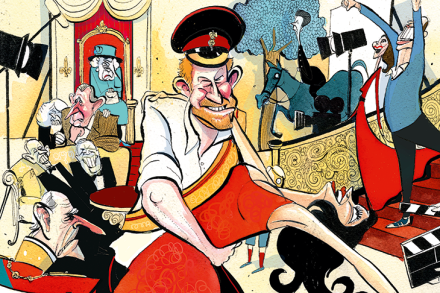
It’s a summer of change for the House of Windsor — out with the old, in with the young. The Duke of Edinburgh has just announced that he is standing down. The Queen carries on, but she’s 91, and now the younger members of the royal family are expected to step up. For an institution that supposedly represents stability, a period of transition inevitably brings dangers. How will Princes William and Harry and the photogenic Catherine, Duchess of Cambridge cope? The early signs are not altogether promising. Nobody these days expects the royal family to heed Walter Bagehot’s famous warning that they should not ‘let in daylight upon magic’; that is, preserve the dignity of the monarchy by shrouding themselves in mystery.

Why republicans should cheer the engagement of Harry and Meghan

From our UK edition

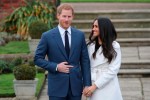
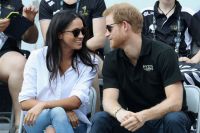
The engagement of Prince Harry and Meghan Markle is great news. Great news for them, of course, because they are clearly in love, and who doesn’t like to see a handsome young-ish couple in love? And it’s great news for republicans like me, too, because it confirms the monarchy has now completed its transformation from a mystical, godly outfit into a celebrity enterprise, which I’m convinced will prove to be the final nail, or one of the last nails, in the coffin of this archaic institution. Harry and Meghan, we salute you! (Metaphorically, not literally. Republicans don’t do that.

The politics of Meghan Markle

From our UK edition

After Kensington Palace announced Prince Harry's engagement to Meghan Markle, the rumour mill has gone into overdrive into what the Suits actress will mean for the monarchy - with some even suggesting the union is good news for the special relationship. Although the royal family is meant to stay strictly neutral with respect to political matters, Markle's time as a public figure in the acting world means that several of her political views are already known.  First off, Markle is a Cameroon – previously praising David Cameron on social media for being a 'class act': https://twitter.

‘Princess Meghan’ has arrived to cheer up Britain

From our UK edition

So, Princess Meghan it will be. No, I know that won’t be her name officially. But we all know that whatever Meghan Markle’s official title ends up being (right now, it seems most like she’ll become the Duchess of Sussex), ‘Princess Meghan’ will be her unofficial title in the press. The news of Harry and Meghan’s engagement comes as little surprise – after all, the tabloids have been telling us for weeks that the announcement might be on the cards. But you know, after a fairly depressing Budget, it’s nice to have a good news story. We might even get another Bank Holiday (sorry, what was that you said about productivity?) I think it’s refreshing that Harry has progressed from his Sloaney blonde era in his choice of fiancée.

Prince Harry and Meghan Markle: the union of royalty and showbiz

From our UK edition

It may be churlish to be unkind about a young couple who have just announced their engagement but needs must. Someone has to say it, though let me say at the outset that the engagement has made lots of people very happy. Not least journalists. Prince Harry is fifth in line to the throne so constitutionally it doesn’t matter a hoot who he marries because neither he nor his children are going to become monarch, but, for what it’s worth, Meghan Markle is unsuitable as his wife for the same reason that Wallis Simpson was unsuitable: she’s divorced and Harry’s grandmother is supreme governor of the CofE. The last person who made any personal sacrifice for that particular principle was Princess Margaret, and you could argue it didn’t end terribly well.

Prince Harry’s sense of duty

From our UK edition

Asked about the monarchy, Prince Harry said his aim was to ‘modernise’ it. Not that any royal wanted to be king or queen, he said, but they would ‘carry out [their] duties at the right time. We are not doing this for ourselves but for the greater good of the people.’ It sounds as if he thinks he is doing us a favour. The question of one’s communal obligations was first raised in the West in Homer’s Iliad (8th century bc). In a dangerous assault on the Greek camp, King Sarpedon, an ally of the Trojans from Lycia (S.E. Turkey), explained to his cousin Glaucus the reason for risking their lives in this way. He began by asking the crucial question: why in Lycia were they looked up to as gods, and given the best of everything?

The Spectator Podcast: Made in Windsor

From our UK edition

On this week's edition of The Spectator Podcast, we tackle a number of the most contentious issues around: whether the young royals are becoming too open with the press, if wind power will ever be an effective source of energy, and the question of whether Arsène Wenger should stay or go. First, in recent weeks, Princes William and Harry have both opened up to the world about their struggle to cope in the wake of their mother's tragic death. But Freddy Gray, in his cover piece, finds this candour off-putting, urging them not to turn the monarchy into a reality TV show. He joins the podcast along with Telegraph columnist Bryony Gordon, who conducted the first interview with Prince Harry where he spoke up about his issues with mental illness.

Barometer | 20 April 2017

From our UK edition

Back to the Foot year This year’s election has been likened to that of 1983 when, under Michael Foot’s leadership, Labour scored its worst result since 1918. What happened? — Labour’s vote share fell 36.9% to 27.6% and their seats from 261 to 209. — The Conservatives also lost vote share, down 1.5% to 42.4%. But their seats increased from 359 to 397, giving them a majority of 140, against just 43 in 1979. — This was the first of two elections fought by the Liberal/SDP Alliance. They gained an impressive 25.4% of the vote, up 11.6% on the Liberal performance in 1979. But this translated into just 11 seats. Counsel leader Prince Harry was counselled to help him cope with the death of his mother. How many Britons have used counselling?

The Spectator’s notes | 20 April 2017

From our UK edition

The fact that nothing leaked about Mrs May’s snap election tells you much of what you need to know about her. It shows how iron is her discipline and how close her inner circle (so close, in fact, that it is a triangle rather than a circle). It suggests that she takes neither her cabinet nor her party into her confidence. It shows that if she wins the general election, her control of her administration will be much tighter than that of Margaret Thatcher (which was surprisingly loose) and even than that of David Cameron (which was surprisingly tight). Finally, it shows that if she loses, or gets a result no better than the present parliamentary arithmetic, she will find herself friendless.

Portrait of the week | 20 April 2017

From our UK edition

Home Theresa May, the Prime Minister, having repeatedly said that there would be no election until 2020, surprised the nation by suddenly standing at a lectern in Downing Street, while the wind ruffled her hair, and saying that she sought a general election on 8 June. ‘Britain is leaving the EU and there can be no turning back,’ she said. ‘The country is coming together but Westminster is not.’ She said later that she had taken the decision after a walking holiday in Wales, and had spoken to the Queen on Easter Monday.

Portrait of the week | 10 November 2016

From our UK edition

Home Theresa May, the Prime Minister, said she still expected to start talks on leaving the EU as planned by the end of March, despite a High Court judgment that Parliament must decide on the invoking of Article 50 of the Lisbon Treaty that would set Brexit in train. Opinion was divided over whether the High Court had required an Act of Parliament or a vote on a resolution. The government appealed to the Supreme Court, which is to hear the case from 5 December. The judgment set off a confused game of hunt the issue. One issue was whether the press is allowed to be rude about judges. The Daily Mail’s headline had been ‘Enemies of the people’ and the Daily Telegraph’s ‘The judges versus the people’.

Very funny Barack, but can our politicians start taking themselves a bit more seriously?

From our UK edition

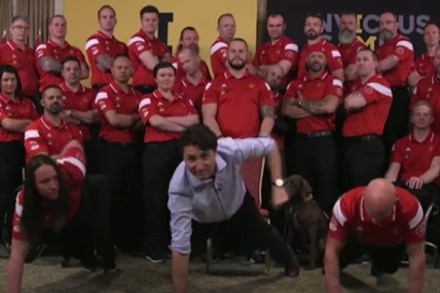
Tell me something. When you watch the above video of Justin Trudeau, does it warm your heart? Do you think it funny and therefore good? Do you say to yourself, 'Aww, isn't it great that our politicians don't take themselves too seriously? It's all in a good cause, too, bless!' Or do you cringe and think, 'You vain prat Justin! You are a politician not a light entertainer. Stop degrading us with this cutesy comic crap! Don't you have anything better to do? Stop using charity as an excuse to celebrate your narcissism and get back to work!' If, like me, your reaction is the latter, then consolations, comrade. We are in the humourless minority. Most people adore this stuff. Trudeau's little skit is being shared all over the internet today.

Model Olivia Inge has a proposition for Prince Charles

From our UK edition

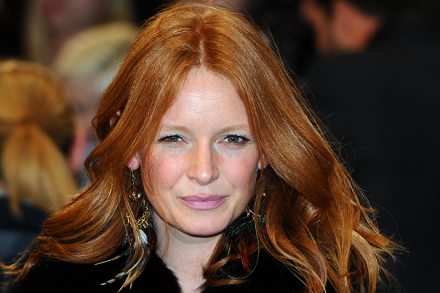
Prince Charles has a lot on his plate this week after a new biography claimed that the Queen thinks Britain is not ready for her son's activism should he become king anytime soon. While his lawyers are set to examine the book closely to check if the author Catherine Mayer used 'artistic license' over her access to the Prince, Charles can take some comfort in the fact that he still has one ardent supporter. The model Olivia Inge, who is a descendant of William Gladstone, is keen to go into business with the heir-to-the-throne. She hopes that he will help her open a teepee in Regent's Park, offering free tea and acupuncture to the public. 'I plan to pitch the idea to Prince Charles,' she tells this month's Tatler.

Truth, Lies, Diana review: it was a cover-up!

From our UK edition

Truth, Lies, Diana Charing Cross Theatre, in rep until 14 February John Conway’s sensationalist play, Truth, Lies, Diana, is a forensic re-examination of the circumstances surrounding the princess’s death in 1997. The issue of Prince Harry’s paternity, which earned the play much advance publicity, reaches no conclusions. James Hewitt co-operated with the show and Conway portrays him as a decent twerp ruthlessly smeared by shadowy puppet-masters (‘men in suits,’ Conway calls them), who set out to destroy his credibility. Hewitt admits that his trysts with Diana began at least a year before Harry’s birth. But is the Cad the dad? Hewitt’s keeping mum.

Charles III is made for numbskulls by numbskulls

From our UK edition

Suppose Charles were to reign as a meddlesome, self-pitying, indecisive plonker. It’s a thought. It’s now a play, too, by Mike Bartlett. In his opening scene he bumps off Lilibet, bungs her in a box and assembles the family at Buck House to discuss ‘what next?’ Bartlett imagines them as stuck-up divs. William’s a self-righteous sourpuss. Kate’s a smug minx. Camilla’s a hectoring gadfly. Harry’s a weepy drunk. Charles is a colossally narcissistic nuisance. They’re too dim to understand the constitution so Camilla has to explain that a new reign commences with the death of the previous monarch and not at the coronation. (This is for the benefit of the audience, who are assumed to have the same poultry-level IQ as the Windsors.

Hacks get a royal handbagging from princes over sandbags

From our UK edition

Prince Harry’s disdain for the media is well documented; but it was William who got grumpy today, telling Guardian journalist Robert Booth: ‘Why don't you put your notebook down and give us a hand with the sandbags?’ Booth offered to help: ‘But when your reporter agreed to help, aides stepped in and said it would not be possible due to a lack of the right sort of clothing.’ Typical health and safety mumbo jumbo, etcetera. The royal PR operation is a slick machine these days. Opportunities are rarely missed, which is why the princes were up bright and early this morning to get in on the action.