Europe

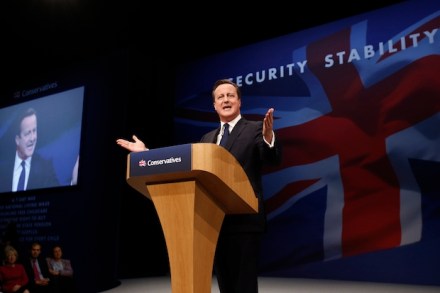
David Cameron will give ministers a free vote on EU referendum

From our UK edition

As expected, David Cameron is to suspend collective responsibility for ministers who wish to campaign for Britain to leave the European Union. The Prime Minister will give a statement this afternoon in which he is expected to announce a free vote on the matter. Ministers will not be able to speak out until after the renegotiation has concluded, which is fair enough as it would undermine Cameron’s authority to have them campaigning for Brexit before they’ve even seen what he has brought back. This is not a surprise - the whips had been working on this assumption for months - but it does show that the Tory leader is trying to do everything he can to keep his party together over the next year.
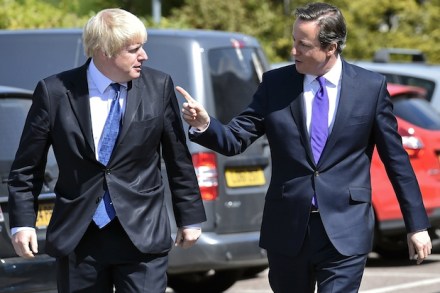
Boris for Foreign Secretary?

From our UK edition

David Cameron is warming to the idea of making Boris Johnson Foreign Secretary. As I write in The Sun this morning, Cameron is drawn to the idea of sending Boris to the Foreign Office in a post-May reshuffle. But a Cabinet ally of the Prime Minister stresses that Boris will have to be ‘unequivocally yes’ come the EU referendum if he is to be Foreign Secretary. It is easy to see why the idea of doing what it take to bind Boris in before the referendum is gaining traction in Number 10. Polling shows that Cameron backing Britain staying part of the EU gives the In campaign a big boost. But if the next best know Tory, Boris, backs Out that effect is pretty much wiped out. Philip Hammond, the current Foreign Secretary, is regarded as expendable by many in Downing Street.

‘Voters think: Oh Christ, push Europe away from me!’ – David Cameron interview

From our UK edition

This is an extended version of an interview with the Prime Minister from the Christmas special issue of The Spectator. The last time David Cameron sat down with The Spectator for an interview, he was on a train and looking rather worried. There were just weeks to go until the general election and the polls were not moving. At the time, almost no one — and certainly not him — imagined that he was on the cusp of a historic election -victory that would not just sweep the Tories to power but send Labour into an abyss. This time, we meet on another train. But he’s far more relaxed, reflecting on winning The Spectator Parliamentarian of the Year award and recalling how election night brought him some of the ‘happiest hours’ of his life.

Cameron’s great escape

From our UK edition

The last time David Cameron sat down with The Spectator for an interview, he was on a train and looking rather worried. There were just weeks to go until the general election and the polls were not moving. At the time, almost no one — and certainly not him — imagined that he was on the cusp of a historic election victory that would not just sweep the Tories to power but send Labour into an abyss. This time, we meet on another train. But he’s far more relaxed, reflecting on winning The Spectator Parliamentarian of the Year award and recalling how election night brought him some of the ‘happiest hours’ of his life. These occurred in the men’s changing room at Witney Leisure Centre.

European countries are now united by the war against Isis

From our UK edition

If anything positive comes out of the Syrian crisis, and I appreciate it’s like looking for silver linings in the Great Storm of Jupiter, it is that it has brought the European nations together as never before. Perhaps the last time that England, France and Germany fought in a major campaign together was the Third Crusade in the 12th century, a military adventure in the Middle East. Okay, so it ended disastrously, and ended up costing the English treasury about four year’s worth of taxes, but let’s hope history doesn’t repeat itself. Part of me does wonder whether the Germans, having now engaged in military action again, will suddenly find something triggered in their brains. (‘Zis feels gut ja, Gunter?

Number 10 admits defeat on EU renegotiation timetable

From our UK edition

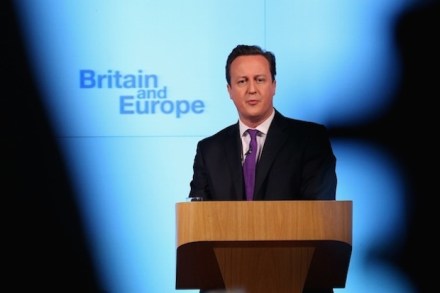
David Cameron has dropped his plans to sign off his renegotiation of Britain’s relationship with Europe at the December European Council summit, accepting that he’s not going to get the deal he wants within the next few weeks. In a call today with Angela Merkel, the Prime Minister ‘noted that the scale of what we are asking for means we will not resolve this in one go and consequently he did not expect to get agreement at the December European Council’, a Downing Street spokesperson said. The summit will instead involve a ‘substantive discussion of the proposed changes in each area’.

Cooler heads

From our UK edition

When world leaders met in Paris to launch the latest UN climate conference, much of the talk behind closed doors did not focus on global warming. Instead, the Paris conference has been overshadowed by more pressing and less contentious security concerns: the war in Syria, Europe’s refugee crisis and the growing threat of Islamist terrorism in the wake of the Paris massacre. The Copenhagen summit six years ago was a massive event; this year’s climate conference barely merits a mention of the front pages. The Paris meeting is not even attempting to achieve what the 2009 Copenhagen summit failed to do: reach a legally binding treaty on cutting CO2 emissions.

The EU renegotiation is now the biggest obstacle to Osborne making it to Number 10

From our UK edition

At the start of this week, everyone was wondering how George Osborne was going to get out of trouble on tax credits, avoid a deeply damaging row over police cuts, all while still keeping to his surplus target. But thanks to the Office for Budget Responsibility upgrading its forecasts, Osborne was able to scrap the tax credit changes, protect the police budget and maintain his plan for a £10 billion surplus by the end of the parliament. But now, an even bigger challenge awaits Osborne: the EU renegotiation. I argue in my Sun column today that it is now the biggest threat to his chances of becoming Prime Minister.

Boris shows a hint of Euroscepticism — but he still can’t beat Mary Beard

From our UK edition

Thank God for Mary Beard. Sure, she’s wrong about Jeremy Corbyn. She was wrong about 9/11. She’s wrong about plenty. But let’s talk about what matters. She’s right about Ancient Rome. It’s rare to see Boris Johnson lose a popular vote. Last night, Beard trounced him at the Intelligence Squared Greece vs Rome debate, winning the day for Rome with a 9% swing. This was also a fundraiser for one of the most worthy educational charities I know: Classics for All encourages access to ‘elite’ classical subjects in state schools, teaching teens that you don’t have to be Bullingdon material to 'get' Boethius.

France’s civil war…

From our UK edition

In the wake of the massacre in Paris, President François Hollande said that France was ‘at war’ — and that it must be fought both inside his country and outside in the Middle East. As the French air force began dropping bombs on Raqqa in Syria, another operation was under way in towns and cities across France: 168 raids in two days. A battle on two fronts has begun. Chartres cathedral is one of the great monuments of western civilisation, but Chartres was also home to one of the Bataclan theatre suicide bombers. A man from the same area died last summer in Syria, fighting for Isis. In Lyon, theraids turned up a rocket launcher. On Tuesday night, a large-scale counter-terror assault was launched in St Denis in Paris.

Lords votes to give 16 and 17 year-olds the vote in the EU referendum

From our UK edition

The House of Lords has tonight voted to give 16 and 17 year olds the vote in the EU referendum. This question will now go to the Commons, which can try and overturn it and send the bill back to the Lords—so-called ‘ping pong’. The government has already made clear tonight that it will try and overturn this amendment. But, intriguingly, some Tory MPs have told me that they think the Commons will actually back votes at 16 for the referendum when this comes back down to the Commons. If this does happen, this could delay the referendum as the Electoral Commission argue that extra time will be needed to register these new voters.

The Spectator’s notes | 5 November 2015

From our UK edition

It is good to learn that the current management of the V&A want to reverse their predecessors’ lack of interest in Margaret Thatcher’s clothes. The museum’s original refusal showed a lack of imagination about how women have tried to gain greater power in a man’s world, and how clothes tell this story. Museums love to have suits of medieval armour. They reveal the amazing combination of defensive utility and elegant display which the age required. Even better if the armour was worn by a great warrior on a great occasion, like the Black Prince at Crecy. Mrs Thatcher’s clothes were her armour on her fields of battle — in Parliament, on television, in Moscow, at her party conference after the Brighton bomb. They helped her win.

‘European values’ won’t last long without national borders

From our UK edition

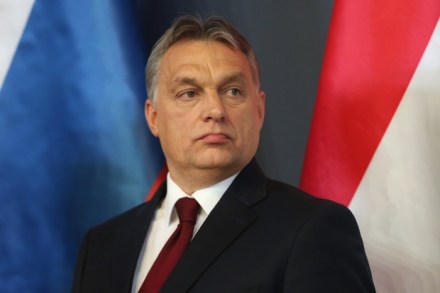
Fascinating events in Hungary where Prime Minister Viktor Orban continues to come under fire from other EU member states for trying to maintain what we used to call ‘borders’. This has now led Orban into direct confrontation with Hungary’s richest export – billionaire financier George Soros.  Orban identifies Soros as being one among a number of ‘activists’ whose organisations share part of the blame for encouraging migrants to come to Europe and for lobbying Europeans to regard borders and sovereignty as things of the past. Soros has now responded in a most illuminating manner, confirming that the many groups he funds are indeed working for precisely the ends Prime Minister Orban described.

The Australian example

From our UK edition

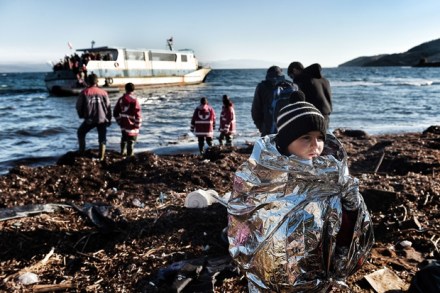
For many years, Australia has been turning away boats filled with migrants. From a remove, this looks cold--hearted — a nation built by immigrants showing no compassion for others who want a better life. But it is precisely because Australia is an immigrant nation that it understands the situation: if you let the boats land, more people come. People traffickers will be encouraged, migrants will be swindled, and their bodies will wash up on your shores. Any country serious about immigration needs a more effective and robust approach. Tony Abbott, the former Prime Minister of Australia, made that point clearly this week on a trip to London.

The new East-West divide: multiculturalism vs sovereignty

From our UK edition

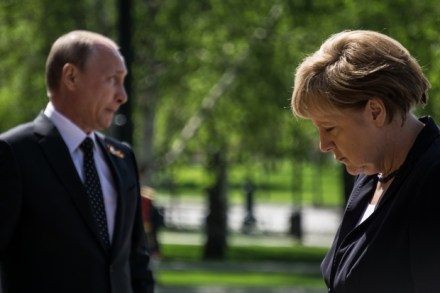
We all know that relations with Russia are at their lowest ebb since 1991, when Boris Yeltsin brought down Communism during one of his alcoholic blackouts. What’s becoming increasingly clear, though, is that there is a new ideological cold war – and I’m not sure we’ll win this one. The German approach to dissent over these past few months has been revealing. Earlier this month, a leading eurocrat chided the Hungarians for refusing to accept that ‘diversity is inevitable’, using that strange Marxist language these people love. Another accused that small central European country of being ‘on the wrong side of history’. Meanwhile Angela Merkel compared those who lock others out to the Communists who once locked their own people in.

A British Bill of Rights would protect our liberty

From our UK edition

David Cameron struggles to repatriate powers from Brussels. Yet Britain can reclaim one sovereign power without negotiation. Other EU members never relinquished the right to say ‘non’, ‘nein’, ‘oxi’ to European law that violates the constitution. Should Britain do the same? Italy and Germany’s Constitutional Courts first set constitutional limits to EU law in the 1970s. The Luxembourg-based European Court of Justice was not amused. It recently raged against the Spanish Constitutional Court which had the chutzpah to say the European Arrest Warrant might violate due process. 'Rules of national law, even of a constitutional order cannot … undermine the effectiveness of EU law,' thundered the Luxembourg judges.

David Cameron expected to give eurosceptics their free EU vote – after letting them put up a fight

From our UK edition

Will David Cameron allow senior ministers to take whatever side they wish in the EU referendum? There are reportedly six Cabinet Ministers pushing for a free vote on the matter, and today Liam Fox added his voice to the calls, telling the Daily Politics that even if the Prime Minister refused an official suspension of collective responsibility, ministers would find other ways of making their views heard. He said: ‘Ultimately the legitimacy of the result will depend on whether the voters think they have heard all the arguments openly and fairly and I think any attempt by any side to restrict people's voice in that debate will limit how people feel the legitimacy of the referendum has gone and I think that’s really important.

Cameron repositions the Tories as the party of ‘true equality’

From our UK edition

This speech was authentic Cameron. It was the most modernising speech that he has given since becoming Prime Minister and an attempt to reposition the Tories as the party of ‘true equality’. It was a return to the approach that characterised his leadership before the financial crash of 2008. Traditional Tory thinking has always been that if you work hard you get on, that you can pull yourselves up by your bootstraps. But this speech argued that for some people in society this simply isn’t true, that they find their opportunities blocked at every turn. Cameron cited the example of a black girl who had to change her name to Elizabeth before she got any job interviews.

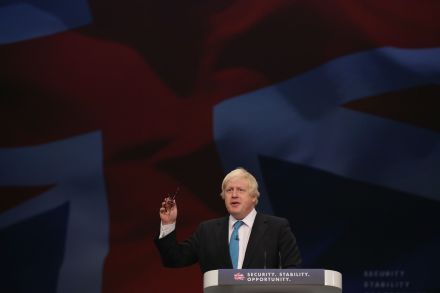
Has Boris just set an impossible bar for Cameron’s EU renegotiation?

From our UK edition

Boris Johnson’s speech today was the best that I have ever heard him give. It was a potent cocktail of political vision, humour and optimism. But the most significant line it was about Europe. He declared that: ‘It should be up to this parliament and this country – not to Jean-Claude Juncker – to decide if too many people are coming here’ It is impossible to read this as anything other than a demand that freedom of movement rules are fundamentally altered as part of the UK’s renegotiation with the EU.

Melting pot

From our UK edition

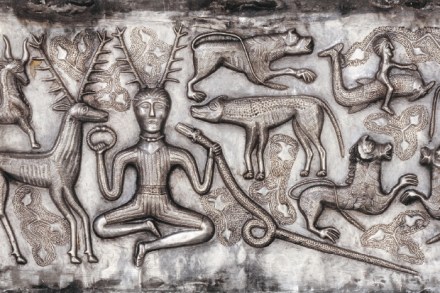
‘Celtic’ is a word heavily charged with meanings. It refers, among other phenomena, to a football club, a group of languages, a temperament, a style of art and a fringe, once the stronghold of the Liberal Democrats. But who are — and were — the Celts? The curators of the new British Museum exhibition are not at all sure, and that’s one of the reasons why the result is so enthralling. There is a familiar answer to this question: the Celts were an ancient people who moved into Europe from the east in prehistoric times and occupied most areas north and east of the Alps, together with northern Italy and much of the Balkans. They spoke a kindred group of languages and created a style of art that continued to evolve from the 5th century BC into the Middle Ages.