9/11

Cameron dines with Obama… and Clooney

https://www.youtube.com/watch?v=mX6mT0kpoyQ The Camerons weren’t the Obamas' only big-name guests at the State Dinner last night. They were joined by a host of stars including Warren Buffett, Richard Branson and George Clooney, who’s just returned from war-torn Sudan. In their speeches (above), the two leaders had very warm words for each other. Of Cameron, Obama said: ‘In good times and in bad, he’s just the kind of partner that you want at your side. I trust him. He says what he does and he does what he says.’ And the PM returned the compliments: ‘There are three things about Barack that really stand out for me: strength, moral authority and wisdom.

Newt: Another 9/11 Would Have Concentrated Minds

There are many, many, many reasons why Newt Gingrich will not be the 45th President of the United States (assuming, as I do not and actually think pretty unlikely, he wins the GOP nomination) but among them is his habit of saying stuff like this: That's from 2008. Here's my transcription of what he says in this clip: Why have we not been hit since 9/11? Good question. My first answer is I honestly don't know. I would have expected another attack, and I particularly thought, I was very, very worried and I talked to the administration when we had the sniper attacks because the sniper attacks were psychologically so frightening to the average person because of their randomness that I was amazed the bad guys didn't figure out how to send 10 or 12 sniper teams.

The randomness of al-Qaeda’s evil

After all the nerves and security in New York, Washington and London, the only attempted terror plot on the anniversary of 9/11 appears to have been foiled outside an arts centre in Gothenburg. The Swedish press says that the four people arrested on Saturday night are believed to belong to a cell linked to al-Qaeda. There are no more details yet, but it's a reminder that the al-Qaeda threat has not gone away. Its Arabian Peninsular division is still active, responsible for the underpants bomber and the bomb bound for Detroit, intercepted in London. This is also a reminder of how chillingly random its attacks are.

In New York, the whole world remembers

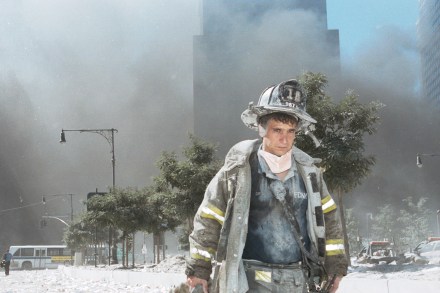
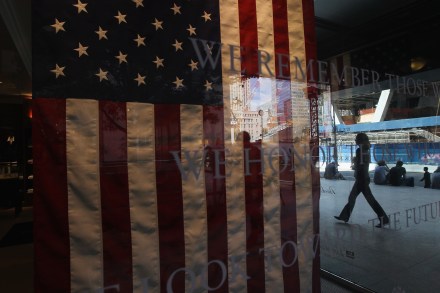
New York There's an eerie mood in New York right now, as the city prepares to commemorate the tenth anniversary of the September 11 attacks. Al-Qaeda, or what's left of it, likes anniversaries. The police have been on overdrive ever since a "credible" tip-off about an attempted truck bomb. Officers are everywhere. Armed guards patrol landmarks and cars from bridges and tunnels are being pulled over and checked. All this reinforces the sense of something alien to New Yorkers (and almost all Americans) until ten years ago: the threat of attack. A common threat has solicited a rather wonderful common response. Shop windows have displays of commemoration; companies take adverts in local newspapers. Exhibits and events have sprung up all over the city.

From the archives: “New York’s loss is also the world’s”

Today marks the tenth anniversary of the terrorist attacks on 11 September 2001. Here is the article Matthew Bishop wrote for The Spectator in response: Spirit of the Blitz, Matthew Bishop, 15 September 2001 New York People walk a lot in Manhattan. Its streets are always crowded. But never before like this. An hour after the attack on the World Trade Center, thousands of New Yorkers - refugees in business attire - trudged north as downtown evacuated. Many were covered from head to toe in white ash. Most walked in silence, contemplating the fact that somebody they know is probably dead, and that in the next 24 hours they will find out who. Others desperately tried to contact loved ones.

Blair returns to warn of the dangers of Iran

With the tenth anniversary of 9/11 approaching, Tony Blair has given an interview to The Times. What’s making news is his—to my mind, accurate--warnings about just how dangerous it would be for the Middle East for the Iranian regime to get a nuclear bomb. But what struck me about the interview was how much easier Blair believed things would be in Afghanistan and Iraq than they have been.  He tells the paper that: “What that means is that you can knock out, militarily, the regime, but then when you’re engaged in the process of nation building afterwards, it’s not like nation building was in, say, the Balkans or Eastern Europe.

From the archives: 9/11

This Sunday marks the tenth anniversary of the terrorist attacks on 11 September 2001. Here is the article Stephen Glover wrote for The Spectator in response: "The terrorists want us to believe the world has ended. We must not fall into their trap.", Stephen Glover, 15 September 2001 As those who are old enough remember what they were doing when President Kennedy was shot, so we will all recall what we were doing when we heard about the attack on New York. I was reading the controversial new book about Tina Brown and Harry Evans, which I had planned to write about for this column. Then my elder son rang me. Immediately Tina and Harry and their New York lives seemed wholly irrelevant to what was going on there now.

Day of reckoning | 3 September 2011

No one could say that we didn’t have warning of these events in the most specific terms. A month before 11 September 2001, the President’s daily intelligence brief was headed ‘Bin Laden Determined to Strike in US.’ Other official warnings from this time and earlier were so specific, and so specifically ignored, that a former National Security Adviser at the White House, Sandy Berger, would on four separate occasions in 2002 and 2003 abstract official top secret documents from the National Archives by stuffing them in his socks. (Because of Berger, we now don’t know what these warnings consisted of). There were any number of commentators, too, who saw exactly what was coming.

Osama bin Laden Was Not America’s Useful Enemy

The Guardian is a great newspaper but, lord, does it ever print some claptrap. Via Messrs Geras and Worstall comes this dreadful piece by Adam Curtis. The headline, for which Mr Curtis is not responsible, is a warning of the nonsense to come: For 10 years, Osama bin Laden filled a gap left by the Soviet Union. Who will be the baddie now? From the off we're supposed to appreciate, I think, that bad as bin Laden certainly was, he was never as bad as you were led to believe and, gosh, certainly not as bad as the people for whom he was a useful, even necessary, enemy. The world, you see, is complicated and if you think al-Qaeda are the bad guys you've been duped my friend. Seriously.

Obama’s Guantanamo Failure

The decision, announced yesterday, that Khalid Sheikh Mohammed will not stand trial in New York or any other corner of the United States hardly came as a surprise. He will be tried before a military tribunal at Guantanamo Bay instead. The Obama administration gave up fighting for its own policy a long time ago. Sometimes retreats are sensible. Sometimes it's necessary to acknowledge blunders or superior firepower. But even allowing for those considerations - and a Congress* more than happy to demagogue the issue - there's a tinge of shame to this retreat. Power need not corrupt but it always changes those who hold it. Obama's approach to terrorism and justice once seemed robustly optimistic and liberal. That seems a long time ago now.

Bush’s Indian legacy

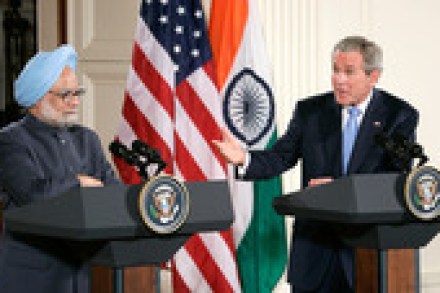
It is appropriate that the US president will be in India on the day that President Bush’s memoirs are published. For President Bush transformed the relations between these two countries, making a strategic alliance possible. This will turn out to be one of Bush’s most important legacies. A strong US-India relationship is vital if this century is going to be one that sees democracy advance. An alliance between the US and India would act as an effective check on China’s attempts to assert its power in Asia. However, I suspect that, for obvious and understandable reasons, most of the coverage of Bush’s memoirs will focus on his comments on 9/11 and its aftermath.