9/11

Michael Anton and the stakes of 2020

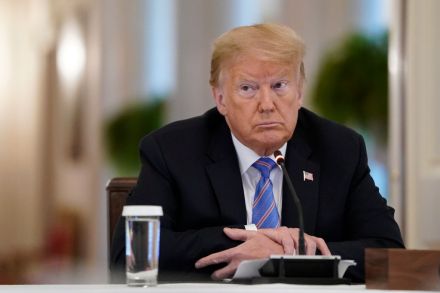
Michael Anton was working in his small home office, almost four years ago to the day, when his wife came in and told him the news. Rush Limbaugh was reading it, on the air, right now. ‘It’ was his essay, a now notorious essay, a soon to be life changing essay, called ‘The Flight 93 Election’. Anton had published it, pseudonymously, with the Claremont Review of Books a few days before. Like any writer, he wanted people to read his work, but, like every writer, he wasn’t too surprised when he wasn’t read. ‘Flight 93’ was posted on Labor Day, a Monday, and did a little traffic. Tuesday: the same. Wednesday? Well, Rush Limbaugh read the whole thing out, all 4,257 words, for three hours, to 13 million people.

michael anton

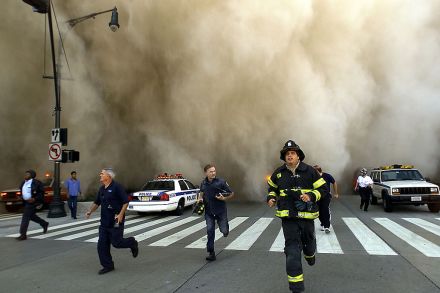
On the ground in Manhattan after 9/11

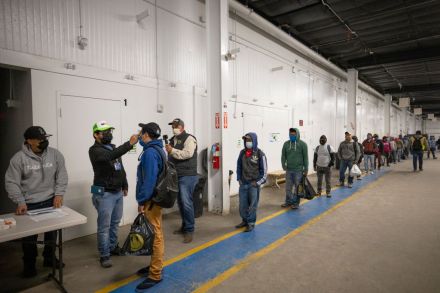
I joke, during this current lockdown, that I am glad I no longer take hallucinogens or mind alterers, but I’m serious. I don’t want to have to think too much about how the globe can pull itself back from this current economic pause, or what I would do if anyone I loved was dying and I couldn’t reach them, because of the new rules. A Taoist monk friend called it a ‘sacred pause’, and in so many ways she is right. Even though I know she was referring to more than wild nature having a rest, I wager it is noticeably nicer to be a bee or a fish right now, with a little more room to maneuver.

9/11 lockdown

End of empire

The end of World War Two inaugurated the era of American dominion, with the United States politically, economically and militarily the most powerful nation on the planet. Yet throughout the subsequent period of American global ascendency, the American people endured a seemingly endless sequence of domestic crises, upheavals and disasters. Primacy abroad did not insulate them, convinced of their unique place in human history, from the trials and tribulations routinely befalling other, more ‘ordinary’ nations. Yet neither did trials at home undermine the deep-seated belief that history had summoned the United States — and no one else — to lead the world.

empire

Still, the Global War on Terrorism goes on

I can think of only a single positive thing to say about World War One: it ended. Yet in addition to precluding any further waste of lives, the Armistice of November 1918 and the ensuing Paris Peace Conference did something else. It allowed historians and other writers to begin taking stock of this ghastly episode, which had caused death and destruction on an unprecedented scale. Making sense of the so-called Great War exceeded the limits of human capacity. Yet however imperfectly, at least it might be understood. Why had the war happened? Why had it lasted so long? What had motivated the belligerents? What did this horrendous cataclysm signify, both politically and morally? Finally, how could the recurrence of such a debacle be averted?

global war on terror

After the virus, the tedium

A few days ago, the French novelist Michel Houellebecq rubbished the idea that the world would change after the pandemic. He wrote: ‘We will not wake up after the lockdown in a new world. It will be the same, just a bit worse.’ The virus, according to him, was ‘normal’, even ‘banal’. As always with Houellebecq, his brand of pessimistic candor made a change from the rolling stream of predictions issued by pundits and academics, who’ve glimpsed in this virus the dawn of everything from renewed hope for a Green New Deal, to the onset of neo-feudalism.Still, it is worth thinking about what a ‘bit’ worse means.

tedium

9/11 and the false sense of American security

Eighteen years ago, I was only a child. My first indication that something bad had happened on September 11, 2001 was that a birthday party my whole class had been slated to attend was canceled. Instead of heading to a celebration, I waited with the rest of my classmates for our parents to come and take us home. Except my mother didn’t take me home. We went straight to the supermarket. I remember watching, mouth agape, as my mother piled what seemed like hundreds of boxes of spaghetti, cases of water, and canned goods into the wagon. None of us knew what would come next, and she wanted to be prepared. That commitment to preparation came from fear. A fear that was rational and justified, and which grew out of a realistic sense that the sands had shifted. We were at war.

9/11

All things lead to 9/11

In the immediate aftermath of 9/11 many writers spoke of feeling immobilised. The scale of the attacks and the world’s shared experience of the media event seemed to demand a response; but simultaneously writers such as Ian McEwan, Martin Amis and Jay McInerney described a sense that the tools at their disposal were inadequate — that the reality of what had taken place exceeded fictional representation. These three all recovered from their shock reasonably quickly, contributing to the flood of 9/11 fiction that poured into bookshops during the 2000s. In recent years this torrent of novels and stories has slowed, but as Christopher Priest’s eerily powerful An American Story demonstrates, it most certainly has not stopped.

american story