1970s

The radical networks that hijacked the 1970s

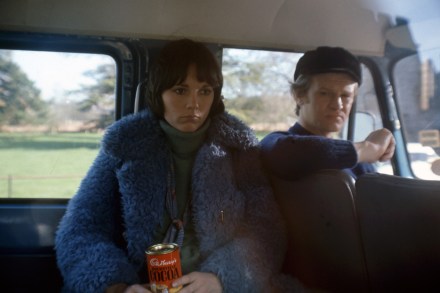
Airplane hijacking, like the mode of transport itself, became common in the 1960s. A practice largely confined to the United States, it was invariably a means for ordinary criminals to extort ransom money or flee to Cuba. In 1968, the hijacking of an El Al flight by the left-wing Popular Front for the Liberation of Palestine revealed the political utility of the act: in exchange for the safe return of its plane and passengers, Israel released 16 Arabs from its prisons. Encouraged by this outcome, the PFLP launched a spate of similar operations. One such mission, the hijacking of a TWA flight in 1969, revealed that prisoner exchanges and ransoms weren’t the only upside of this new tactic.

Four vectors of danger for America and the West

Fifty years ago, everything seemed to be breaking down, kind of like it is now. In fact, it can feel like the 1970s redux. Searing issues of war, ecology, race, and “malaise” have never really disappeared. A silent majority, political schism, limits to growth, and price inflation — all are here. Yet there are new uncertainties too. Even to optimists, debt-induced fragility clouds the economic horizon. Investor Charles Munger notes that bitcoin actively undermines the Federal Reserve System; any gain comes from trading, not from creating products, crops or rents. As fantastic as non-binary sexuality, cryptocurrency points to additional contemporary follies.

Inflation is the great destroyer

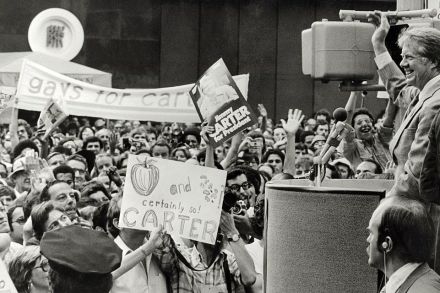
In the summer of 1981, the American air traffic controllers’ union PATCO rejected a salary and benefits deal that had been put forth by the Reagan administration. What happened next lives on in the annals of Republican lore and in labor movement horror stories: PATCO opted for an illegal strike. More than 12,000 air traffic controllers walked off the job, and in one of the most successful union-busts in history, Reagan fired almost all of them. That’s the official account anyway. But there’s much more about the strike that’s less known, or at least misunderstood. For example, did you know that PATCO had actually endorsed Reagan for president in 1980, finding Jimmy Carter too intransigent?

Biden’s problem isn’t his age, it’s his eyesight

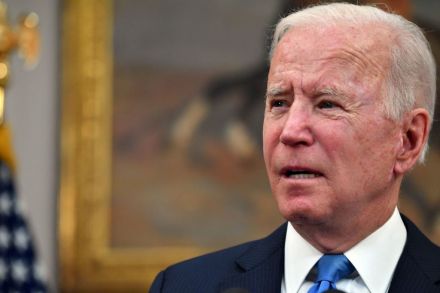
My brothers, my sisters, hold it right there. Thank you. We’re missing a major point, howsoever understandably. All this media chitchat coupling Joe Biden’s political incapacities to his undoubtedly advanced age and slowing gait requires, in my estimation, some context. Nor do I suggest the president’s recently acquired case of Covid — from which we all pray he recovers speedily and fully — lends point and pith to the discussion. I suggest that the problem with Joe Biden isn’t age as such, nor the infirmities that go with having lived back when Cokes cost a nickel and Ed Sullivan was king of TV.

Is swinging back?

In 1974 I was living in San Francisco when I got a phone call from a man who said, “I’m having a few people over to have sex with my wife, would you care to join us?” Back in the 1970s, people like this were called swingers. I politely declined. To my amazement I was recently invited by a couple in their sixties to go to one of London’s secret swinging parties with them. This one, they assured me, was for the “older swinger.” (I didn’t think there were any still alive!) To swing or not to swing? That is the question I never thought I’d ever face again. It was a kind offer, but frankly I’m too old for those sorts of sexual shenanigans.

swinging

Everyone hates Nancy Pelosi’s gas bill

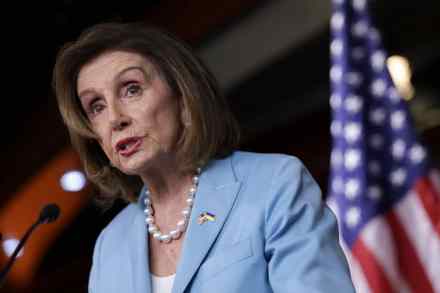
Congress on Thursday approved a bill that gives the White House power to enact price controls on gasoline. The Consumer Fuel Price Gouging Prevention Act lets the Federal Trade Commission treat so-called price gouging as a deceptive trade practice. Congress specifically directs the FTC to prioritize cases “concerning companies with total United States wholesale or retail sales of consumer fuels in excess of $500,000,000 per year.” In other words, all the major suppliers of oil and gas to the United States. “This is a major exploitation of the consumer, because this is a product the consumer must have,” droned House Speaker Nancy Pelosi, whose love of fuel price gouging legislation dates to 2005.

Enough with the 1970s comparisons

The media are abuzz these days about a purported “return to the 1970s.” Generally speaking, such chatter is not intended kindly, for many today would likely agree with the sardonic assessment of the Seventies made by the editors of New West magazine as that decade wound down: “It was the worst of times, it was the worst of times.” And not just because of the popularity of bell-bottom pants, platform shoes, and disco music. In the Seventies, we had problems far more troubling — more troubling even than the pop group ABBA. For starters, we saw a quadrupling of real oil prices between 1973 and 1979. We suffered high rates of both inflation and unemployment, which hitherto varied inversely, leading to the creation of the portmanteau “stagflation.

1970s