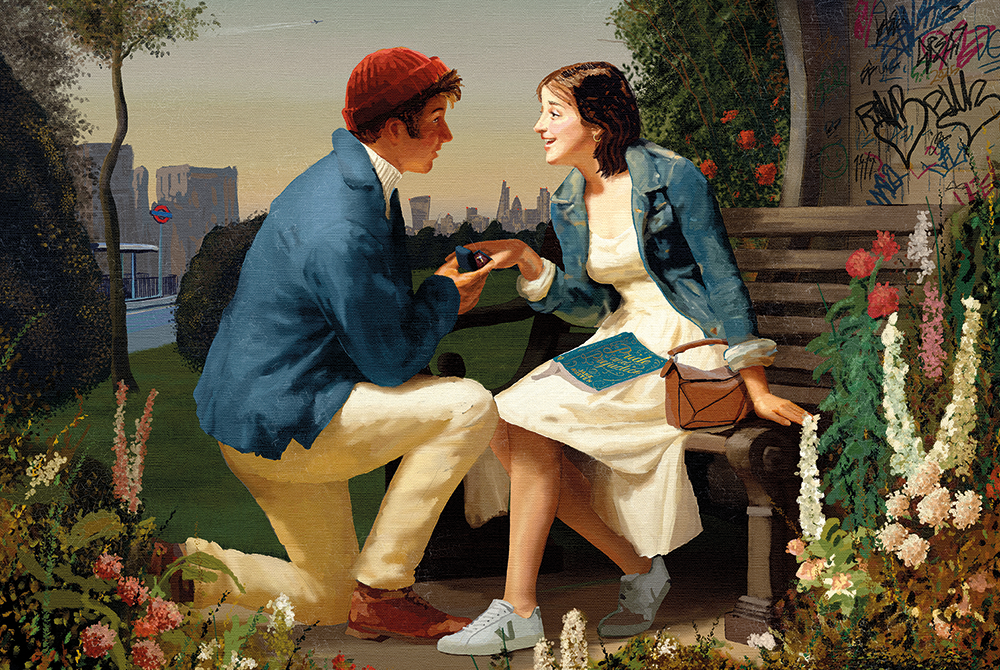
Friends is still the most streamed show in the UK. Gen Z is relaxing to a sitcom that was set, roughly, when their parents met. The show mostly shows a world where dating is much like it is today. Of course, the apps do not exist yet, but hook-up culture is alive and well, there are several gay characters and pornography is pervasive. To the statistically uninformed, the universe that Friends is set in is very similar to ours. But in terms of marriage, the world has changed a lot since the 1990s.
Most of the characters in Friends end up married or expecting to marry. Even most of the side characters end up coupled up. Dating today is very different. Marriage rates are falling much faster than anyone realises.
If you were born in 1960, you had an 85 per cent chance of getting married by the time you turned 40. This fell by more than 10 percentage points for women born in 1970 and by more than 10 percentage points again for women born in 1980.
We do not have the numbers yet for women born in 1990, but things do not look promising. Since 1990s-born women turned 25, they have persistently been 10 percentage points less likely to be married than their 1980 counterparts. Now, by their mid-thirties, only 39 per cent are married. My guess – and it is only a guess, but a defensible one – is that only half of the cohort born in 1990 will end up married. For every year of birth after 1990, knock off another percentage point.
A lot of people are inclined to blame the decline of marriage on smartphones. They reason that addictive scrolling has substituted for partner-finding – an act that remains persistently dependent on in-person interaction. Or perhaps dating apps have given people an illusion of choice that makes the time-honoured tradition of settling down less appealing.

But we should note that this trend long predates smartphones. Marriage rates started falling before the internet was invented. If we are going to point blame at a particular technology, perhaps we should look at contraception or abortion. People are now free to have low-commitment sex, so they are not getting married just to satisfy their carnal urges nor are they walking down the aisle because of an accidental pregnancy.
Marriage is likely falling because women have only recently been freed from dependence on bad men. Unmarried women are able to support themselves and their children. Spinsters and single mothers are no longer social outcasts. Old maids do not have to accept proposals from potentially abusive men.
Despite the fact that the internet, contraception and women’s liberation are, overall, good things, the combination will have devastating consequences for all of society. Most importantly, it means people will be unhappy. Marriage rates have fallen much faster than people’s desire to get married. Most Brits under 35 still say that they want to get married, and married people, across cultures, are consistently happier.
People are getting lonelier. We live in a world in which everyone, but particularly men, has fewer friends. In the UK, small families are becoming more common. The proportion of families with just one child has been growing since the turn of the century. After their parents die, these children may have no family left at all. Without marriage and children, they risk being totally alone.
It is well documented that we are facing a collapse in birth rates across the developed world and Britain is no exception. Falling birth rates have many causes but falling marriage rates are certainly a critical part. Without more people, Britain will become bankrupt. We are facing a future in which the elderly outnumber working people. These unwed millennials may find they have spent their working lives paying for pensions that the country can no longer afford when it is their turn to receive them.
I do not have a solution to this problem, but it is worth sounding the alarm. Slowly, marriage is becoming rarer and rarer. This crisis is not like a recession or a terrorist attack. It won’t happen suddenly and grab headlines. Instead, like the erosion of public trust or ahistorically high tax rates – it is sneaking up on us. It is feasible that we may soon live in a world in which marriage is an anomaly.
At this moment we are at a critical tipping point. Perhaps, for the first time since this country was ever inhabited, most young people cannot expect to get married. We are in the midst of a crisis and no one seems to have noticed.





Comments