Life

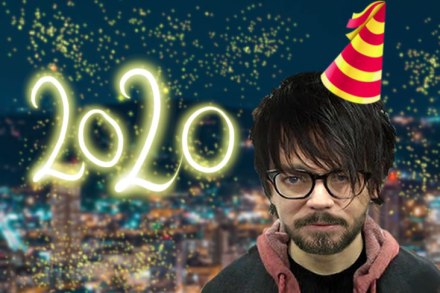
A Godfrey New Year

Portland, Oregon A new year, whether you follow the Greek calendar or the Latinx, is like the first page in a new diary, its date set by patriarchal theocracy, its entries written in guilt. I’ve always questioned the tradition of making and then forgetting resolutions. I view them as an empty promise of redemption, like the fad diets with which late-capitalist dysmorphia tyrannizes the fat-positive. This year, however, I decided to indulge my curiosity. Yes, dear reader, I have made a resolution. ‘B-b-but how on Earth can Godfrey Elfwick’s holistically beneficial way of living xir’s best life be improved upon?’ I hear you stutter in bewilderment.
new year

After the Americans

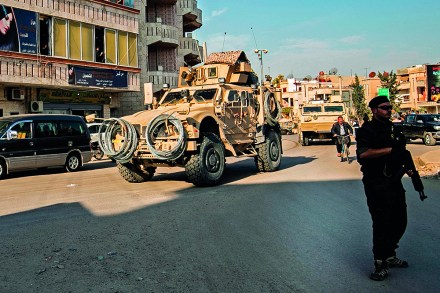
This article is in The Spectator’s January 2020 US edition. Subscribe here.Malkef, northern Syria I’m sitting under an olive tree about a mile from the front with ‘Agir’, a Kurdish soldier from the Syrian Democratic Forces (SDF). The sharp cracks and dull rumbles of fighting make their way to us over dusty farmland; the shade protects us from the scorching mid-morning sun and omnipresent Turkish drones. Agir tells me how the Turkish-backed Free Syrian Army (FSA) can’t fight — at least, compared with the Islamic State (Isis). Agir fought Isis with American backing for years in Syria. Sometimes, he says, Isis soldiers would tie foam cushioning to their feet, sneak up to your position in the moonlight and slit your throat.

americans syria

In the cart of the city

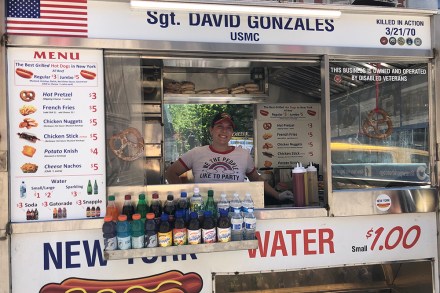
This article is in The Spectator’s January 2020 US edition. Subscribe here.New York City It’s the Sunday before Memorial Day outside the Metropolitan Museum of Art and the street is filling up with families. Navy servicemen and women stop for a friendly word and a photo. But a tragedy is happening here and there’s nothing anyone seems able to do about it. Elizabeth Rossi, a retired disabled Marine veteran in her early forties, runs a hot-dog stall outside the museum. She served in Operation Iraqi Freedom. ‘On my first day we were bombed; you never forget that,’ she says. Her father, Dan, also a disabled vet, runs the van next door. But they feel that they have been rejected by the city of New York and the world around them.

food cart

Burning Christianity

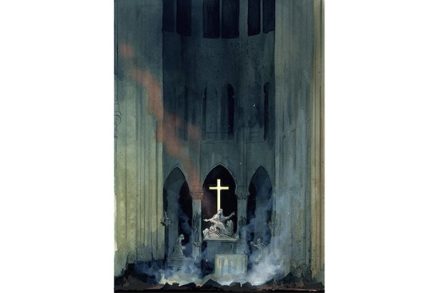
Conspiracy theories aren’t something I take seriously. But when flames engulfed Notre-Dame cathedral in Paris on the evening of April 15, 2019, my mind momentarily wandered down that path. After all, attempts to incinerate, vandalize and rob Christian churches and shrines have become so commonplace in France over the past three years that one could be forgiven for concluding that something even more sinister was afoot. In 2017 alone, according to France’s Interior Ministry, 878 acts of vandalism were committed against Christian places of worship, cemeteries and shrines. That’s an average of nearly two and a half sites being targeted every day. Government officials play down the problem.

christian

Headlines of the coming year

This article is in The Spectator’s December 2019 US edition. Subscribe here. January to March ‘Caucasians Are The Best’ Remark By Biden At Iowa Caucus Renews Concerns Over Age Declaring An ‘End To These Endless Security Agreements,’ Trump Tweet Announces US Will Withdraw From Nato ‘Why Do We Need To Defend Germany? Did They Defend Us At Normandy? NINE!’ New Whistleblower Bombshell: $391 Million Military Aid To Ukraine Conditioned On Start Of Construction Of Trump Tower Kiev Trump Tweet Hints At Displeasure With Lawyer ‘Rudy Is A Great Guy But He Is Making Trump Look Evil And Should Stop Going On TV NOW!!!

headlines

The culture war is lost

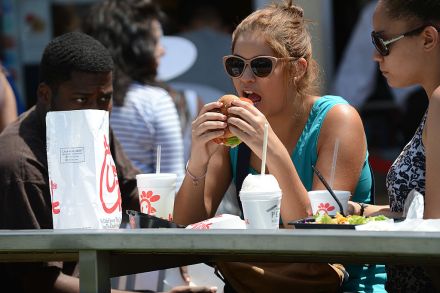
Even though American culture warriors of the right are fighting what Tolkien called ‘the long defeat’, surrender in the Battle of Chick-fil-A was a monumental symbolic loss. That’s because the fast-food chain had become what psychology calls a ‘condensation symbol’: a phrase or entity that powerfully evokes a worldview, and usually calls forth strong emotions around it. Chick-fil-A sells fried chicken. When are chicken nuggets not mere morsels of battered and fried chicken? When LGBT activists transform them into sacraments of Bible-thumping wickedness, as they have done with enormous effectiveness since 2012. That was the year that Dan Cathy, CEO of the privately held company and son of its founder, criticized the campaign for same-sex marriage as offensive to God.

chick-fil-a christian

Christmas greatness: a Yuletide sermon

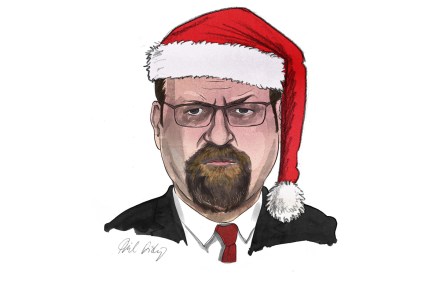
This article is in The Spectator’s December 2019 US edition. Subscribe here. ’Tis the season friends. The season to be merry. But also the season to remember. Especially those who gave their everything. For us. Great Americans who made the ultimate sacrifice to protect the greatest nation on earth. I speak, of course, of the true meaning of Christmas. The Yuletide. The winter festival. The hinge of the Judeo-Christian cultural year. The subject of so much opprobrium from the secular left. Christmas is under attack. It has to be defended. President Donald Trump is fighting back. But we all have a responsibility to stand up. To say ‘No!

sebastian gorka
nativity

Godfrey Elfwick’s Nativity drama

This article is in The Spectator’s December 2019 US edition. Subscribe here. Portland, Oregon How do you survive the festive season when you have a social conscience? Dear reader, allow me to impart to you my experience with this predicament, and some wisdom along the way. Once again, the Chr*stm*s season is upon us. Like a virus, it cares not whom it infects and cannot be completely avoided. I choose not to celebrate this holiday, both as a Muslim atheist and a social-justice progressive. Like Th*nksg*v*ng, Chr*stm*s is a toxic symbol of white heteronormative greed. Like the river of evil slime depicted in Ghostbusters II, it seeps insidiously into the fabric of all our lives.

American English must be the most carelessly spoken and written dialect on Earth

This article is in The Spectator’s December 2019 US edition. Subscribe here. Kemmerer, Wyoming Before 1965, when immigrants to the American Republic came almost exclusively from Europe, the largest white ethnic group in this country was of German stock. It may still be so, though I am unaware of recent statistics that demonstrate the fact. Certainly, a linguistically sophisticated visitor arriving here today from Europe might easily arrive at that conclusion. The now ubiquitous ‘Yah!’ is phonetically indistinguishable from ‘Ja!’, and while ‘Yah-wohl!’ has yet to be widely heard in American streets, connoisseurs of the American language in the 21st century would hardly be surprised should it crop up there.

american english ‘OK, here it is, “Brexit” … Apparently it means “Brexit”…’
drugs

White Christmas: the magic of the festive drugs binge

This article is in The Spectator’s December 2019 US edition. Subscribe here. An effective antidote to all this thoughtless zealotry, I find, is to go out for the evening with my friend Trevor. When despair hits total, I know it’s time to ring him up and suggest a small sherry: code for drinking and taking drugs until we’re totally out of our minds, then partying all night. Trevor is a big, strong, hard-working country boy for whom life is invariably a momentous affair. Though he’s a tolerant man, there is a point at which forbearance ceases to be a virtue, and he is an old-school puncher and the man you have to beat if you want the magnetic title of Hardest Man in Town. His catchphrase is ‘Who’s the Daddy?

The joy of spending Christmas alone

This article is in The Spectator’s December 2019 US edition. Subscribe here. I’ve always resented Christmas — because Christmas is a holiday that makes liars out of us all. Let’s not get into whether Jesus was born of a virgin. Suffice it to say, I struggled with this idea from a young age. Back in kindergarten, having no idea what a virgin was, I consulted Anne, my precocious neighbor and classmate at the Convent of the Visitation School. Anne showed me a biology book, which presented in very graphic detail the mechanics of intercourse. Anne explained that being a virgin meant you hadn’t had sex. ‘Mom, how did the Virgin Mary get pregnant with baby Jesus?’ I asked. ‘Oh, God did that,’ she explained dutifully.

christmas alone

Let Utah be Utah

This article is in The Spectator’s December 2019 US edition. Subscribe here. Salt Lake City, Utah Here I sit in a Salt Lake City coffeehouse, wishing I’d donned the uniform (white shirt, black tie, nameplate) of a Mormon missionary. Now that would throw the ambient hipsters for a loop. Last time I buzzed through the Beehive State was the dawn of 1984, when I fled the Imperial City on the Potomac after 30 months legislatively assisting Sen. Pat Moynihan. I went to Washington a left-of-center populist and returned a novice in what Henry Adams called the Conservative Christian Anarchist party, of which he mistakenly thought himself the only member.

utah

Digby Dent on lawn darts in winter

New Haven, Connecticut Greetings friends. Old Digby Dent (BR ’89) here. I’ve been press-ganged by the good folks at The Spectator into sharing a few reflections on living well as the fiery splendor of autumn gives way to the dour cold of winter. The leaves are gone, the days grow short and it’s dark by four in the afternoon in Boston. Worse still, the obvious recreations of warmer days having given way to the inconstancy of the third season, we find ourselves waiting for enough snow to ski, cross-country or alpine. What is to be done in the unsteady interregnum from now until The Game? Sailing is no damned good if you can’t guess how cold it’ll be on the water.

lawn darts
key west

My wild Key West

This article is in The Spectator’s December 2019 US edition. Subscribe here. Key West was originally called Cayo Hueso (Bone Island in Spanish) either for its bleached limestone rock or because the Calusa Indians used it as a burial ground. The first European here was Spain’s Ponce de León in 1521, on his spiritual quest for the Fountain of Youth. Lt Cmdr Matthew Perry planted the American flag on March 25, 1822. By the 1880s, Key West was the richest town in Florida. I first came on a Greyhound in November 1977. I knew no one. An American boyfriend in London had talked about breakfasting with fishermen, and of the Southern writer who was his mentor.

Notes on…bridge

This article is in The Spectator’s December 2019 US edition. Subscribe here. ‘If you don’t get your act together,’ I told my husband, Bobby, ‘I’m going to have to find a new partner.’ In life, I had no doubt he was the one. In bridge, it was another story. The four-person game seems to have evolved as a distinct form of whist in the 19th century. Today, people commonly explain it as a more complicated version of spades. It begins with bidding: each player opens his hand, counts his points (aces are four, for example; kings are three) and determines which of his suits are strongest. Teams of two then try to communicate what cards they have through a set of predetermined codes called conventions.

bridge

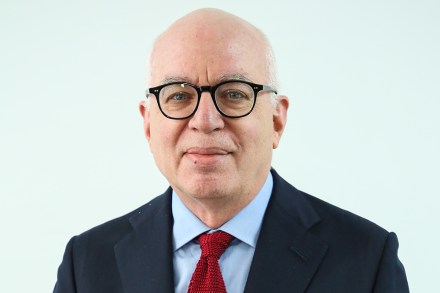
Michael Wolff is working on ‘nothing’

This article is in The Spectator’s December 2019 US edition. Subscribe here. New York ‘What are you working on?’ is a standard and annoying question often asked of creative types. Finally, I have a good answer: ‘Nothing.’ That was my response at a recent New York dinner party at the home of the Italian journalist Mario Platero and his British wife, Ariadne. The Plateros have been entertaining the New York media class for decades and many of their long-time guests are even older than I am. But they are all still announcing projects. More power to them. They are fighting obsolescence. I’m embracing it. For one thing, it is hard not to be fatalistic if you are a journalist.

michael wolff

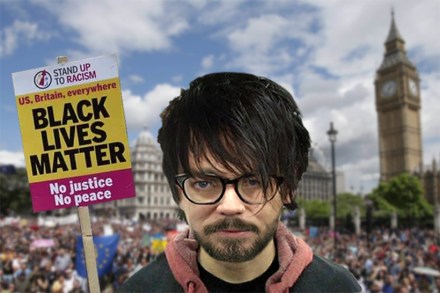
My morning with Black Lives Matter UK

This article is in The Spectator’s November 2019 US edition. Subscribe here. Portland, Oregon It was a bright April morning and the sun shone benevolent golden rays upon me as I strode purposefully up the steps to the door of a house in the London district of Islington. Pressing the Victorian brass doorbell, I heard the comforting chimes of Toto’s ‘Africa’ emanating from within and nodded my head in approval. After a few seconds the door was opened by a charming white-passing transracial man who called himself Babatunde (I later found out his birth parents had named him Rupert). He graciously invited me into a spacious studio apartment decorated with tribal carvings from Ikea’s African Solnedgång collection.

black

Fashion victims: how feminists are betraying Muslim women

This article is in The Spectator’s November 2019 US edition. Subscribe here. When I was growing up, one of my closest female friends was Muslim. At first, her parents didn’t want us to be friends; they figured that as a child of divorced parents, I’d be a bad influence. Their restrictions pushed her to what they would surely have thought of as the dark side, had they ever known what we got up to. She and I were devout feminists, and we knew that women’s equality was more important than the dictates of religion. Neither she nor her mother covered her hair with a hijab or wore a baggy abaya. I’d been raised in a Christian household where short skirts were prohibited, but I’d recently moved in with my more permissive mother and stepfather.

feminists

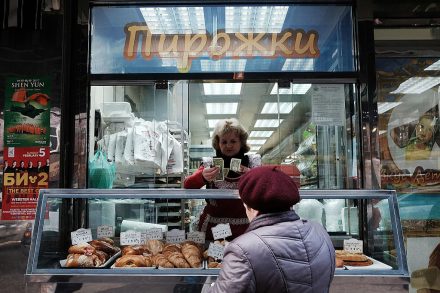
The ‘Russians’ of Brighton Beach

This article is in The Spectator’s November 2019 US edition. Subscribe here. At the very southern tip of Brooklyn, far from the hip avocado cafés and right before you hit the sea, there sits the neighborhood of Brighton Beach. Nicknamed ‘Little Odessa’ after the waterfront city in Ukraine, the area is home to primarily Russian-speaking immigrants from the former Soviet Union. It’s a jumble of identity. The immigrants are mostly Jews from Ukraine, hence the nickname, but also Russia, Belarus and the other Soviet republics. So what to call these people in America? In Russia, in Ukraine, in Belarus, our identity cards never described us as Russian, Ukrainian, Belarusian. We were just Evrei, Jews.

brighton beach russians

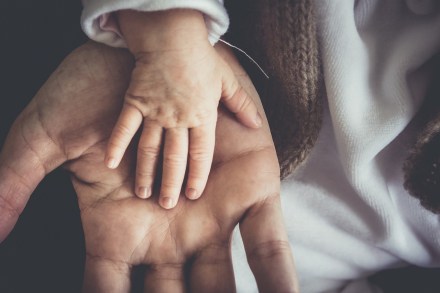
Daddy issues: the fatherhood revolution has failed

This article is in The Spectator’s October 2019 US edition. Subscribe here. When I was growing up in the late 1960s, boys like me craved the admiration and approval of our dads; we wanted nothing more than to impress them. And now that we are dads, we crave the admiration and approval of our children; we want nothing more than to impress them. But the curious thing is, they don’t care about impressing us. In fact, our teenage children are just like our dads were — distant figures who are busy getting on with their own lives. Today we demonize dads of the recent past for being cold and uncaring. For failing to change diapers, read stories at bedtime, provide the unconditional love and praise children need to grow into happy, well- adjusted adults.

fatherhood