Life

Six degrees of Batavia

I never could figure out that Six Degrees of Kevin Bacon game. Am I one degree or two degrees removed from someone a friend or acquaintance of mine knows? Whatever, as kids a generation ago used to say. Through political eminences I have known, I suppose I’m semi-adjacent to various world rulers of yesteryear, but the challenge is to see how far back in time one can go. This is my best shot. When our daughter was one year old, she sat on the lap of my friend Henry W. Clune, the Rochester novelist who was then 105 years of age. Henry’s father grew up in a neighborhood whose luminaries included Frederick Douglass, the great abolitionist orator who called the Flower City home from 1847 to 1872.

degrees
experts

The march of the ‘experts’

Historically Americans have had little, if any, respect for college and university professors, for whom they felt a mild though distant and tolerant contempt. As more and more members of the professoriat have been recognized as “experts” in their respective fields, or at least at the edges of them, since World War Two, they have naturally presented themselves to the public under the guise of “specialist,” a vast improvement over their previous reputation as absent-minded eggheads barely able to afford the Ford Motor Company’s cheapest product and a shabby house on the wrong side of the railroad tracks.

The rise of the Busy People

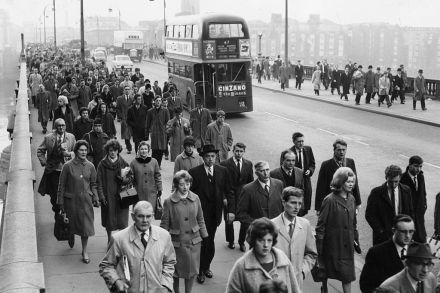
I have a friend who’s always very busy. So busy that we rarely see each other. But I know that she’s very busy because when we talk on the phone and I ask “How are you?” she always says the same thing: “Busy. Very busy.” She is one of the Busy People. Busy people work very long hours and have important meetings, conferences, trips and appointments to attend to. She belongs to that breed of Busy People — fortunately a minority — who love to tell you how busy they are. I, on the other hand, am one of the Lazy People. We hardly work at all. We don’t have meetings or conference calls; we have long lunches and short naps. The only important meeting we ever take is with our oral hygienist or therapist.

busy
democratic

A eulogy for the Democrats of yore

In my days as a budding political scientist — nipped, fortunately for the discipline, in the bud — I learned that party identification is frequently due to non-ideological, and to outsiders irrational, factors. I’m sure this is less true today, as corporate and social media herd us into Team Red and Team Blue cattle pens, but this knowledge offers comfort every biennium, when primary elections roll around and I wonder why the hell I remain a registered Democrat. The die was cast, I suppose, when as a tyke I discovered in my grandparents’ attic a “Peace, Preparedness, Prosperity” button promoting Woodrow Wilson’s 1916 reelection. (How was I to know that smug bastard lied?

sports

The ultimate human futility of sports

If it were true that civilization progresses inexorably according to the laws of some teleological principle, public — in modern times, professional and commercialized — sports would not have survived Classical Greece and the Roman Empire, thus sparing the modern world such obscene extravagances as the Super Bowl in the United States, the World Cup in Europe and the international Olympic Games. Mass man at play in his leisure hours is not a pleasant and encouraging sight in any circumstances, but gathered with his fellows in massive sports stadia one views him at his absolute worst.

Succeeding at failing

My London agent calls to break the news gently. “Your book is dead. I can’t sell it. Sorry. But you do have the most fabulous collection of rejections from publishers I’ve ever read.” “Really? Can you get me a book deal for a book of my book rejections? Failure is a hot topic now.” “You’re funny...” “Thanks.” “...but not commercial. Still, there is some good news.” “Really?” “I’ve sold your ex-wife’s new book for a huge advance!” My ex-wife and I have the same agent so I’m well practiced in the art of the fake congratulation. It’s what we men do, our equivalent of the fake orgasm. “That’s such wonderful news!” Two weeks later, more failure.

failure
hoosiers

Hoosiers of New York

Poor March. It has so few defenders. Yet annually, on the first day of the month, I stand in the snow or sleet or icy rain and recite William Cullen Bryant in hopeful placation: “Ah, passing few are they who speak/ Wild stormy month! in praise of thee.” Bryant went on to speak in measured praise of the third month not so much for its qualities, such as they are, as for the promise it contains of the eventual arrival of the fifth month. For me, though, unheralded March offers the spectatorial pleasure of basketball.

liberalism

Liberalism and existential insecurity

After 1789, conservatism was the party of insecurity, pessimism and fear, liberalism the party of confidence, optimism and eager anticipation, down to the early years of the twenty-first century when the mood of hubristic triumph that followed the collapse of the Soviet Union deflated almost overnight, in the United States especially, where liberal democrats have come to resemble the “normal American of the pure-blooded type” whom Mencken described as going “to rest every night with an uneasy feeling that there is a burglar under the bed, and... [getting] up with a sickening fear that his underwear has been stolen.

Blowing my mind in the Electric Forest

Rothbury, Michigan exists in a similarly strange duality to the small towns of Woodstock in New York and Glastonbury in Somerset on the other side of the Atlantic. It is a village of little consequence once you separate it from the famous music festival associated with it. But when the electronic dance music (EDM) extravaganza Electric Forest happens, Rothbury — 432 inhabitants, according to the 2010 Census — gets its annual day in the sun. The hatchet-faced Michigan state troopers, standing to mark the turnoff from the main road through the village toward the festival didn’t return our eager waves from the car. But the smoldering opprobrium of The Man was soon forgotten amid the fields and woodlands of the Double JJ Resort that braves hosting the festival.

electric
catholic

Rum, Rome and rebellion

As a piss-poor Catholic I am about the last person who should express an opinion of the propriety of President Biden receiving Holy Communion, but as a native of the county whose nineteenth-century women’s college (Ingham University) employed the chancellor whose phrase “rum, Romanism, and rebellion” may have flipped the 1884 presidential election to Grover Cleveland — how’s that for a tenuous connection? — I feel it within my competence to say a word about anti-papism in American politics. I had a bibulous lunch with Senator Pat Moynihan, my long-ago boss, several months before his death in 2003. Over more Pinot Grigios than I can remember, Moynihan said that he was disturbed by rising anti-Catholicism in the Democratic Party.

literature

The death of literature

The greatest men make the greatest mistakes. One thinks of the late John Lukacs, the Hungarian-American historian who claimed that the age of the book is at an end. That is far from being the case, the electronic book having failed to drive the print version to extinction as enthusiasts had predicted. Indeed, the continuing flood of printed and bound books remains among the greatest threat to books today — good books, that is, books worth an intelligent man’s time.

Staten my preference

The Margarita, the divey bar facing an equally divey pizza joint in the Staten Island Ferry Terminal, is a special place. For one, it’s where a middle-aged African-American lesbian bought me a drink — the only instance I can recall from decades of drinking that a woman has offered to buy me a drink before I got her one. Given her preference for fuller Latino ladies over lanky white men — which she emphasized through photos on her phone — my new acquaintance clearly didn’t have an agenda behind that drink for me. We just got talking and she did that New Yorker thing of embracing companionship and the moment.

staten

Did the culture wars kill the New Year’s Eve party?

It’s hard to celebrate New Year’s Eve when, if like me, you don’t drink, you don’t do drugs, you don’t have sex with skanky strangers in sleazy toilets anymore — and you like to be in bed by 9 p.m. My ex-wife used to complain that she was married to a man who wanted to go to bed at nine on New Year’s Eve. The bit she left out from this tale of woe was that I wanted to go to bed with her and celebrate with cold martinis (I still drank back then), hot sex and yummy food. Isn’t that a better way to see out the year than a party full of drunk strangers desperately trying to make whoopee? The answer for most of my friends and most of London too is: no. They have this compulsion to celebrate and get very anxious about not having a party to go to on the big night.

New Year's Eve

Mark Twain in Buffalo

“Irreverence is the champion of liberty and its only sure defense,” wrote Mark Twain in an age before irreverence became a hanging, or at least exiling, offense. Perhaps the more apt aphorism today belongs to Edward Abbey: “The distrust of wit is the beginning of tyranny.” (The distrust of half-wit, I suppose, is the beginning of a TV critic.) Mark Twain would be hopelessly out of favor with both wings of the modern duopoly. Militaristic Republicans would scorn Twain for his skepticism of empire and mockery of world-saving cant. (He was a supporter of the Anti-Imperialist League and proposed that the stars and stripes be replaced by the skull and crossbones.

twain

The exhortative tradition in America

G.K. Chesterton observed after his return to England from a lecture tour in the United States that America is a nation with the soul of a church. That is hardly surprising, the northernmost of the original thirteen colonies having been established by a fervently religious sect. All religions are exhortative by nature, none more so than the sectarian ones which have a solid history of being noisier in this respect than the established churches, partly, I suppose, because one encourages the burning of witches in louder tones than one solicits a bigger collection plate for the relief of the victims of territorial rebellion in Ethiopia. It is true that the first generation of Puritans in Massachusetts were a more dignified lot than many of their successors.

exhortation

The language of the victimhood war

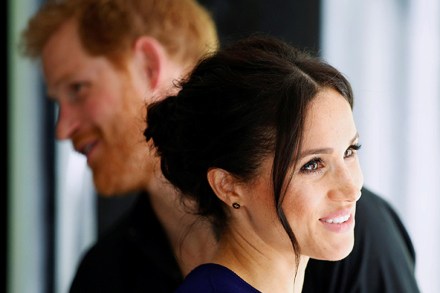
Language is used in a weird way in the victimhood war, where those who see themselves without agency bravely speak their truth to power. Their truth cannot be negated merely by examining the evidence, for it derives from lived experience. The powerful are axiomatically guilty, and must be called out for their behavior, or behaviors, as the new usage puts it. They must then own or take ownership of the issue. The Duke and Duchess of Sussex found themselves victims without agency in the racist world of the royal family. During their interview with Oprah Winfrey, they spoke of conversations between the Duke and a member of the family about their unborn son Archie and what color his skin might be.

own

Summer in Newport

Hello, shipmates! Digby here, back ashore, back at my desk, bunking in Vermont for the holidays with a shapely ski bunny and a seabag stuffed full of sailing stories of harrowing feats on the high seas. Well, few of them are particularly harrowing, save for a midsummer horror when a bespectacled crewmate, his face fogged with mask mist, misplaced a pair of Pol Roger bottles that now sleep with the fishes. Champagne donated to Davy Jones aside, it’s been a good year. I spent the summer in Newport, of course. It’s a fine town, and though I feared it would feel a bit dead on account of the persistent plague, the pandemic was no match for the nautically minded.

newport
duncan

Blues for Jimmy Duncan

Were Pulitzer Prize-winning “author” John F. Kennedy — I mean Ted Sorensen — to write Profiles in Courage today, taking his subjects from the contemporary political world, his pickings would be mighty slim. I suppose he might produce one of those comically brief novelty books, à la Steve Miller’s Higher Poetics or Hot Stuff by Mamie Eisenhower. For my part, I can’t think of a sharper modern political profile in courage than that cut by Tennessee Republican John J.“Jimmy” Duncan, Jr., who represented Knoxville in the US House of Representatives for thirty years before his retirement in 2019. Jimmy — full disclosure: I am a friend and admirer — was one of the six brave and prescient House Republicans who resisted intense lobbying by George W.

class

The foremost challenge facing Western democracies

A few philosophers since ancient Greece have been wise, scarcely any humble. None at all, to my knowledge, has had the hubris — or maybe courage — to tackle the foremost challenge in political philosophy facing Western democracies today: how to achieve a demotic political system with an elite culture resting on top of the popular one, and the subordinate problem of how to prevent bad culture from driving out good, or making it impossible. Not even Tocqueville addressed the problem, which shows what a wise man the aristocratic Frenchman truly was.

The history of the American Memorial Chapel

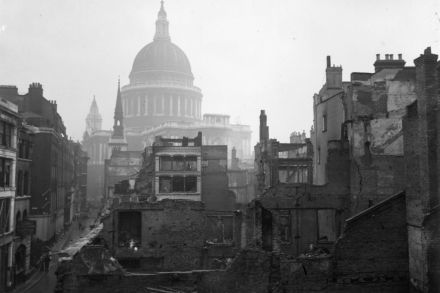
The clipped voice on the old television newsreel tells us that November 27, 1958 was a gray old London day. The Queen, accompanied by Vice President Richard Nixon, was dedicating and opening the American Memorial Chapel at the far east end of the City of London’s great cathedral. Ordinary men and women from all over Britain paid for the chapel by public subscription. It was the least we could do. It was a miracle that the cathedral had survived the Nazi Blitz almost intact. One part of the cathedral was hit by a bomb in October 1940, and it was on that site that eighteen years later the Memorial Chapel was built. The Chapel is dedicated to the 28,000 American people who were stationed on British soil and died in World War Two, many of them on D-Day.

chapel