Food and Drink

Is this the end of the French croissant?

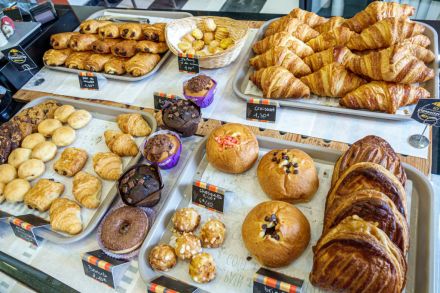
Occasionally, a French person reveals – without any malice or superciliousness – that they run on an alternative operating system from us Brits. And on an entirely different motherboard from our American cousins. Over the years of gathering supporting anecdotes, a surprising theme has emerged: butter. Take my first visit to Paris, more than 30 years ago. I innocently asked for butter with my croissant. Simple answer: “Non.” Naturally, I remonstrated. The waiter retorted: “A croissant eeez butter!” And, in fairness, he had a point. Upon biting into said viennoiserie, I had to concede: it was nothing like the dry grocery store versions I was used to. Moments later, a small pot of raspberry confiture was graciously placed on my table.

croissants
g&t

How America fell in love with the G&T

The gin and tonic has had quite the journey. From humble beginnings protecting British explorers against malaria, it has become the country’s favorite cocktail. Abroad, Italians grown tired of spritzes now opt for it come aperitivo hour. The Japanese bow before it. The world stumbles after it. Yet there is one land the G&T has been slow to conquer: America, the land of vodka sodas and zero-calorie seltzers. In recent years that has begun to change. While overall consumption of spirits is down, sales of gin in the US are on the rise and expected to grow some 6.5 percent a year for the rest of this decade. Craft distilleries are in the vanguard: in California, gin is infused with citrus and coastal herbs. In the South, it might be perfumed with watermelon rind or magnolia blossoms.

Why bother banning US booze in Canada?

You know what they say about America: beautiful for spacious skies, for amber waves of grain and purple mountain majesties above the fruited plain. But its fruited plains – specifically its vineyards – and amber waves of grain aren’t doing her neighbor to the north much good at the moment – at least not in the beverage department. In the Loyalist province of Ontario, just as in la belle province of Québec, no California wines have graced the store shelves for more than half a year. American tipple is out. As far as eastern Canada is concerned, the minions of Francis Ford Coppola crush grapes in vain, all is quiet along the Yakima and it matters not whether pinot noir still reigns supreme in the Willamette Valley. Ask not for whom the Napa flows; it’s not for thee.

alcohol

Go to Cicoria for the food, stay for the opera

Smart Italian restaurants in cultural destinations are like buses: you wait ages for one and suddenly two come along at once. I recently praised Locatelli at London’s National Gallery. Returning to the city, it is the turn of Cicoria at the Royal Ballet and Opera, Covent Garden; a joint under the aegis of Angela Hartnett, well-known for her upscale restaurant Murano in Mayfair, her casual chain Cafe Murano and her frequent appearances on the box. Surprisingly few of the world’s great opera houses have given much thought to catering, although things are improving. I ate very well recently at Madrid’s Teatro Real and you can push the boat out with caviar at the Met in New York.

cicoria

Zohran Mamdani’s policies will make restaurants bland and expensive

There’s no shortage of catastrophic predictions for New York City under Zohran Mamdani’s leadership. While we probably won’t see breadlines, the wildly expensive, exhaustingly derivative restaurants that dominate the New York food scene are likely to become more dominant. Mamdani’s big pledge on food is to “make halal eight bucks again.” But it’s a “false promise” of street-food affordability according to Heritage Foundation economist Nicole Huyer. She says Mamdani’s economic program, which includes higher taxes, steeper leasing regulations and a pledge to raise the minimum wage to $30 an hour by 2030, will effectively make restaurants even more expensive.

zohran mamdani

What doesn’t kill Egly-Ouriet makes it stronger

In recent columns, we have visited some lesser known spots in Burgundy – Saint-Romain, Maranges, Ladoix – where the wines are good and the prices reassuring.  This time, I’d like to travel to Champagne to introduce you to one of my most exciting recent discoveries, the wines of Egly-Ouriet. You know about Dom Pérignon, Krug, Bollinger and Taittinger. They can be very good. Egly-Ouriet is something else. Remember that Champagne occupies the northernmost precinct of French wine production. The northeastern bit of the area borders Belgium. It’s chilly up there, and damp. Nietzsche famously declared that, “What doesn’t kill me makes me stronger.” That may not be true of people. I am pretty sure it is not. But the observation has a certain application to wine.

egly-ouriet

When did restaurants get so boring?

The New York Times recently released its annual list of America’s Top 50 restaurants – and the perfectly predictable honorees highlight just how beholden the restaurant industry is to the tastes of a would-be cosmopolitan class. The casually refined, vaguely ethnic-fusion cuisine that you stumble upon even in America’s most provincial places is rife. From New York to Los Angeles and everywhere in between, America’s restaurant industry has never been more diverse. Yet somewhat counterintuitively, it’s also never offered more of the same. Often, these restaurants propose some mix of French staples (think mother sauces, patisserie) or Italian comfort food (pasta, pizza) fused with Latin, Asian and/or Middle Eastern flavors.

restaurants
tomato

Why I haven’t created a tomato-cannabis hybrid

Jean-Louis was leaning out of his second-floor window. “Bonsoir, Dan!” I could hear the rumblings of a social gathering behind him – no music, just a cacophony of French voices battling for supremacy. I bonsoired him back and that would have been that, only my dog took the opportunity to evacuate by his front gate. “Montes boire un verre!” Jean-Louis was clearly drunk, but after 12 years of cordial nods, I momentarily allowed myself to believe I’d cracked the inner circle of village winemakers. And so, poop bag in hand, I politely accepted. Right away, it was clear that the vibe was off. Everyone had stopped talking and was looking at me as I stepped into the kitchen.

restaurants

Can American restaurants thrive in Britain?

To mark the arrival of Carbone in London and the imminent opening of Straker’s in New York, The Spectator’s Angus Colwell spoke with writer Gage Klipper about the differences between British and American restaurants, whether bad-boy chefs are back in – and which eateries couldn’t exist anywhere else. ANGUS COLWELL: Shall we talk about Carbone, which has just arrived in London? GAGE KLIPPER: For sure. I’m a certified Carbone hater: New Yorker, born and raised, but for me, Carbone just never really fit the New York vibe. It’s the Instagram person’s idea of what New York fine dining should be. Of course, they cater to this old-school, showy New York sensibility, but it’s not really New York in any real sense.

There’s more to pumpkins than you might think

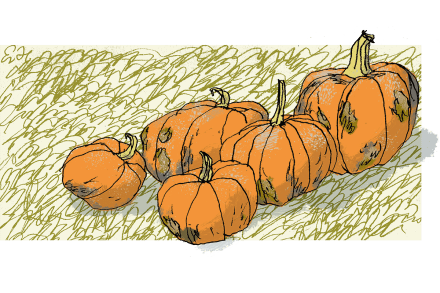
There’s a famously untranslatable expression in Virgil’s Aeneid: lacrimae rerum. Latin scholars, always fond of threshing things out, have devoted reams of analysis to proving just how untranslatable it is. As is typical of academics, however, they go to lots of trouble to establish its utter untranslatability – and then turn around and translate it anyway. When pumpkins aren’t being cozy, they generally denote a sense of emptiness or artifice Word for word, lacrimae rerum means “The tears of things” (or, depending on your school of thought, “The tears for things.”) But each scholar has his slant on the sadness.

pumpkins

Revisiting the Devin Nunes winery

Anyone who writes about wine for a while finds himself coming back to old friends as the years go by. This wine here was actually fuller and more sumptuous in that vintage five years ago, while that wine over there really came into its own in the most recently released vintage. Just as with people, some wines with early promise somehow go astray and never amount to much, while others that were disorganized and introverted when young suddenly blossom and turn outward as they age, the magic sunflowers of viticulture. Most writers about wine will have similar stories. It’s a bit rarer for most of us, however, to get in on the ground floor and stand by while a new vineyard, fawn-like, is born, manages to stand up on its own and then goes trotting off.

Nunes

Don’t let science stop you from baking

Sometimes, cooking is art. Other times, it’s science. When it comes to baking, both are involved, which is what can cause problems for those who are otherwise skilled in the kitchen. Whereas throwing together ingredients and tossing them in the slow cooker or on the grill can produce delicious results, baking demands precision. I have experienced great successes when making a host of dishes that don’t require me to get overly scientific A little too much sugar in the dough can cause cookies to flatten, caramelize or end up burned. Setting an oven to the wrong temperature – or failing to preheat – can produce bread or cakes that are unevenly cooked.

baking

In praise of the Acropolis Museum Café and Restaurant

In the global poker game of cultural repatriation – otherwise known as who nicked what from whom – the Greeks seriously upped the ante with the opening of the Acropolis Museum in 2009. This lavish display of archaeological treasures in a light-filled building designed by the Swiss architect Bernard Tschumi is, alongside the recently opened Grand Egyptian Museum in Cairo, an exemplar of such a building’s mission to educate and inspire. In the tradition of polemic buildings, it is also a $200 million plea to return the Elgin Marbles from the British Museum to Greece.

Acropolis

Why Eleven Madison Park had to put meat back on the menu

Eleven Madison Park, perhaps the finest of New York’s fine-dining establishments, is adding select meat dishes back to its prix fixe menu after an ill-fated foray into veganism after the pandemic. Chef Daniel Humm announced the move in the New York Times, citing all the predictable reasons for ditching a plant-based menu. First and foremost: the finances. “It’s hard to get 30 people for a corporate dinner to come to a plant-based restaurant,” Humm told the Times, noting the negative feedback from diners over the years. Still, he framed the move in moral terms, explaining how he didn’t “realize that [the vegan menu] would exclude people.” To this, I can only muster an eye roll.

Eleven Madison Park

Why I was right to ban vegans

I remember the day I heard my culinary hero Daniel Humm had decided to make Eleven Madison Park’s menu plant-based. It was as profound as the day Princess Diana died and as pivotal as the birth of my first child, Lily Elvis. The news tore the joy from my heart as well as all the love and respect I had for Humm. The toil, tenacity and sheer stamina it took him to earn his three Michelin stars is extraordinary. Who am I to criticize one of the greatest chefs alive today? I’m a nobody. Yes, I’ve worked at three-Michelin-starred restaurants, served Queen Elizabeth II and starred in the BBC’s Great British Menu but I’m just a cook: nothing more and nothing less.

vegan

Is ‘carbon butter’ really good for us?

All butter is made from carbon, but not all butter is carbon butter. This is the name being given to a new environmentally friendly, 100 percent ethical lab-made food product. There’s not an udder, churn or milkmaid in sight. Carbon butter is yet another one of those foods of the future we’re told about, with wide-eyed, breathless enthusiasm, that will transform the way we eat as well as our health, save the planet and make sure there are enough calories to go round when the world hits a population of 10 billion, at some point in the next decade or two. A few years ago, it was cockroach milk – four times more nutritious than cow’s milk, said Bloomberg, excitedly – plant-based meat and “cultured oil.” Now, it’s the turn of carbon butter.

butter

My quest for the perfect Christmas broccoli

I adore broccoli, but I despise seeing it shrink-wrapped and kidnapped in the grocery store. The sight of those slightly compressed, yellowing florets sweating under fluorescent morgue lighting is a rude tap on the shoulder from dystopia. That’s why I was in my basement in late August, cleaning out the propagation tent while everyone else was still at the beach. My goal each year is to enjoy homegrown broccoli with Christmas dinner. In this corner of the Mediterranean, that’s about as likely as a French civil servant answering the phone after lunch. But with precision timing and bloody-mindedness you can pull it off. And after years of suffering those supermarket specimens, I’m determined to.

broccoli

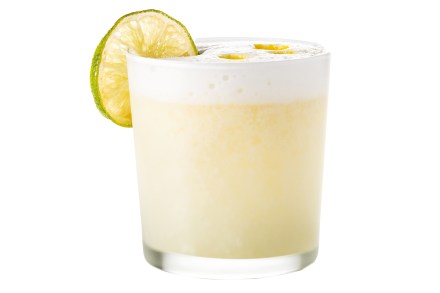
Beneath the foam of the Pisco Sour cocktail lies a border feud

The Pisco Sour is poured by Maria, my business partner’s wife and the quiet boss of a small empire of bars and restaurants. It is served in the living room, the windows cracked open, friends drifting in and out, the kids out of school. It has rained and something in the air has lifted. Then comes the coupe glass: perfectly chilled, capped in silken foam, dots of bitters shaped like a closing parenthesis. I’ve had Pisco Sours before. But this one makes sense. In Peru, the drink is practically sacred, served at protests and presidential inaugurations alike The ingredients shouldn’t work – harsh grape brandy, raw citrus, egg – but in the glass, they harmonize. Chocolate at the edge, grape in the middle, something like spring itself underneath.

pisco sour
Locatelli

Locatelli has entered the premier league of museum dining

Does your museum feel tired and run down? Is the entrance unwelcoming? The bookshop shabby? The restaurant a mere café? If so, call Annabelle Selldorf, the German-American architect whose talent and sensitivity have made her the go-to person for reviving weary museums. Her recent transformation of the Frick in New York has been widely acclaimed and she will soon start work on the Wallace Collection in London. But the latest masterwork has seen Selldorf sprinkle her fairy dust on the Sainsbury Wing of London’s National Gallery. Those with long architectural memories will recall how in 1984, the then Prince of Wales christened the proposed new wing of the Gallery “a monstrous carbuncle on the face of a much-loved and elegant friend.

The cult of Erewhon

“So naturally the first thing I did when I got to California was go to Erewhon and get their hot bar because I have no self-control. I personally love Erewhon,” says Marianna Moore, a food influencer with nearly one million followers, a beautiful face, slightly gross online recipes and comic flair. She then tucks into a plate of tofu sticks, kelp noodles, Japanese sweet potato and buffalo cauliflower. At the end, she says with a smirk: “Was this worth $28? I don’t know! I couldn’t tell you.” She keeps on munching. I’ve not been able to find the seaweed gel or lion’s mane mushrooms in the form they are sold in Erewhon Having been studiously following food content on Instagram for nearly a year, I am finally finding my feet in the thicket of viral trends.