Food and Drink

Dearborn beloved

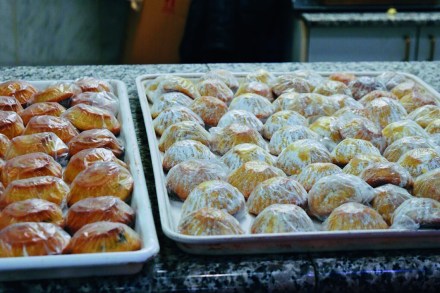
Americans will drive anywhere, but only immigrants will drive eight hours for groceries. Our community of Syrians and Lebanese trek from western Pennsylvania to Dearborn, Michigan, where a handful of small Levantine groceries sell ingredients too obscure for a Rust Belt supermarket: Cortas rose water, Al Wadi tahini, bags of dried wildflowers for zhourat tea. Eight hours round-trip by the Ohio turnpike, Dearborn is my family’s culinary refuge, and home to America’s largest population of Arab Americans. Henry Ford, also an advocate of driving, was born here on the family farm. The burgeoning auto industry attracted Arabs from the Levant, and Ford gave his employees healthcare, English classes and a trade school.

dearborn

A leaf from Verdi’s book

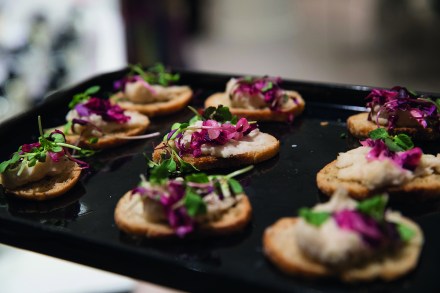
Radicchio, radicchio, wherefore art thou radicchio? A red-leafed chicory by any other name would doubtless taste as bitter — but it certainly wouldn’t sound as pedigreed. Consider the following bit of dialogue: ‘Would you like a chicory salad?’ The natural response is a hasty, ‘Not just at the moment, thank you,’ the very name of chicory summoning up painful memories of undercooked chickpeas and bowls of foliage into which well-meaning persons have seemingly shaken the broken fragments at the bottom of the cereal box. Compare and contrast with the following overture: ‘Would you care for some grilled Chioggia radicchio embellished with small cubes of buffalo mozzarella and drizzled with a reduction of Balsamico di Modena?

radicchio

Pita Shack flashback

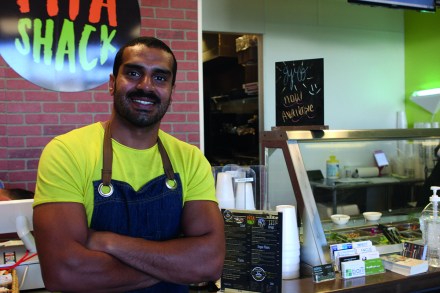
Friday afternoon in the Pita Shack diner in the northern suburbs of Austin, Texas and I was surrounded by Iraqis. There was even a picture of a sweet-looking Marsh Arab girl in her papyrus boat hanging on the wall. It was all unexpected but strangely familiar, stirring memories of Delta-30’s turret-scanning the junction of Red 11 in downtown Al Amarah back in 2004. During the first Gulf War in 1991, the Maysan province around Al Amarah was the site of local uprisings against Saddam Hussein. In retaliation he drained the region’s marshes to deprive the local Marsh Arabs of the waters on which their livelihoods and 6,000-year-old culture depended.

pita shack

Jason Peters writes to entertain his friends and exasperate his enemies

Batavia, New York H.L. Mencken mocked the authors of I’ll Take My Stand, the classic 1930 manifesto of Twelve Southerners, as ‘typewriter agrarians’. The gibe was partly fair and partly not, but then a strict adherence to fact is a disability in a humorist — it is what adds those warning braces to his title and makes him that deadliest enemy of the lively reader: the ‘humorist’. Always self-reproving, never self-improving, Jason Peters, a scapegrace professor of something-or-other at Augustana College in Rock Island, Illinois, gemstone of the Quad Cities, is no ‘humorist’. Though his new book is titled The Culinary Plagiarist, he is no keyboard kebabist either.

jason peters

Eye on the pies: food in the age of ‘cultural appropriation’

I walked into a party with a friend a few years ago and told her I felt uncharacteristically uncomfortable. ‘That’s because you’re not carrying a pie,’ she said. It’s true; I usually have a pie as my calling card. The offering of a homemade pie makes no one unhappy. It’s a nice presentation, sure, but the handoff is magical, a conjuring the baker does when deciding whether the recipient is a pumpkin or cherry pie kind of guy. People think you’re being generous when you show up with pie, but really it’s quite selfish. First, baking carries me away. Second, I love to see people’s faces when handing them pie.

cultural appropriation

Count your chickens

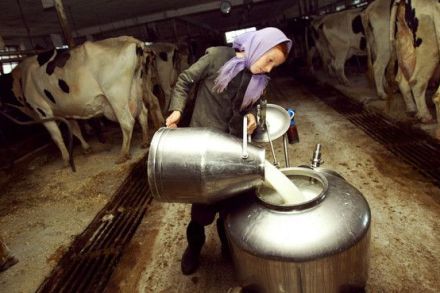
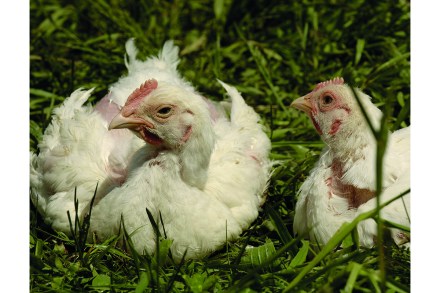
In a valley of the Catskill Mountains near the tiny village of Hobart and not much else, there’s a farm with a red barn and a trickling spring-fed stream. Chickens and geese roam through the yard, cows and their young graze in the pasture, and a vegetable garden thrives on the hillside. If this sounds idyllic, you’ve never spent a week on a working farm. I recently had the opportunity, mostly by accident. I thought ‘housesitting’ with two friends in the mountains meant a few chores: watering the plants, say, or feeding the cats. Roxbury Mountain Maple Farm turned out to be home to 130 chickens, 50-odd chicks, 30 cows, 12 ducklings, six roosters, five geese, four ducks, three cats and two dogs.

chickens

Digging for clams on the Jersey Shore

When you find one, you’re sure to find more. No, not roaches. Clams. In shallow, sometimes reedy bay water, you walk like a duck through a mud and sand mixture until you feel something hard underfoot. It could be a rock or it could be a root. But if God wills it, it will be a clam. You dig down, sometimes six inches into the muck. If, at bottom, there appears a hardshell clam (M. mercenaria) — with a white-gray-beige shell striated and sometimes mottled — then chances are there are more about. Many more. This past Fourth of July a team of us set out in three boats from the top of New Jersey’s Barnegat Bay. The first spot proved a bust, yielding fewer than 10 clams among more than a dozen clammers. We upped anchor and spun around to another site.

clams

Cherry baby

What do the works of Le Corbusier, driftwood on the beach and French cherry tart have in common? Well, all three are improved by being set on fire. That’s uncontroversial when it comes to two items on the list, but perhaps you’re inclined to quibble about the tart. Resist the temptation, messieurs-dames, for I have an irrefutable authority up my sleeve: Julia Child, the lady whose Mastering the Art of French Cooking (1961) was hailed by legendary restaurateur George Lang of Café des Artistes fame as the volume that ‘not only clarified what real French food is, but simply taught us to cook’.

cherries cherry

A rosé by any other name

According to the Book of Genesis, Man was not made to be alone. No, nor is wine. Just as man is (as Aristotle reminds us) essentially a social animal, incomplete without the society of his fellows, so wine requires food to flourish. There are exceptions to these rules, no doubt, but they remain exceptions. Untangling this truth is one of the primary tasks that the distinguished wine importer and writer Kermit Lynch has pursued since he set up shop in the 1970s. One of the most delightful books about wine that you will ever read is Lynch’s Adventures on the Wine Route, first published in 1988 and spruced up for its 25th anniversary a few years ago.

bandol

Avocado angst: is there anything safe to eat?

Your morning coffee is now an ethical minefield. Sure, you’ve remembered your reusable cup and are smugly avoiding adding to the 2.5 billion disposable cups dumped each year. But, ma’am, which milk would you like in your latte? Asked this question in my local coffee shop, I panic. Obviously not dairy, thanks to the methane-burping cows that produce it. Coconut is imported and food-mile heavy. Aren’t almonds causing drought in California? And isn’t the Amazon being razed to make way for soya plantations? Oat milk then, except I don’t like the taste. And isn’t coffee a pretty unethical product all told anyway? I recently stood at the counter for a full 20 seconds, lost in a moral milk maze.

avocado angst

All about the allium

‘A nickel will get you on the subway,’ the saying goes, ‘but garlic will get you a seat.’ Garlic’s always possessed a pungent reputation — according to the explorer Robert de la Salle, the area of modern-day Chicago was so full of Allium tricoccum, our native wild garlic, that the Algonquin called it Che-ka-kou, ‘place of the smelly onions’. But it was Lucky Leif Erikson who brought the first bulbs of Allium sativum, the kind of garlic you buy at the grocery store, to the settlements of Vinland in Newfoundland and along the shores of the Gulf of Saint Lawrence. The Vikings didn’t remain chez nous, but garlic did, carving out a niche for itself as is its wont.

garlic

Do the vegans want blood?

Veganism is upon us. Something which was a minority dietary choice five years ago is now mainstream, a seemingly unstoppable bandwagon. I’m not here to discuss its merits, whether ethical, environmental or dietetic; the jury is still out. What interests me is the etiquette. I have fed guests at my table for more than 50 years, and many of them have been vegetarians. No problem. Perhaps I’ve been blessed with particularly lovable vegetarian friends, but somehow their food preferences have always trumped my own carnivorous tendency and we all eat vegetarian. I hated the idea of serving separate dishes. Veganism turns up the dial. It is, frankly, a cook’s nightmare.

Born Toulouse: varietals, vermouth and verse

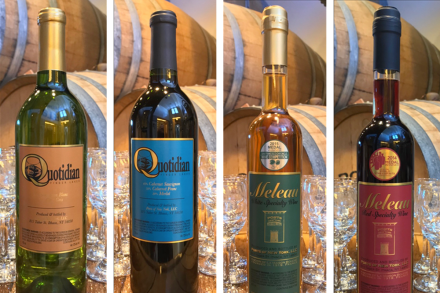
I like vintners with a sense of humor. When Vern and Maxine Boltz retired — he from the Oakland Fire Department, she from flying the friendly skies of United — they decided to try their hands at making wine. That’s intrepid, not necessarily funny. But in 1997 they found a sweet parcel of 160 acres above the Navarro River in the Anderson Valley of Mendocino County and started planting. ‘Go forth and multiply,’ they said to the grapes and the grapes (Pinot Noir, mostly) did just that. In 2002 they produced 400 cases for sale and Toulouse Vineyards was launched. ‘Toulouse’? Yes, they reasoned, ‘What to do we have to lose?’ Fair warning: their publicity deploys variations of that homophonic witticism early and often.

toulouse

Strawberry yields forever

Looking to impress your girl in NYC? Order her some Omakase berries from Oishii. Although they’ll probably be the most expensive strawberries you’ll ever buy in the States, a pack of eight, hand-delivered to you at a secret rendezvous in the Oculus at the World Trade Center, will still only set you back $50. That, as you’ll know if you’re inclined towards thrift in courtship, is significantly less than a dinner date within the same city precincts. Word on the street is that these berries are so good (a subtle hint is provided in the company name, Oishii, which means ‘delicious’ in Japanese) that you can be served a single one as dessert at a Michelin-starred joint in Manhattan and not feel gypped.

strawberry

Arise, the cupcake

Do you know the milquetoast muffin man? His name is Charlie Brooker, he’s the co-creator of the hit television series Black Mirror and he thinks cupcakes are ‘bullshit’. ‘A cupcake is just a muffin with clown puke topping,’ Brooker wrote in 2012. ’Once you’ve got through the clown puke there’s nothing but a fistful of quotidian sponge nestling in a depressing, soggy “cup” that feels like a pair of paper knickers a fat man has been sitting in throughout a long, hot coach journey between two disappointing market towns.’ I’m usually quite skeptical of gastronomic fads — the rainbow bagel and matcha ice creams can go pound sand — but I’m here to defend the cupcake.

cupcake

Feed it to the Marines

Between my parents, my six brothers, my sister and I, we were always gathering for something special in normal times: a graduation, a baptism, a cookout, even just pastries after Sunday Mass. But then the days and weeks of quarantine stretched darkly before us with nothing to celebrate, minor or major. The days all run together, differentiated by nothing except my parents’ choice of detective procedural for binge-watching. Until this week, when we got the news: L. is coming home. My younger brother L. is a second lieutenant in the Marines, the second of my brothers to become an officer.

marines

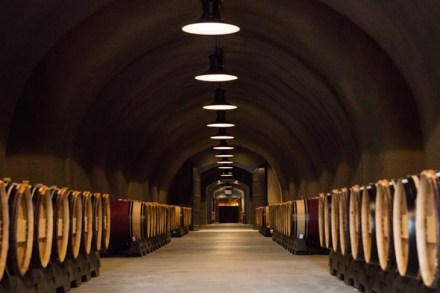
Cellar’s market

I met Kingsley Amis only once. It was in the bar of the Garrick Club at about three in the afternoon. He had clearly been there for some time. I was with a friend who knew him, so cadged an introduction. I cannot say that we had a truly meaningful exchange. More like 1 Corinthians 13:12: ‘through a glass, darkly’. But the encounter did put me in mind of General Principle Number 1 from Amis’s amusing book on drink, candidly titled On Drink. ‘Short of offering your guests one of those Balkan plonks marketed as wine,’ he advises, ‘go for quantity rather than quality.’ If you had asked my opinion about that advice a couple of months ago, I might have demurred.

cellar lockdown billecart

Civilized caffeination

Palaces, art galleries, parks, composers’ houses, operas, concerts, Spanish Riding School horses, full-throated choirboys wearing sailor suits...yes, I go to Vienna for all these delights. But, deep down, probing my true desires and motives, I really go there for the coffeehouses. It’s just that to make the coffeehouse experience the most delicious it can be, you need to arrive cold, hungry, intellectually stimulated and with aching feet from visiting one of the above attractions. Then you’ll feel the warmth seeping into you as you sink down onto a coffeehouse banquette.

viennese coffeehouse

Upper crust: a sweeter approach to sourdough

Hoping to win an election in 2020? If you’re not above buying votes, take a tip from the poet Juvenal, who described — disapprovingly, it is true — how Roman politicians in the second century used to bribe the lower classes with free sourdough bread and cutting-edge entertainment. (Yes, the Romans knew how to make sourdough — there are a few burnt loaves still around in the ruins of Pompeii). Nowadays it’s the millions of workers in the tech industry that you’ll have at your feet if you mention sourdough, but they want to bake it themselves, so you’ll do better handing out free workshops, countertop flour mills and Emile Henry bakeware.

sourdough

Cooking for dad: real food is nothing fancy

I fled New York City in March for my hometown in Pennsylvania. I brought with me one suitcase, a good chunk of it filled by my favorite book: the bestselling Nothing Fancy by Alison Roman of the New York Times. I’m now facing weeks here with three shirts and an impractical selection of underwear, but I regret nothing about my packing. As my father drove up the turnpike to evacuate me, I had decided in a burst of wartime can-do spirit that my contribution to the household would consist in cooking for the family, and damn if I wasn’t going to make a go of it. There was more than a little self-interest in this idea. Like all middle children, I long for a chance to shine in front of my family.

alison roman