Food and Drink

Cost-cutting in the kitchen with Budget Bytes

Have you heard about the latest food trend sweeping the nation? It’s called “whimpering over your grocery bill.” In the early days of 2023, Americans are spending 70 percent more on eggs than one year ago. Chicken, dairy and bread prices outpaced inflation as well, increasing by double-digit percentages. What’s an adventurous home cook to do? The answer is Budget Bytes, a website I first turned to as a broke twenty-two-year-old with a galley kitchen in Queens. I didn’t know, before an acquaintance tweeted a link to a coconut vegetable curry, that you could make a tasty, filling meal, complete with leftovers, using almost entirely canned or frozen goods. Budget Bytes taught me to cook.

budget

McSorley’s Old Ale House resists restoration

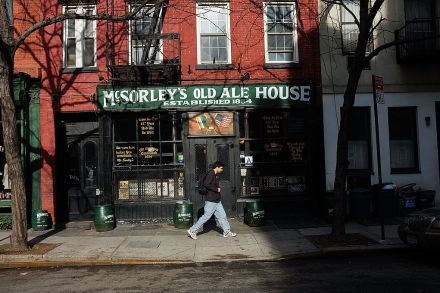
The late Christopher Hitchens once lamented that he left London for America because the “piss and vinegar” of the city had been swept away by an antiseptic tide of money. Manhattan, though, still has plenty of both, not only in the subway but also in the form of a series of old-school pubs that have somehow resisted the modern mania for restoring the life out of anything old and authentic. The granddaddy of them all is McSorley’s Old Ale House on East 7th, opened in 1854 and America’s oldest continuously operated bar. The front room of McSorley’s has no chairs or tables. There is sawdust on the floor. The place accepts only cash and has no till. It serves only two kinds of ale (light or dark) and house soda. A sleeve of crackers and a chunk of cheddar are the staple bar food.

mcsorley's

The art of Georgian toasting

There are a few words you need to know when visiting Georgia — gamarjoba for “hello,” madloba for “thank you” — but one word is absolutely crucial, and that is gaumarjos, for “cheers.” The Georgians are serious drinkers, as I recently discovered while visiting a friend in Tbilisi. And when they drink, they toast. And when they toast, they don’t stop toasting. In Georgia, raising a glass is an essential ritual of the supra, their ancient tradition of the feast. The recent discovery of a bronze tamada (“toastmaster”) figurine from 600 bc means it’s older than the development of their written language. As with any ancient ritual, toasting has its own set of rules.

Georgia

How to wine and dine

If you dare to host a dinner party, said Brillat-Savarin, you must be prepared to be responsible for your guests’ entire happiness while they are under your roof. It’s not just the victuals you are serving. It’s an entire world. I got that sage bit of advice from the French doctor and food writer Édouard de Pomiane (1875-1964), one of the most engaging writers about the preparation and enjoyment of pain quotidien I know. At least two books by Pomiane have been translated into English, Cooking with Pomiane and French Cooking in Ten Minutes (yes, really). Neither replaces Julia Child’s Mastering the Art of French Cooking or similar nitty-gritty manuals, but both are atmospheric charmers, books that can be read as well as consulted.

host

Jimmy Kelly’s Steakhouse keeps a simple, good thing going

I have written before in these pages about declining standards in the restaurant world, which has less to do with the food than with the whole “experience” of dining out: the lack of tablecloths, the napkin-wrapped silverware, the to-go boxes, the slovenly informality of staff and customers alike. I stand by every word of it, which is why discovery, or rediscovery, of rare holdout occasions, in this diner-out, is sheer joy. One such exception, long known to me, Jimmy Kelly’s Steakhouse in Nashville, is exceptional in another sense, too. It has been in operation without interruption and under the same family ownership for eighty-nine years.

Nashville jimmy kelly's
la roca

Crossing the border for margaritas at La Roca

There are many different reasons to like a bar. Because it does the best cocktails. Because it is the cheapest around. Or the most expensive. Because it’s a great place to meet people for sex. Because all your mates go there. Because it is ubertrendy. The colorful, ornate, majolica-tiled, lushly colonnaded bar restaurant of La Roca, in Nogales, Mexico, isn’t really any of these things. And it certainly isn’t ultra-convenient: you must cross a border to get there from Nogales, Arizona. Why do this?

German

German philosophy and German wine: a sumptuous pairing

The best teacher I ever had in graduate school — or anywhere else, for that matter — was also the most dedicated. Most semesters he would offer a not-for-credit seminar one evening a week at his house. There, some half-a-dozen fledgling philosophy students would congregate, bottle of German wine in hand, to parse slowly through one text: Heidegger on Nietzsche, say, or Bishop Tempier’s condemnation of 219 propositions in 1277, a once-famous event that signaled the eclipse of the Aristotelian world view in favor of the Christian. We devoted one full semester to De li non aliud, “Concerning the Not-Other” (i.e., God) by the mystically inclined Renaissance philosopher, churchman and diplomat Nicholas of Cusa (1400-1464).

A salt for all seasons

It takes four people, according to the French, to get a salad dressing right: a spendthrift for the oil, a miser for the vinegar, a wise man for the salt and a lunatic for the pepper. A tough cast to assemble, you might think, but the freehanded, the tightfisted and the insane aren’t such rare birds. The true needle in the haystack is the wise man who would have anything to do with a recipe involving four chefs. Cooks, broth, too many — enough said. Most wise men would be out of town before you could say “smoked oak salt flakes” ten times fast. But the point stands: getting the salt right isn’t a walkover. The rookie has to steer a tight course between undersalted Scylla and oversalted Charybdis.

salt

The beauty of the Beaumont inn

It is not often these days that I get to return to the Beaumont, an old inn in the Kentucky Bluegrass first visited half a century ago. The cliché that time and distance make the heart grow fonder has truth in it, as I have relearned this season. The Beaumont has been in the food and lodging business since 1917. It is owned and operated by branches of the Dedman family whose roots reach back to the early days of trans-Appalachian settlement. The original building dates from the 1840s and was once a girls’ finishing school. The young ladies in crinolines are long gone, but not a certain air of gentility. The Beaumont has a worthy watering hole — the Owl’s Nest — refashioned from an old carriage shelter in 2003 when liquor-by-the-drink finally came to Harrodsburg.

Beaumont

There’s a sherry for everyone

On cold nights, a zesty margarita just isn’t going to cut it. You need a bolder tipple: a glass of sherry, the fortified wine favored by retired generals, members of the Diogenes Club and Ordinariate priests swotting up on Thomas Aquinas for the next Sunday sermon. It’s an appropriate drink with which to reflect on the complexity of life itself. You can go from the crispest blanco sherry, through a series of progressively richer flavors, to the most moreish dulce rum-colored sherry. When I passed through Jerez de la Frontera in southern Spain’s Andalucía region, every bar was jammed with great quantities and varieties of sherry. I had stumbled — literally, as I was hiking a hundred miles of the Camino from the coastal city of Cádiz to Seville — upon the Mecca of sherry.

Planning world domination, fueled by Burgundy

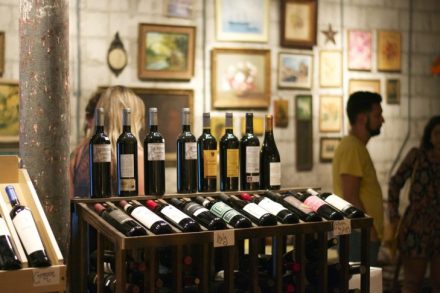
Just because you were born in a manger doesn’t mean you are a horse. I stumbled upon that bit of proverbial wisdom several times in the buildup to Christmas last year. It seems somehow applicable to a recent visit to Arizona where, despite the non-vinous-friendly environs, I had some amazing wines. On the Cabernet front, I finally had the opportunity to taste Alpha Omega. I mentioned this storied Napa Valley wine back in July when I wrote about the wines from its San Luis Obispo cousin, Tolosa Winery. I was with friends at an undisclosed, semi-secure venue, pursuing a plot for world conquest. As a result, my attention was not as focused on this excellent wine as it should have been.

burgundy

Japanese food is overrated

After twenty-three years in Japan, I have concluded that the much-lauded, worshipped even, cuisine is overrated. And I am getting a little tired of being told how awe-inspiringly wonderful Japanese food is, often by people whose only experience is high-end sushi or designer tempura in a showpiece Tribeca eatery, a world away from the standard fare available on the backstreets of Shibuya. Part of the problem is that much of what delights the Japanese about their food is unrelated to its actual taste.

Japanese
broadmoor hotel

Buried treasures of the Broadmoor

There are many reasons to visit the magnificently storied and illustrious Broadmoor Hotel, in the Rocky Mountain resort town of Colorado Springs. It has a glamorously luxe and gleaming spa. They will do you a superb dry martini with its own cute little carafe. Prince Harry once nipped into this pink-stone Italianate palace for a cheeky pint. But it’s the fantastical history of the Broadmoor that really compels, and which also tells us something possibly rather important about the relationship between politics and alcohol. The owner-founder of the Broadmoor was a failed-at-Harvard bon viveur by the name of Spencer Penrose.

bourbon

The thrill of bourbon collecting is in the chase

There was once a time when a man would find a bourbon he liked and stick with it. Today, that is no longer sufficient. To enjoy bourbon, one must dive into the depths of bourbon hunting, scouring liquor stores for hard-to-come-by bottles, making friends with the staff so they’ll pull out one of the bottles from the secret stash and joining various social media groups in which fellow members share their tips and finds. My passion for actual bottle-hunting was short-lived, however. It takes too much time and effort and when opportunity costs are factored in, I’d rather pay a little over store price to those who are willing to go stand in line at 7:30 a.m. on a Tuesday morning waiting on the store’s latest shipment.

Émilion

Saintly succor

Since you’ll likely be reading this with what Wallace Stevens called “a mind of winter” (needful “to regard the frost and the boughs of the pine trees crusted with snow;... to behold the junipers shagged with ice, the spruces rough in the distant glitter of the January sun”), I thought I would provide something warming to conjure with. I am eventually going to get to one of the world’s most spectacular wines, Château Cheval Blanc, a premier grand crus classé from St. Emilion, but first let’s indulge in a bit of lore. A friend introduced me to Michael Foley’s Drinking with the Saints: The Sinner’s Guide to a Holy Happy Hour (Regnery), a Catholic-heavy but light-hearted topper’s fasti.

A gingerbread house divided

To celebrate my birthday, which falls six days before Christmas, my mother used to make gingerbread houses for me and a dozen of my friends. Every December, she set to work baking sheet after sheet of gingerbread. The baking would take up the first week of the month, and in the second she would assemble the houses, laying their icing foundations and sealing the four walls with crisp white frosting. These would dry in the basement laundry room, taking up every available surface. After school, I would peep at the houses and dream about my party. On the big day, my mom set out each perfect house at the formal dining room table, and we convened to decorate them.

gingerbread

Colony Grill’s culture remains

Nothing has done more damage to the watering hole than Bar Rescue. In each episode, the show’s protagonist swoops into some troubled landmark Toledo bar, guts its history in the name of “open concept,” installs some LED lighting to cut costs, adds some overpriced microbrew, and yells at the backwoods staff — his anger a thin disguise for his McKinsey consultant personality. As a finishing touch, he’ll add a crabcake to the menu. Rescue complete. This reverse-Road House consultant is why every bar in America looks the same: bland, bloodless, stocked with minimalist Ikea furniture, cut off from the past. Don’t let the “unique” seasonal IPA or over-sized Jenga fool you. You are staring at conformity.

colony

My smorgasbord of Christmas traditions

Like many American families with multicultural members, my own family incorporates traditions to reflect different ways to celebrate Christmas. I count seven besides American: Swedish, English, Scottish, German, French, Swiss, Belgian. The first five are in the family DNA. The remaining two reflect countries where we have lived and raised our children. Growing up with Swedish immigrant grandparents under the same roof, my Christmas took on many Swedish customs, starting on December 13 with the celebration of Santa Lucia. Legend has it that the fourth-century saint was a child-martyr who brought food and aid to Christians hiding in the Roman catacombs. A young girl is dressed as the saint, in virginal white, sashed in red, representing a baptismal robe and the blood of martyrdom.

christmas

The Chablis complex

Chablis has the paradoxical distinction of being at once one of the most famous and least well known of French wines. Hugh Johnson opined that it is “one of the world’s most under-estimated treasures.” I agree. We say that Chablis is Burgundy, but, situated on the Serein River some 100 miles southeast of Paris, Chablis is nearly 100 miles north of Beaune. Perhaps we can say that it is the Hadrian’s Wall of Burgundy. Hadrian’s bit of Britain was part of the Roman Empire, but no one would confuse it with Rome. The climate in Chablis is markedly different from and less forgiving than that of the Côte-d’Or: chillier and windier. Think of Auden’s poem, “Roman Wall Blues”: “The rain comes pattering out of the sky, / I’m a Wall soldier, I don’t know why.

chablis