Features

Blackpill: inside the incel death cult

Young men are giving up. They are the losers of the endless beauty pageant that is online life, dating in particular. Their failure to attract women or find rewarding employment is the stuff of jokes: they are “incels” (involuntary celibates), basement-dwellers, forty-year-old virgins. Meanwhile, they sink into a digital swamp of gloom and isolation that leads to resentment, radicalization, murder and suicide. In their internet forums, they call this “taking the blackpill.” The blackpill had yet to be named in 2014, when twenty-two-year-old Elliot Rodger rampaged through Isla Vista, California, killing six people and injuring fourteen more before his suicide, but he was fueled by its spirit of nihilism.

blackpill
camus

The other Camus

Nearly two-thirds of French citizens say they fear that Muslim immigrants threaten white Christians with “extinction.” That bodes well for Éric Zemmour, France’s ubiquitous right-wing polemicist, candidate for its presidency — and prominent popularizer of the concept of le grand remplacement, the conspiracy theory that a cabal of Jews and globalist elites are conniving to “replace” Europe’s native population with Africans and Arabs. This paranoid thesis has inspired white supremacists across the world, and is an increasingly popular import on the American right. The man who coined le grand remplacement is the seventy-five-year-old novelist and travel writer Renaud Camus — no relation to Albert, but a kind of philosopher nevertheless.

Youngkin

The multinational that ate Virginia

This time next year, Republicans expect to be back in control of Congress. They are already celebrating, as 2022 sees Glenn Youngkin newly sworn in as governor of Virginia. For a wide swath of GOP activists and consultants (and not a few voters, too), Youngkin is the face of a Republican Party that can win — with or without Donald Trump. Youngkin had Trump’s endorsement last November. Youngkin was as eager to promote this as his Democratic opponent was, but the endorsement helped rather than hurt him. Trump voters’ residual skepticism toward a nominee who had recently been head of the Carlyle Group — a private equity firm long synonymous with insiderdom and globalism — was overcome by the rise of Critical Race Theory as a pivotal campaign issue.

tweed

Tweed is of the essence

Rushing through Dulles Airport after a trip abroad this winter, I noticed a policeman following quickly but discreetly behind me. Not having smuggled any sausages or cigarettes on that particular flight, I was of clear conscience, and nodded hello at him when he caught up. All he said was: “Love the jacket.” It was a heavy, scruffy, brown herringbone tweed. People like tweeds. When I wore one, my parents’ friends used to tell me what a nice-looking young man I was. At college, women I didn’t know would occasionally run a fingertip down the sleeve and say, “Mmm.” Never found out what that meant. Too late now. The cop’s compliment was a bit different. There was pity in it. “My wife’s grandfather had one,” he said. “That’s old-school.” I suppose he was right.

manna

Downloading God in the App Store

Education at my Jewish private school was chock-full of religious instruction. Precisely half of our lessons were dedicated to Jewish studies. We had Bible classes (Chumash, we called it) every single day. As a child, I wasn’t particularly excited about most of the miracles. Sure, the staff turning into a snake was cool, but it felt like a parlor trick. The sea splitting felt too huge to even contemplate. The one miracle that seemed to get everyone in class thoroughly enamored with God’s power was the concept of manna from Heaven. The idea that you could just dream up what you wanted to eat — and for eight-year-old me that was infinite donuts, pizza and Dunkaroos — and it would just fall from the sky? Well, that was truly miraculous.

harvard

Harvard’s diversity disgrace

In 2014, the non-profit Students for Fair Admissions filed a lawsuit against Harvard University, alleging discrimination against Asian Americans in its admissions process — discrimination resulting from Harvard’s stated commitment to “a diverse class.” After defeats at the District and Court of Appeals level, the suit has arrived at the foot of the United States Supreme Court. The case will be argued in the 2022 term. Harvard’s reputation is not all that’s at stake. The case threatens to bring down the entire system of race-based affirmative action that dominates college admissions. Looking at the numbers, it’s easy to see why Students for Fair Admissions believe they have a case.

Get set for the Great Reset

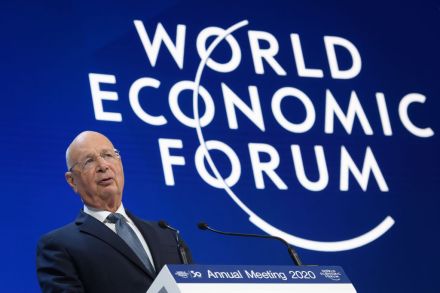
'Welcome to 2030. You’ll own nothing. And you’ll be happy.” This is not a quotation from George Orwell or Aldous Huxley. It is not even supposed to be dystopian. If it is fiction, it is not because it is implausible, but because it has yet to be accomplished as fact. These are the opening lines from a social media video issued by the World Economic Forum in 2016, and generated from “the input of members of the WEF’s Global Future Councils.” These visionaries have further delights in store for us: “Whatever you want, you’ll rent... The US won’t be the world’s leading superpower… You’ll eat much less meat… A billion people will be displaced by climate change. We’ll have to do a better job at welcoming and integrating refugees.

reset

It’s the Dawn of Omicron

It’s 4 a.m. and instead of sleep, powerlessness is on my mind. It’s a concept I’m quite familiar with, being that I’m in recovery: it’s the idea one must embrace to “take the first step.” The idea is, by admitting your powerlessness over whatever behavior or substance you are abusing, you begin on the journey of liberating yourself from the bondage of addiction. It’s a paradox I had a hard time reconciling in my early days of sobering up. A great line about step one in some of the Alcoholics Anonymous literature plays on a loop as I stare at the ceiling. “Who cares to admit complete defeat. Practically no one, of course. Every natural instinct cries out against the idea of personal powerlessness.” However, the list of things I’m powerless over has grown long.

omicron

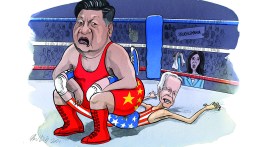
The China reckoning

Fifteen years ago, I remarked to an acquaintance over lunch that it looked like China might eat America’s lunch in naval power. My interlocutor, a person well-known in leadership positions in the China studies community, scoffed at my comment. Over the next few years, he never missed an opportunity to ridicule my wild-eyed prediction. I often wonder what he thought in February 2021 when, less than a month after becoming president, Joe Biden warned US senators that if America didn’t “get moving, [China is] going to eat our lunch.” I claim no credit for prescience, just a historian’s sensitivity to trends over time. The fiftieth anniversary of President Richard Nixon’s visit to China falls in February 2022.

china

The dive is alive

Last summer, Covid claimed yet another casualty. The Post Pub, tucked away under a low ceiling on L Street in Washington, was a throwback to a different age, one of noontime highballs and midnight shots on the house. Yet while the past had been swinging, the future for the little downtown watering hole was bleak, and so it announced that it would have to close. For me, the loss was personal. The Post was where I had deepened countless friendships over glasses filled and then unfilled with foamy brown. It was where, in 2018, I looked up at the TV above the bar, saw the words “fire and fury” on the same chyron as “North Korea,” and wondered for a fleeting second whether that was where I might die (it wouldn’t have been a bad end, all things considered).

dive
foreign policy

The next chapter in American foreign policy

The new year begins a new chapter in American foreign policy. For the first time since 2001, we are not at war in Afghanistan. More than that, we no longer have an architectonic strategy for our role in world affairs. We had one during the Cold War: to win it. And we had one afterward, too: a decade before 9/11, our policy elite had already committed to the idea that we must police the world for the good of the liberal international order. The lead-up to the first Gulf War was the opening paragraph of that chapter, the ignominious retreat from Afghanistan its last line. Our policy mandarins have not changed their minds, but the world has changed too much for their grand design to have any meaning in 2022.

reformation

The Tudor roots of wokecraft

In January 2019, I received an email from an administrator at Georgetown University, where I was a graduate student. She and my department chair wanted to meet with me to “discuss concerns that have been raised by some of your peers about classroom comments and behavior.” This meeting, they told me, would “function as the start of a conversation.” They didn’t say where the conversation might lead. I concluded that the next step would be a formal disciplinary hearing. I was terrified. Three-quarters through a two-year program, I was in danger of being forced to leave without a degree. And for what? I scanned my memory for deviant statements. There were a few: I’d alluded in print to certain essential biological differences between men and women.

jews

Eighty years after Wannsee

Eighty years ago in January, fifteen men sat around a table at a villa near Berlin and decided to eradicate a nation. To be precise, they decided how to eradicate a nation. Their decision, their “solution” as they perversely termed it, would lead to the murder of more than six million European Jews, though that is the easy-to-remember round number to which we so often default. The murders had started long before the Nazi leadership met at Wannsee in January 1942: this was not the first time a group of European leaders had planned to rid themselves of the Jews. The meeting clarified not just the goal of wiping out Europe’s Jewry, but the path to solving the “Jewish problem” by modern means.

Will Armen Sarkissian save Armenia?

Yerevan, Armenia Armen Sarkissian, the president of Armenia, is incandescent with rage. “Five thousand brave and selfless Armenian soldiers were killed in this war,” he tells me at his office, referring to last year’s conflict with Azerbaijan and Turkey. “There must be accountability for their deaths.” Sarkissian strikes me as the only Armenian politician whose anger comes with a constructive program of national revival. The man once described by Zbigniew Brzezinski as the “Vaclav Havel of the Caucasus” radiates no grievances against foreign powers.

stone

Are New England’s stone heaps Native Americans’ sacred ruins?

Brightman Hill lies deep in the forests of Hopkinton, Rhode Island. It is named for the Brightmans, one of the families who farmed it, and evidence of its agricultural past is, to most observers, unambiguous: old building foundations, a nineteenth-century burial ground, an extensive network of stone walls and hundreds of stone heaps, the results of field clearing. But in 2019, a federally-funded survey of Brightman Hill shattered these traditional interpretations. The surveyors, Ceremonial Landscapes Research, LLC, are a small group of antiquarians led by Alexandra Martin, a registered professional archaeologist who recently earned her doctorate in anthropology. Instead of stone heaps and walls, the surveyors reported “linear stone groupings” on Brightman Hill.

New York

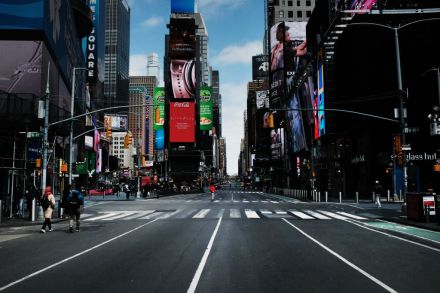
Bring back New York

New York is back. It’s so back. It’s extra back. It’s better than ever. It’s really not. I’ve been a New York supremacist my entire life. I’ve been to your city. Your city is fine. Your city is not New York City. Your city has the one deli, the one restaurant, the one street. My city has them all. But in the time of “equity,” the best city is being brought down to size. My teen years were spent in the bad old New York. Drinking on Ludlow Street when it had one bar, going to Limelight on Wednesday nights, hanging out with squatters in Tompkins Square. New York was in peril and as I smoked weed in front of police officers on St Mark’s Place, I knew it. Everyone carried a weapon and looked out for deranged people who might push you on the tracks. That was life.

The hostage president

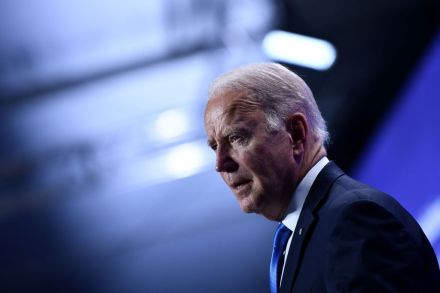
Every president is a hostage to fortune, but every president makes his own luck. The George W. Bush presidency was redefined by the 9/11 attacks and ruined by its response. The crash of the markets in 2008 pushed Barack Obama ahead of John McCain in the polls. The Democrats’ choice of Hillary Clinton in 2016 was their misfortune and a gift to Donald Trump. Would Joe Biden have won in 2020 without Covid-19 closing the global economy? The first year of the Biden presidency ends as it began, only with less luck. Biden tells us that the sky is falling and that legislation can heal the planet, but his administration cannot organize a vote in Congress. Through the fall, Biden’s wild spending plans were held hostage by the Squad in the House and by Democratic moderates in the Senate.

biden
meghan

How Meghan Markle wins the White House

In October, Meghan Markle, the Duchess of Sussex, made her most significant political intervention to date. She marked her fortieth birthday by writing an open letter “as a mom” to Nancy Pelosi and Chuck Schumer, and asked Congress to legislate for paid family leave for new parents. Markle may have thought she was pushing at an open door: the Democrats were striving to include paid family leave in the Build Back Better Act. But this may not be the only open door Meghan is pushing at. Seasoned observers will notice the Markle trademarks in the letter. There is the folksy appeal to her humble heritage: “I grew up on the $4.99 salad bar at Sizzler... I knew how hard my parents worked to afford this because even at five bucks, eating out was something special, and I felt lucky.