Features

Downloading God in the App Store

Education at my Jewish private school was chock-full of religious instruction. Precisely half of our lessons were dedicated to Jewish studies. We had Bible classes (Chumash, we called it) every single day. As a child, I wasn’t particularly excited about most of the miracles. Sure, the staff turning into a snake was cool, but it felt like a parlor trick. The sea splitting felt too huge to even contemplate. The one miracle that seemed to get everyone in class thoroughly enamored with God’s power was the concept of manna from Heaven. The idea that you could just dream up what you wanted to eat — and for eight-year-old me that was infinite donuts, pizza and Dunkaroos — and it would just fall from the sky? Well, that was truly miraculous.

manna
harvard

Harvard’s diversity disgrace

In 2014, the non-profit Students for Fair Admissions filed a lawsuit against Harvard University, alleging discrimination against Asian Americans in its admissions process — discrimination resulting from Harvard’s stated commitment to “a diverse class.” After defeats at the District and Court of Appeals level, the suit has arrived at the foot of the United States Supreme Court. The case will be argued in the 2022 term. Harvard’s reputation is not all that’s at stake. The case threatens to bring down the entire system of race-based affirmative action that dominates college admissions. Looking at the numbers, it’s easy to see why Students for Fair Admissions believe they have a case.

Get set for the Great Reset

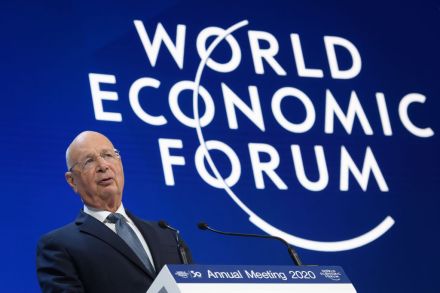
'Welcome to 2030. You’ll own nothing. And you’ll be happy.” This is not a quotation from George Orwell or Aldous Huxley. It is not even supposed to be dystopian. If it is fiction, it is not because it is implausible, but because it has yet to be accomplished as fact. These are the opening lines from a social media video issued by the World Economic Forum in 2016, and generated from “the input of members of the WEF’s Global Future Councils.” These visionaries have further delights in store for us: “Whatever you want, you’ll rent... The US won’t be the world’s leading superpower… You’ll eat much less meat… A billion people will be displaced by climate change. We’ll have to do a better job at welcoming and integrating refugees.

reset

It’s the Dawn of Omicron

It’s 4 a.m. and instead of sleep, powerlessness is on my mind. It’s a concept I’m quite familiar with, being that I’m in recovery: it’s the idea one must embrace to “take the first step.” The idea is, by admitting your powerlessness over whatever behavior or substance you are abusing, you begin on the journey of liberating yourself from the bondage of addiction. It’s a paradox I had a hard time reconciling in my early days of sobering up. A great line about step one in some of the Alcoholics Anonymous literature plays on a loop as I stare at the ceiling. “Who cares to admit complete defeat. Practically no one, of course. Every natural instinct cries out against the idea of personal powerlessness.” However, the list of things I’m powerless over has grown long.

omicron

The China reckoning

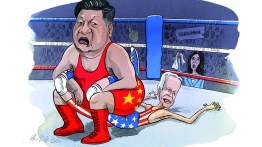
Fifteen years ago, I remarked to an acquaintance over lunch that it looked like China might eat America’s lunch in naval power. My interlocutor, a person well-known in leadership positions in the China studies community, scoffed at my comment. Over the next few years, he never missed an opportunity to ridicule my wild-eyed prediction. I often wonder what he thought in February 2021 when, less than a month after becoming president, Joe Biden warned US senators that if America didn’t “get moving, [China is] going to eat our lunch.” I claim no credit for prescience, just a historian’s sensitivity to trends over time. The fiftieth anniversary of President Richard Nixon’s visit to China falls in February 2022.

china

The dive is alive

Last summer, Covid claimed yet another casualty. The Post Pub, tucked away under a low ceiling on L Street in Washington, was a throwback to a different age, one of noontime highballs and midnight shots on the house. Yet while the past had been swinging, the future for the little downtown watering hole was bleak, and so it announced that it would have to close. For me, the loss was personal. The Post was where I had deepened countless friendships over glasses filled and then unfilled with foamy brown. It was where, in 2018, I looked up at the TV above the bar, saw the words “fire and fury” on the same chyron as “North Korea,” and wondered for a fleeting second whether that was where I might die (it wouldn’t have been a bad end, all things considered).

dive
foreign policy

The next chapter in American foreign policy

The new year begins a new chapter in American foreign policy. For the first time since 2001, we are not at war in Afghanistan. More than that, we no longer have an architectonic strategy for our role in world affairs. We had one during the Cold War: to win it. And we had one afterward, too: a decade before 9/11, our policy elite had already committed to the idea that we must police the world for the good of the liberal international order. The lead-up to the first Gulf War was the opening paragraph of that chapter, the ignominious retreat from Afghanistan its last line. Our policy mandarins have not changed their minds, but the world has changed too much for their grand design to have any meaning in 2022.

reformation

The Tudor roots of wokecraft

In January 2019, I received an email from an administrator at Georgetown University, where I was a graduate student. She and my department chair wanted to meet with me to “discuss concerns that have been raised by some of your peers about classroom comments and behavior.” This meeting, they told me, would “function as the start of a conversation.” They didn’t say where the conversation might lead. I concluded that the next step would be a formal disciplinary hearing. I was terrified. Three-quarters through a two-year program, I was in danger of being forced to leave without a degree. And for what? I scanned my memory for deviant statements. There were a few: I’d alluded in print to certain essential biological differences between men and women.

jews

Eighty years after Wannsee

Eighty years ago in January, fifteen men sat around a table at a villa near Berlin and decided to eradicate a nation. To be precise, they decided how to eradicate a nation. Their decision, their “solution” as they perversely termed it, would lead to the murder of more than six million European Jews, though that is the easy-to-remember round number to which we so often default. The murders had started long before the Nazi leadership met at Wannsee in January 1942: this was not the first time a group of European leaders had planned to rid themselves of the Jews. The meeting clarified not just the goal of wiping out Europe’s Jewry, but the path to solving the “Jewish problem” by modern means.

Will Armen Sarkissian save Armenia?

Yerevan, Armenia Armen Sarkissian, the president of Armenia, is incandescent with rage. “Five thousand brave and selfless Armenian soldiers were killed in this war,” he tells me at his office, referring to last year’s conflict with Azerbaijan and Turkey. “There must be accountability for their deaths.” Sarkissian strikes me as the only Armenian politician whose anger comes with a constructive program of national revival. The man once described by Zbigniew Brzezinski as the “Vaclav Havel of the Caucasus” radiates no grievances against foreign powers.

stone

Are New England’s stone heaps Native Americans’ sacred ruins?

Brightman Hill lies deep in the forests of Hopkinton, Rhode Island. It is named for the Brightmans, one of the families who farmed it, and evidence of its agricultural past is, to most observers, unambiguous: old building foundations, a nineteenth-century burial ground, an extensive network of stone walls and hundreds of stone heaps, the results of field clearing. But in 2019, a federally-funded survey of Brightman Hill shattered these traditional interpretations. The surveyors, Ceremonial Landscapes Research, LLC, are a small group of antiquarians led by Alexandra Martin, a registered professional archaeologist who recently earned her doctorate in anthropology. Instead of stone heaps and walls, the surveyors reported “linear stone groupings” on Brightman Hill.

New York

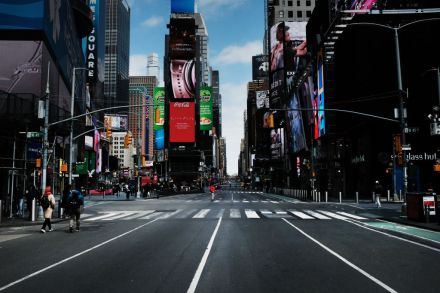
Bring back New York

New York is back. It’s so back. It’s extra back. It’s better than ever. It’s really not. I’ve been a New York supremacist my entire life. I’ve been to your city. Your city is fine. Your city is not New York City. Your city has the one deli, the one restaurant, the one street. My city has them all. But in the time of “equity,” the best city is being brought down to size. My teen years were spent in the bad old New York. Drinking on Ludlow Street when it had one bar, going to Limelight on Wednesday nights, hanging out with squatters in Tompkins Square. New York was in peril and as I smoked weed in front of police officers on St Mark’s Place, I knew it. Everyone carried a weapon and looked out for deranged people who might push you on the tracks. That was life.

The hostage president

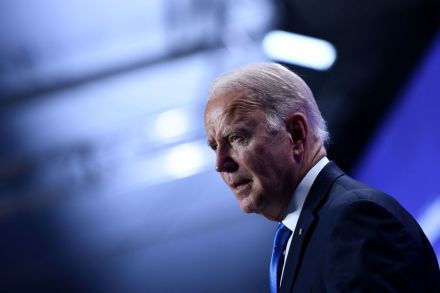
Every president is a hostage to fortune, but every president makes his own luck. The George W. Bush presidency was redefined by the 9/11 attacks and ruined by its response. The crash of the markets in 2008 pushed Barack Obama ahead of John McCain in the polls. The Democrats’ choice of Hillary Clinton in 2016 was their misfortune and a gift to Donald Trump. Would Joe Biden have won in 2020 without Covid-19 closing the global economy? The first year of the Biden presidency ends as it began, only with less luck. Biden tells us that the sky is falling and that legislation can heal the planet, but his administration cannot organize a vote in Congress. Through the fall, Biden’s wild spending plans were held hostage by the Squad in the House and by Democratic moderates in the Senate.

biden
children pregnant

Pregnant at the end of the world

We hear lot of talk these days about anti-natalism: the ethical view that procreation is morally wrong. Young women and men are choosing not to have kids and, in extreme instances, choosing sterilization in their late teens. “I got my uterus thrown out voluntarily at 19!” a young woman boasts on an internet forum devoted to this topic. Climate anxiety often tops the list of reasons cited by contributors. Call them the “baby doomers.” When I went down the rabbit hole to read what these young folks are saying, they sounded exactly like me in my twenties. My climate anxiety peaked in the early 2000s (thanks, Al Gore). The inconvenient truth is that I loudly told anyone who would listen that I was never having children.

gettr

Can GETTR go the distance?

Where to go these days in social media when you want to MAGA and shake off Big Tech’s shackling of free speech on woke corporate giants such as Facebook and Twitter? You have a few choices, including one just announced by Donald Trump, TRUTH Social, which is set to launch in 2022. In addition to Parler, an app favored by Dan Bongino, a prominent Trump supporter, TRUTH Social will compete with GETTR, which is run by Trump’s ex-advisor Jason Miller, who left his unofficial job with the Trump Organization to run the fledgling Twitter clone. The OG Twitter alternative is Gab.

Cold War

Who won the Cold War, anyway?

Thirty years ago this December 26, the impossible happened. One of the bloodiest states of the twentieth century (a horrific and highly competitive category) dissolved without violence. The Union of Soviet Socialist Republics had all but ended months earlier, when Russians took to the streets to defy the communist hardliners who had seized the government from an impotent Mikhail Gorbachev. That popular countercoup was itself largely bloodless: the soldiers called upon to enforce the hardliners’ rule refused to shoot their own countrymen. The Cold War is often said to have ended with the toppling of the Berlin Wall in 1989. Had things turned out differently in Moscow two years later, the struggle might well have resumed.

sinema

How Kyrsten Sinema brought Gen X to the Senate

Kyrsten Sinema doesn’t care. She doesn’t care about your tweets. She doesn’t care about the constant vitriol from Jacobin-lite bloggers. She doesn’t care about CNN’s Manu Raju chasing her down the halls of the Capitol to ask her about the filibuster or “voting rights” for the fifth time that day, every day. She doesn’t care about what Chuck Todd is saying about her on Sunday mornings. She doesn’t care what the astroturfed Act Blue-funded activists are saying to her while they film her in the restroom. She doesn’t care about Joe Biden or his faltering presidency.

medical

The doctor is mad

I have been writing a lot about the politically inspired perversion of language. The name “Orwell” crops up in any such discussion, as does the word “Newspeak,” that twisted mode of language that Orwell outlined in the appendix to Nineteen Eighty-Four. The goal of Newspeak, Orwell said, was to replace standard English with a sharply diminished patois whose linguistic poverty was its prime political advantage. By reducing the suppleness of language, the elites who controlled society hoped also to reduce dissent — not only the activity of dissent, but also the thoughts and emotions that guided it. This has been a perennial dream of budding totalitarians, from the French Revolution to the varieties of communist tyranny.