Features

The new wave of woman hate

It was in the late 1990s, during then-President Bill Clinton’s scandal, when I first concluded that neither major political party actually cared about women. I watched — in horror — as the Democrats downplayed the allegations and defended Clinton’s actions rather than fully supporting Monica Lewinsky. Republicans exploited her testimony in order to discredit and weaken the president. Both parties used her to advance their own agendas at the expense of Lewinsky’s dignity and well-being. While the adults around me were concerned with the political fanfare, I only saw a young woman caught in the crossfire, enduring public scrutiny, humiliation and personal trauma while the media feasted on the spectacle.

woman

The rise of the underground free speech groups

Robin McDuff still lives in the same California town where she and other feminists formed a community back in the 1970s, during the heyday of the women’s movement. But by the end of the decade, McDuff had already begun to drift away from feminist orthodoxies. She’d been working in the anti-rape movement where victims said they wanted the man who assaulted them to understand the pain they caused, apologize and learn why never to do it again. They didn’t want them in jail. But most of McDuff’s feminist peers were fixated solely on incarceration as justice. “These women had no interest in considering any nuance of a case,” McDuff, now sixty-nine and retired, told me. “Nuance and feminism have never done well together.

free speech

The future looks Republican

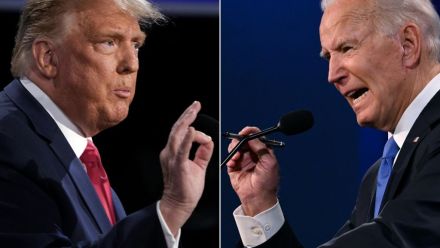
In presidential elections there’s no such thing as a Pyrrhic victory. Winning is everything — and neither party would ever openly admit there could be advantages to losing. Yet the outcome of the 2020 election wasn’t entirely unlucky for the Republican Party or even Donald Trump himself. And as both parties look to next year’s contest, far-sighted strategists can see a bigger picture beyond Trump and Biden. Whoever won in 2020 was going to face the ugly but necessary task of withdrawing US forces from Afghanistan, where twenty years of nation-building had failed to establish a free state that could resist the Taliban. Trump might have executed the withdrawal more successfully than Biden. But if he had, would the media have covered him more favorably? Of course not.

republican

‘We must defend our territory’: on the frontline of Europe’s migrant woes

Lampedusa, Italy The motorcade carrying Italy’s prime minister is being held up by a wild-eyed pirate. With a bushy black beard, sun-blasted face, tattooed forearms and a single earring, he stands in front of the convoy of a dozen police cars, extending a flattened palm. Blue lights flash, engines idle and somewhere behind blacked-out windows sit Giorgia Meloni, the prime minister, and her important guest, Ursula von der Leyen, president of the European Commission. The pirate is Giacomo Sferlazzo, leader of the protests that began on the island of Lampedusa after around 100 small boats carrying migrants arrived there on a single day in September. Really he’s a local musician, professional puppeteer and, as he describes himself, a Marxist-Leninist follower of Antonio Gramsci.

lampedusa
trudeau

Justin Trudeau is tanking Canada’s economy

In September the leaders of the world’s most powerful nations met in New Delhi for the annual G20 Summit to address such heady matters as the war between Russia and Ukraine, the future of energy production and the criticality of food security. Everyone smiled for the cameras, shook hands politely and agreed to do their best to do something about everything, just so long as they weren’t asked to make any enforceable commitments. At the end of the weekend, all the great men and women of the world put their shoes back on, took one more group photo and bid adieu to their friends (and enemies). Then they all headed for home. All, that is, except one.

freedom

Reports of the death of freedom have been greatly exaggerated

Not long ago, I accepted an invitation to attend a gala dinner in Washington, DC, celebrating what Caketoppers.co.uk informs me is the “emerald” anniversary of AnOther magazine. Ten years ago, as an unpaid intern with the same publication, I used to sign up for these things indiscriminately: House Freedom Caucus luncheons “catered” by Chick-fil-A, panels at the Brookings Institution on the debt-to-something-or-other ratio, symposia on the threats to cybersecurity faced by entrepreneurs in suburban Uzbekistan. As long as you showed up and at least pretended to listen (which meant, in practice, taking no more than two cigarette breaks per speaker), you got a free meal and an evening’s worth of drinks in one of the most expensive cities in the country.

coal

Why ‘dirty’ coal is vital to a ‘clean’ green future

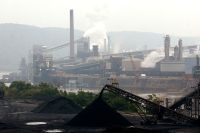
The Central and Western regions of Pennsylvania are known for their majestic, untamed landscapes. Seen from on high, you’d think the forested wilderness here was yet untouched. Though that’s far from the truth, the area has, for the past few decades, for better and worse, been largely forgotten — except by the people who live, work and play among the lands and waters scarred and poisoned by abandoned deep-coal mines and unreclaimed strip mines. The Allegheny section of the Appalachian Mountain range resembles an accordion poised in compact, scrunched-up, ready-to-perform mode.

doormen

The secret lives of New York’s doormen

The first test was the audacious cockroach that sidled into our apartment about three days after we moved in. Hardly enough of a native Manhattanite to calmly swat it and flush it and go on eating my pizza, I pollyannaish-ly sprinted downstairs instead. “Excuse me,” I breathlessly announced to the crossword-solving bald guy manning the front desk — I hadn’t even had the courtesy of introducing myself to him yet. “There’s a cockroach in my living room.” Visibly unimpressed but with an air of professional politeness that almost hid what he actually wanted to say (“suck it up, princess”), he looked up at me sympathetically: “The exterminator comes Tuesdays.” It was Friday.

marijuana

Americans are watching legal weed’s promise go up in smoke

When Colorado became the first state to legalize marijuana for recreational use in 2014, expectations were as high as its users. For decades activists, investors and lobbyists assured Americans that the legalization of marijuana would displace the black market, generate an influx of tax revenue to finance schools and hospitals, halt senseless arrests and improve racial equity, all without attracting the attention of kids. In the run-up to legalization in Colorado, officials projected a $70 million jump in tax revenue from the hundreds of marijuana and THC products in newly minted dispensaries and licensed shops and budgeted accordingly. They learned quickly that the expectations didn’t live up to the reality, bringing in around $44 million in its first full year in operation.

Welcome to the new counterculture

The mantle of song of the summer generally belongs to whichever hit Americans heard the most in clubs and bars, at cookouts or on their way to the beach: the earworm that dominated the airwaves and was the soundtrack to their fun in the sun. But as temperatures cool, the most talked-about song of the summer of 2023 wasn’t a mega-hit from a superstar, but a stripped back political ballad by a previously unknown country musician from southern Virginia. Oliver Anthony’s “Rich Men North of Richmond” is an angry song for a restive country — and, astonishingly, given Anthony’s status as a complete outsider, it shot to number one in the charts. His rise is unprecedentedly steep: never before has an artist with no prior chart history debuted in the top spot.

oliver anthony rolling stone counterculture

The quest for an authentic bite of Americana

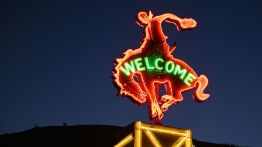
Finally I found an authentic bite of Americana. Or so I thought. The rodeo. A blaze of bucks and broncos, boots and bulls, shining golden in the dusk of the Teton mountain range. Jackson, Wyoming, far away from the raging culture wars and as unapologetically American as a bald eagle’s middle finger. A proud, if out-of-tune, “Star Spangled Banner” stirred me enough that for a moment I forgot I was English. The crackle and hollering, the stirrups and steers. This was real, I believed. Weeding through an air-conditioned continent of screens, plastic and corporate advertisements, I had found her at last: America. But then slipped the veneer. The rodeo barrelman — a ringmaster in clown maquillage — squawked at us down a dusty PA system. “Where are you from?...

authenticity

Why Democrats and Republicans are so worried about third parties

In the closing months of the 2022 midterms North Carolina residents began receiving text messages and phone calls from unfamiliar numbers, a ritual all too familiar to a swing-state voter. The benevolent voice on the line had seen the recipient’s name on a petition to allow the Green Party on the ballot and wanted to ensure the signature was on the up and up. With validity confirmed the anonymous caller would reveal himself to be a Green Party representative. “If the Green Party is on the ballot, it’ll take votes away from Democrats, giving Republicans a huge advantage. It will help them win North Carolina in 2022 and 2024. There’s far too much at stake to let this happen. Are you interested in asking to have your name removed from this petition or leave it as is?

third party

Why we’re all populists now

Fifteen years ago, populist politicians and parties were seen as a reactionary blip which would soon fade. They are instead not only still present but rapidly gaining strength and power across the developed world. It’s well past time to wonder if populist sentiments will fade. It’s rather time to consider the heretofore unthinkable: perhaps populism will be to the twenty-first century what labor union-backed social democracy was to the twentieth. All of us grew up in the world that social democracy created, so it’s hard to grasp that it has not always been with us. But that’s not so. As late as the 1890s, social democratic parties were either weak or non-existent in most of the (admittedly small) democratic world. That changed quickly as industrialization gained steam.

populists
Youngkin

The Youngkin blueprint

Virginia Beach, Virginia “Please run. We need you to save our country. Please.” A man pleads with Virginia governor Glenn Youngkin, referring to speculation that Youngkin may jump into the 2024 GOP presidential primary — and that Republican donors are encouraging him to do so. Youngkin responds, with a laugh: “I’m busy.” The governor is, indeed, quite busy. It is late August and he has just finished up one of his “Parents Matter” listening sessions, this one in Virginia Beach. Youngkin has been traveling the Commonwealth and hearing directly from parents to fulfill one of his biggest 2021 campaign promises: protecting the rights of parents from government overreach in matters concerning their children.

censorship

We’re fighting the Covid censors

On July 4, our Independence Day, Judge Terry Doughty issued a preliminary injunction ordering the federal government to immediately cease contact with social media companies, which it had been urging to censor protected free speech. Evidence unearthed in the Missouri v. Biden case, in which we are co-plaintiffs, has revealed a vast federal enterprise dictating to social media companies who and what to censor. The Centers for Disease Control and Prevention (CDC), the Surgeon General’s office, the National Institutes of Health, the FBI, the State Department, the Department of Homeland Security and the White House itself were all closely involved.

right

Why the new right is like the old left

F.H. Bradley, perhaps the most self-aware philosopher who ever lived, once dismissed metaphysics as “the finding of bad reasons for what we believe upon instinct.” Bradley (whose favorite pastime was using pictures of Gladstone for target practice with his revolver in his rooms at Merton College, Oxford) qualified his negative assessment of the intellectual life by pointing out that philosophy was itself one of those irrepressible instincts — a nicely circular way of putting it. This is more or less how I feel about journalism. I don’t expect anything from readers except the occasional quiet chuckle and a general sense of not having wasted their time. I am certainly not in the business of changing hearts and minds.

cemeteries

The problem facing US cemeteries

On a hillside on the outskirts of my town is an expansive cemetery where more than 20,000 of Philipsburg’s ancestors have been laid to rest since 1869. For decades, its thirty or so acres have been cared for by three dedicated men who dig and fill graves, mow and trim the grass, repair equipment, patch and plow roads, maintain old headstones and gather leaves “for next to nothing,” as Paul Springer puts it. This work must “go on constantly,” says Paul, but changes in the mores surrounding death mean “generating the income necessary to support these activities is becoming impossible.” Paul is my friend and one of those indispensable do-ers small towns across the country rely on to keep things ticking.

doombragging

Doombragging: the rise of sustainable boasting

A post came across my social media feed last week that looked like half the posts in my social media feed: a smiling Caucasian couple at an outdoor restaurant table with palm trees in the background. But the caption was more unusual: “The world is suffering beyond measure — but we have to find moments to be grateful for good health, good food and nice weather. Hoping for good news every day. (Heart emoji).” On the one hand, this is very true: we do have to find moments to be grateful for good health, good food and nice weather. But why the first part? Is the world really suffering beyond measure? And if it is, why do you need to mention that in a post that features you and your spouse going out for what looks like a pleasant meal?