Features

How AI helps the tech giants

Artificial intelligence (AI) and its related technologies — machine learning and the metaverse — represent a watershed in the evolution of the global economy. Like other such shifts, its emergence is likely to favor certain interests, notably a handful of technology giants, the media and a small cadre of highly skilled programmers. Everyone else faces economic danger, certain to roil domestic and international politics in coming years. Eighty-two percent of millennials fear AI will reduce their earning ability — and they are right to be worried. The first group to lose will be the usual suspects: factory and warehouse workers as well as professionals with largely routinized occupations suited to automation.

ai

Why everybody should have seen the Google Gemini blunder coming

Has it ever bothered you that all the Founding Fathers were white? Fear not: Google Gemini AI is here to save the day. In February, Google updated its artificial intelligence LLM, or Large Language Model, releasing one called Gemini. The hope was that tech companies could build off each other’s platforms and that Google’s new AI would correct earlier mistakes made by Microsoft’s Bing, which in turn corrected mistakes made by OpenAI. Shortly after Google released Gemini to the public, internet users began quizzing the AI. Immediately problems were apparent, especially within Gemini’s image creation. When asked to replicate portraits of medieval British kings, for example, Gemini provided images containing historically inaccurate ethnicities.

gemini

Lessons from costly wars past

Money is often a substitute for strategy in US foreign policy. We spent $2 trillion in Afghanistan, only to lose the country the minute our troops began to pull out. How much will it realistically cost, then, to beat Russia in Ukraine? Will the next $100 or $200 billion do the trick? This is not a question that supporters of war-spending ask themselves. As in Afghanistan, spending is a way to defer thinking about actually winning — or facing the serious possibility of losing. Our aid buys delay, not results. Ironically, while the specter of World War Two is invoked every time there’s a conflict, our experience then teaches the same lesson as recent attempts to purchase victory.

wars

King Charles’s cancer and the future

On September 23, 1951, King George VI was operated on for cancer. It was a grueling, dangerous procedure, conducted at Buckingham Palace by Clement Price Thomas, a leading chest surgeon. The king, unsurprisingly, was miserable at the idea, saying, “if it’s going to help me get well again, I don’t mind, but the very idea of the surgeon’s knife again is hell.” Yet he was kept unaware of the seriousness of his illness, instead being informed that the cause of his health problem was nothing more urgent than obstruction in one of his bronchial tubes, which would require a “resection” of the lung, and that it would cure the “pneumonitis” that he believed he was suffering from.

Charles
BRICS

Nixing BRICS: how to counter the China-led alliance

Americans are used to exercising influence through international entities such as NATO, the World Trade Organization or the World Bank. Each of these groups was set up with American leadership or at its instigation; all have been used to advance Washington’s vision of global liberal-democratic capitalism. No comparable international organization or collection of nations has been influential since the Soviet Union’s collapse. That may be changing. The so-called BRICS alliance (its founding countries were Brazil, Russia, India, China and South Africa) recently added new members Iran, Ethiopia, Egypt and the United Arab Emirates.

press fake news media consultancy journalism

The depressed press

There is a recurring type of incident that reflects the insularity of today’s media class: “Everyone was talking about it, but no one reported it.” There is no stronger indictment of contemporary media bias — it doesn’t arise just out of partisanship, nor out of opposition to reporting stories that displease our ruling class. It reaches the point of actively lying and covering up things any average American knows to be true. The most prominent recent example is found in the reaction to Special Counsel Robert Hur’s findings regarding Joe Biden’s hoarding of classified documents.

debt

Want student loan forgiveness? Make universities pay

At the turn of the twentieth century, Saturday Evening Post editor and Yale dropout George Lorimer bitingly summed up academia when he said “colleges don’t make fools, they only develop them.” On the heels of yet another multibillion-dollar Biden administration college bailout, it seems we haven’t learned the lesson: colleges might not make fools, but they’re certainly trying to make fools of us. The bailout projects come from a Biden campaign promise: “I will eliminate your student debt.” Half-slogan, half-bribe, this resonated with millions burdened by the unpayable debt brought on by liberal arts degrees that may barely be worth the paper they’re printed on.

travel

Don’t let climate activists stop you from traveling

A decade ago, when I first started contributing to the New York Times’s annual “52 Places to Go” list, the top user comments were about the destinations: Why was Calcutta chosen but not Chattanooga? This year, in a sign of the times, the most popular comments suggest that we should all just stay home to save the planet. The climate-obsessed among us are falling out of love with travel, particularly with the idea of exploring far-off places where your carbon footprint is greater. If their movement gains steam they won’t save the world, but they might well wreck the global economy and deprive themselves and others of much-needed perspectives and experiences that make the world a better place.

How foreign policy will impact the 2024 election

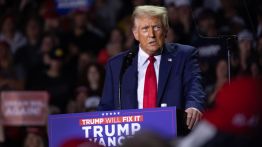
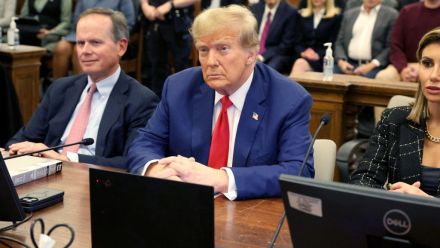
Donald Trump’s long march through the Republican primaries leaves little doubt about the inevitability of a Biden-Trump rematch in November — court cases and old age notwithstanding, of course. Unlike previous contests, foreign policy looks set to be at top of mind for many voters. Which, if you’re a Biden supporter, isn’t great news. In a recent AP poll, four in ten American adults named foreign policy as issues the government should work on in 2024. The president’s decisions abroad broadcast weakness, lack of direction and myopia, traits that have come to define his first term. The deadly and chaotic withdrawal from Afghanistan was only a sign of things to come, as more conflicts and crises sprang up around the world.

policy

Searching for the energy at the New Hampshire primary

Manchester, New Hampshire “OK, who here is not a voter in New Hampshire?” asked Marianne Williamson as she took the microphone. Almost everyone in the small, quarter-full auditorium at Manchester Community College raised a hand. “Well, that’s depressing,” said Marianne. Williamson carries herself with a certain grandiosity. She has that quasi-aristocratic bearing that comes from decades of being attractive, famous, well-off and radical. In 2024, she’s casting herself as the presidential candidate for despairing Bernie Sanders supporters. As she did in 2020, she presents her agenda as the spiritual alternative to politics as normal. “Not every rich person in America is a greedy bastard,” she says. “Not every poor person is a noble and pure soul.

New Hampshire

2024 and the invasion at the southern border

Donald Trump crushed the New Hampshire primary, as every poll in Alpha Centauri predicted he would. Nevertheless, his sole remaining opponent for the GOP nomination, Nikki Haley, “vowed to fight on.” Why? A cynical person might suggest the interaction of two volatile liquids: cash, on the one hand, and consultants, on the other. Haley is swimming in both. The cash is coming from two sources: brittle, establishment faux conservatives like the Kochs and wily Dem operatives like the billionaire Reid Hoffman who, in addition to shoveling gobs of money to Nikki Haley, is also funding such entrepreneurial activities as E. Jean Carroll’s bizarre lawsuit against Donald Trump. In a sane world, the support of a malignant figure like Hoffman would be disqualifying for Haley.

border

‘Maybe I have the healing I need’: speaking to Father Paul Wierichs

It used to be you had to get in close to hear Father Paul Wierichs speak. For two years the former FBI chaplain couldn’t talk above a whisper. Now he is a little louder, but very hoarse; though he still struggles to swallow you can at least hear his voice. Bell’s Palsy keeps him from moving the left side of his face, and he has a difficult time seeing out of that eye. His scalp is bandaged where the doctors removed a growth. There’s cancer in his prostate, too. He’s still held onto a good amount of hair for his age and his troubles — but he expects to lose it to surgeries by the end of the month. “I wore my collar on 9/11,” Father Paul recalled on a frozen January morning in Queens. “I had to throw them out, because they were covered in dust.

Wierichs
tradwife women

How the tradwife killed the girlboss age

The tradwife smiles as she feeds her sourdough starter, wearing a long dress and a baby and wrangling the occasional toddler underfoot. She beams at her husband as he comes in from a long day on the ranch, or from the hedge-fund trenches. She makes salt-dough modeling clay for the little ones, whether her stove is from Lowe’s or La Cornue. The Cut describes her Instagram account as both “dangerous” and “stupid.” CNN experts lament that too many girls are turning to her as a “Band-Aid with ideological cover,” and fret about the sourdough-starter-to-White-Supremacy pipeline. Tradwives, both self-identified and smacked with admiring or hostile labels, are the latest cultural phenomenon in media crosshairs.

Botox

The curious case of Botox babies

"You look great,” my friend beamed at me as she opened her apartment door a few months ago. “Have you had Botox?” Of course I hadn’t. I’d had something that’s almost certainly far rarer — especially as a parent — in this age of ubiquitous beauty-on-demand services: eight solid hours of sleep, followed by a strong cup of coffee, followed by a ten-minute power walk through a New York City downpour replete with gale-force winds blowing in off the Hudson. Take that, injectable dermal fillers. Botox, it seems, is everywhere. Many of my acquaintances, even those barely old enough to remember Tamagotchis or Princess Diana’s funeral or that AOL dial-up tone, casually drop into conversation how overdue they are for an appointment with Doctor So-And-So.

LaPierre

The LaPierre legacy

Everything from the flintlock rifle to the dialogue was planned — somehow people often don’t realize that, even when there’s a Hollywood actor on stage. When Charlton Heston raised the prop above his head at the 2000 NRA convention and bellowed, “from my cold dead hands,” those gathered in Charlotte reacted just as the ghostwriters thought they would. It didn’t matter that the line in question had been a bumper sticker for decades, or that the septuagenarian Oscar-winner was reciting a phrase Vincent D’Onofrio had parodied just three years earlier in the blockbuster Men in Black. Viewers of the film today won’t realize the cart is pulling the satire horse until they check IMDb.

luxury

Why the luxury life feels alien

My path to “media personality” (puke) and cultural commentator was not the usual one. I didn’t get a degree in Journalism or Broadcast Journalism or Communications. I didn’t go to Harvard or Columbia or Syracuse or Yale. In fact, I didn’t get a degree at all. This sets me apart from almost everyone in old-guard media — and were it not for new media and more importantly, social media, I would still probably be excluded by most of the establishment gatekeepers. Our mainstream media and late-night television rooms are dominated by people who went to Ivy League schools. The Harvard Lampoon guys. The Columbia School of Journalism kids.

covid

How Covid amnesia spread through the right and left

In August 2020, the US Centers for Disease Control released new Covid testing guidelines, which called for increased vigilance in nursing homes and other hotbeds, while leaving hypochondriacs free to sodomize their noses to their hearts’ delight. The document sought to move away from mass testing for its own sake, which served the dual purpose of, first, generating panic-inducing headlines that could be used to justify lockdowns and drive cable TV ratings and, second, not doing a thing to protect the elderly. The Coronavirus Task Force led by Vice President Mike Pence had signed off on the change a week before in a situation room meeting without any objection from National Institute of Allergy and Infectious Diseases lead Anthony Fauci, as White House advisor Dr.

Supreme Court

The Supreme Court takes on the administrative state

After consecutive Supreme Court terms with major rulings on abortion, guns and affirmative action, the justices don’t have anything on the docket now that will roil the culture wars. (The Trump ballot case to be argued as this goes to press will be a small blip.) Instead, this year our black-robed philosopher-kings are doing battle with the administrative state — which Steve Bannon promised to “deconstruct” when Donald Trump took office last go-round. That shouldn’t be surprising; notwithstanding the media trope that Trump “stacked the court” to overrule Roe v. Wade, it was instead potential nominees’ commitments to reining in the bureaucracy that was White House counsel Don McGahn’s focus.