Books and Arts

One Battle After Another may be the worst movie ever made

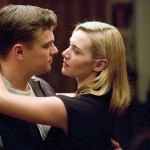
One Battle After Another may be the worst movie ever made. Not in the petty and obvious way of a normal bad movie, though. It is a grand, multifaceted masterpiece of badness. It is dramatically bad, morally bad, historically bad and even erotically bad. And to cram in all this badness, it is an hour too long. But you won’t be bored – it is even entertainingly bad. This film is so bad that most people will think it is good, and it will probably make a lot of money. Proving only that America is the kingdom of Cain. But we knew that. But why not start with praise, eh? The film has a beautiful celluloid look.

Battle
The Who

The Who’s farewell tour marks the end of an era

The Who are our last great rock ’n’ roll band. More than 60 years after four working-class boys from west London formed a humble R&B combo, the two surviving members look to be hanging up their spurs for good. The Who have named their latest string of engagements – a farewell tour which concluded early this month – “The Song Is Over.” When I caught them in Long Island, rumors of geriatric struggles were soundly put to rest: Pete Townshend, 80, and Roger Daltrey, 81, were in cracking good form. Most concertgoers that night were male, working-class and in their late fifties or early sixties.

Is Dan Brown finished?

In a moment of modesty that he’s never quite been allowed to forget, Stephen King once declared himself “the literary equivalent of a Big Mac and fries.” This is self-deprecation taken too far. As the author of more than 60 books in a career that has spanned more than half a century, King’s writings have roamed over numerous genres: horror, most famously, but also mystery, suspense, science fiction, fantasy and a surprisingly dour brand of social realism. All are delivered in his trademark muscular prose, dappled with moments of stylistic brilliance. The real purveyor of literary junk food is surely Dan Brown, whose works of fiction mirror far more accurately the salt-rich, nutrition-free offerings of the hamburger giant than anything King has ever produced. If Mr.

Brown

Francesca Wade’s Gertrude Stein biography is a study in frustration

There came a point in time when Gertrude Stein was more famous for being Gertrude Stein than for anything she’d written. The American writer, born in Oakland, California, in 1874, moved to Paris in 1902 and devised a style of writing that privileged the sounds of words over narrative or plot, a process of discovery inspired by the art she discovered in the city. The non-representational canvases of Picasso and Cézanne, who became her close friends, made more of an impact on her emerging style than any writer: colors and shapes told a story of their own beyond any apparent subject or setting. She engaged in constant battles of wits with publishers and editors, eventually resorting to publishing her writing herself instead.

Stein

Against abstinence-based approaches to sobriety

It would be impossible for me to review Katie Herzog’s Drink Your Way Sober without disclosing the central fact of my adult life: I have been sober and in Alcoholics Anonymous for more than 15 years. And while I am not an out-and-out evangelist for AA and its notorious Twelve Step method, it is, nonetheless, the movement that I credit with my survival. Not so for journalist – and addict – Katie Herzog. Herzog has all the serial-relapser energy you would expect from the addict who has forsworn AA Part memoir, part guidebook, Drink Your Way Sober is an impassioned – and at times, angry – argument that abstinence-based approaches to sobriety are doomed to fail.

Sober

Martin Mull’s short stories bring levity to serious themes

Books of short stories are among the most difficult for writers to sell. Which is odd, as they’re often where the best writing is. A short story is rarely boring. It has to pack everything in, grip the reader right away, unfold its plot and make its point – a cultural truism or a subtle universal or a moral profundity – elegantly. It’s the one kind of writing I’ll always read when a friend says they’ve tried their hand at it.

Mull
Wilson

Witnessing Humanity: The Art of John Wilson is a must-see show

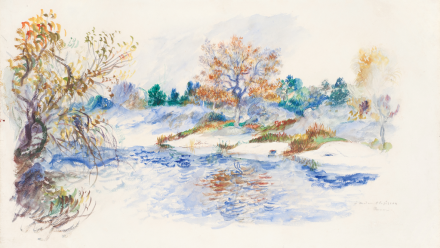
The Metropolitan Museum of Art’s Witnessing Humanity: The Art of John Wilson is a must-see show. Originating as an exhibition at Boston’s Museum of Fine Arts, the Met’s show is certainly the museum’s largest solo exhibition of an African-American artist’s work in recent memory, perhaps ever. It’s definitely the biggest-ever showing of Wilson’s work, but the Met is not patting itself on the back on these points. The show is a tribute to a fine artist of boundless talent, a painter of deeply felt and expertly rendered works, even if it will not rewrite any narratives of art history. Wilson (1922-2015) was an African-American artist of Guyanese descent who had a long and many-chaptered career.

The closest look yet at David Bowie’s mind and imagination

What would David Bowie say? The much-missed musician – dead a decade next January – is the beneficiary of a new, bespoke space inside the Victoria & Albert Museum’s East Storehouse outpost. Although Bowie is by no means Britain’s most commercially successful rock star, he is surely its most interesting – and certainly the most chameleonic, making his legacy ripe for serious re-evaluation. Now, thanks to the David Bowie Centre, the curious public can get its closest look yet into the artist’s mind and imagination. And as a bonus, it’s free, too. The space is composed of one room with nine rotating displays showing about 200 items.

fashion

New York Fashion Week’s shimmer feels noticeably dimmed

Crossing streets with lattes in hand, camera lights flashing, perfectly curated outfits meant to be noticed, and a crisp chill in the air means one thing: New York Fashion Week has arrived. The September Fashion Week has long stood as the pinnacle of American fashion prestige. As the leaves turn red and brown, style photographers capture eclectic ensembles in motion, A-listers march through the streets and assistants carefully place nameplates on front-row seats beside pristine runways. But this year the week’s shimmer feels noticeably dimmed. The big names still show up – Michael Kors, Calvin Klein, Tory Burch. But in recent years they’ve been eclipsed by smaller, edgier and distinctly New York-based designers.

Spinal Tap

Spinal Tap II is an amusing, honorable successor to the original film

The story of the made-up English heavy-metal band Spinal Tap is, in every way but its particulars, the story of Joe Biden. Consider the parallels: a group of not-very-bright Baby Boomers – or, in Biden’s case, a single not-very-bright old man – manage, through sheer dumb luck, to reach the peak of their professions – selling out stadiums, in the case of Spinal Tap, or being elected to assorted high offices, in the case of Biden. Essential to the film’s success is the characters’ persistent ignorance of their own deficits in intelligence and logic Then, as time marches on, neither the band nor the politician acquires wisdom or sagacity but merely becomes older, weaker, and ever more enfeebled.

Two wholly different but complementary ways of looking at Christianity

In Philip Larkin’s 1954 poem “Church Going,” the narrator walks into a deserted English country church, and observes that it isn’t up to much. Larkin writes that there is “a tense, musty, unignorable silence/ Brewed God knows how long,” feels a sense of “awkward reverence” and, on the way out, “Reflect the place was not worth stopping for.” It is one of the great vignettes of church-crawling, as the practice is generally known – wandering into an empty ecclesiastical space, not being wildly impressed and strolling out again, unblessed by the visit. Yet for Larkin, that it will be “A shape less recognizable each week/ A purpose more obscure” is a tragedy, even for a non-believer.

churches

Patricia Lockwood’s latest novel transcends genres

In the wake of her niece’s death, a writer travels with her family to Scotland, hoping the holiday will ease their pain. After tasting water from Skye’s natural Fairy Pools, the writer starts to feel not quite herself. It must be a fairy trick, she thinks, or perhaps her grief. She loses feeling in her legs and her grasp of language, but gains an odd new power: access to other creatures’ sensations. Watching her friend eat, she feels the food “slipping spoonful by spoonful inside her,” and picking a sunflower’s petals elicits a “tug in her own flesh.” Patricia Lockwood’s latest novel, Will There Ever Be Another You, charts the protagonist’s bizarre illness and recovery.

Lockwood

Patrick Ryan’s second novel doesn’t pretend to be perfect

Patrick Ryan’s second novel is a small-town family saga that spans three generations, four wars, 11 presidents and many a watershed moment along the way. Ryan understands that big stories are made of small moments, not the other way around, and Buckeye is a fine illustration of how drawing-room tensions can fester and become matters of historical significance. In 1945, very few young men can be seen walking the streets of Bonhomie, Ohio. Cal Jenkins, a hardware store clerk with one leg shorter than the other, is one of them. The superheroes in the comic books he reads are versions of himself, but for the limp. Cal is married to Becky, whose occasional séances with her childhood friend Janice he initially brushes off as an innocuous, if slightly odd, pastime.

Buckeye

The Life of Violet catches a side of Virginia Woolf that has been obscured

She was Adeline Virginia Stephen, then. Signing her letter “AVS”, in August 1907 the 25-year-old who became Virginia Woolf complained to her friend Lady Robert Cecil: “The effort it is to write… I feel like one rolled at the bottom of a green flood, smoothed, obliterated, how should my pockets still be full of words?” Long before the masterpieces that would make her name, she was working on a series of literary exercises. These attempted to remold the biographical form into one that could encompass and celebrate the lives, not of famous men, but of unfamous women and combine what she called the granite and rainbow of “life-writing”: stony fact and iridescent fantasy. Her letter continues: If you keep The Life, or Myth, don’t quote it – see my vanity!

Woolf
Shahn

Ben Shahn’s work remains as timely as ever

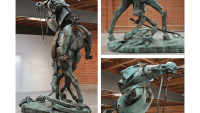
How can an artist express social and political dissent in a polarized, volatile time? Look no further than the sobering and rousing Ben Shahn: On Nonconformity. Throughout his decades-long career, Shahn (1898-1969) crafted paintings, murals, posters, drawings, photographs and prints chronicling the news of the world, with a focus on the suffering of society’s most wounded. This is the first major retrospective of his work to appear in the US since 1976. The country has changed, and yet Shahn’s work remains as timely as ever.  His social-realistic approach fell out of fashion as critics came to prefer abstract and pop art. But Shahn remained true to his own aesthetic, as the show’s 175 works demonstrate.

McCartney

Eyes of the Storm revisits an era

At Eyes of the Storm, the de Young Museum’s exhibition of photographs taken by Paul McCartney, mainly on the Beatles’ first American visit, the typical viewer will be surprised to find herself empathizing more with the rock stars than the audience. In early photos, the crowds – and the band members – are eager, curious and frank. But through the months and the cities and photoshoots, the Beatles learn to pose. They soon find themselves flattened by a camera’s gaze in a way all too familiar to just about everyone today. The collection opens with the Beatles’ British tour in 1963 and residency in Paris in early 1964. “We were just wondering at the world,” McCartney writes, “just excited about all these little things that were making up our lives.

Drake

Nick Drake’s explosive creativity

Nick Drake’s debut album Five Leaves Left (1969) had so much going for it. Supported by tasteful string arrangements and a cast of noteworthy musicians, Drake (1948-74) sang with a delicate croon that sounded like Chet Baker if he’d gone to Eton, and he played some of the finest acoustic guitar this side of Segovia. Joe Boyd, the impresario who’d launched Pink Floyd and Fairport Convention, produced the album, and it bore the imprimatur of Island Records, London’s hippest label. On the cover, Drake cut a shy but handsome figure, nonchalantly clad in blue jeans and blazer, gazing wistfully out the second-story window of an abandoned house in Wimbledon.

Viola's Room

Viola’s Room is beguiling

What is theater? For most people it’s live performance, whether solo or in a troupe. Punchdrunk, the immersive theater company led by Felix Barrett, is not most people. Take its latest iteration now on at the Shed: Viola’s Room features no real-time actors. There is no stage and no seated audience. In this creepy gothic fairy tale, the story is narrated through headphones; the audience moves (sometimes walking, sometimes crawling) through a maze of spaces and the senses – including touch, smell, sight and sound – are as central as the script. Viola’s Room is intimate, small and contained. Every detail, every sound, every object feels intentional. Indeed, much of what makes Viola’s Room so beguiling is the rare sensation of giving up control.