Books and Arts

Wells farrago: gaslighting the Invisible Man

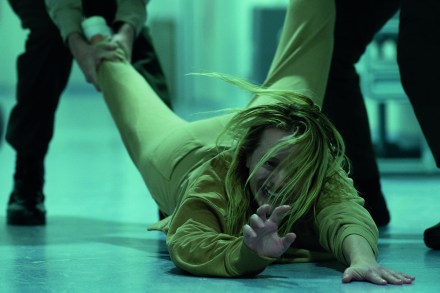
This article is in The Spectator’s February 2020 US edition. Subscribe here. ‘To many young people nowadays,’ H.G. Wells sighed in 1934, ‘I am just the author of The Invisible Man.’ He meant the movie, not the novel. George Bernard Shaw might have said something similar, only at greater length, had he lived to see the improvements by which Alan Jay Lerner turned Pygmalion into My Fair Lady. But would Wells recognize the latest variation on his 123-year-old character at all? This Invisible Man is not much interested in invisibility or men, or men who happen to become invisible. Elisabeth Moss is Cecilia Kass, a harassed woman trapped in an abusive relationship with a sociopathic tech bro.

wells
cats

Cats: The Snuff Movie

This article is in The Spectator’s March 2020 US edition. Subscribe here. In the 1970s, the English humorist Alan Coren set out to create the grabbiest literary cover package in the history of bestsellerdom. He titled his book, a collection of funny essays, Golfing for Cats and hit the trifecta by putting a massive, and otherwise totally irrelevant, swastika on the front. Needless to say, the book sold well. Golf isn’t as big now as it was then, but Coren’s other two ingredients remain staples of popular entertainment.

india

Birth of a nation

This article is in The Spectator’s March 2020 US edition. Subscribe here. The 20th century was a crowded century. Event piled upon world-historical event to produce a mass of history so heavy with the prospect of annihilation and so alive with the possibilities of individual emancipation that one of humanity’s most extraordinary accomplishments, the constitution of a liberal democratic republic on the Indian subcontinent, went largely unnoticed in the West. The significance of India’s birth was, however, not lost on a colonial world clamoring for freedom, or African Americans striving to unlock the full promise of America. India’s founding on August 15, 1947, W.E.B. DuBois rhapsodized, would be ‘remembered as the greatest historical date of the 19th and 20th centuries’.

The way we read now

For almost 300 years, the novel was a major art form, perhaps the major art form, of the modern world — the device by which we tried to explain ourselves to ourselves. Something new came into art during the transition out of the Middle Ages, through the Renaissance and the Reformation, and into the modern age. We might call it the turn to the interior — an increasing agreement that domestic life and drama are real, not merely minor activities necessary to keep body and soul together while we play out our real lives on the world’s stage. Think how rare domestic drama was before the novel.

novel bottum

Land of hope and Victoria: The Kinks’ lost empire

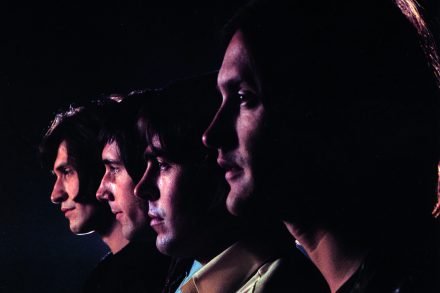
This article is in The Spectator’s February 2020 US edition. Subscribe here. Was there ever a more audacious album title than Arthur, or The Decline and Fall of the British Empire? The name of the Kinks’ 1969 masterpiece could almost be described, in Sixties vernacular, as ‘far out’. But just two years after the lysergic hurricane of 1967, the content of Arthur was ‘far in’, even by the Kinks’ distinctly un-psychedelic standards. Not for them the late Sixties’ return to Americana of the Stones (Beggars Banquet), the Band (Music from Big Pink) and Dylan (John Wesley Harding).

kinks

The Witcher’s hours

This article is in The Spectator’s February 2020 US edition. Subscribe here. If you want to get really depressed about the future of television, consider this: over Christmas, The Witcher was Netflix’s highest-rated original series on IMDb, beating everything from Black Mirror to Stranger Things and The Crown. The reason you should be depressed is that The Witcher’s popularity may send a dangerous signal to screen producers: don’t worry about the script or the acting, just chuck in lots of monsters, ultra closeups of swords cleaving heads, arrows going into people’s eyes and girls in body-hugging leather fantasy outfits, like a Dark Ages version of Hooters.

witcher

Novel inspirations: H.L. Mencken, the bad boy of Baltimore

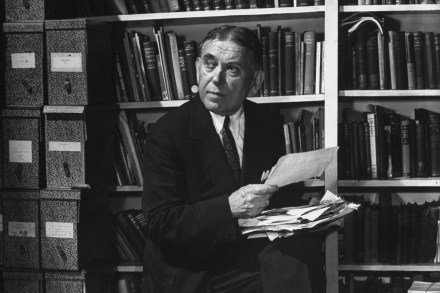
This article is in The Spectator’s January 2020 US edition. Subscribe here. In this age of dim digitized media in which E.J. Dionne and David Brooks are honored as distinguished columnists, the byline Henry Louis Mencken is virtually forgotten. Mencken, who died in his sleep 64 years ago this week after listening to Die Meistersinger on the Saturday afternoon broadcast from the Metropolitan Opera, is unlikely to be remembered by the mediacrats who abhor everything the man stood for. Yet Mencken in the 1920s was one of the most celebrated figures in America, and even the western world.

mencken

Stayin’ alive in ’75

This article is in The Spectator’s January 2020 US edition. Subscribe here. ‘Ford to City: Drop Dead’ was the headline of the New York Daily News. To which the City said to Ford, you first. When the Daily News ran that famous headline on October 29 1975, New York was teetering on bankruptcy. President Gerald Ford had declared he would veto a federal bailout. It looked like the Big Apple was stewed. The world had written off New York. The feeling was mutual: the city had written off the world. Between 1970 and 1980, the city lost nearly a million residents, over a tenth of its population. Still, New York attracted people who, against the reigning wisdom, would not or could not live anywhere else.

meryl meisler

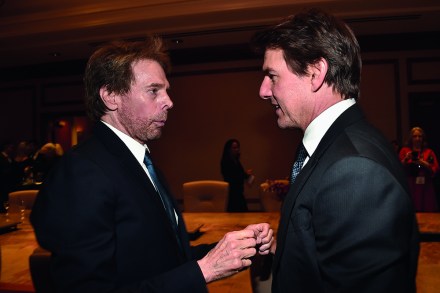
Style on steroids: the power of Jerry Bruckheimer

This article is in The Spectator’s January 2020 US edition. Subscribe here. Jerry Bruckheimer is a quiet man who produces the loudest movies in the world. Early, arty Jerry was the fixer who put together 1980’s slight neo-noir American Gigolo. Thrusting mid-period Jerry, happily partnered with the 1980s zeitgeist and fellow producer Don Simpson, made the classics Flashdance, Top Gun and Beverly Hills Cop. Don died a truly maximal Hollywood death in 1996 — they found 21 different substances inside him — but Jerry, always the sober one, kept going bigger, faster, louder: The Rock, Con Air, Armageddon.

jerry bruckheimer

‘A system at odds with the Constitution’

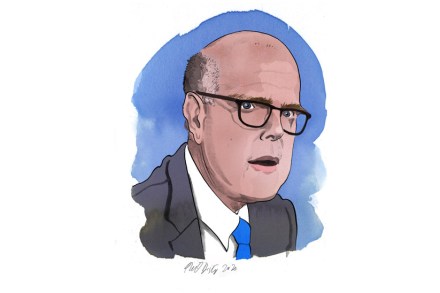
This article is in The Spectator’s February 2020 US edition. Subscribe here.How did America’s house divide for a second time in the 1960s? By a tragedy of good intentions and bad-faith actions, Christopher Caldwell argues in his new book, The Age of Entitlement: America Since the Sixties. He talks to our Life & Arts editor about how we got here from there, and how activism inside and outside the courts has refounded American politics on an undemocratic basis. DG: The Age of Entitlement argues that the Civil Rights Act divided the country by establishing what you call a ‘second constitution’. CC: That is a big part of it. The book is about the evolution of American society since the Kennedy assassination.

caldwell lockdown

Jung love

This article is in The Spectator’s January 2020 US edition. Subscribe here. If Jim Proser’s goal in writing Savage Messiah was to convince people to take Jordan Peterson seriously, I am afraid he has failed miserably. Peterson, for those without an internet connection, is a Canadian psychologist who rose suddenly to fame after he posted a video on YouTube criticizing a bill that proposed criminalizing speech against transgenderism. In 2018 he published 12 Rules for Life: An Antidote to Chaos, which has sold several million copies. He has confounded undemanding television hosts like Cathy Newman, but he has also debated Sam Harris and Slavoj Žižek, all while keeping up his popular podcasts and lectures.

peterson

Is he talking to us?

This article is in The Spectator’s January 2020 US edition. Subscribe here. There’s an old joke about Democrats and Republicans that might help us understand the anti-Trump rantings of pop-culture icons such as Robert De Niro and Bruce Springsteen. Two old guys are talking politics. One asks the other which party he supports. ‘The Democratic party,’ he responds. ‘Why so?’ ‘Because my daddy voted for the Democratic party, and my granddaddy voted for the Democratic party. So I vote for the Democratic party.’ ‘That’s ridiculous,’ rejoined the Republican voter. ‘So, if your daddy had been a hoss thief, and your granddaddy had been a hoss thief, does that mean you’d be a hoss thief, too?

de niro

All modern art is quite useless

This article is in The Spectator’s January 2020 US edition. Subscribe here.Laramie, Wyoming ‘It’s pretty, but is it art?’ Rudyard Kipling asked in 1890. In those days the modernist movement across the Beaux Arts was gaining a grip on the western world that it maintains in the 21st century and is likely to hold into the 22nd, if there is one. One hundred and thirty years later, Kipling’s question calls for a plain response: ‘If it’s ugly, it has to be art.’ Aquinas defined art as ‘right reason in action’; reason in making. Right reason depends upon a man’s knowing what he ought to believe, desire and do. The modern artist is ignorant of all of these things.

art
isaac hayes

The Hayes of our lives

This article is in The Spectator’s January 2020 US edition. Subscribe here. Somehow it’s fitting that in the era of Donald Trump, the blaxploitation genre, which emerged from the black nationalist movement during the original call for ‘law and order’ during the Nixon administration, has been making a comeback. In 2018, Sony released a remake of Superfly starring Trevor Jackson as pusherman Youngblood Priest and directed by Director X. But perhaps no film has done more to signal the revival of the blaxploitation genre than the latest Shaft film. The franchise could scarcely appear hardier. It was Gordon Parks who first adapted the film from the works of the pulp novelist Ernest Tidyman.

The soft power of Italian jazz

This article is in The Spectator’s January 2020 US edition. Subscribe here.New York City The singer and saxophonist Ray Gelato opens his set at Birdland with a cover of ‘That’s Amore’. But this isn’t the sleepy send-up of Neapolitan street waltzes that Dean Martin recorded in 1953. Gelato raises the tempo and swings it four to the bar. As he sprints his way through the verses, Philadelphia’s City Rhythm Orchestra drives the pace, piano, bass and drums holding down the shuffle while the four-piece horn section plays call-and-response to each other and his vocals. It’s the start of a fun, high- energy set, the two hours of which feel as if they pass in half the time. You don’t tap your feet to this music: you stomp.

italian jazz

Kingdoms of the wicked

This article is in The Spectator’s January 2020 US edition. Subscribe here. Frank Dikötter has written a lively and concise analysis of the techniques and personalities of eight 20th-century dictators: Mussolini, Hitler, Stalin, Mao Zedong, Kim Il-sung (North Korea), François ‘Papa Doc’ Duvalier (Haiti), Nicolae Ceausescu (Romania) and Mengistu Haile Mariam (Ethiopia). As a comparative study of those individuals, it is enlightening and a good read. The title and parts of the foreword indicate that it aspires also to be a guidebook of dictator tactics. There are some weaknesses in this broader ambition. These eight men were not altogether uniform in their methods of obtaining, retaining or losing power, and certainly not in their abilities.

dictator
jack ryan

A hero for the Snowflake age

This article is in The Spectator’s January 2020 US edition. Subscribe here. What have they done to Jack Ryan? That’s a rhetorical question, by the way: he’s been captured by a crack team of Ivy League majors in Race, Gender and Weaponized Resentment Studies — probably the same guys who wrote the Washington Post headline calling Abu Bakr al-Baghdadi an ‘austere religious scholar’ — and they’ve reengineered him as a beta-cuck pantywaist woke dork for the Age of Snowflakes. To be fair, Jack did slightly show these tendencies in the first season of his Amazon adventures.

Johnson

The audacity of verse

This article is in The Spectator’s January 2020 US edition. Subscribe here. Shelley famously and optimistically proclaimed that poets were the unacknowledged legislators of the world. Adorno famously and pessimistically declared that poetry was impossible after Auschwitz. In The Music of Time, his new study of poetry in the 20th century, John Burnside makes a rather more modest claim: that to write a poem at all is an act of hope. By any standards, Burnside’s own career seems cause for hope in poetry’s capacity to transform at least one individual life.

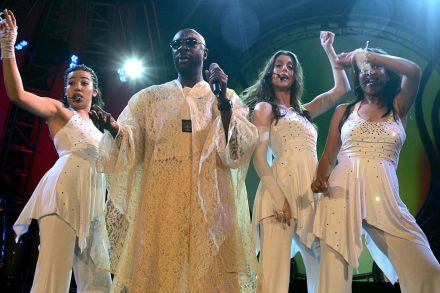
Christmas crackers: the tragic soul of Natalie Cole

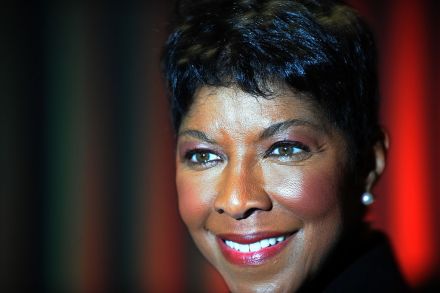
This article is in The Spectator’s December 2019 US edition. Subscribe here. As any Yule fool knows, there’s no Christmas album like an old Christmas album. But there’s not many of them. We’ve had plenty of classic Christmas singles but hardly any classic Christmas albums. In fact, since little Phil Spector went and ‘canceled’ himself and the life of actress Lana Clarkson in 2003, there is only one. Nowadays, a double-sided helping of Spector’s A Christmas Gift For You from 1963 would have the most ardent Wall Of Sound fan hearing sirens, not sleigh bells.

natalie cole

The boy on the hillside

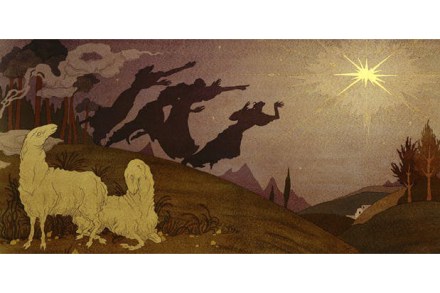
The boy, Seth, stirred in his sleep. ‘Cold…’ He had pushed the blanket off, with his tossing and turning about. ‘Here, here.’ The man seated on the ground nearest to him rearranged Seth’s covering, pulling it up and tucking it under him until he was swaddled like a baby. His head rested on an old fleece. https://audioboom.com/posts/1816403-susan-hill-reads-the-boy-on-the-hillside There were five men and the boy out on this first night of bitter weather. Until now it had been wild winds and huge clouds gray as boulders rolling across the sky and the sheep huddled wherever they could shelter from the gale, but later that day the clouds had shredded into skeins, becoming thinner and paler until they vanished and the sky was quite clear.

star dreamer