Books and Arts

Why we should venerate Evelyn Waugh

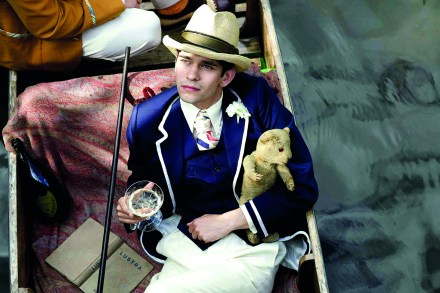
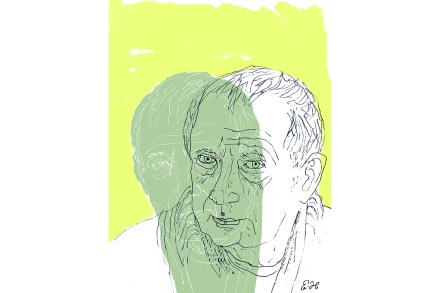
Evelyn Waugh is popularly known today as a comic author, despite the fact that Brideshead Revisited, made famous by the eponymous 1981 television series, is certainly not a comedy. Not everyone agrees. Years ago, a well-read friend of mine remarked to me that he was not fond of Waugh’s work. When I asked why, he replied, ‘Because I don’t think he’s that funny.’ I answered that the way to appreciate the exquisite wit of Evelyn Waugh is to approach him in the expectation of something other than humor, in which case the absurd incongruities, outrageous juxtapositions and ludicrous extremes that occur throughout the novels are in fact supremely funny. Waugh never set out to write comedic stories in the manner of P.G.

waugh
kruger art

The art world is cashing in on anti-capitalism

A few years ago, the American artist Barbara Kruger covered the facade of Frankfurt’s Kaufhof department store with a pair of huge eyes. It was as if Big Brother had come out of retirement. Above that unsparing gaze was the slogan, in Kruger’s signature Futura bold italic font: ‘You want it. You buy it. You forget it.’ It was a typical work of art by Kruger. She made her career from what’s called culture jamming, subverting media messages by transforming them into their own anti-messages and by indicting the business of capitalism. In 1987, for instance, she took an advertising image of an all-American boy flexing his juvenile biceps before his admiring sister and subverted that message with the overlaid words ‘We don’t need another hero’ for a billboard.

morgan

Vital Morgan

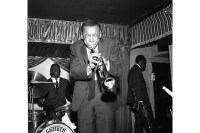
The jazz world has seen more than its share of tragic deaths, whether it was the trumpeter Clifford Brown perishing in a car crash at night on the Pennsylvania Turnpike at the age of 25 or saxophonist John Coltrane succumbing to liver cancer at 40. But perhaps there is no more confounding early demise than that of the bravura trumpeter Lee Morgan. Morgan, who played with the likes of Miles Davis, Dizzy Gillespie and Art Blakey as a teenager, was known for his swagger, which he liked to call ‘expoobidence’, (which he deployed as the title for an album for Vee-Jay records in 1960 called Expoobident). It all came to a swift terminus in February 1972 after his common-law wife Helen, a tough cookie if there ever was one, pulled out a .

delivery

Delivery woes

It’s really quite difficult to keep up with all of the new ways technological ‘advancements’ are ruining things. We’re beginning to live out the 2009 film The Box, in which characters are presented a device with a button that, when pushed, grants them a million dollars — the only catch being that someone they’ll never meet will immediately perish. The dire unseen consequences of smart- phone conveniences aren’t quite as drastic, but they’re there nonetheless, and we rarely consider the moral quandary they present. Enjoying the long lifespan of your lithium-ion battery? A Congolese child might’ve mined the cobalt it contains. You want the new Róisín Murphy LP delivered to your doorstep?

eastwood

Eternal Eastwood

No other actor epitomizes traditional masculinity and classic cool quite like Clint Eastwood. He long ago ceased being human and transformed into the American Man. When you watch an Eastwood movie, your understanding of Clint as the ultimate symbol of a bygone America is so potent that an otherwise mediocre movie like Gran Torino feels greater than the sum of its parts because of his mere presence. This is what an American man is supposed to look and sound like, you think, as Clint snarls and puts up his dukes. These young whippersnappers, they’re no good now, you hear. Which is to say that when you watch one of his films, you’re not watching the actor become a different character, but rather hoping to see ‘Clint Eastwood’.

no time to die bond

The spy’s the limit

No Time to Die is Daniel Craig’s last mission as James Bond. Clocking in at well over 180 minutes, it might more accurately be called No Time to Pee. The epic length and general air of slothful despair derive from the picture’s tortured development. Mess and confusion are the inevitable product of two directors, platoons of writers, a tangled residue of multiple plotlines and the star’s blatant misery at being once again vacuum-packed into a tuxedo one size too small. ‘We did our best,’ Daniel Craig has said repeatedly in promotional interviews. M wouldn’t accept that, so why should we? Bond begins No Time to Die with plenty of time to die. He has retired with his heart broken and the rest of him in little better shape.

An orange or an egg? Determining the shape of the world

Thirty-two years ago, the young Nicholas Crane, who would go on to become one of England’s most esteemed television geographers, set out to woo a young woman by spiriting her off to the unfailingly romantic landscape of Chimborazo and Cotopaxi. The couple spent their high-altitude idyll walking the hills in hobnail boots, making river passage in dugout canoes and boarding a Quito-bound steam train through the Andes, run by the estimable Empresa de Ferrocariles Ecuatorianos. Their journey had its moments: at one stage both parties were to be found at 13,000 feet, crusted with ice and huddled overnight from the gales inside a pair of plastic trash bags; they then got themselves lost for a while among a wilderness of huge and very active volcanoes.

crane
shakespeare

Shakespeare is getting trigger warnings

Hark, groundlings: Shakespeare, after decades of being found to be Problematic, is now being reclaimed as the wokemeister-in-chief. New York’s Shakespeare in the Park company returned to Central Park this summer with a staging of The Merry Wives of Windsor, adapted by the Ghanaian-American playwright Jocelyn Bioh. The action, traditionally located in the white-supremacist purlieus of 17th-century Windsor, is now transposed to 116th Street in Harlem. The cast is mostly black, the script has been updated to contain references to Black Lives Matter and the Bronx, and Jacob Ming-Trent portrays the portly knight-about-town Falstaff as a wannabe gangsta. The critics love the production.

lo-fi

The triumph of bedroom pop

I must have been about 16 when I got my first Portastudio. The compact home recording unit had first been introduced by Japanese electronics firm Teac in 1979, offering unprecedented multitrack dubbing to the bed-bound amateur musician. For a little less than $1,000, you could record four separate tracks of instrumentation — as much as the Beatles had when making Sgt. Pepper — on an ordinary cassette tape. By the time I got my teenage hands on a four-track machine of my own, that price had come down by an order of magnitude. It was a chunky little unit in pigeon blue with just two microphone sockets and a small handful of mixing dials for volume control and stereo panning.

Flagging energy

Paintings so nice you’ll see them twice. That’s the gambit of Jasper Johns: Mind/Mirror, the gargantuan ‘simultaneous retrospective’ that’s currently split between the Philadelphia Museum of Art and New York’s Whitney Museum of American Art. OK, so the concurrent presentations of painting and sculpture by the neo-Dada, quasi-proto-Pop artist aren’t exactly duplicates. The museums promise a sort of imperfect symmetry: ‘each half of the exhibition will act as a reflection of the other, inviting viewers to look closely to discover the themes, methods, and coded visual language that echo across the two venues’.

American Dream
hitler

How Hitler’s great gamble nearly paid off

Do we need another wrist-breaking book about Adolf Hitler, the Third Reich and World War Two? What is there left to say? To gain attention, any new study has to have a thesis: some fresh angle that previous writers have overlooked or played down. For Frank McDonough it is the insane impossibility that Germany could ever have won the struggle it launched against the combined powers of the US, USSR and the British Empire that was the Führer’s fatal flaw. McDonough is an academic specializing in Nazi Germany, and he writes clearly and readably, with just enough detail, on the huge canvas that he covers.

another round

Time for Another Round

Years ago, a friend of mine turned to me at someone’s birthday party and called beer ‘the universal panacea’. Beyond a physical intolerance to most alcohol, I can hardly tolerate alcoholics and their often appalling behavior. Anything that valorizes drinking alcohol, a drug whose societal acceptance is wildly at odds with its negative effects and addictive nature, is a hard sell for me. Unless you’re a member of the Jackass ensemble — that’s appointment viewing. If you’re getting bitten by scorpions and jumping off buildings for fun, a beer bong up the rear end is a nice surprise, at least in the world of cinema.

Titian meets Isabella Stewart Gardner

In 1576 Venice was gripped by plague. The island of the Lazzaretto Vecchio, on which the afflicted were crammed three to a bed, was compared to hell itself. In the midst of this horror Tiziano Vecellio, the greatest painter in Europe, died — apparently of something else. He was in his eighties and working, it seems, almost to the end. Titian: Women, Myth & Power, now on view at Boston’s Isabella Stewart Gardner Museum, contains several of the greatest masterpieces of his old age — and also of European art. It comprised just six canvases (a seventh was unable to travel to Boston), all done for Philip II of Spain — a villain of English history, the man who launched the Armada but, as far as Titian was concerned, his most discerning patron.

titian

What Richard Scarry did all day

If you were lucky enough to know Richard Scarry, you might get a postcard from one of the world’s most successful and celebrated children’s book authors. If you were lucky enough to be Scarry’s friend, you might get a letter from Lowly Worm. If you were lucky enough to be a close friend and also a storyteller, you might get advice from the master storyteller himself. I was very lucky to be all three. I met Dick Scarry in 1959, when Dick bought a sailboat from my father in Westport, Connecticut. The two men had become friends based on a love of all things nautical. My father was an artist-illustrator and writer before he gave up the Madison Avenue rat race and opened a yacht brokerage and ship’s chandlery in Westport.

richard scarry
parasocial

Dad’s the word

My partner has taken to calling his favorite podcast host ‘Dad’. ‘Can I put Dad on?’ he asks when we get into the car. I’ve fallen into the habit too. ‘Does your dad have a new episode today?’ I don’t know how much he actually agrees with Dad — Scott Galloway, the NYU professor and business expert whose podcast properties include Pivot with Kara Swisher and The Prof G Pod — as he is yet to invest in Galloway-approved stocks or repeat Dad’s opinions as his own. I also don’t think he aspires to be like Galloway, with his clearly nonexistent work-life balance and tragic dad jokes.

Fitzgerald

The odd couple: John Keats and F. Scott Fitzgerald

On a shard of paper, some time in the bleak 1930s, F. Scott Fitzgerald incorporated a favorite line from one of his favorite poets, John Keats, in a short verse of his own: 'Don’t you worry I surrender Days are long and life’s a bender Still I know that Tender is the Night.' Keats was a Romantic, perhaps the Romantic, with his lyric gift and tragically brief life. Fitzgerald loved the Romantic poets, and romance in the lower case, but was at the heart’s core a modernist, far more egoist than romantic, and quite hardboiled. The little quatrain above is rather like T.S. Eliot’s ‘jug jug’ in The Waste Land — homage of a sort, but also showing ironic distance, and no intention of writing like Keats.

Fatty Arbuckle’s fall

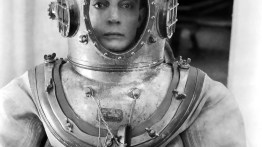
Roscoe ‘Fatty’ Arbuckle (1887-1933) never won an Oscar or saw his name emblazoned on the Hollywood Walk of Fame, but he should be remembered as a movie pioneer. Despite his considerable physical size, he was a remarkably versatile and agile actor, and his best films are weirdly droll as much as slapstick funny. He predated both Charlie Chaplin and Buster Keaton as a master of physical comedy played with a straight face. Arbuckle was also an accidental pioneer of cancel culture. Exactly a hundred years ago, he found himself sitting in a cell on ‘felony row’ at the downtown San Francisco jail, held without bail for the alleged rape and subsequent death of a 26-year-old actress named Virginia Rappe.

fatty arbuckle
art

The art of politics: what ministers hang on their walls

If I am ever appointed to one of Britain’s Great Offices of State — stranger things have happened to Spectator hacks — the first thing I’d do is furnish my office. A raid on the Government Art Collection is a perk of being a minister, and better than the car and the driver. A few Hogarth engravings, a set of David Jones’s ‘Ancient Mariner’ etchings, Cedric Morris’s ‘Irises and Tulips’, Edward Bawden’s ‘The Coal Exchange’...I’d have liked to nab Winifred Nicholson’s ‘Flower Piece’, if only Carrie, the new Mrs Boris, hadn’t got there first. A Freedom of Information request from The Spectator has lifted the little red velvet curtains on which works of art ministers have got from the vaults.

Perry Mason was America’s Sherlock Holmes

I was well into my thirties when my parents acquired a television set, for no good reason that I could discern after they’d gone so many years without one without obvious damage to their health or intellects. Growing up in the Fifties and Sixties, my sister and I were permitted to watch two television shows while visiting with relatives. One was Topper. The other was Perry Mason, which they occasionally joined us for: a small family grouping that was the closest thing the Williamsons ever came to resembling a painting by Norman Rockwell. Over the past year and a half, I have been re-watching episodes of the original show starring Raymond Burr as Mason, Barbara Hale as Della Street, William Hopper as Paul Drake, Ray Collins as Lieutenant Tragg and William Talman as Hamilton Burger.

mason