The Listener

The Stockhausen work that is worth braving

Grade: A- One of the best one-liners attributed to Sir Thomas Beecham refers to the stridently avant-garde Karlheinz Stockhausen: ‘I’ve never conducted his music, but I once trod in some.’ It’s almost certainly apocryphal, but the implied verdict is widely shared. Stockhausen played up to the caricature of the self-obsessed ‘squeaky gate’ composer, though his capacity to create painful noises went way beyond squeaks: only he could have written a string quartet in which each player is recorded in a separate helicopter. So I’m sticking my neck out when I suggest that some of Stockhausen’s works are masterpieces that can be enjoyed even – or especially – if you steer clear of the thicket of mathematics, physics and astrology that surrounds them.

Too bombastic to be country music: Post Malone’s F-1 Trillion reviewed

Grade: B Country music has become the acceptable route through which American pop stars resuscitate their floundering careers: sales are down, kid – shove a fiddle in the next one. And a pedal steel. And git some of those country dudes to collaborate. Especially Dolly. But also Hank Williams Jnr, if you can. Makes them look hip, makes you look real down home. So it is with the agreeably slobbering rapper Post Malone, born in NYC, raised in LA but here sounding like he jes swung in from some roadhouse barstool outta Shreveport, with bourbon and country blood trickling down over his stupid tattoos. His career has hit a hiatus of late and so this is an attempted revival.

The most exhilarating ‘authentic’ Mozart I’ve ever heard

Grade: A+ Yet another double bill of Mozart’s Piano Concertos 20 and 23! There’s an online database of 185 recordings of the first of these, the brooding K466 in D minor, and the classically perfect K488 in A major isn’t far behind. Can there really be anything new to say about either of them? The answer is yes, and in virtually every bar. Olga Pashchenko, a Russian-born pianist based in the Netherlands, here directs the top-flight period ensemble Il Gardellino in her second album of Mozart concertos. She’s playing a fortepiano, but don’t let that put you off: it’s a sweet-toned instrument whose soft action helps Pashchenko deliver cheeky ornaments at lightning speed. And cheeky is definitely the word.

Boring, corporate, imitative, inane and gutless: Kasabian’s Happenings reviewed

Grade: D+ Happenings were interesting, or irritating, events staged from the late 1950s through to the early 1970s by performers who eschewed the corporate and bourgeois restraints placed on artists and veered into surrealism, parody, violence and, of course, situationism. Think Allan Kaprow and John Cage. In rock music, meanwhile, think the Fugs and the Pink Fairies. Happenings by our country’s most profitable faux-rawk outfit, Leicester’s Kasabian, is by contrast a celebration of everything happenings were most opposed to. It is boring, corporate, imitative, inane and gutless. I would almost rather listen to an album by Dua Lipa. It is 20 years since Kasabian’s first album and they have got no more interesting or challenging, but the cash flows in regardless.

Buy this for Beethoven’s beguiling arrangements of British folk songs

Grade: B+ Beethoven was proud of his Triple Concerto for Violin, Cello, Piano, pointing out that no one else had attempted such an experiment. He was writing at the height of his youthful powers and the work is stuffed with earworms. Yet I can’t think of any later composers who copied that particular model, and you can’t blame them. This is essentially a concerto for piano trio and full orchestra – not an easy combination, because the soloists keep having to pass the baton to each other while bracing themselves for the next orchestral tutti. Nicola Benedetti, Sheku Kanneh-Mason and Benjamin Grosvenor make a really good job of it; Kanneh-Mason’s cello glows as memorably as it did in his Elgar Cello Concerto.

Stunningly boring: Brat, by Charli XCX, reviewed

Grade: C I don’t doubt the ingenuity. The mastery of a technology which now exists as a substitute for melody, heart, soul, rhythm and meaning. I get the manifesto, too – a pop music that in a certain shallow sense reflects the modern predilection for meta-fiction: novels which mash up all the genres, so that your detective story suddenly becomes magic realism and a little later, sci-fi. I understand, too, that this is probably the closest our Gen Zers have to a music which they can call their own, given that the technology required to produce it would cause an embolism in a Gen X listener or a Boomer. So I get all that. The trouble is, what if, when all is said and done, it’s basically rubbish?

An exhilarating debut: Peltokoski’s Mozart Symphonies reviewed

Grade: A- Here’s an oddly structured album of Mozart’s symphonies 35, 40 and 36 from the world’s most fashionable young Finnish conductor – and, no, it isn’t Klaus Makela, the 28-year-old maestro of the Oslo Philharmonic and Orchestre de Paris who’s taking over in Amsterdam and Chicago. It’s Tarmo Peltokoski, 24, who hasn’t yet had to cope with iffy reviews hinting that he’s been overpromoted. Peltokoski is cute, clever and scarily self-assured. He’s already music director of the Latvian National Symphony Orchestra and is about to hold the same position in Toulouse. He’s principal guest conductor of the Rotterdam Philharmonic and also the Deutsche Kammerphilharmonie Bremen, the Mercedes-Benz of chamber orchestras.

Let the Lemon Twigs pour warm syrup into your ears

Grade: A If you enjoy the sensation of having warm, jangly syrup poured directly into your ear, then this is probably the summer album for you. You might think that syrup cannot, by definition, be jangly. But imagine treacle with popping candy in it – poured into your ear in a kindly manner by a smiling young man. This Long Island sibling duo have been honing their pastiche for eight years or so and here reference almost every power-pop band that ever existed, from the Byrds via the dB’s to Teenage Fanclub, but also taking in the winsome pop which dominated our charts before the Beatles came along (but post the advent of rock’n’roll) – as well as many less cool contributors to the genre, such as Herman’s Hermits and, gawd help us, Wings.

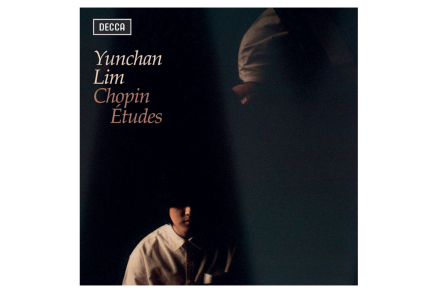
Yunchan Lim’s Chopin isn’t as good as his Liszt or Rach

Grade: B- In 2022 the South Korean pianist Yunchan Lim became, at 18, the youngest winner of the Van Cliburn competition, displaying a virtuosity that stunned the judges. You could see conductor Marin Alsop’s astonishment as he bounded through the finale of Rach 3, combining accuracy and swirling fantasy at daredevil speed. It’s been viewed nearly 15 million times on YouTube. In truth, though, he’d have had to screw up badly not to win, because he’d already dispatched Liszt’s fiendish Transcendental Études with perfect articulation and mercurial wit; in places he out-dazzled even the current master of this repertoire, Daniil Trifonov. Decca snapped him up and here’s his first studio album: both sets of Chopin’s Études.

Fat White Family’s new album is much, much better than I had feared

Grade: A- The irresistibly catchy – if you are not quite right in the head – ‘Touch The Leather’ was probably my favourite single of the previous decade, aided by a video which was simultaneously marvellously seedy, threatening and infantile. ‘Left-wing skin on the right-wing leather – touch the leather leather…’ Well it did it for me, and so I set great stock by these scrofulous squat-dwelling skaggies from Brixton, until with every subsequent dim-witted release the notion began to embed itself that they weren’t, actually, very good. ‘Touch The Leather’ was maybe just one of those glorious singular flukes you find in pop music by performers who aren’t really up to much. I might have to revise that opinion a little.

The greatest British symphonist you’ve never heard of

Grade: A Rejoice! A glorious symphonic cycle by a British composer has been issued as a set for the first time. George Lloyd (1913-98) was treated with lofty condescension by the musical establishment because his twelve symphonies contain barely a single dissonance. They’re sprinkled with jaunty tunes that have the feel of an Ealing Comedy – heresy! Also, it didn’t help that for decades Lloyd made his living as a mushroom farmer in the West Country. But he was no amateur: he could write perfect fugues as a teenager and by his early twenties had a fine opera under his belt. Then in 1942, the ship on which he was serving as radio engineer was hit by a torpedo. Lloyd nearly drowned in oil; shell shock ruined his health and he and his wife retreated to their smallholding.

Clever, beautiful and sonically witty: Beyoncé’s Cowboy Carter album reviewed

Grade: A+ Carter is a useful surname to have if you’re making a country album. So it is with Beyoncé: she married into the name when she got hitched to Jay-Z, but he is from New York, not Poor Valley, VA. Helps if you’re from Texas too – just to convince folks that this bit of genre-hopping is rooted in authenticity. It isn’t – but who cares? This is a clever, beautiful and sonically witty album. Country music’s conventions draw out of Beyoncé perhaps the most sublime melodies she has written, or part-written. There are cameos from Dolly Parton, half-forgotten black sharecropper’s daughter Linda Martell, Willie Nelson and the ghost of Chuck Berry, but – the last excepted – they don’t add much to this sprawling but magnificent double album.

Lang Lang’s wretched new album

Grade: F At the end of his life Sviatoslav Richter decided to try his hand at the Gershwin Piano Concerto. It was a ghastly experiment, but his admirers were used to his quirkiness, knew his powers were fading and so sensibly forgot about it. Now we have Lang Lang playing Saint-Saëns. It’s an even more wretched mismatch than Richter and Gershwin – but I learn from a Deutsche Grammophon press release that fans of the ‘Chinese superstar’ have pushed this horrible album to the top of the UK classical charts. The liner notes are beyond parody. I counted ten photos of the superstar, in which he’s clutching a flower, playing air piano or resting his head on the keyboard. ‘In the Orient, music is sometimes just an idea, a mood, or a smell,’ he explains.

The Last Dinner Party are sadly rather good

Grade: A- There is something decidedly fishy about this convocation of terribly well-bred young ladies who became a kind of sensation two years ago, before they had even recorded a single song – and now have their first album at number one, a sell-out tour in the US and a Brit award. All a bit too good to be true. Do they write their own stuff? Are they music industry nepo-kids, like everybody claimed Clairo was? For the first time, a glimmer of trouble afflicted them last week when a member of the five-piece band seemingly announced that people didn’t want to hear about the cost-of-living crisis. Cue outrage from the lefty music press. But don’t worry, they quickly released a statement ranting about living in a time of National Emergency, etc. Lots to dislike, then.

A thrilling new recording of Messiaen’s Turangalila-Symphonie

Grade: A Pierre Boulez once called Messiaen’s giant Turangalila-Symphonie ‘brothel music’. That was mean-spirited but you knew what he meant: a typical performance comes in at just under 80 minutes, much of it consisting of the B-movie sound of an ondes Martenot wailing over lush harmonies. There’s a constant zig-zag of polyrhythms, plus great towers of brass that represent ‘the heavy, terrifying brutality of old Mexican monuments’ – but, yes, it can hang around like cheap scent. But not in this recording by the Toronto Symphony Orchestra under its music director Gustavo Gimeno, who lingers only where he has to. The effect is not hurried but bouncy and clean-limbed, allowing us to hear the intricacy of the rythmic argument.

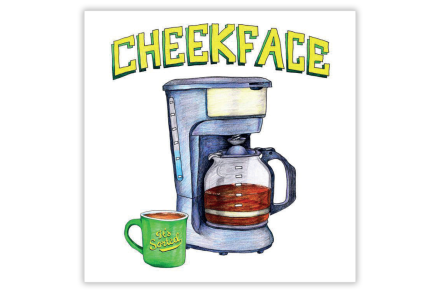
Cheekface are uplifting and witty but also very punchable: It’s Sorted reviewed

Grade: B+ Cheekface are apt to divide opinion rather sharply. There are those who believe that the Los Angeles indie nerd-rock three-piece dissect late capitalism and the American psyche with an uplifting and insightful laconic wit. And then there are those who want to punch them repeatedly in the face, especially the singer Greg Katz – punch them and punch them until there is nothing left but broken teeth. I get that. I swing between both camps. In this respect, and several others, they are rather like Weezer, except a little less cute. In the end people decided that a punching was probably the right option for Weezer and they may, after time, decide the same for Cheekface.

Pleasant, underwhelming: Kurt Vile’s Back to Moon Beach reviewed

Grade: C+ Maximum points for self-awareness, you have to say. The title track of this pleasant, if largely underwhelming, album include the lines: ‘These recycled riffs aren’t going anywhere, any time.’ Never a truer word spoken. Here, this fitfully engaging singer-songwriter shuffles through predictable chord changes pinioned by forgettable piano riffs and intones – deploying an often exaggerated southern drawl somewhat at odds with his Pennsylvanian provenance – basic and repetitive melodies which stay in the memory for about the half-life of Oganesson and then vanish. There is a pleasing twang to the guitar, bursts of scuzzy bottleneck and the occasional lap steel, but the songs go nowhere, as Kurt is generous enough to admit.

A rather beautiful farewell to rock’n’roll: The Beatles’ ‘Now and Then’ reviewed

Grade: A The last song the Beatles ever recorded was called, appropriately enough, ‘The End’, on the Abbey Road album. As a consequence of digital sorcery, however, ‘Now and Then’ is the last song we will ever hear from them – a demo passed from John to Paul, dubbed over in the early 1990s by the (then) three surviving members and, more recently, unearthed and remastered. It does not sound very much like the Beatles; it is more akin to a mid-1970s John Lennon solo album song (think ‘#9 Dream’) but overseen by Paul McCartney – which in effect is kind of what it is. It’s a fine, lachrymose ballad and the notion that it is also a tender love letter from John to his then estranged former bandmate does moisten the eyes a little.

The Goldberg crown has settled on a new head: Vikingur Olafsson’s Golberg Variations reviewed

Grade: A+ In 2018, the Icelandic pianist Vikingur Olafsson released a solo Bach album. It bounced along unforgettably. Olafsson’s subsequent albums for Deutsche Grammophon were all lovely, but like many ‘intellectual’ pianists blessed with a pearly touch he could sound a bit precious. I missed the playfulness of his Bach, and so when he announced he was recording the Goldberg Variations I was excited. Could he sprinkle the magic of his original album over this famous Aria and its 30 tightly argued variations, at a time when there are more than 200 rival recordings on piano floating around – and roughly the same number on harpsichord? (When Glenn Gould cut his sensational Goldberg Variations in 1956, the only competition was a forgotten disc from Claudio Arrau.

The real reason you shouldn’t buy Roisin Murphy’s new album

Grade: B The rather wonderful, liberating thing about being a sentient human being, rather than a moron, is that one can agree with Roisin Murphy that giving kids puberty blockers is a kind of child abuse, while at the same time not liking her new album very much. Just as a sentient human being can enjoy watching Michael Sheen pretending to be other people quite well in films, while thinking him an egregious tit. The cancellation of Murphy was, of course, as obscene as it was predictable – but I do not quite swallow the idea that we are required, as a consequence, to buy Hit Parade. The title is a bit of a misnomer: three or four decent songs does not, to my mind, constitute much of a parade.