The Listener

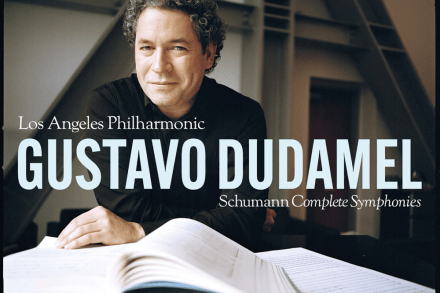
Do we really need a Dudamel Schumann cycle?

Grade: B These are strange days in the recording industry. Heaven alone knows why Platoon – an Apple sub-conglomerate with all the charm of the Borg – has decided that this is the moment to release a cycle of Schumann symphonies recorded live by Gustavo Dudamel and the Los Angeles Philharmonic in 2018. But I’m not complaining. No conductor records these four misunderstood masterpieces for the glory. No: it has to be love; and while you can draw any number of conclusions from Platoon’s decision to give the recordings away for free via streaming and download platforms, the real value is in the listening. If perceptions of Dudamel as a hyperactive ex-wunderkind were ever really justified, they aren’t now.

The violinist who told the Vienna Phil where to stick it

Grade: A The Viennese violinist Arnold Rosé (1863-1946) held a musical civilisation together. Brother-in-law of Mahler, friend to Brahms and a legendary chamber musician, in 1884 he became leader of the Vienna Philharmonic – a post he held under Mahler and Richard Strauss until the Nazis drove him into exile in London in 1938. His daughter Alma conducted the women’s orchestra in Auschwitz; she didn’t survive. After the war, the Philharmonic apologised to Arnold for any misunderstanding, and offered him his old job back. He told them where to stick it. Aren’t you curious to hear such a musician?

A much-deserved revival of a formidable British composer

Grade: B+ ‘Cheltenham Symphonies’, they used to call them – a catch-all term for the kind of large-scale, traditionally inclined postwar works that found a natural home at the Cheltenham Music Festival. But it was also a sneer: a dig at the supposedly parochial nature of British music in the 1960s and 1970s. Over in Europe, the avant-garde was doing whizzy things with Marxism and electronics. British music, went the narrative, was suburban, outdated and drab. Now listen to John McCabe’s Third Symphony of 1978. McCabe’s orchestration is as gorgeous as a bird of paradise; it shimmers like the colours on the surface of a bubble. Not that there’s anything fragile about McCabe’s musical engineering.

The finest music ever composed by a Breton naval officer

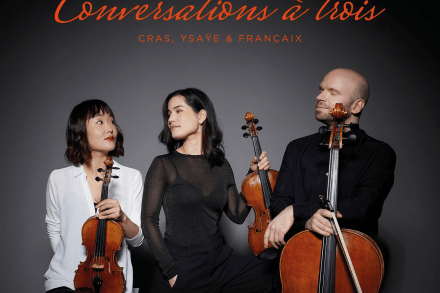
Grade: B+ There’s a special art in making something difficult appear effortless, and the string trio is a supreme test. It’s the smallest viable unit for string chamber music: with one each of violin, viola and cello, there’s no fat, no redundancy, and nowhere to hide for composer and performer alike. And yet its greatest masters – Mozart, Schubert and Beethoven (Schoenberg is a special case, as he usually is) – make it sound like a trifle, a recreation. They’re on a tightrope, but they can’t stop dancing.

Fresh, original Mozart

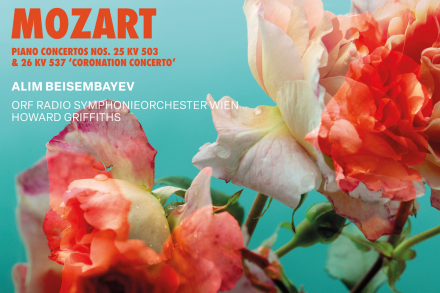
Grade: A It’s spring in Vienna; well, OK, it’s early summer but it’s a grey day when Mozart doesn’t make you feel younger and I reckon this new release from Alim Beisembayev will do just that. In a world of infinite entertainment possibilities, Beisembayev has done the hard bit – the choosing – for you. Here we have two late piano concertos (Mozart wrote them between the ages of 30 and 32, as his own solo career wound down) charged with a grandeur, a playfulness and an endless smiling compassion that will come as a glorious corrective to anyone whose last experience of Mozart involved bodily fluids and confectionery in Sky’s hellish remake of Amadeus.

The joy of Martinu’s symphonies

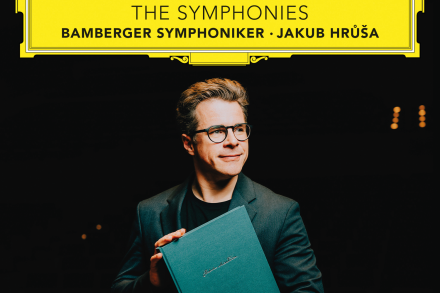
Grade: A– What, more Martinu? It feels like no time since the Pavel Haas Quartet was persuading us that there might, after all, be more than we’d suspected in the chamber music of this patchy but fascinating Czech composer. Now here’s the chief of the Royal Opera, Jakub Hrusa, with a symphony cycle, and it’s starting to look as if Martinu is having a moment. To older record collectors, there’s still something oddly authoritative about seeing the yellow Deutsche Grammophon cartouche above an earnest conductor photo. Stand up straight: it’s on DG. This is serious. Hrusa is certainly serious; very much the thinking man’s maestro, he’s even published a collection of essays on Martinu.

Is this the missing link between Bach and Haydn?

Grade: B ‘Is that Haydn or Mozart? One can’t always be sure,’ remarks Kenneth Clark in the 18th-century episode of Civilisation, and there’s the British intelligentsia’s relationship with music, right there. Imagine saying that about any other art form, and still passing as a connoisseur. ‘Rembrandt or Poussin? Not much in it, really.’ ‘Michelangelo or Raphael? I can’t honestly tell.’ Don’t be like Kenneth. Brush up on your 18th-century idioms, and rediscover the qualities that make Mozart and Haydn so great – with regular dips into the also-rans of the classical era.

Don’t blame Kanye for his abject idiocy

Grade: C– Kanye? No, I can’t, quite. I will always quietly overlook the idiotic political sensibilities of the conformist millennial legions who comprise our pop charts – the keffiyeh-clad Hamas wannabes, the BLM halfwits, the greenies, the men-can-be-women wankpuffins – in order to let their music be judged on its own merits, free from boomer political disdain. But songs such as ‘Heil Hitler’ and all those swastikas? Well, they are just a stretch too far for me. The man is an abject moron. Some will say, so what? There have been loads of abject morons down the years in pop. Why draw a line in the sand for Kanye West? Good question. And it turns out it’s not his fault.

The joy of American romanticism

Grade: A– For some record collectors, the fun lies in comparing recordings of standard repertoire. For others, it’s more about exploring – discovering works that are extinct in the concert hall, but which the inscrutable economics of recording make viable. If you’ve a habit of forming modest crushes on wallflowers and unfashionable composers, the news that Chandos is recording the orchestral music of Edward MacDowell (1860-1908) will bring a pleasant flush of blood to the cheeks. MacDowell, in short, is what American classical music sounded like before there was such a thing as American classical music – before Copland, Gershwin and all that jazz. Romantic, in other words; very, very Romantic.

Harry Styles has a cute voice

Grade: B In which the foppish Davy Jones figure from the manufactured band One Direction (Zayn Malik being Peter Tork; One Direction didn’t have a Mike Nesmith) sheds the soft-rock pop-lite that has served him so well and goes with what he fondly believes is challengingly funky EDM, a genre which I do not believe plays to his strengths. So what you get is lyrics as fabulously inane as on ‘Watermelon Sugar’ but very little of the pleasant tunes which accompanied that and his many other hits. There are some interesting rhythmic textures for sure, and a surfeit of old-skool playground synths. There is also a surfeit of repetition, a necessity for the oeuvre and a polite nod towards rap.

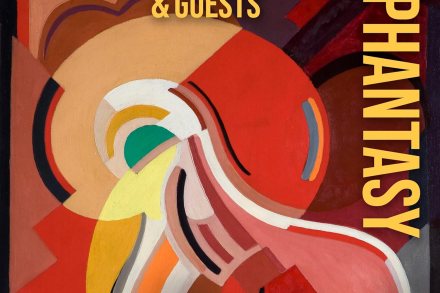
Bracingly inventive: Phantasy by the Piatti Quartet reviewed

Grade: A You think you know a musical genre; then a new recording comes along and pulls something unexpected out of the bag. Walter Willson Cobbett (1847-1937) was an improbable culture-hero; a belt tycoon from Blackheath who devoted his spare time (and most of his profits) to domestic music-making, commissioning major British composers of his day and editing the single most readable reference book ever written about chamber music. Two ‘Phantasies’ from Cobbett’s competitions – reasonably familiar masterpieces of English pastoralism by Vaughan Williams and Herbert Howells – are the starting point for this imaginative disc from the Piatti Quartet.

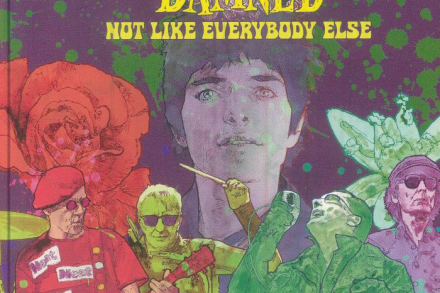
Old songs for an audience of elderly people: The Damned’s Not Like Everybody Else reviewed

Grade: B I remember hearing ‘Neat Neat Neat’, the Damned’s second single, and actually falling off a chair laughing. Is that really the future, I wondered, clutching tight hold of my New Riders of the Purple Sage album. Yes, reader, I’m afraid it was, with the Damned pre-eminent, handmaidens to the whole thing. They made by my reckoning three half-decent singles – ‘New Rose’, ‘Smash It Up’ and the ‘Ça plane pour moi’ facsimile ‘Jet Boy, Jet Girl’. And that was it. Pantomime punk that morphed into pantomime Goth, mostly. Now they are back doing what pensioned-off boomers have been doing for years, the 1960s (largely) covers album, a last resort when inspiration and public attention have left for other places.

Seductive Debussy and Ravel from the RLPO

Grade: A It’s a cliché that the best Spanish music was written by Frenchmen but it’s mostly true nonetheless, and here to prove the point is Domingo Hindoyan and the Royal Liverpool Philharmonic Orchestra. Debussy’s Iberia and Ravel’s Rapsodie Espagnole form the balmy, orange-scented heart of this Franco-Spanish album, featuring not a single note by an actual Spaniard. It’s a beaker full of the warm south; summer holiday music for these bleak, damp days. Four Spanish-themed French miniatures fill out the programme, including Ravel’s spicy orchestration of Alborada del gracioso. I’ll be honest, though, they had me at Chabrier’s Espana, that shameless little burst of sunshine from a composer who spent two decades as a pen-pusher in the Ministère de l’Intérieur.

Who let Men Without Hats make a new album?

Grade: D A Montreal band led by a Ukrainian/Canadian called Ivan Doruschuk, with a histrionic baritone, famous solely for having had the most ludicrous hit of that ludicrous decade, the 1980s, with ‘Safety Dance’. Perhaps more famous still was the hilarious video that accompanied the song: Mr Doruschuck in medieval gear cavorting in fields with peasants, throttling a dwarf and entrancing a very pretty blonde woman who looked well up for it. Status Quo, bizarrely, covered ‘Safety Dance’, but the band had no more hits. Why on earth are they still going? Who gave them the advance for a new album? And is it any good? No, of course not. It’s portentous synth pop-by-numbers, with the kind of execrable lyrics you got back then.

There’s a lot to like in Rosalia’s new album

Grade: A Welcome to the Andalusian cadence, the minor fall and the major lift, the descent from Am through G and F to E. Welcome also to Rosalia Vila Tobella, who is not Andalusian, but Catalan, but uses that cadence an awful lot, much as Status Quo prefer to stick to C, F, G. She has been much praised for the depth and ambition of her compositions – and commercially much rewarded when those compositions, sometimes appended to fairly straightforward EDM, get the kind of downloads you would more usually expect from Ariane Grande. Though I find a good few of the compositions comparatively slight, there is no doubting the melodic invention of the arrangements.

Violin concertos from two Broadway legends

Grade: B+ The 20th century, eh? What a lark that was. Vladimir Dukelsky studied in Kiev under Glière and looked set to be one of the smarter Russian composers of his generation. He even wrote a ballet for Diaghilev. Then communism happened and Dukelsky ended up in the USA where to the bemusement of his friend Prokofiev he reinvented himself as Vernon Duke, Broadway songsmith. ‘Autumn in New York’ and ‘Taking a Chance on Love’ are both by Duke; classic Americana by way of Tsarist Ukraine.  Duke’s Violin Concerto (1943) is recorded here alongside the 1941 concerto by Robert Russell Bennett – better known as the king of Broadway orchestrators; the man who clothed Oklahoma! and My Fair Lady in silken strings.

An album that proves Martinu was one of the great quartet composers

Grade: A Bohuslav Martinu was a patchy composer; worse, he was also a prolific one, meaning that if you dip into his music at random you never quite know if you’re going to have your day made, or just half an hour wasted. Ideally, you need someone to do the choosing for you, and praise be, here’s one of today’s brightest and best chamber ensembles doing exactly that. Seriously: listen to one of the big-name string quartets of the CD era – the Alban Berg Quartet, say, or the Emersons – and ask yourself, hand on heart, whether the Pavel Haas Quartet doesn’t play the socks off them. The vitality, the intelligence; the headlong, needle-point virtuosity: all this is a wholly 21st-century phenomenon and there’s no finer proof than this new release.

No, Big Thief’s Double Infinity is not the greatest folk album ever

Grade: B- ‘I feel within myself a constant dialogue between my masculinity, my femininity and the part of me that is neither of those things. I’m just trying to talk about it because I feel like I’m something that is very ambiguous,’ explains lead singer and songwriter Adrianne Lenker. This may explain why the first song on the new album from this New York indie-ish folk-rock band is called ‘Incomprehensible’, a title which could easily be appended to a good 60 per cent of the lyrics on an album which, given its heralding as the greatest folk album ever, is something of a let-down. It ain’t quite John Prine, let alone Woody Guthrie. Hell, it’s not even Conor Oberst.

Why are there so few decent French symphonies?

Grade: B Here’s a blind-listening game for you: spot the difference between proficiency and genius. Kazuki Yamada and his Monte-Carlo orchestra have recorded three first symphonies by three 19th-century French composers. With a few barnstorming exceptions (I’m looking at you, Berlioz), the French never really got the hang of the romantic symphony. Berlioz recounts with horror how Parisian editors picked through the scores of Beethoven’s symphonies, meticulously correcting Big Ludwig’s supposed errors.  The kindest thing to say about the first symphonies of Gounod and Saint-Saëns is that they sound like Beethoven with the inspiration snipped out. Bright, polite and completely harmless, they’re both blown out of the water by the 17-year-old Bizet’s glorious Symphony in C.

A new Beethoven cycle to keep – but hide

Grade: C In the 1990s the young Italian pianist Giovanni Bellucci gave us a reading of Beethoven’s Hammerklavier Sonata whose thrilling athleticism bore comparison with those of Maurizio Pollini and Charles Rosen. A few years later Bellucci began a complete cycle of the piano sonatas – but, rather than include his existing Hammerklavier, he produced a version that was in keeping with the style of the cycle: deliberately perverse, reinterpreting (that is, ignoring) the composer’s precise instructions in the score. Only now has Bellucci finished the cycle, explaining in his pretentious liner notes that he was held up by his meditations on Beethoven’s true intentions.