Radio and podcasts

The lives of others | 14 May 2015

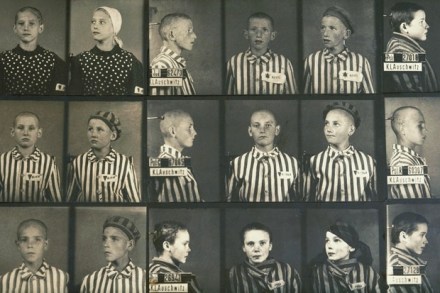
‘I call Zelma Cacik who may be living in London,’ says the announcer, in the clipped RP accent of the BBC in the 1940s. ‘I call her on behalf of her 16-year-old cousin...’ The voice betrays no emotion, no feeling, it’s so matter-of-fact, but the script spares no punches as it tells the cousin’s story in blunt statements of fact. She was born in Poland, separated from her family when she was 12 and made to work in a munitions factory while her parents, her sisters and brother were sent to Treblinka extermination camp.
Home and away | 7 May 2015

An extraordinary black-and-white photograph of a young black boy taken on the Isle of Wight by Julia Margaret Cameron in 1868 shows him in exotic clothes and a heavy silver-bead necklace, like a chain-of-office or a prisoner’s collar. He looks so sad, reminding me of the caged lions in London Zoo, his eyes heavy-laden, his listless body lacking the restless energy you would expect of a seven-year-old. He is Prince Alemayehu of Ethiopia, brought to England after his father, the emperor, committed suicide in his palace at Addis Ababa having just been defeated by the British.

Presence of mind

‘It’s hard to know how to tell this story,’ she said as she began. ‘Because it’s so loaded. It’s so heavy-duty.’ Lore Wolfson was talking about the death of her husband, Paul, or rather about the onset of the illness that led him a year later to take an overdose of heroin, aged 61. He had been diagnosed with early-onset dementia, in a peculiarly aggressive form, rapidly losing his words, his memory, his capacity to work or function independently. Lore began recording her conversations with Paul very soon after they knew for sure why he was having word-finding difficulties. ‘It was the natural thing to do,’ she said, because she’s a radio producer and, for her, keeping an audio diary was more natural than writing things down.

Three cheers

The new controller of Radio Three, Alan Davey, was on Feedback this week (Radio Four) talking to listeners about his plans for the network. Roger Bolton, who presents, wondered if Davey was worried about ratings — Radio Three hovers around two million listeners compared with the 5.5 million boasted by its commercial rival Classic FM, or perhaps more alarmingly the two million lured to BBC upstart 6 Music. ‘Ratings aren’t a pressure for me,’ said an ebullient Davey, while admitting that he does want to find more listeners, and then to ensure they stay tuned. But how? Without going down the Classic FM route of more audience participation, more gimmicks, more cheesy competitions? ‘We have to get better at explaining what Radio Three is about ...

I, Bette Davis

It was called Frankly Speaking and by golly it was. The great screen actress Bette Davis was being interviewed by not one but two men: George Coulouris, with whom she co-starred in Hollywood, and a BBC producer. ‘It’s a little sad for some of us who adore your work that a lot of your best performances have been in fairly trivial films,’ said the producer, Peter Duval-Smith, as if to tempt Davis into dishing the dirt on the directors who made her what she became. ‘I don’t know what you’re talking about,’ Davis replied, not a woman to be tricked into anything. ‘Who do you think made you a star?’ Duval-Smith persisted. ‘Me myself,’ said Davis. ‘And my sweat, blood and tears...’ ‘Nobody helped you?

Keeping the faith | 9 April 2015

There was no shortage of Easter music and talks across the BBC networks with a sunrise service on Radio 4 followed by much fuss and fanfare for the ‘live’ relay of Libby Lane’s first Easter sermon as Bishop. A significant milestone for the C of E as women are at last allowed to don mitres and wield a bishop’s crozier. Three, not to be outdone, invited the Revd Lucy Winkett (who had to outride the brouhaha caused by her appointment as the first woman priest at St Paul’s Cathedral) on to Private Passions, where she proved herself an insightful musician and theologian.

Did Radio 4 have to deal with the Germanwings disaster as it did?

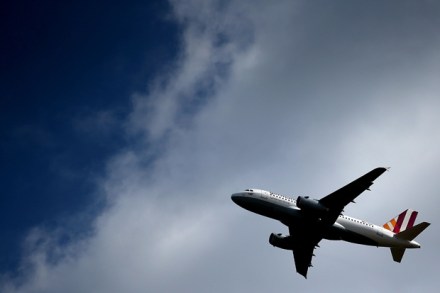
‘You can hear pretty clearly the sound of one of the helicopters and you can see it in the darkness,’ yelled James Reynolds over the noise of helicopters, police sirens, vehicles on the move. It was 8.10 a.m., the Today programme on the morning after the fatal Airbus A320 crash in southern France last week. Reynolds, a fine reporter, had been sent off to the crash site for an on-the-spot report, ‘live’ action, high-octane drama, tension so taut it’s almost visible. ‘I can see a convoy of police vehicles coming up the road with blue sirens,’ he continued. ‘There goes the police helicopter...’ Huge noise of rotors whirring. ‘It’s almost passing overhead.’ No doubt about that as the noise boomed around the kitchen.

Does the future of radio really lie in podcasts?

To a debate on the future of radio at the BBC where it turns out not to be a discussion on who’s listening now but how they’re listening. The Reithian ambition to inform, educate and entertain needs to change, says Mary Hockaday, controller of BBC World Service English, and become ‘inform, educate and connect’. But how do you find and hold on to your audience in the digital age? The buzz word here is ‘podcast’ after the extraordinary success of Serial, the American-made documentary that went viral and has now reached an astonishing 75 million downloads worldwide, still rising. In many ways, though, Serial was very old-fashioned radio. True crime told as a long-form narrative in 12 episodes.

Radio is the best way to mug up on the classics

If ever I found myself at a pretentious literary party obliged to play David Lodge’s ‘Humiliation’ game and to confess to the great books I’ve never read, I’d only escape the ignominy of winning (by being the most ignorant) because of the radio and the almost weekly possibility of hearing yet another classic adapted as a drama or read at bedtime. The nuances of the novel may be lost in translation — the depth of characterisation, the complexities of the plot, its many threads and diversions — but a good adaptation will capture the essence, the true feeling of the original and take us there in our imaginations as effectively as reading from the page, if by a very different route.

What it’s really like to live in India today – stressful

After a month cooped up in a Scottish castle, no internet, no TV, and no radio, watching hectic snowflakes billowing through the wooded hillside opposite my window, I realise that what I’ve missed most about this supposed deprivation has not been the news (to which I thought I was addicted) or the chatter, the company of other voices, but the chance to be taken in my head to other places and inside quite different experiences of life. It’s not just the factual education that radio can provide (although I’m pretty sure most of what I know has come from listening on air), it’s the absorbing intimacy of hearing other people talk about themselves, as if only to you, one-to-one, in direct communication.

All radio drama should be as good as this Conrad adaptation

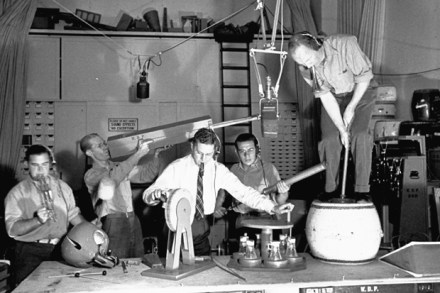
The aching hum of crickets. The susurrus of reeds. The lapping of waves. The unmistakable noise of a sound technician ripping a duster in two as the heroine’s dress was torn, thuggishly, by a character in the heat of passion... The sound effects for Harold Pinter’s adaptation of Joseph Conrad’s Victory (which started life as a screenplay and has now been dramatised by Radio Four, Saturday)transported us to a private island in the Java sea.

The pleasures and perils of podcast listening

No phrase is better calculated to tense the neck muscles of a regular podcast listener than ‘We have something special for you now.’ Having your radio shows downloaded to your phone, music player or computer, rather than plucked out of the air the old-fashioned way, immediately grants the listener a great deal of extra freedom: you choose the feeds to which you subscribe, you decide which episodes to hear and in which order. But it also demands from the listener a measure of extra trust, or at least a ruthless readiness to skip, because what a producer puts on a feed can vary much more than in the scheduled-to-the-second world of broadcast radio.

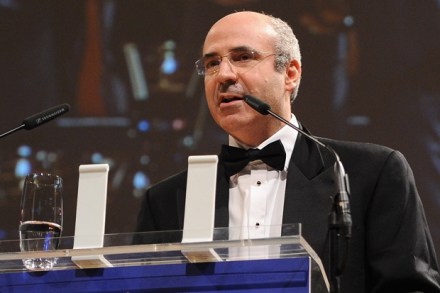
Why Putin is even less of a human than Stalin was

LBC likes to tell us it’s ‘Leading Britain’s Conversation’, though in the case of weekday pre-lunch presenter James O’Brien you’ll have to sit through a series of bombastic monologues from the host before any punters get a word in edgeways. O’Brien knows everything, and he doesn’t mind telling you. Still, I understand that running a talk show is no job for timid introverts who might burst into tears if callers start giving them a hard time. The trick is pretending to listen sympathetically while being ready to drop the guillotine without compunction (after all, these people aren’t your friends, they’re just statistics for the business plan).

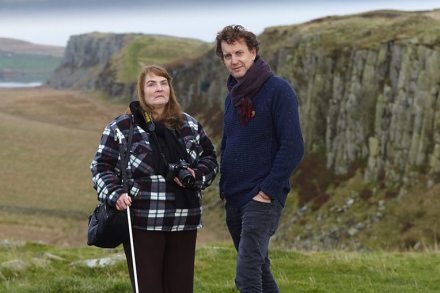
The amazing story of the blind photographer

Perhaps the news that Radio 5 live will be the only BBC station (under the new broadcasting rights agreements) to broadcast ‘live’ golf will ensure that its audience stays above the six million listeners now dreamt of by its controller Jonathan Wall as the magic number he needs for the network to stay buoyant. (Figures announced last week showed that 5 live has lost 10 per cent of its audience after a radical shake-up of its presenting team, losing especially Shelagh Fogarty and Victoria Derbyshire, which had the knock-on effect of turning it even more blokey.) At first the idea sounds absurd —golf on radio.

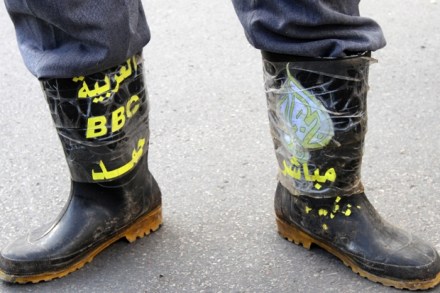
Why BBC Arabic is booming

Last weekend BBC Arabic celebrated 77 years since John Reith (as he then was) launched the first foreign-language service of the fledgling BBC Empire Service with an announcement (in English) in which he declared that the programmes would always be ‘reliable, accurate and interesting’, values that have become virtually cast in stone as the Reithian model of broadcasting. ‘You have to remember the BBC was very, very young at this time, but there was no limit to its ambition,’ says Tarik Kafala, the current head of BBC Arabic, which now broadcasts on radio and (since 2008) on TV also, 24 hours each and every day. Reith’s statement was ‘a fabulous declaration of intent’, an intention which has meant 77 years later that BBC Arabic reaches 36.

The man who discovered Ebola

By some quirk of fate, just as news reached the papers that the Scottish nurse who had contracted Ebola while working in Sierra Leone was now recovered, the guest on that Radio 4 staple Desert Island Discs was the scientist who first identified the virus. This gave a programme that can seem rather outdated and superficial a whole new resonance, providing the back story to the news, adding that frisson of inquiry, of revelation. Did Professor Peter Piot, as a young researcher working at Antwerp’s Institute of Tropical Medicine almost 40 years ago, realise he was seeing something quite new and so dangerous?

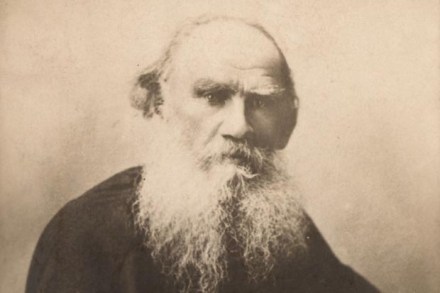
Radio 4’s War and Peace: almost as good as the book

To have listened to Radio 4’s marathon ten-hour adaptation of Tolstoy’s War and Peace as it was being broadcast on New Year’s Day must have been both wonderful and a bit weird. Like soaking in an ever-replenishing warm bath, indulgent, luxuriant, all-absorbing. Yet at the same time I imagine it was quite hard by the end to step back into your own world after being so taken over by the fictional cares of the Rostov, Bolkonsky and Bezukhov families. Needless to say, I caught barely one episode on that day (how many, I wonder, did listen all the way through?). Fortunately, there’s a chance to catch up in the old-fashioned way, week by week, on Saturday nights (or to download and listen whenever you choose). This, though, is a different kind of listening experience.

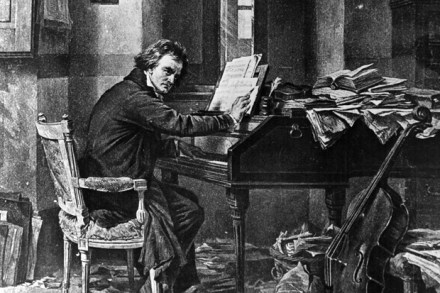
Was Beethoven influenced by yoga?

How many digital radios have you bought over the years? How many are still working? Of the four I used to have, only two are now working and those only in certain parts of the house. I wonder, if a nationwide audit were conducted, how many DAB sets would be found that are still up and running and in daily use? It’s far easier for me to take a laptop into the kitchen and listen online than to struggle to hear through the wheezes and pops emitted by the DAB radio. Why the signal never seems to improve, even in crowded urban areas, is a puzzle.

Without childhood traumas, how did Alan Bennett ever become a writer?

‘So — take heart,’ said Alan Bennett, sending us out from his play, Cocktail Sticks, on a cheery note. The treatment for cancer had been gruelling, but that was 15 years ago, so... This Radio 4 production was adapted (and produced) by Gordon House from the stage version at the National Theatre but was perfectly made for radio, a monologue interrupted by dramatic scenes that take us back into Bennett’s childhood. Why, he wonders, is there nothing from that past for him to write about — no trauma, no deprivation, no disappointment? Surely, his parents could have done more to help him become a writer?

Why Serial is the future of radio

The fuss may now be over, the last episode of Serial revealed. But if the global success of WBEZ Chicago’s latest weekly podcast is a portent, then the future of radio lies not in static daily programming but in the fleeting pursuit of the latest internet download. No scheduling necessary. Listeners can just choose what they want to hear (based on what’s trending online), sign up for the podcast, and listen to the episodes any time they want, once they have been released for download. Just imagine how much easier and cheaper this could be for production companies. Non-stop, live, on-air programming would become redundant. The listener would no longer be dependent on the whims and prejudices of those malfaisant programme controllers.