Portrait of the week

Portrait of the week | 10 April 2010

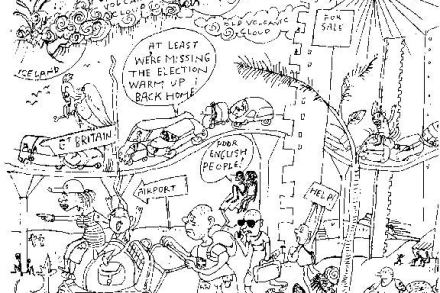
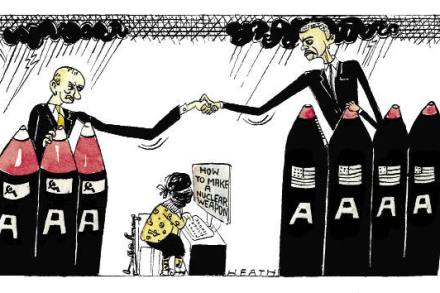
The Queen agreed to a request from Mr Gordon Brown, the Prime Minister, to dissolve Parliament so that a general election might be held on 6 May. Mr Brown stood in Downing Street, surrounded by the Cabinet, including a woman with striking red hair, who turned out to be Lady Royall of Blaisdon, the leader of the House of Lords. He then went with a posse of outriders to catch a train to Ashford, Kent. On Monday, after the dissolution of Parliament, he will fly from the country, in order to take part in talks in New York about Iran’s nuclear programme. Mr David Cameron, the leader of the opposition, stood by the Thames for the cameras, surrounded by young party supporters, then went to Leeds.

Portrait of the week | 3 April 2010

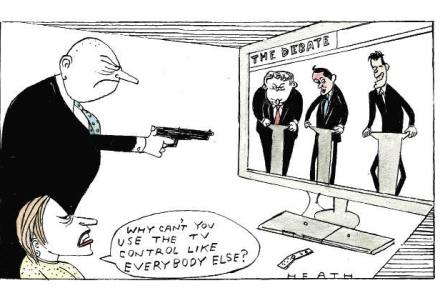
Mr Alistair Darling, the Chancellor of the Exchequer, Mr George Osborne, the shadow Chancellor, and Mr Vince Cable, the Liberal Democrat Treasury spokesman, held a debate on television. Many viewers had hoped one of them would fall off the tightrope, but none did. Mr Cable called Labour efficiency-saving plans a ‘fiction’ and accused the Tories of swallowing the fiction to fund their proposed cut, announced earlier that day, for low and middle earners, of the 1 per cent rise in National Insurance due in 2011. Earlier, on being asked whether he accepted Treasury figures that suggested deeper, tougher cuts than those made by the Thatcher administration, Mr Darling said: ‘They will be deeper and tougher.

Portrait of the week | 27 March 2010

Mr Alistair Darling, the Chancellor of the Exchequer, sought in the Budget to give some credibility to the government’s plans to tackle the national deficit. Mr Alistair Darling, the Chancellor of the Exchequer, sought in the Budget to give some credibility to the government’s plans to tackle the national deficit. Forecasts had improved, he said, government borrowing this year would be £167 billion rather than £178 billion. Thresholds for inheritance tax are to be frozen for four years. This was the extent of the good news. Duty on beer, wine and spirits was increased. Growth forecasts for future years were reduced.

Portrait of the week | 20 March 2010

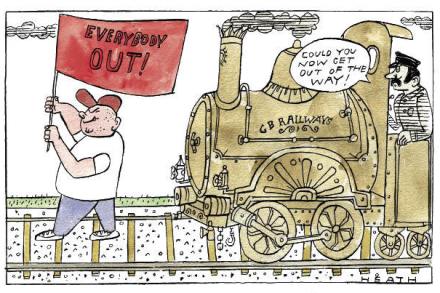
A European Commission report warned that Britain would not meet the 2014-2015 deadline for reducing the budget deficit to below 3 per cent of domestic output. Mr Liam Byrne, the Chief Secretary to the Treasury, said: ‘We think the EU has got the judgment wrong.’ British Airways cabin crew belonging to the union Unite announced strikes for three days from 20 March and four days from 27 March. Lord Adonis, the Transport Secretary, called the strike ‘totally unjustifiable’. Mr Gordon Brown, the Prime Minister, then spoke out against it on BBC Radio 4’s Woman’s Hour: ‘It is the wrong time, it is unjustified, it is deplorable, we shouldn’t have a strike.

Portrait of the week | 13 March 2010

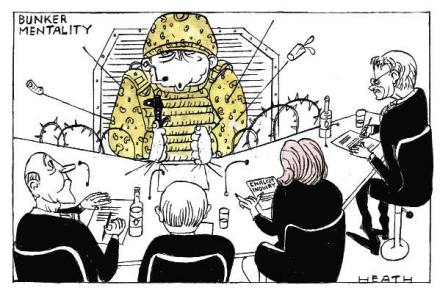
Mr Gordon Brown, the Prime Minister, appeared before the Chilcot inquiry into the Iraq war and denied that as Chancellor of the Exchequer he had harmfully squeezed defence budgets. ‘At any point, commanders were able to ask for equipment that they needed and I know of no occasion when they were turned down,’ he said. ‘That is simply disingenuous,’ said Lord Guthrie of Craigiebank, Chief of the Defence Staff from 1997 to 2001. ‘He’s being disingenuous,’ said Lord Boyce, the Chief of the Defence Staff from 2001 to 2003. Mr Brown then flew off to see British troops in Afghanistan. The death of a British soldier in Helmand brought the number killed in Afghanistan since 2001 to 272.

Portrait of the week | 6 March 2010

The Conservatives made their election slogan ‘Vote for change’, and Mr David Cameron made their flesh creep in a speech at a conference at Brighton concluding: ‘I want you to think of the incredible dark depression of another five years of Gordon Brown.’ The Conservatives made their election slogan ‘Vote for change’, and Mr David Cameron made their flesh creep in a speech at a conference at Brighton concluding: ‘I want you to think of the incredible dark depression of another five years of Gordon Brown.

Portrait of the week | 27 February 2010

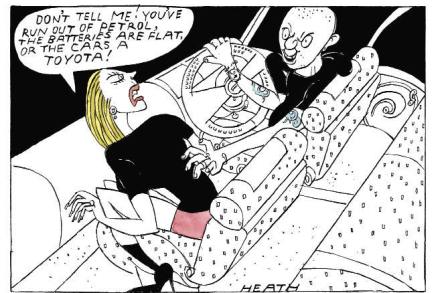
Mr Gordon Brown, the Prime Minister, had sworn at senior aides and ‘roughly shoved aside’ an adviser and hit a car seat, according to an extract in the Observer from a forthcoming book by Mr Andrew Rawnsley. Mr Gordon Brown, the Prime Minister, had sworn at senior aides and ‘roughly shoved aside’ an adviser and hit a car seat, according to an extract in the Observer from a forthcoming book by Mr Andrew Rawnsley. ‘I have never, never hit anybody in my life,’ Mr Brown said. ‘I throw the newspapers on the floor or something like that.

Portrait of the week | 20 February 2010

UK Financial Investments, which oversees the British government’s stake in RBS, Lloyds and Northern Rock, said it might be 2015 before taxpayers got back the £40 billion used to prop up failing banks. UK Financial Investments, which oversees the British government’s stake in RBS, Lloyds and Northern Rock, said it might be 2015 before taxpayers got back the £40 billion used to prop up failing banks. Barclays’ profits increased to £11.6 billion in 2009, a rise of 92 per cent over the year before. Mr Gordon Brown, the Prime Minister, said that the world’s leading economies were close to agreeing an international levy on banks.

Portrait of the week | 13 February 2010

Three Labour MPs, Mr Elliot Morley, Mr David Chaytor and Mr Jim Devine, and a Conservative peer, Lord Hanningfield, were charged with false accounting under section 17 of the Theft Act 1968 with regard to claims for parliamentary expenses. Lawyers for the MPs let it be known that they might claim immunity from prosecution under parliamentary privilege guaranteed by the Bill of Rights 1689. Mr David Cameron said that he had asked Sir George Young, the shadow leader of the House, to draft a Parliamentary Privilege Bill to clarify matters. Lord Hanningfield was quickly suspended from the parliamentary Conservative party and stood down as leader of Essex County Council. Three days later the MPs were suspended from the parliamentary Labour party.

Portrait of the week | 6 February 2010

Mr Gordon Brown, the Prime Minister, said MPs would vote next week on whether a referendum should be held to allow an alternative-vote system in general elections after the next one. The government also came up with new ideas for persecuting smokers, such as driving them from shelter in doorways. Members of the Scottish Parliament passed their own law to make shopkeepers hide cigarettes. During a meeting in Rome with the Catholic bishops of England and Wales, the Pope implicitly criticised the Equality Bill promoted by Miss Harriet Harman. ‘Your country is well known for its firm commitment to equality of opportunity,’ he said.

Portrait of the week | 30 January 2010

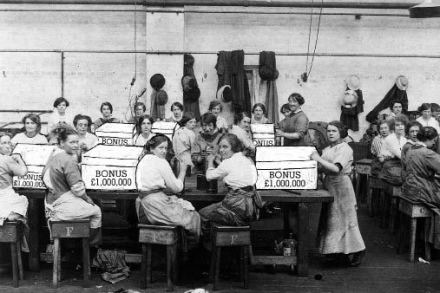
Britain technically emerged from recession, with economic growth of 0.1 per cent in the last quarter of 2009, according to figures from the Office for National Statistics, although these might be revised in a month’s time. Britain technically emerged from recession, with economic growth of 0.1 per cent in the last quarter of 2009, according to figures from the Office for National Statistics, although these might be revised in a month’s time. The previous six quarters of contraction had been the longest such period since 1955. Gross Domestic Product fell by 4.8 per cent last year. The 100 partners of Goldman Sachs based in Britain are having pay and bonuses for 2009 capped at £1 million each; this will not affect executives of the bank who are not partners.

Portrait of the week | 23 January 2010

British people donated £23 million through the charities’ Disasters Emergency Committee to help the people of Haiti within six days of the earthquake there; the British government also gave £20 million. British people donated £23 million through the charities’ Disasters Emergency Committee to help the people of Haiti within six days of the earthquake there; the British government also gave £20 million. Mr Gordon Brown, the Prime Minister, said in a speech: ‘The coming decade will provide the UK with more middle-class jobs than ever before.’ Cadbury agreed to an £11.5 billion takeover by Kraft; there were fears of job losses. Unemployment unexpectedly fell a smidgen in December to 2.45 million.

Portrait of the week | 16 January 2010

A failed attempt by Mr Geoff Hoon and Miss Patricia Hewitt to provoke a ballot on the Labour leadership was not mentioned at the next meeting of the Cabinet meeting, Mr Gordon Brown, the Prime Minister said. Instead he had urged ministers to apply a ‘laser focus’ on Britain’s problems, such as the weather. A week earlier, Mr Brown had said that Labour had a ‘laser focus on school standards’. He told the News of the World that he had been inspired, like Nelson Mandela, by W.E. Henley’s poem ‘Invictus’ (though he did not mention that Timothy McVeigh, the Oklahoma bomber, had been inspired by it too).

Portrait of the week | 9 January 2010

Mr Gordon Brown, the Prime Minister, called a meeting in London on Yemen at the end of the month after al-Qa’eda claimed that it was responsible for the attempted destruction of an airliner approaching Detroit on Christmas Day. Mr Gordon Brown, the Prime Minister, called a meeting in London on Yemen at the end of the month after al-Qa’eda claimed that it was responsible for the attempted destruction of an airliner approaching Detroit on Christmas Day. Charges were brought against Umar Farouk Abdulmutallab, a Nigerian who had taken his degree at University College London and later spent a few months in Yemen allegedly learning how to set off a bomb hidden in his underpants.

Portrait of the Week – 12 December 2009

Mr Alistair Darling, the Chancellor of the Exchequer, in his pre-Budget statement, made hostile gestures at bonus-earning bankers to distract attention from the borrowings of £178 billion that Britain will have to make this year. Mr Alistair Darling, the Chancellor of the Exchequer, in his pre-Budget statement, made hostile gestures at bonus-earning bankers to distract attention from the borrowings of £178 billion that Britain will have to make this year. ‘Efficiencies’ promised in some departments still left total borrowing at much the same level. In a pre-emptive strike, Mr Gordon Brown, the Prime Minister, attacked a ‘culture of excess’ among higher earners in the public sector, and promised to cut the salaries of senior civil servants.

Portrait of the week | 5 December 2009

Mr Gordon Brown, the Prime Minister, announced that Britain would send an extra 500 troops to Afghanistan, bringing its strength there to 10,000. Earlier he had criticised Pakistan for not making ‘more progress in taking out’ the leader of al-Qa’eda: ‘We have got to ask ourselves why, eight years after September 11, nobody has been able to spot or detain or get close to Osama bin Laden.’ The High Court ruled that two men in prison accused of being al-Qa’eda terrorists, who cannot be named, have the right to hear the secret evidence against them or be released. Lady Warsi, the opposition spokesman on community cohesion, was pelted with eggs by Muslim protesters when she visited Luton.

Portrait of the week | 28 November 2009

Floods swept Cumbria after 12.4 inches of rain fell in 24 hours (at Seathwaite), the most ever recorded in Britain. Main Street in Cockermouth was more than waist deep in water. Some 1,300 houses were affected, and insurance claims were expected to reach £100 million. PC Bill Baker died in the collapse of the Northside bridge at Workington, away from which he was directing traffic. Six bridges were washed away, and all 1,800 in the county were to be checked, with the Calva bridge at Workington being condemned, separating the town by a 20-mile drive. The floods arrived a day after the government announced in the Queen’s Speech that ‘legislation will be introduced to protect communities against flooding’. Mr Gordon Brown, the Prime Minister, visited the area.

Portrait of the Week – 21 November 2009

Mr Gordon Brown, the Prime Minister, said during his speech at the Lord Mayor’s banquet that he wanted a meeting of allies in London in January about Afghanistan, to set a timetable and ‘identify a process for transferring district by district to full Afghan control’. Mr Gordon Brown, the Prime Minister, said during his speech at the Lord Mayor’s banquet that he wanted a meeting of allies in London in January about Afghanistan, to set a timetable and ‘identify a process for transferring district by district to full Afghan control’. Mr Brown also decided that next year would be a good time to apologise for the deportation in past decades of 130,000 orphans to Australia.

Portrait of the week | 14 November 2009

Sir Jock Stirrup, the Chief of the Defence Staff, said that British forces would be fighting the Taleban in Afghanistan until at least 2014, by which date the Afghan National Army would ‘be able to take the lead on security across the country’. Sir Jock Stirrup, the Chief of the Defence Staff, said that British forces would be fighting the Taleban in Afghanistan until at least 2014, by which date the Afghan National Army would ‘be able to take the lead on security across the country’. In a ComRes opinion poll, 63 per cent said they wanted British troops withdrawn as soon as possible. Sections of the press criticised Mr Gordon Brown, the Prime Minister, for orthographic errors in a letter of condolence to the mother of a soldier killed in Afghanistan.

Portrait of the Week – 7 November 2009

Mr David Cameron, the leader of the opposition, had to explain why a ‘cast iron guarantee’ by the Conservatives to hold a referendum on the Lisbon Treaty would no longer be possible, now it had been ratified. Mr David Cameron, the leader of the opposition, had to explain why a ‘cast iron guarantee’ by the Conservatives to hold a referendum on the Lisbon Treaty would no longer be possible, now it had been ratified. The Royal Bank of Scotland will sell 318 branches and the Lloyds banking group more than 600 in a move demanded by the European Commission to avoid a breach of competition rules. Lloyds announced a £13.5 billion rights issue, the biggest ever attempted in Britain, in an attempt to free itself from the government’s asset protection scheme.