Portrait of the week

Portrait of the week | 28 August 2010

Mr Michael O’Higgins, the chairman of the Audit Commission, denied accusations made by Mr Eric Pickles, the Communities Secretary, of organisational extravagance exemplified by spending £5,943 to hire the Reform Club for a 25th anniversary event and £40,000 on pot plants for its offices. Mr Michael O’Higgins, the chairman of the Audit Commission, denied accusations made by Mr Eric Pickles, the Communities Secretary, of organisational extravagance exemplified by spending £5,943 to hire the Reform Club for a 25th anniversary event and £40,000 on pot plants for its offices. The Institute for Fiscal Studies said that the emergency Budget in June was regressive, hitting poorer people hardest.

Portrait of the week | 21 August 2010

Mr David Cameron, the Prime Minister, got no further than Buckingham-shire on his summer holiday before Mr Nick Clegg, the deputy Prime Minister, cast doubts on replacing Trident. ‘It’s going to be difficult for someone who is going to receive less housing benefit,’ he said, if the government spent ‘huge, huge amounts of money in a hurry on replacing Trident in full’. Dr Liam Fox, the Secretary of State for Defence, had suggested that the numbers of civil servants and senior officers in the armed forces would be notably reduced. Mr Iain Duncan Smith, the Secretary of State for Work and Pensions, was said to have had a ‘blazing, shouting, grade-A row’ with Mr George Osborne, the Chancellor of the Exchequer, over the funding of his welfare reforms.

Portrait of the week | 14 August 2010

Mrs Anne Milton, the Health Minister, tried to abolish free milk for children under five in nurseries, as it costs £50 million a year and ‘there is no evidence that it improves the health of very young children’, but Downing Street said that Mr David Cameron, the Prime Minister ‘did not like the idea’, so it would not go ahead. Mrs Anne Milton, the Health Minister, tried to abolish free milk for children under five in nurseries, as it costs £50 million a year and ‘there is no evidence that it improves the health of very young children’, but Downing Street said that Mr David Cameron, the Prime Minister ‘did not like the idea’, so it would not go ahead.

Portrait of the week | 7 August 2010

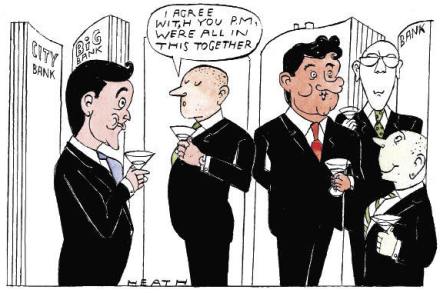
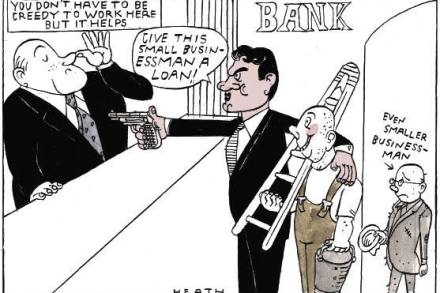
Mr David Cameron, the Prime Minister, and Mr Nick Clegg, the Deputy Prime Minister, rather oddly wrote a letter to the rest of the Cabinet. ‘Deficit reduction and continuing to ensure economic recovery is the most urgent issue facing Britain,’ they said. Mr George Osborne, the Chancellor of the Exchequer said that banks had an ‘obligation’ to increase their lending: ‘Every small and medium-sized company that I have visited in recent weeks has had some problem with their bank,’ he said. The profits of HSBC, which took no money from the government during the financial crisis, doubled for the first half of the year to £7 billion. Lloyds, 41 per cent of which is owned by the taxpayer, made £1.

Portrait of the week | 31 July 2010

Mr David Cameron, the Prime Minister, visited India, and on the way said he was ‘angry’ that negotiations for Turkey to join the European Union were so slow. Mr David Cameron, the Prime Minister, visited India, and on the way said he was ‘angry’ that negotiations for Turkey to join the European Union were so slow. While Mr Cameron was abroad earlier in America, Mr Nick Clegg, the Deputy Prime Minister, had spoken in the Commons of the ‘illegal invasion of Iraq’. Four in ten people who said they had voted Lib-Dem would not have done had they known the party would enter a coalition with the Tories, a poll of 1,009 people for Newsnight said; but 86 per cent of Conservative voters said they would have done if they had known.

Portrait of the week | 24 July 2010

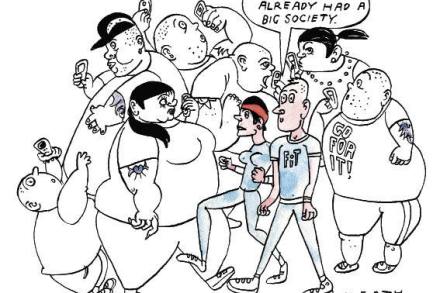
In a speech in Liverpool intended to relaunch his theme of the Big Society, as a ‘big advance for people power’, Mr David Cameron, the Prime Minister, said that, as part of a scheme to ‘turn government completely on its head’, four community schemes were being set up in Liverpool (a museum project); the Eden Valley, Westmorland (a pub); Windsor (parks); and the London borough of Sutton (youth and green projects).

Portrait of the week | 17 July 2010

General practitioners, operating in consortia under an independent commissioning board, are to take charge of 70 per cent of the National Health Service budget by 2013, with the abolition of all England’s ten strategic health authorities and the 152 primary care trusts, according to a White Paper. General practitioners, operating in consortia under an independent commissioning board, are to take charge of 70 per cent of the National Health Service budget by 2013, with the abolition of all England’s ten strategic health authorities and the 152 primary care trusts, according to a White Paper. The annual rate of inflation measured by the Consumer Prices Index fell to 3.2 per cent for June, from 3.

Portrait of the week | 10 July 2010

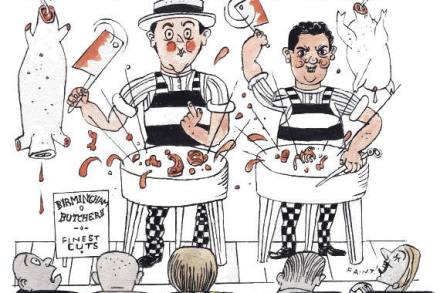
The coalition government contemplated legislation to reduce Civil Service lay-off payments in prospect of large redundancies. The Public and Commercial Services Union predicted strikes. Mr George Osborne, the Chancellor of the Exchequer, was accused by the opposition of scare tactics after asking ministerial colleagues to prepare plans for departmental cuts of 40 per cent. Mr Michael Gove, the Education Secretary, said that 715 school reconstruction schemes under Labour’s programme called Building Schools for the Future would not go ahead. Mr Philip Hammond, the Transport Secretary, encouraged ‘better off’ people with free bus passes to pay their fares. The BBC is to close its Asian Network radio channel but reprieve 6 Music.

Portrait of the week | 3 July 2010

The government’s committee on public expenditure, otherwise known as Pex or the Star Chamber, gave departments a month to come up with spending cuts of up to 33 per cent. The government’s committee on public expenditure, otherwise known as Pex or the Star Chamber, gave departments a month to come up with spending cuts of up to 33 per cent. Mr George Osborne, the Chancellor of the Exchequer, said he would spend the summer seeking ways to reduce welfare spending in order to cushion the cuts in other areas. Mr Ken Clarke, the Justice Secretary, proposed fewer short jail sentences, which were ‘costly and ineffective’.

Portrait of the week | 26 June 2010

In the Budget, Mr George Osborne, the Chancellor of the Exchequer, said that the balance of cuts to tax rises would be 77 per cent to 23 per cent. Whitehall departments would have to cut spending by 25 per cent. Borrowing would fall from £149 billion this year to £20 billion in 2015-16. Debt would be 67 per cent of GDP by 2015-16, compared with the 75 per cent planned by Labour in its budget in March. Current expenditure of £637 billion this year would rise to £711 billion in 2015-16, to meet debt interest. Mr Osborne raised VAT from 17.5 per cent to 20 per cent, from 4 January 2011. For basic-rate income tax payers, the personal allowance will rise by £1,000 in April, to £7,475.

Portrait of the week | 19 June 2010

The Office for Budget Responsibil-ity (OBR) forecast that gross domestic product would grow by 2.6 per cent in 2011, compared with the 3.25 per cent predicted by the previous government. But the deficit and inflation would nonetheless fall faster than predicted. ‘This is our best shot at an impossible task,’ said Sir Alan Budd, the head of the OBR. The government is to make an emergency Budget on 22 June. The OBR also said that the cost to the taxpayer of public sector pensions will rise from £4 billion a year now to £9 billion by 2014-15. Mr Nick Clegg, the deputy Prime Minister said: ‘It’s not affordable.’ The annual rate of inflation measured by the Consumer Prices Index fell to 3.4 in May from 3.

Portrait of the week | 12 June 2010

Mr David Cameron, the Prime Minister, said in a speech that ‘in five years’ time the interest we are paying on our debt is predicted to be ‘around £70 billion’; this meant that of ‘every single pound you pay in tax, ten pence would be spent on interest’. Mr David Cameron, the Prime Minister, said in a speech that ‘in five years’ time the interest we are paying on our debt is predicted to be ‘around £70 billion’; this meant that of ‘every single pound you pay in tax, ten pence would be spent on interest’. Decisions on how to reduce the deficit ‘will affect every single person in our country’, he said.

Portrait of the week | 5 June 2010

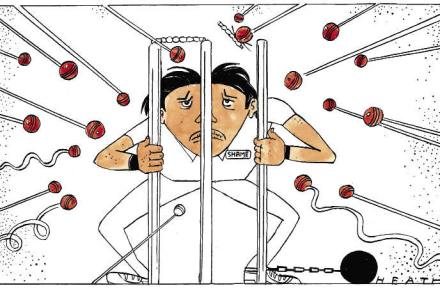
Mr David Laws resigned as Chief Secretary to the Treasury after it was revealed that he had used parliamentary allowances to pay £40,000 rent over five years for a room in the house of a man with whom he had long had a sexual relationship. Mr David Laws resigned as Chief Secretary to the Treasury after it was revealed that he had used parliamentary allowances to pay £40,000 rent over five years for a room in the house of a man with whom he had long had a sexual relationship. ‘My motivation throughout has not been to maximise profit,’ Mr Laws said, ‘but to simply protect our privacy and my wish not to reveal my sexuality.’ Mr Danny Alexander, also a Liberal Democrat, replaced Mr Laws in the Cabinet.

Portrait of the week | 29 May 2010

In her 58th speech at the state opening of Parliament, the Queen said: ‘My government’s legislative programme will be based upon the principles of freedom, fairness and responsibility.’ In her 58th speech at the state opening of Parliament, the Queen said: ‘My government’s legislative programme will be based upon the principles of freedom, fairness and responsibility.

Portrait of the week | 22 May 2010

George Osborne, the Chancellor of the Exchequer, said he would hold an emergency Budget on 22 June. He announced the setting up of an Office for Budget Responsibility under Sir Alan Budd, one of the original members of the Bank of England’s Monetary Policy Committee in 1997. The office would publish its first economic and fiscal forecasts before the Budget. In the meantime the government looked for £6 billion of savings to make this year. Mr David Cameron, the Prime Minister, sought, as an adviser on poverty, Mr Frank Field, the Labour MP asked in 1997 to ‘think the unthinkable’ about welfare reform and sacked as a minister when he did so. MPs reappointed Mr John Bercow as Speaker.

Portrait of the week | 15 May 2010

Five days after the general election, Mr David Cameron, the leader of the Conservative party, accepted the Queen’s request to form an administration and kissed hands upon his appointment as Prime Minister, the 12th of her reign, and at 43, the youngest since Lord Liverpool. Five days after the general election, Mr David Cameron, the leader of the Conservative party, accepted the Queen’s request to form an administration and kissed hands upon his appointment as Prime Minister, the 12th of her reign, and at 43, the youngest since Lord Liverpool. In Downing Street he announced a ‘full coalition’ with the Liberal Democrats.

Portrait of the week | 8 May 2010

The country voted in a general election and local elections. In the run-up to the polls, Mr Gordon Brown had comforted Tiari Sanchez, aged 14, who broke down in tears as she described to a rally of Citizens UK how her family had to eat lentils because their mother earned so little as a cleaner at the Treasury. Mr Brown said hers was an example of the importance of fighting for ‘fairness and dignity for all’. Mr David Cameron, the leader of the Conservative party, wooed Ulster Unionists, then took to campaigning in the middle of the night, visiting firemen and fishermen. Mr Manish Sood, a Labour candidate, told his local paper: ‘I believe Gordon Brown has been the worst prime minister we have had in this country.

Portrait of the week | 1 May 2010

On the eve of the third television debate by the leaders of Britain’s three main parties, on the subject of the economy, the Institute for Fiscal Studies published a report on the size of the spending cuts and tax rises needed and criticised the parties for failing to set out how they would achieve them. On the eve of the third television debate by the leaders of Britain’s three main parties, on the subject of the economy, the Institute for Fiscal Studies published a report on the size of the spending cuts and tax rises needed and criticised the parties for failing to set out how they would achieve them. All the talk was of a hung parliament. The party leaders’ second debate drew a live audience of 4.

Portrait of the week | 24 April 2010

Some 150,000 British travellers were stranded when the National Air Traffic Services stopped all flights from 15 April because of a cloud of fine volcanic ash drifting from the Eyjafjallajökull volcano in Iceland. Some 150,000 British travellers were stranded when the National Air Traffic Services stopped all flights from 15 April because of a cloud of fine volcanic ash drifting from the Eyjafjallajökull volcano in Iceland. It was feared that the glassy particles would melt in jet engines, causing them to fail. The name of the volcano was very seldom heard on British media because it was hard to pronounce. No aeroplanes flew over Europe from the Pyrenees to the Arctic. The quietness was widely noted.

Portrait of the week | 17 April 2010

Mr Gordon Brown, the Prime Minister, sent the Foreign Secretary to a nuclear security summit in Washington, so that he could launch the Labour party manifesto in an empty hospital in Birmingham. It promised to halve the annual deficit by 2014, through growth, taxes and cuts, but not to raise rates of income tax and not to extend VAT to food, children’s clothes, books, newspapers and public transport fares. Underperforming schools might be taken over by more successful ones; failing police forces might be taken over by more successful ones. There would be a referendum before 2011 on the alternative vote method of electing MPs. Mr David Cameron launched the Conservative manifesto at Battersea power station, promising: ‘People power, not state power.