Portrait of the week

Portrait of the week | 2 June 2016

Home Two British men were charged with immigration offences after the rescue by night of 18 Albanian migrants, two of them children, from an inflatable boat off Dymchurch, Kent. ‘We don’t want the English Channel turning into the Mediterranean with fleets of small boats coming over,’ said Chris Grayling, the Leader of the House of Commons and a campaigner for Britain to leave the EU.

Portrait of the week | 26 May 2016

Home The government published a Treasury analysis warning that an exit from the EU would plunge Britain into a year-long recession and could cost 820,000 jobs. David Cameron, the Prime Minister, speaking with George Osborne, the Chancellor of the Exchequer, at B&Q’s head office in Hampshire, said that leaving ‘would be like surviving a fall then running straight back to the cliff edge. It is the self-destruct option.’ Downing Street said that leaving the EU would make an average holiday for four people to the EU £230 more expensive. Gillian Duffy of Rochdale, the nemesis of Gordon Brown, the former Labour leader, spoke in favour of the Leave campaign.

Portrait of the week | 19 May 2016

Home In the Queen’s Speech, the government made provision for bills against extremism and in favour of driverless cars, drones, commercial space travel and adoption. It proposed turning all prisons into academies or something similar and consolidating British rights while reducing the power of the House of Lords. The watchword was ‘life chances’. Boris Johnson MP said that the EU was an attempt to recover the continent’s lost ‘golden age’, under the Romans: ‘Napoleon, Hitler, various people tried this out, and it ends tragically.’ For his part, David Cameron, the Prime Minister, said that in the event of Britain leaving the EU, ‘Putin would be happy. I suspect al-Baghdadi [leader of the Islamic State] would be happy.

Portrait of the week | 12 May 2016

Home David Cameron, the Prime Minister, made a speech in the British Museum warning of war if Britain left the European Union: ‘And if things go wrong in Europe, let’s not pretend we can be immune from the consequences.’ George Osborne, the Chancellor of the Exchequer, said that if Britain left, house prices would go down. The government changed its policy, announced during the budget, of turning all schools into academies. The government changed its policy of denying admission from Europe of unaccompanied children originating in countries such as Afghanistan and Syria. Mr Cameron was heard on television to say to the Queen at Buckingham Palace: ‘We’ve got some leaders of some fantastically corrupt countries coming to Britain.

Portrait of the week | 5 May 2016

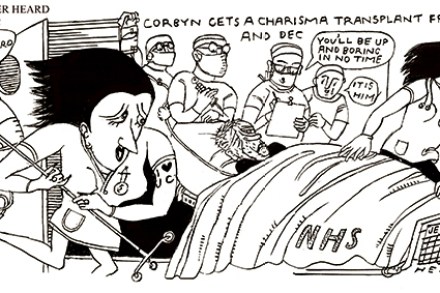
Home Naz Shah MP was suspended from the Labour Party after the blogger Guido Fawkes revealed that in 2014, nine months before she beat George Galloway to win the seat of Bradford West, she had posted on Facebook a proposal to ‘relocate Israel into the United States’, adding the comment: ‘Problem solved and save you bank charges for the £3bn you transfer yearly.’ Jeremy Corbyn, the Labour leader, said: ‘It’s not a crisis. There’s no crisis.’ Ken Livingstone, the former mayor of London, said on the wireless: ‘When Hitler won his election in 1932, his policy then was that Jews should be moved to Israel. He was supporting Zionism — this before he went mad and ended up killing six million Jews.

Portrait of the week | 28 April 2016

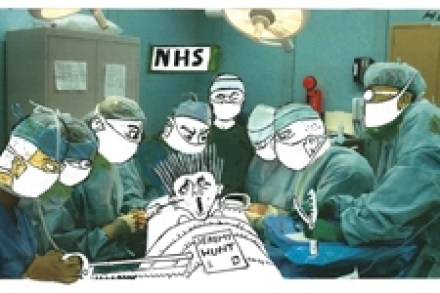
Home Junior doctors went on strike for two days, refusing to provide even emergency treatment. The 96 Liverpool fans who died in the Hillsborough football stadium disaster in 1989 were unlawfully killed, an inquest jury found. Philip Hammond, the Foreign Secretary, contemplated British forces being sent to Libya, but said ‘if there were ever any question of a British combat role in any form — ground, sea or air — that would go to the House of Commons’. Big Ben is to be silenced for months while its clock and tower are restored.

Portrait of the week | 21 April 2016

Home George Osborne, the Chancellor, said that if Britain left the European Union, households would be on average £4,300 a year worse off. He quoted a Treasury analysis that said the British economy would be 6 per cent smaller outside the EU by 2030 than it would have been. ‘Remain’ campaigners were treating voters ‘like children who can be frightened into obedience’, Michael Gove, the Justice Secretary, said, and declared that Britain could be part of the European free trade zone but ‘free from EU regulation which costs us billions of pounds a year’. Kenneth Clarke, the former Chancellor, said that David Cameron ‘wouldn’t last 30 seconds if he lost the referendum’.

Portrait of the week | 14 April 2016

Home David Cameron, the Prime Minister, after spending a week parrying questions about his late father’s investment fund Blairmore, suddenly published a summary showing that on his own taxable income of £200,307 in the past year he had paid tax of £75,898. Downing Street said ‘potential prime ministers’ and chancellors should be expected to publish their tax returns in future. George Osborne, the Chancellor of the Exchequer, said he had paid £72,210 in tax on earnings or £198,738. Boris Johnson MP said he’d paid £276,505 tax on income of £612,583. Jeremy Corbyn, the leader of the opposition, had not kept a copy of his tax return, but then got hold of one which showed that he’d paid £18,902 tax on £72,645 income.

Portrait of the week | 7 April 2016

Home Sajid Javid, the Business Secretary, said that the government would like a buyer to save Port Talbot steelworks. ‘We’re going to also have to offer support to eventually clinch that buyer and to give this steel plant a long-term viable future,’ he said. Andrew Tyrie, the chairman of the Commons Treasury Select Committee, said that he expected to learn by the end of this month the proportion that remained active of the 655,000 National Insurance numbers granted to people from the EU in the year up to September 2015. An online survey by Opinium for the Observer on the forthcoming EU referendum put the ‘leave’ side at 43 per cent and ‘remain’ at 39 per cent.

Portrait of the week | 31 March 2016

Home The Indian company Tata decided to sell its entire steel business in Britain, putting more than 15,000 jobs in jeopardy. The buy-to-let business was squashed by the Prudential Regulation Authority imposing more stringent borrowing criteria in parallel with an increase in stamp duty from this month. The Bank of England’s Financial Policy Committee said that ‘the most significant’ domestic risks to financial stability were connected to the referendum on EU membership. The French utility company EDF agreed to take on part of its Chinese partner’s financial risks from cost overruns in building the Hinkley Point nuclear power station. BHS, the department store chain, attempted to secure its future in the face of a £571 million pension deficit.

Portrait of the week | 23 March 2016

Home Iain Duncan Smith resigned as Work and Pensions Secretary two days after the Budget, throwing the government into a fine pickle. In his letter of resignation, he said that new changes to benefits to the disabled were ‘not defensible in the way they were placed within a Budget that benefits higher-earning taxpayers’. With a dig at George Osborne, the Chancellor of the Exchequer, he questioned whether ‘enough has been done to ensure “we are all in this together”.’ In his reply, David Cameron, the Prime Minister, wrote: ‘Today [18 March] we agreed not to proceed with the policies in their current form.’ He was, therefore ‘puzzled and disappointed’.

Portrait of the week | 17 March 2016

Home In the Budget, George Osborne, the Chancellor of the Exchequer, kept talking of the ‘next generation’. He outlined cuts of £3.5 billion in public spending by 2020, to be ‘on course’ to balance the books. Personal allowances edged up for lower taxpayers, with the higher-rate threshold rising to £45,000. A ‘lifetime Isa’ for under-40s would be introduced. Corporation tax would go down to 17 per cent by 2020. Small-business rate relief was raised: a ‘hairdresser in Leeds’ would pay none. Fuel, beer, cider and whisky duty would be frozen. To turn all state schools into academies (removing local authorities from education), he earmarked £1.5 billion.

Portrait of the week | 10 March 2016

Home The Bank of England arranged for banks to be able to borrow as much money as they needed around the date of the EU referendum, lest there should be a bank run. After saying in a speech that Britain’s long-term prospects could be ‘brighter’ outside the EU, John Longworth was suspended as director-general of the British Chamber of Commerce, from which he then resigned so that he could speak freely. Four arrests followed the explosion of a bomb in Belfast, which wounded a prison officer working at Maghaberry Prison near Lisburn in Co. Antrim. The law against smoking in public buildings does not apply to prisons in England and Wales, the Appeal Court ruled. The Liberal Democrats called for the legal sale of marijuana through ‘cannabis social clubs’.

Portrait of the week | 3 March 2016

Home An official analysis by the Cabinet Office said that if Britain left the EU it would lead to a ‘decade of uncertainty’. Opponents of Britain remaining in the EU called the report a ‘dodgy dossier’. George Osborne, the Chancellor of the Exchequer, said that the economy would suffer a ‘profound economic shock’ if Britain left, echoing a communiqué of the G20 which referred to ‘the shock of a potential UK exit’. Boris Johnson revised his suggestion that a vote to leave could bring about a better deal from Brussels; ‘Out is out,’ he told the Times. Sir Jeremy Heywood, the Cabinet Secretary, declared that ministers opposing government policy on the referendum should not be shown government papers on the matter.

Portrait of the week | 25 February 2016

Home David Cameron, having continued talks through the night in Brussels, announced that he had achieved a ‘special status’ for Britain in the European Union and would call a referendum on it for 23 June. One concession he had wrung was that, for seven years, Britain could decide to limit in-work benefits for EU migrants during their first four years in Britain. ‘I do not love Brussels; I love Britain,’ he said. The cabinet met next morning, and six members left by a back door to promote their support for the campaign to leave. The biggest beast among them was Michael Gove, and the others were Chris Grayling, Iain Duncan Smith, Theresa Villiers, John Whittingdale and Priti Patel.

Portrait of the week | 18 February 2016

Home David Cameron, the Prime Minister, spent time in Brussels before a meeting of the European Council to see what it would allow him to bring home for voters in a referendum on Britain’s membership of the European Union. The board of HSBC voted to keep its headquarters in Britain. Sir John Vickers, who headed the Independent Commission on Banking, said that Bank of England proposals for bank capital reserves were ‘less strong than what the ICB recommended’. The annual rate of inflation, measured by the Consumer Prices Index, rose to 0.3 per cent in January, compared with 0.2 per cent in December. Unemployment fell by 60,000 to 1.69 million. A dental nurse from Bradford who gave her friend a facelift was struck off the dental register.

Portrait of the week | 11 February 2016

Home David Cameron, the Prime Minister, said that if Britain left the European Union, France could stop allowing British officials to make immigration checks on the French side of the border, and, his spokesman predicted: ‘You have potentially thousands of asylum seekers camped out in northern France who could be here almost overnight.’ Mr Cameron denounced the way prisons are being run by his administration: ‘Current levels of prison violence, drug-taking and self-harm should shame us all.’ Junior doctors went on strike again for 24 hours. Twelve men of Pakistani heritage were jailed for up to 20 years for the rape and sexual abuse of a girl when she was aged 13 and 14, over a period of two years, in Keighley, West Yorkshire.

Portrait of the week | 4 February 2016

Home David Cameron, the Prime Minister, made a speech in Wiltshire about a letter from Donald Tusk, the president of the European Council, on Britain’s demands for renegotiating terms of its membership of the European Union. Mr Cameron said: ‘What we’ve got is basically something I asked for.’ In the House of Commons, Jeremy Corbyn, leader of the opposition, said: ‘It’s rather strange that the Prime Minister is not here…’ instead of ‘…in Chippenham, paying homage to the town where I was born.’ Mr Tusk proposed that in-work benefits for migrants might be subject to an ‘emergency brake’.

Portrait of the week | 28 January 2016

Home Donald Tusk, the president of the European Council, prepared a paper on the four areas of concern between Britain and the European Union, as formulated by David Cameron, the British Prime Minister, for the EU to chew on at a summit in February. Nicola Sturgeon, the leader of the Scottish National Party, said that to hold a referendum on the EU in June would be ‘disrespectful’ to elections being held in Scotland. Tony Blair, the former prime minister, said he thought Scotland would leave the Union if the United Kingdom voted to leave the EU. Lord Parkinson, who as Cecil Parkinson was party chairman when the Conservatives won a landslide in 1983, died, aged 84. Lieutenant-Colonel Henry Worsley died aged 55 after being rescued from his attempt to cross Antarctica unsupported.

Portrait of the week | 21 January 2016

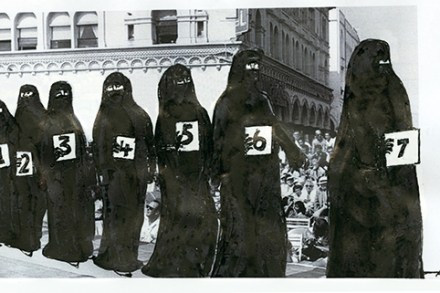
Home David Cameron, the Prime Minister, said that Muslim women must learn English, and that those who had entered on spousal visas would be told halfway through their five-year spousal settlement: ‘You can’t guarantee you can stay if you are not improving your language.’ He said that learning English had ‘a connection with combating extremism’. A heterosexual couple went to the High Court to claim the right to enter into a civil partnership. MI5, the security service, was rated as Britain’s most gay-friendly employer, following a survey by the organisation Stonewall. Mark Carney, the governor of the Bank of England, said: ‘Now is not the time to raise interest rates.