Pop

Chrissie Hynde remains outstanding: the Pretenders, at Usher Hall, reviewed

A few hours before the doors opened for the Pretenders’ Edinburgh concert, Chrissie Hynde posted a message on her social media channels. The gist being that, while she appreciated the support of the band’s most devoted fans – the ones who travel from city to city and country to country to attend multiple concerts – she was, to be frank, getting sick of seeing the usual suspects plonked six feet in front of her at every damn gig. She was therefore formally asking her hardy but apparently increasingly tiresome acolytes to cede the front row to ‘local faces’. This would, she said, help keep ‘it new’ for the band each night. Hynde has always been pretty punchy, but this seemed a bit much, even by her standards; not so much biting the hand that feeds as gnawing it clean off.

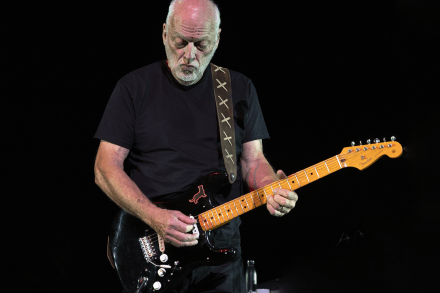
An uncompromising master: David Gilmour, at the Royal Albert Hall, reviewed

It doesn’t matter which dictionary you consult, they all agree on what a song is: words, set to music, that are sung. Yet it’s also an entirely inadequate description, since there are so many types of song. Take David Gilmour and Neil Finn, both men of passing years who like to switch between electric and acoustic guitars, both backed by plenty of singers and kindred instrumentation (though Finn didn’t have a pair of harps on stage with Crowded House), both playing music largely rooted in the late 1960s, both offering lightly mind-bending songs. Yet this misses something crucial.

I agree with pop’s war on iPhones – but King Canute might want a word

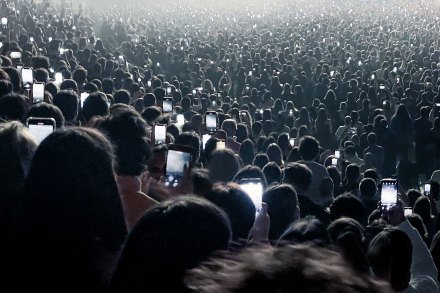
Before each show on the recent The The tour – reviewed in these pages last week – the pre-recorded voice of singer Matt Johnson politely asked the audience to refrain from using mobile phones when the band was performing. In Edinburgh, while Johnson was speaking, the chap next to me was preoccupied filming an empty stage. A sea of screens can be priceless in a genuine emergency but that’s about it As it happens, most of the crowd complied most of the time, but proscribing phone use at concerts is increasingly challenging. A few artists are up for the fight.

The world is on fire – yet navel-gazing still reigns in pop

There is no better cultural weather vane than pop. It’s not that pop singers possess incredible analytical skills – they don’t. It’s more that it’s in their interests to reflect some prevailing mood. And what people call a vibe shift can often be gleaned by comparing two artists. Take those featured this week: one very much au courant, the other regarded as a searing commentator on 1980s Britain. It’s a very good album, one for sitting down and listening to rather than standing in a vast shed to hear Over the past couple of years, Raye – a 26-year-old Londoner – has become rather a star. You may remember that she had a bunch of hit singles early on, but her label showed no interest in releasing an album.

The ethics of posthumous pop albums

‘At the record company meeting/ On their hands – at last! – a dead star!’ Back when Morrissey was more concerned with writing a decent lyric than sour internet tirades, ‘Paint a Vulgar Picture’ by the Smiths summed it all up rather neatly: a living pop star is all well and good, but a dead one is far less troublesome – and considerably more profitable. Some artists only really get going once they’re dead. Commercially speaking, Eva Cassidy’s entire career has been posthumous; the Van Gogh of the lustreless Radio 2 ballad. The motive feels pure: a family’s wish to keep their sibling alive through her art Death has been a boon to the pop industry since the year dot.

My night with the worst kind of nostalgia 

American Football are a band whose legend was formed by the internet: some Illinois college kids who made an album for a little label in 1999, went their separate ways, and in their absence found that a huge number of people had responded to their music. They duly reunited in 2014. They are often identified as emo, the most confounding of all genre names, given it means everything and nothing, but American Football are not of the eyeliner and dyed-hair variety exemplified by My Chemical Romance, nor the angsty pop-punk variant of Weezer or Jimmy Eat World, nor the shouty hardcore punk evolution of the genre’s founders in the 1980s.

Elvis Costello remains the most fascinating songwriter Britain has produced in the past 50 years

Song for song, line by line, blow for blow, Elvis Costello remains the most consistently fascinating songwriter Britain has produced in the past 50 years – an opinion which seems these days to be mostly confined to a smallish section of an ageing demographic. Certainly, Costello’s music has, as far as I can tell, proved largely resistant to TikTokification, even if Olivia Rodrigo did ‘pay homage’ (nicked, with the author’s approval) to the riff to ‘Pump It Up’ for her song ‘Brutal’.

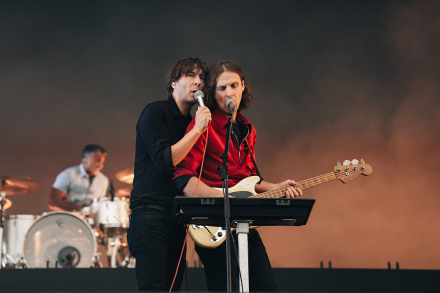
Delightful: Phoenix, at All Points East, reviewed

A few years ago, my nephew informed me that he and his friend were planning to come up to London for the weekend for the Wireless Festival. Did they need somewhere to stay? He looked at me like I was a mad old man. No, of course not. They were going to camp. In Finsbury Park. Because when you go to festivals, you camp. Thankfully, he didn’t turn up on the Victoria Line with his tent and then wonder why no one else was similarly equipped. Phoenix have the air of being as much a lifestyle choice as a pop group Inner-city festivals such as Wireless and All Points East are almost always a series of single-day events. APE is a ruthlessly programmed festival. Rather than try to be all things to all people, each day is targeted at some section of the festival-going population.

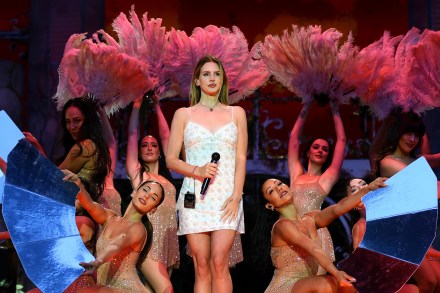
The Ava Gardner of the ketamine age: Lana Del Rey, at Leeds Festival, reviewed

As the American superstar starts singing another slow, sad, rather beautiful song, my mind begins to drift. I’m thinking that our appreciation of music is so much about the who, the when and perhaps most crucially the where; the significance of place is an under-examined element in our relationship with what we’re hearing at any given moment. I’m also thinking that a massive over-reliance on concert revenue to sustain artists’ livelihoods means that nowadays bigger is almost always seen as better – even when ‘bigger’ comes at the obvious detriment of the music. And I’m thinking that an act’s popularity – and indeed their excellence – isn’t necessarily proportionate to their ability to successfully perform at the top end of the bill at a major music festival.

Triumphant: Big Thief, at Green Man, reviewed

One of the first things I learned after seeing Big Thief triumph at Green Man is that some long-time fans are worried about them. There’s an extra percussionist; the bassist has been replaced; and the singer is now front and centre. Have they just become a conventional rock band, people mutter. Have they lost the intimacy they once had? I’d never seen Big Thief before, which is something of an error on my part. Not least because I can’t answer those questions: I have nothing to compare Saturday night’s performance with. I can only say that without caring about what they were in the past, they are extraordinary in the present: both grand and welcoming.

Fun, frenetic and only a little gauche: Declan McKenna, at the Edinburgh Playhouse, reviewed

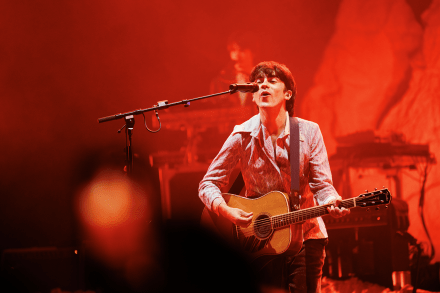
Towards the end of Declan McKenna’s snappy, enjoyable 90-minute set at the Edinburgh International Festival, something quite powerful occurs. The English singer-songwriter returns alone to the stage for the encore and proceeds to play a version of ABBA’s ‘Slipping Through My Fingers’ with only his electric guitar as accompaniment. It becomes a strange, emotionally layered moment. A young musician singing from the perspective of a parent ruefully reflecting on their child growing up, away and beyond reach; a predominantly teenage crowd singing those words back to him; and the older members of the audience, many attending with their own kids, staring blurrily into the middle distance.

Fantastic – and genuinely indie: Personal Trainer, at the Shacklewell Arms, reviewed

Remember when we all knew what indie meant? Indie was what John Peel played. It was music that was recorded, manufactured and distributed independent of the major labels. In practice, that tended to be music played by young white people, usually more in hope than expectation of either competence or success. As the years passed it came to be applied particularly to a kind of whey-faced, solipsistic music, played on guitars by people who were either too clever by half or too wimpy by half. By dusk, what had not long before looked like the seventh circle of hell had transformed These days, though, indie means whatever you want it to mean. Entirely mainstream soft pop acts with massive worldwide hits on major labels – such as Glass Animals – are classed as indie.

Jack White’s new album will be of close interest to Led Zeppelin’s legal team

The ploy of releasing an album without any advance warning comes into play when an artist feels they are being paid either too much or too little attention. The stealth arrival of Jack White’s new solo album falls firmly into the second category. Putting out music in this way ensures additional media coverage and a certain level of intrigue I didn’t love White’s old band, the White Stripes, back when they were a garage-rock/blues revival phenomenon in the early 2000s. Since their demise in 2011, the world seems to be coming around to this way of thinking. Their most successful albums, Elephant and White Blood Cells, hold little cultural currency these days.

Charismatic, powerful and raw: Patti Smith, at Somerset House, reviewed

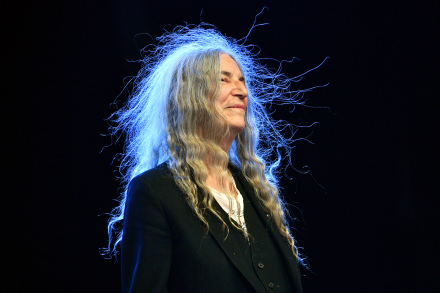
There are certain long-established rules for describing Patti Smith. Google her name and the words ‘shaman’ and ‘priestess’ and you’ll see what I mean. For the best part of 50 years she’s been treated as though she’s a mystical object, a human convergence of ley lines, as much as a rock singer. In the courtyard at Somerset House, she didn’t exactly discourage the clichés. There was a long lecture on the power of the full ‘buck’ moon, which was hidden by clouds but still prompted the people in front of me to pull out their phones to check astronomy apps. There was a lengthy hymn to William Blake that concluded: ‘And then the children, the chimney sweeps, remembered him.

Hard to love – but Shirley Manson is terrific: Garbage, at Usher Hall, reviewed

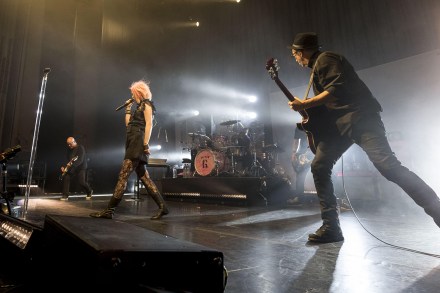
There’s nothing quite like the drama of a prodigal’s return. ‘I’ve been singing in this venue since I was ten years old,’ announces Shirley Manson, staring down nearly half a century of personal history at Edinburgh’s ornate Usher Hall. The fact that Garbage’s lead singer made the United States her primary residence many years ago lends this homecoming concert added potency. There are shout-outs to her dad, a ‘Happy Birthday’ serenade for her sister and what looks like a tear or two at the start of the encore. A ‘badass’ attitude is so sleekly applied it seems like a Che Guevara T-shirt in the racks at M&S For all the sentiment, it was obvious that Manson was right to leave not just Edinburgh, but the UK.

Complain all you like but Glastonbury has delivered the goods again

There’s yet to be a Glastonbury line-up that hasn’t provoked a chorus of naysaying. Refrains like ‘looks rubbish. I wouldn’t go’ and ‘not like it used to be’ are de rigueur. Dismissing the headliners as ‘crap this year’ rivals football as the nation’s favourite sport. Yet there’s something to be said for trusting the Glastonbury bookers: check out, say, the lower-tier bands on the 1994 poster and see how many greats they discovered before they were famous – Radiohead, Pulp, Oasis... Nowhere else in the world could hand written signs for toilets induce a Proustian yearning to return Glastonbury’s prestige and legendary ‘vibe’ are now such that the festival is bigger than any of the artists playing there.

Camila Cabello’s new album presents an existential threat to songwriting

It is always interesting to observe the ways in which pop stars try to negotiate first growing up, and then growing old. From teen scream to respected mainstay to elder states(wo)man is not an easy path to walk without a few stumbles. At certain times, it requires making some blatantly strategic moves. Cabello wants so badly to grow up that she evolves from a past incarnation practically into thin air Few readers will remember that the first solo single George Michael released after dissolving Wham! was called ‘I Want Your Sex’, a forgettable bump-and-grind with a steamy video designed purely to shift audience expectations away from all things teenybopper and towards a more adult-orientated market. The song was banned by the BBC during daylight hours.

Teenage Swifties restored my faith in strangers

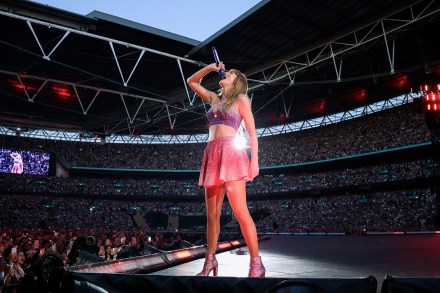
Taylor Swift is the last of the monocultural pop icons. Put it this way: I bet you’ve heard of her. Your parents have heard of her. Your children have heard of her – and so have your grandchildren. This used to be commonplace – but not now. She transcends pop music. This might be why so much of the discussion of the Swift phenomenon has been about the facts and figures: hers is the first tour to gross more than $1 billion, while global leaders have begged for her to visit their countries due to the financial boost she brings. Not to mention her tendency to pump out new editions of her albums every 20 minutes to keep her top of the charts as loyal fans loyally part with their cash.

Does it matter how posh pop stars are?

‘A working class hero is something to be.’ Rishi Sunak and Keir Starmer must have missed the conflicted, sardonic edge to John Lennon’s lyric, from his 1970 song ‘Working Class Hero’, given their rush to scrub away the whiff of privilege in the crudest manner imaginable. Sunak, desperately, by means of bemoaning a childhood forever blighted by lack of access to satellite TV; Starmer by dully hammering home that he is the son of a toolmaker. A country pile, a double-barrelled girlfriend and a mock-regal drawl were valued plunder in 1960s pop As in politics, so in music. In both fields, class anxiety has become inverted. The fear now is to appear too privileged. It wasn’t always thus.

‘Psychedelic folk that twists and leaps’: Beth Gibbons, at the Barbican, reviewed

A decade ago, a group of people who owned small music venues came to the conclusion that the kinds of places they ran were teetering on the brink of a catastrophic extinction event. And so they formed the Music Venue Trust, which has spent ten years kicking cans and shouting the odds about the need to preserve these places, about how they are the production lines from which the festival headliners of tomorrow come. A brilliant guitarist, a fascinating songwriter, St Vincent cycles sleekly through styles with utter assurance Quite right. Good, small venues are the best place to enjoy both live, loud, raucous music and intimate performances where the crowd’s hush is as deafening as any amp.