More from life

Steinbeck’s Eden

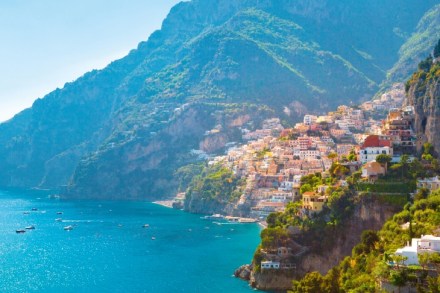
 Amalfi Coast ‘Nearly always when you find a place as beautiful as Positano, your impulse is to conceal it. You think: “If I tell, it will be crowded with tourists and they will ruin it, turn it into a honky-tonk and then the local people will get touristy and there’s your lovely place gone to hell.” There isn’t the slightest chance of this in Positano.’ John Steinbeck, 1953 This is quite possibly the most delectable view you'll ever see anywhere in the world Yeah, right. The sad truth is that like so many classic destinations, Positano, on Italy’s Amalfi Coast, has long since been overtouristed almost to the point of ruination.
A song of ice and snow

 Norway It might seem strange for someone who is half-Norwegian to decide on Scandinavian studies at university. But having lived in the UK my whole life, I wanted a better understanding of Scandinavia, its language, and its culture. In four years, I learned plenty of useful skills, such as the ability to read fuþark runes and point out the Norwegian influences in Disney’s Frozen. All in all, time well spent. But I always ummed and ahed when friends asked if they should pop over on a weekend break. As much as I love the country, I felt guilty about recommending it as a holiday destination. Norway is famously expensive. Recently though, my attitude has started to change. For those used to London prices, the Norwegian capital isn’t that extortionate.

Stress-free slopes

 Austria One day in February each year, my three children come home from school in London, but go to sleep in Germany. We pile into our old Rover 75 Estate, take the tunnel to Calais, then drive through France, Belgium and the Netherlands before collapsing into bed in Aachen: five countries in an afternoon. The next day we cruise down the Autobahn to Munich or Salzburg, potter around the city and have an early night. The following morning we are on the ski slopes, hours before the plane gang arrive. For a ten-night ski holiday in February half-term, the most expensive ski week of the year, our total spend is less than £3,500. For five people. That includes travel, accommodation, eight-day lift passes, ski lessons, equipment hire and food.

Desert flocks

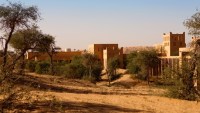
 Ras Al Khaimah It’s the emirate you’ve never heard of, and a welcome antidote to the showmanship and excesses of Dubai – for now at least. The northernmost emirate, Ras Al Khaimah, is only 40 minutes by car from Dubai international airport, and is quickly emerging as an open tourist destination for the savvy traveller. Unlike in Dubai, genuine Emirati culture is still highly visible. There are several mosques worth seeing, from the ornate Sheik Zayed in the Corniche region to the traditional Mohammad Bin Salem mosque, built from coral and beach rock. Other highlights are the working date farms and the historic Dhaya fort, built in the 19th century on prehistoric ruins.

Boris, the conviction politician

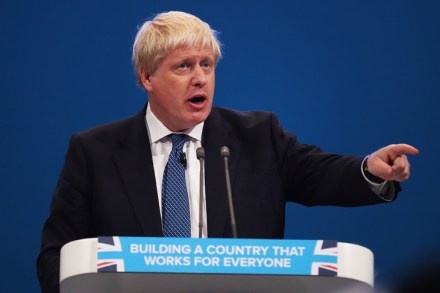
I’m writing this from the Conservative party conference where I can report that Boris Johnson, who has just wowed the blue rinses with a barn-storming speech, isn’t preparing a leadership bid. At least, that’s the line from all those closest to him. Without exception, they say if he was planning something they’d know about it and they don’t. It’s a media concoction. He’s a man without a plan. I know, I know. That’s exactly what Boris’s team would say if they had just press-ganged the last of 48 MPs to sign a letter to the chairman of the 1922 Committee, which is the magic number needed to trigger a leadership election in this Parliament. And there are plenty of reasons to be sceptical.

The turf | 28 September 2017

Racing is an expensive sport to stage. Courses and grandstands have to be maintained, health and safety regulations have to be observed. Human and horse ambulances have to be provided, turnstiles have to be manned and, to maintain the ‘integrity’ of a much gambled-on sport, stables have to be guarded, and photo-finish and race-patrol cameras have to be provided. Recognising this, as they sought to clean up gambling laws in the 1960s, our politicians introduced a rare example of ring-fenced taxation: they sanctioned a levy system on bookmakers to make them responsible for producing a significant contribution to racing’s costs. By 1978 the Gambling Commission was complaining that racing had become ‘addicted to subsidy’.

Don’t let these figures depress you, girls

Are British teenagers suffering from an epidemic of mental illness? Yes, according to a ‘government-funded study’ which found that 24 per cent of 14-year-old girls are suffering from depression. This has been seized upon by critics of Conservative education policies; they see it as ‘proof’ that the increased focus on teaching children knowledge, as well as more frequent testing and the GCSE reforms, have literally driven children mad. ‘One in four girls is clinically depressed by the time they turn 14,’ reported the Guardian. I’m sceptical about this and I took a look at the research carried out by the Centre for Longitudinal Studies, which is based at UCL Institute for Education.

The mystery of socialism’s enduring appeal

One of the mysteries of our age is why socialism continues to appeal to so many people. Whether in the Soviet Union, China, Eastern Europe, North Korea, Cuba, Vietnam, Cambodia or Venezuela, it has resulted in the suppression of free speech, the imprisonment of political dissidents and, more often than not, state-sanctioned mass murder. Socialist economics nearly always produce widespread starvation, something we were reminded of last week when the President of Venezuela urged people not to be squeamish about eating their rabbits. That perfectly captures the trajectory of nearly every socialist experiment: it begins with the dream of a more equal society and ends with people eating their pets. Has there ever been an ideology with a more miserable track record?

The turf | 14 September 2017

Racing moves off the back pages only when its opponents have bad news to gloat over. Two examples lately have been the disciplining of Irish jump jockey Davy Russell for striking a wayward horse, and the death of the Flat-racer Permian, trained in Yorkshire by Mark Johnston, after he broke a leg as he crossed the finishing line at Arlington Park in Illinois. The Russell saga reminded me of the morality tale of the frozen bird in a Russian forest that falls from the sky exhausted. A kindly hunter places the tiny creature inside his fur jacket, where it thaws. Anxious to carry on his shooting, the hunter spots a heap of still-steaming elk dung and places the creature in it to continue its recovery. Restored to health, the rescued bird sits up and sings joyously.

Do what they do, not what they say

Last month, two law professors named Amy Wax and Larry Alexander published a piece in the Philadelphia Inquirer praising ‘bourgeois’ values. They argued that many of the social problems afflicting the American working class, such as the opioid epidemic, are partly due to the decline of these values and that reviving them might go some way to help. They summarised them as follows: ‘Get married before you have children and strive to stay married for their sake. Get the education you need for gainful employment, work hard, and avoid idleness. Go the extra mile for your employer or client. Be a patriot, ready to serve the country. Be neighbourly, civic-minded, and charitable. Avoid coarse language in public. Be respectful of authority. Eschew substance abuse and crime.

All four of my kids will learn to shoot

I spent Monday morning being taught how to use a shotgun at E.J. Churchill, a shooting ground in High Wycombe. If you’re a member of the Royal Society for the Protection of Birds you probably won’t approve, but it gets worse. I was with my friend Merlin Wright and we had taken our 12-year-old sons with us so that they could learn how to shoot, too. Needless to say, after they’d hit a few clays they were completely hooked and couldn’t wait to take aim at the real thing. Merlin brought his own gun and is an experienced shot, but I’m a bit of a novice. Until two years ago I’d never been on a proper grouse shoot. Its appeal was immediate.

The turf | 31 August 2017

I guess his mother may have called him Patrick, or even, when he was in trouble, ‘Patrick Joseph’, but in the racing world, like the great McCoy, the Yorkshire-based jockey P.J. McDonald is known simply by his initials. It is proving to be a very good year for ‘P.J.’ and those initials are becoming steadily more familiar to southern as well as northern racegoers. He won the National Stakes at Sandown and the Molecomb Stakes at Glorious Goodwood on Karl Burke’s Havana Grey, and as I write he is firmly ensconced in the top ten riders’ table with nearly 80 winners. ‘I’d love to get the hundred up this season,’ he says, and there must be every chance he will.

Spare me the encomiums for John le Carré

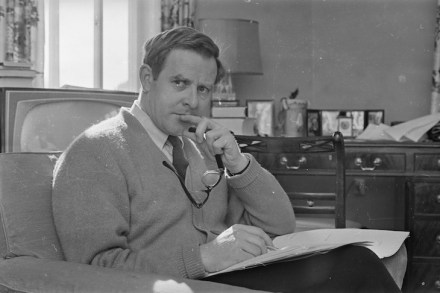
In Absolute Friends, one of John le Carré’s lesser works, the central character explains his rebirth as a left-wing firebrand, radicalised by Britain’s support for America’s invasion of Iraq. ‘It’s the old man’s impatience coming on early,’ he says. ‘It’s anger at seeing the show come round again one too many times.’ This is followed by a rant about ‘the death of empire’, our ‘dismally ill-managed country’ and ‘the renegade hyperpower that thinks it can treat the rest of the world as its allotment’ (not Russia, obviously, but the United States).

As easy as 1, 2, 3…

The amount of nonsense being talked about the new GCSEs in English and maths, whereby exams have been graded 9-1 rather than A*-G, is astonishing. The new grading system is ‘gibberish’ and will cost young people jobs, according to the Institute of Directors. The NSPCC thinks greater differentiation at the top end, with 9 being worth more than A*, will take a terrible toll on children’s mental health, while Mary Bousted, the General Secretary of the Association of Teachers and Lecturers, says the new system is ‘inherently ridiculous’. ‘To put 1 at the lowest and 9 at the top when the grades go alphabetically in a different order from A* to G just seems to put the icing on the cake,’ she says. Let us take these points in reverse order.

The turf | 17 August 2017

‘Racing isn’t a team sport,’ the diehards used to tell us about the Shergar Cup, Ascot’s annual contest for three-rider teams representing Europe, Great Britain and Northern Ireland, the Rest of the World, and the Girls. How odd then that the annual extravaganza of six handicaps lavishly sponsored by Dubai Duty Free with its frenziedly twirling cheerleaders and belting theme tunes, its jockey team uniforms and its Silver Saddle prize for the top points-winner, should once again last Saturday have attracted a sellout crowd of 27,000, the biggest turnout the course achieves outside of Royal Ascot.

Hunt-the-iPhone was the highlight of my hols

For years, Caroline and I have been squabbling over where to spend our summer holidays. Her ideal is a family-friendly Mediterranean resort where she can lie on a beach reading a paperback, while mine involves renting a car and driving from place to place, staying in Airbnbs and packing in as many ‘fun’ activities as we can. Last year she got her way; this year it was my turn. So we took an easyJet flight from Gatwick to Munich. Admittedly not perfect, given that we were going to Italy, but it was the cheapest deal I could find: £450 all-in, including the kids. A bargain, even factoring in a 6.25 a.m. departure and a return flight to Luton.

Don’t like our diversity agenda? You’re fired

Earlier this week, a technology website published an internal memo written by a Google employee called James Damore criticising the company’s efforts to diversify its workforce. This is ‘where angels fear to tread’ territory. The American technology sector has come under fire for years for failing to hire and promote enough women and Google is being investigated by the US Department of Labor for allegedly underpaying its female employees. What makes this memo particularly controversial is that Damore takes Google to task for discriminating in favour of women. He begins by saying that he is pro-diversity and accepts that sexism is one of the reasons women don’t constitute 50 per cent of the workforce in the tech industry.

The turf | 3 August 2017

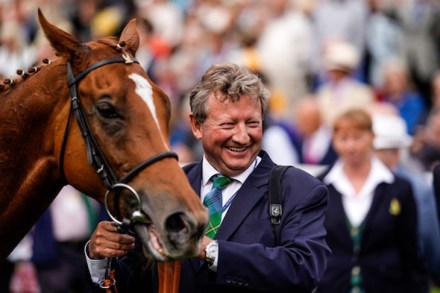
Khalid Abdullah, John Gosden and Frankie Dettori — owner, trainer and jockey — already figured among the great names of racing. After this year’s Qipco-sponsored King George VI and Queen Elizabeth Stakes they were joined in the pantheon by Enable, the astonishing filly who has been the prime focus of their attentions this year. As she stood in the winner’s enclosure, her flanks heaving with the effort but her intelligent eye still flickering around the gathering of racing’s great and good, both she and we had no doubt that we were in the presence of equine greatness. She has huge ability, she has guts and she has presence.

Parents, not schools, are key to the knowledge gap

The Education Policy Institute (EPI) has just published a report looking at the attainment gap between disadvantaged and non-disadvantaged 16-year-olds in England — and the news is not good. While the gap has narrowed by three months since 2007, it is still 19.3 months. That is to say, it is as if disadvantaged pupils have received 19.3 months less schooling than their peers by the time they take their GCSEs. For the persistently disadvantaged, i.e. those who have been eligible for free school meals for at least 80 per cent of their school lives, the gap is 24.3 months. Most people’s instinctive reaction to this news will be frustration and anger.