Mind your language

Where did ‘taking a knee’ come from?

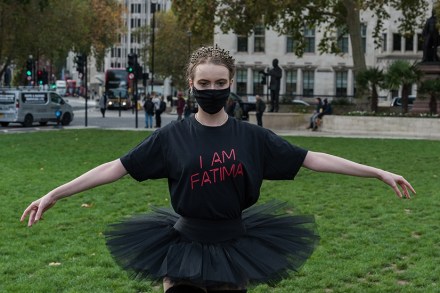
That sympathetic physician, Sir Thomas Browne, thought himself austere in conversation. ‘Yet, at my devotion,’ he confessed in Religio Medici (from the 1630s), ‘I love to use the civility of my knee, my hat, and hand, with all those outward and sensible motions which may express or promote my invisible devotion.’ His hat he took off in church. His hand? Did he make the sign of the cross with it? His knee he probably bent to kneel in prayer, certainly at the reception of the Sacrament, as the Prayer Book directed. Today, there are two things odd about take the knee: the phrase itself and the gesture it describes. Neither was familiar in Britain. The phrase finds a history in American football, which I don’t play.

The French have made a hash of the hashtag

‘So my poor wife rose by five o’clock in the morning, before day, and went to market and bought fowls and many other things for dinner, with which I was highly pleased,’ wrote Samuel Pepys on 13 January 1667. They were eight. ‘I had for them, after oysters, at first course, a hash of rabbits, a lamb and a rare chine of beef. Next a great dish of roasted fowl, cost me about 30s, and a tart, and then fruit and cheese. My dinner was noble and enough.’ My husband said he liked the sound of this and asked if I might manage something similar out of doors, for six, duly distanced. I noticed he had doodled in the margin of his Times #rabbits. Hash sign shares an origin with rabbit hash, both being related to the French hacher, ‘cut in pieces’.

What’s the difference between ‘scaffold’ and ‘scaffolding’?

Whenever I turned on the news last weekend, my husband took to humming the March to the Scaffold from the Symphonie fantastique. He was expecting a political decapitation. Political metaphors tend to the violent: toast, under a bus, the high jump. Berlioz didn’t use échafaud, ‘scaffold’, in the title of his movement, but supplice, ‘torment’. But J.M. Neale, the author of ‘Good King Wenceslas’, wrote a less successful ballad on the martyrdom of Archbishop Laud that included these lines: ‘So steadfastly the scaffold-steps/ That good Archbishop trod/ As one that journeyed to his Home/ And hasten’d to his God.’ Scaffold has a different connotation from scaffolding, with its loud voices, transistors and non-woke workmen.

The link between spick and span, spanking and spoon

I Hoovered on Saturday (or vacuumed as they say in newspapers eager to avoid using a trademark) while my husband was out ‘exercising’. I don’t know whether he attracts dust, like a piece of amber, or produces it, as if by spontaneous combustion in slow motion. Anyway, when he settled in his chair again, he ran his finger rather annoyingly over the table next to him and said encouragingly: ‘Spick and span.’ It’s a curious expression, since neither part seems to have any meaning on its own. The table wasn’t spick. Nor was it span.

Do we wrestle coronavirus to the floor – or the ground?

In the game of ‘U’ and ‘Non-U’, begun by Alan S.C. Ross (1907-80) and popularised in Nancy Mitford’s volume Noblesse Oblige, some words embody upper-class usage (U), and some definitely do not. To the Non-U toilet and serviette might be added floor in the sense of the ground outdoors. Did Boris Johnson succumb to Non-U usage in remarks about coronavirus? ‘If this virus were a physical assailant, an unexpected and invisible mugger,’ he said, ‘then this is the moment when we have begun together to wrestle it to the floor.’ Floor or ground? On VE Day 1945, speaking from the balcony of the Ministry of Health, Winston Churchill said: ‘A terrible foe has been cast on the ground and awaits our judgment and our mercy.

From milk to prayer: the curious connections of ‘pasture’

‘We can now see the sunlight and the pasture ahead of us,’ said Boris Johnson on our escape from a tunnel under an Alpine peak. One could almost hear the cowbells and the echo of a yodel. From schooldays the Prime Minister will remember in chapel the Psalm ‘The Lord is my shepherd’, which declares: ‘He shall feed me in a green pasture.’ The Prayer Book superscribes the psalm with its Latin beginning ‘Dominus regit me’. Under Elizabeth I, places where Latin was expected to be understood, such as Oxford, Cambridge and Eton, could use a Book of Common Prayer in Latin. I don’t think it has been much seen in living memory. Pasture comes from Latin.

How ‘odd’ became normal

‘Is this not the oddest news?’ Harriet Smith exclaimed to Emma Woodhouse, on the news that Jane Fairfax and Frank Churchill were to be married. ‘Did you ever hear any thing so strange?’ Those two words, strange and odd, are being used almost universally about the quality of the past few weeks. Odd is Scandinavian in origin, Viking if you like. The root idea is of triangularity, as when you have an odd bit of land left over. It’s found in place-names, such as Greenodd, which used to be in Lancashire until, in 1974, it was conquered and swallowed by Cumbria. Such three-cornered oddity is like that of the triangle of land called the Angle (in southern Schleswig, which I believe is German at the moment). This was seen by Angles of England as their old homeland.

How ‘furlough’ became mainstream

In July, in its ‘Guess the definition’ slot, next to the day’s birthdays, the Daily Mail asked its readers to plump for the correct meaning of furlough. Was it a) a second swarm of bees in a season; b) a pole across a stream to stop cattle; c) a soldier’s leave of absence? I think the second swarm is called an after-swarm or piper. The government has published a whole document on water-gates to stop cattle. (You can get a £240 grant if the wood used is peeled and tanalised.) These are backwaters of life, but furloughing has become mainstream. Furlough was used before the present emergency. I remember in August that poor Nazanin Zaghari-Ratcliffe was let out of jail for a few days on ‘furlough’, but then taken back in.

What does it mean to go ‘stir crazy’?

My husband left a copy of The Spectator open on the table by his chair, next to the little cardboard mat with a browning glass-ring on it where for most hours of the day he keeps his whisky glass. It was of course open at the letters page, where a kind-hearted reader expressed a most unwise readiness to hear more from him. I can’t say I’ve heard much more of him than usual, for he seldom ventures into the kitchen for fear that I should answer ‘Yes’ to the question he feels he must ask upon entering: ‘Anything I can do?’ But as they say, if you can’t do the time, don’t sign the marriage lines. Perhaps we have been slightly stir crazy for years. It is only now, though, that I discover my assumptions about that phrase were wrong.

The animal ferocity of ‘ramping up’

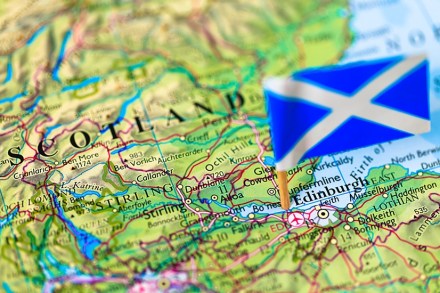
My husband is fond of an old pub in Northumberland called the Red Lion, once a drovers’ inn, it says. In fact my husband is fond of lots of pubs, many of them unattractive. The red (or gules) lion of the Scottish royal banner is rampant, ‘rearing up’. This rampancy is connected in complicated ways with the ramping up of virus tests and such things, about which the government is forever talking. Scientific advisers and civil servants probably think ramping up is to provide an inclined plane or ramp. That kind of ramp is borrowed from the French rampe, used in the 16th century for the slope of a staircase. It derived exactly from the ramping of animals in medieval terminology, especially heraldic lions.

Why my husband is throwing socks at the TV during the Covid-19 crisis

My husband has special ‘throwing socks’. They are a rolled-up pair of woolly hiking socks. He does not hike. He used to throw a slipper at the television, and I feared he would graduate to a whisky glass. So I introduced the socks, like a sort of dog toy. The latest target has been the podium at government television briefings that says: ‘Stay home.’ My husband correctly regards this as an Americanism for ‘Stay at home’. The Oxford English Dictionary does not list the phrase, but it occurs 17 times in quotations illustrating the use of other words, and each is, I think, from an American source, except one from a Caribbean song: ‘Brown-skin gal, stay home and mind baby.

How ‘barley’ cropped up

‘Why can’t you write about something wholesome?’ asked my husband, in a flanking move. He was in a bad mood because his offer to come out of retirement to save the NHS had not so much been rebuffed as received with uneasy amusement. It so happened that I had been rereading something that might fit the strange category of wholesomeness demanded. It was The Shell Country Alphabet by Geoffrey Grigson (1905-85). Grigson really knew about the countryside, from the Stone Age onwards, and the writers who delighted in it, from Thomas Tusser to Cecil Torr. Anyway, Grigson’s entry for barns explains that the word derives from the Old English for ‘barley-house’, bere-ern.

How to judge a book by its colour

I pictured the Green Book (which Rishi Sunak has been urged to tear up) as a matt card-bound thing like an exercise book at school (in which the staples might be rusty from storage). The thing now has a virtual existence. Engagingly subtitled ‘Appraisal and evaluation in central government’, it had been a real paperback book in its 2003 edition, with a picture of a lamppost and the London Eye on the cover. It’s funny how colour names stick. The standard designation for official publications was Blue Book, a term in use before the English Civil War. The name was applied ad hoc to things like the three Blue Books issued between 1780 and 1792 by the self-appointed Catholic Committee of laymen seeking emancipation.

Why ‘housewife’ is no more demeaning than ‘husband’

My husband tried to identify in the 2011 census as ‘housewife’. Luckily I grabbed the form when he had dozed off and put him down as ‘economically inactive’. At bottom, housewife is no more demeaning than husband. Husband is compounded of the elements hus, ‘house’, and bond, ‘householder’. Housewife has the elements house, ‘house’, and wife, ‘woman’. (Woman itself comes from wife, meaning ‘woman’ and man, meaning ‘human being’.) These words have a rich history. Housewife is now almost impossible to use. Yet Housewives’ Choice, on the wireless from 1946 to 1967, when the Light Programme was abolished, attracted audiences of eight million.

Why we can’t count toast

‘Somebody loves me,’ said my husband, waving a copy of The Spectator above his head as though pursued by wasps. ‘Don’t be silly, darling,’ I said, refusing to feed his appetite for vicarious fame. A kindly reader had written, wondering if he was well, since I hadn’t mentioned him for a couple of weeks. He was more than well; he was well and truly infuriating, nursing his whisky and occasionally saying ‘Fine wines’, before falling silent until another pair of words spilt out, such as ‘Rare earths’, or ‘French cheeses’. These were his quibbles after I’d explained that some nouns in English are uncountable. Much food is uncountable: bread, butter, toast.

What do elbows have to do with fighting coronavirus?

Before the Covid-19 scare I never thought that one particular Spanish proverb would come in useful. It goes: ‘Los ojos con los codo.’ This hardly seems to make sense, ‘Eyes with the elbows’, but the great 19th-century traveller Richard Ford explains in his Gatherings from Spain that the sun’s glare on the dusty land may inflame the eyes, which must never be rubbed with the hand, only with the elbow, lest ophthalmia and blindness set in. He also recommends blue gauze spectacles, which I must out. Now, with the coming of the coronavirus, the public-spirited sneezer will use a pad of paper tissues in her hand, or sneeze into the crook of her elbow, rather than into her hand, which might then infect Underground carriage poles or escalator handrails.

The disconnected language of ‘connectivity’

Facebook recently told readers of the Sun that satellites could ‘bring broadband connectivity to rural regions where internet connectivity is lacking’. Sajid Javid in happier days not long ago told the Telegraph that HS2 would ‘create greater North-South connectivity’. Connectivity seems an unnecessarily abstract way of expressing it. E.M. Forster didn’t attach the epigraph ‘Only connectivity’ to Howards End. It was not the Countess of Huntingdon’s Connectivity. No, the novelist, with the epigraph ‘Only connect’, wanted to connect ‘the prose and the passion’ and the Countess wanted her Connexion to be precisely whatever she said it was at any one time, whether Methodist, or Calvinist or dissenting.

The Streatham stabbing is being investigated at pace. But what does that mean?

In Arnold Bennett’s Tales of the Five Towns, a young dog called Ellis Carter takes a girl for a drive in a dogcart (a little open carriage pulled by a horse, not a dog, the use of which for traction was made illegal in 1854) on a Sunday afternoon, until the spirited mare he is driving pulls to the left, bringing them into collision with a lamp post, which is bent in half. The respectable folk of Bursley are scandalised, though as news spreads, Ellis’s fellow young dogs regard him with an expression that says: ‘Well, you have been going the pace!’ Today, preparations for the climate jamboree in Glasgow are continuing at pace, the government says, just as the Streatham stabbing was investigated at pace.

Is Billie Eilish really in shock over James Bond?

Billie Eilish, who has just won five Grammys, is also singing the theme song for the next Bond film. ‘James Bond is the coolest film franchise ever to exist,’ she said. ‘I’m still in shock.’ My husband tells me that the symptoms of shock include pale, clammy skin and bluish fingernails. Since Miss Eilish’s fingernails were painted green at the Grammy ceremony, it was not easy to tell. But a life-threatening drop in blood pressure was clearly not present. The phrase in shock is now used where we used to say shocked, or even overjoyed. Perhaps people have been watching Casualty too much. From a metaphor, it has become an annoying cliché. Shock, from the French choque, began as the word for a collision of armies.

Did Harry and Meghan step back, step down or step away?

At this time of year in Colorado the crime of puffing is widespread. It is so cold that in the morning people often leave the car engine running to warm it up while they finish getting ready indoors. This is called puffing. It leads to dozens of cars being stolen. Characteristically, the police penalise victims, fining the puffers. A piece of Colorado law-enforcement publicity declared: ‘Don’t step away from your running vehicle even for a second.’ This plays on the cliché employed by police who stop suspects in cars: ‘Step away from the vehicle.’ In Britain we might expect ‘car’, although the constabulary is given to polysyllables.