Leading article

Leader: Less heat, more light

We have heard surprisingly little about the climate change jamboree currently underway in Cancun. Before last year’s Copenhagen summit, there was much hullaballoo. Gordon Brown told us that we had ‘fewer than 50 days to set the course of the next 50 years’. Yet he and 100 of his political counterparts could not stop the conference from collapsing under the weight of its contradictions. This year, only two dozen world leaders are likely to make the carbon-consuming trek to the Mexican coast. David Cameron, to his credit, will not be one of them. He will not miss much. One paper prepared for the Cancun summit, by Prof Kevin Anderson of the Tyndall Centre for Climate Change Research, proposes halting economic growth in the developed world for the next 20 years.
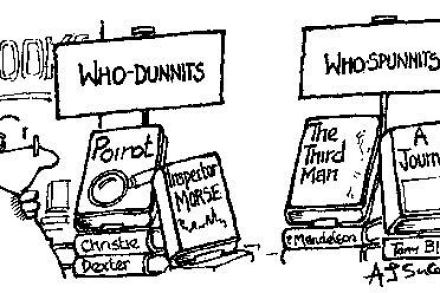
Now for the real examination

If William Beveridge were commissioned to write another report into Britain’s social ills, he would find that two of his ‘giant evils’ — ignorance and idleness — still stalk and shame Britain. If William Beveridge were commissioned to write another report into Britain’s social ills, he would find that two of his ‘giant evils’ — ignorance and idleness — still stalk and shame Britain. At the time, one might have argued that this was because schools lacked enough money or because the economy was a ruin. But today, when schools enjoy record funding and immigrants occupy one in seven jobs, only one conclusion can be drawn: that the welfare state has been incubating the very evils it was designed to eradicate.

A sacred bond

The royal family has a gift for laying on a wedding just when the nation’s spirits most need lifting. The Queen’s marriage to the Duke of Edinburgh in 1947 helped to rejuvenate a nation exhausted by war and demoralised by rationing. The wedding of Princess Anne to Mark Phillips in 1973 aroused extraordinary excitement in a Britain disfigured by vicious industrial disputes (and polyester flares). The marriage of Charles and Diana in 1981 distracted the public’s attention from street riots and shocking unemployment figures; indeed, with hindsight, the near hysteria it provoked was an ill omen.

Remember the living

Various political attempts to institute a national British day have failed, perhaps because Britain already has one. It is Armistice Day, and it is marked not by the waving of flags, or by the recitation of a national creed, but by keeping a silence in memory of those who sacrificed their lives for our country. Armistice Day, however, has always been about the living as well as the fallen. The poppies we wear are not just a commemoration of Flanders, but a sign that we support our soldiers in the battlefield today. Since the Taleban were toppled from Kabul nine years ago, 180,000 servicemen and women have fought campaigns in either Iraq or Afghanistan.

Cutting across the Channel

While it may be a little dangerous to speak so soon, a remarkable gulf is growing between the responses of the British and the French public to their governments’ attempts to balance the books. While it may be a little dangerous to speak so soon, a remarkable gulf is growing between the responses of the British and the French public to their governments’ attempts to balance the books. In Britain, there has been a calm reaction to the cuts so far announced, with a clear majority supporting the government’s bungled announcement that it is to restrict child benefit payments. In France, the only austerity measure to speak of is raising the minimum retirement age from 60 to 62 — and it has brought protesters to the streets.

In it together

It has been a remarkable week for the bright young Tories who worked for John Major in the 1992 election campaign. At the time, David Cameron, Steve Hilton and their friends were young praetorians who, after the Conservatives were returned to office, credited themselves with snatching victory from the jaws of defeat. They nearly did the opposite in May, but there was no sense of disappointment at the Tory party conference in Birmingham. It looked and felt more like a victory parade for the New Establishment. The word Conservative could hardly be seen inside the conference hall, and the chosen motto, ‘Together in the national interest’‚ suggests coalition rather than party. But Mr Cameron and his lieutenants proudly eschew tribal politics.

The wisdom of Pitkin

While we mourn the comic actor Sir Norman Wisdom, who died on Monday aged 95, we should also celebrate the incurable optimism of his most famous character — Norman Pitkin. Remembered principally for his trademark stumbles, flailing limbs, and saying ‘Mr Grimsdale!’, Pitkin, played by Wisdom in numerous films during the 1950s and 1960s, was the ultimate ‘little man’ who wouldn’t give up. Pitkin was never downcast for long, he rose to the occasion — any occasion — and battled the odds. Cloth-capped, and wearing a jacket that was two sizes too small, Pitkin, or ‘the Gump’ as his character was affectionately known, was a symbol of dogged resistance to conformity and a champion of individuality.

The Tories need to talk

Liam Fox has certainly given the Tories something to talk about as they gather for the party conference this weekend. Liam Fox has certainly given the Tories something to talk about as they gather for the party conference this weekend. Everything that he wrote in his leaked letter to David Cameron is true: the Conservatives in opposition promised to be tough on defence; in government, however, they propose to degrade Britain’s military to the extent that it would be unable to repeat successful operations such as the one carried out in Sierra Leone. This government is determined at all costs to protect the NHS budget and spend more (borrowed) money on overseas aid — while the military’s budget is to be cut to pieces.

Blame Games

India has given a good impression of a country that views the Commonwealth as an embarrassment. It should be an honour to host the commonwealth Games. We hoped that India would use the event to show the world that it is not just an emerging superpower with nuclear weapons and a space programme, but a country with a sense of pride — as China did with the Beijing Olympics. Instead, India has given a good impression of a country that views the Commonwealth as an embarrassment. Advance parties from England, Scotland, Australia and Canada arrived to find squalid and even incomplete accommodation. There were reports of walls bubbling with mould and floors covered with pools of stagnant water. The site is so structurally unsound that one of the footbridges collapsed.

Benedict brings hope

But, if the protestors know where Benedict XVI stands on issues of sexual morality, they have a very shaky grasp of his precise relationship to these issues. The arrival of Pope Benedict XVI in Britain has provoked protests that, in the intesity of their anger, far exceed those that greet the state visits of blood-drenched dictators. That is because the Pope is seen to represent — in ascending order of secular distaste — religion, Christianity, the Roman Catholic Church and the conservative wing of Catholicism. Fair enough: Benedict does represent all of these things. He opposes atheism, regarding it as a desperately sad alienation of man from his creator.

Spot the difference

You may notice that your Spectator looks a little different this week. We have updated its design, but cautiously, taking the best ideas from past magazines, and refreshing the rest. Even the tidiest house needs a little spring-cleaning from time to time. Many read the Spectator back to front, so our peerless books and arts sections now have their own opening page. Some readers felt that Taki and Jeremy Clarke were buried at the back of the Arts section, so we’ve given them a section of their own — Life begins at page 71. And we’ve made room for some shorter features as well as long reads. And what of the character of The Spectator? We’ve changed it not one jot. We have no interest in striving to be modern, and no need to either.

War and peace | 11 September 2010

One subject about which we hope pupils will always be taught is the Blitz, which began in London 70 years ago this week. The ‘spirit of the Blitz’ may have been over-romanticised, but it is right that the brave determination with which Britons faced the aerial assault remains a source of national pride. But British courage is perhaps not best recalled by the proposed new memorial to the airmen of Bomber Command in London’s Green Park. While no one can doubt that we are deeply indebted to the 55,573 who lost their lives, and who are already remembered at the Air Forces Memorial at Runnymede, there is a good reason why a memorial specifically dedicated to Bomber Command was not built after the war.

Fox news

Perhaps the most surprising part of Tony Blair’s memoirs is the passage in which he reveals one of his deepest regrets: it’s not Iraq, but the fox-hunting ban. Blair now says that the 2005 reform was ‘a fatal mistake’ and even admits to having been swayed by a metropolitan bias against country dwellers. ‘I started to realise that this wasn’t a small clique of weirdo inbreds delighting in cruelty,’ he writes, ‘but a tradition, deeply embedded by history and profound community and social liens, that was integral to a way of life.’ Pro-hunting groups will see Blair’s admission as too little too late.

Science fictions

What is it about international organisations that makes them so impervious to criticism? If the Intergovernmental Panel on Climate Change (IPCC) were a British ministry or quango, it is inconceivable that its chairman, Rajendra Pachauri, would still be in his post. The IPCC’s reports, which have been accepted by governments around the world as a definitive judgment on the science of global warming and used to influence policies with huge economic and social consequences, have over the past few months been exposed as shoddy pieces of work which would have disgraced an undergraduate thesis.

Conservatism has triumphed in Australia, whoever its next PM might be

He’s ‘too archetypically conservative’. He’s too much of a ‘King Catholic’. He views the world through a ‘narrow ideological prism’. He’ll ‘split the party’. He’s ‘unelectable as prime minister’. Under his leadership, the centre-right Liberal party will become ‘a down-market protest party of angry old men and the outer suburbs’. As these barbs indicate, Tony Abbott is as much a hate figure among Australia’s left-leaning academics and columnists as Margaret Thatcher was in the senior common rooms of Britain’s great learned institutions.

Baby Cam’s question time

What could David Cameron wish for his new daughter? All fathers want their children to grow up in a better world. The Prime Minister is in the position to forge one. He has a good chance of his youngest daughter celebrating her next nine birthdays at Chequers, and there is much he can do in the meantime. There are several questions we hope Baby Cam (her name was not chosen when we went to press) will be able to ask her father on her tenth birthday. The first is ‘what was a sink school, Daddy?’ The academies proposal by Michael Gove can — if properly rolled out — make them disappear. Why, a future generation might wonder, would a parent send their child to a school they knew was bad?

University challenged

One of the least remarked-upon scandals of recent years is the mis-selling of Higher Education. Pupils are now told, from a very early age, that university should be the great goal in schooling; that there is some kind of binary distinction between those with initials after their name and the also-rans. David Willetts, the Universities Minister, remarked recently that graduates make on average £100,000 more over a lifetime — a windfall which he says his government may penalise them for in the form of a graduate tax. There is a scam going on here which the young ought to be alerted to. This year, around 160,000 school-leavers will miss out on the university place which they sought.

Independent thinker

It was refreshing of Lord Pearson to admit, as he resigned as leader of the United Kingdom Independence Party on Tuesday, that he is ‘not much good at party politics’. If only other party heads were so candid. Most politicians are too scared of making a gaffe to say anything so interesting. They would rather prevaricate than commit the political sin of looking bad on television. Not so Lord Pearson, who, in the run-up to the general election earlier this year, admitted to the BBC that he had not read all of Ukip’s manifesto. Lord Pearson’s unusually frank style means that he has been dismissed in the media as an old-fashioned eccentric with kooky right-wing opinions. Yet far from being a dotty old peer, he is in fact a successful businessman and philanthropist.

Give Clegg credit

Nick Clegg’s triumphant performance in the first televised leaders’ debate has already faded in the public imagination. Back then, Lib Dems spoke breathlessly about overtaking Labour as the nation’s second largest party. But a general election in which they lost more seats than they gained has dampened that optimism, and recent opinion polls have all but extinguished it. Were an election held tomorrow, it is suggested, they would stand to lose a further two thirds of their seats. No longer an insurgent force acting against the Conservatives, Mr Clegg is presiding over a party which fears disappearing altogether. It’s easy to mock Nick Clegg — it was David Cameron’s favourite pastime in the days when they were in competition, not coalition.

Taleban justice

For anyone still clinging to the idea that we have brought democracy and human rights to Afghanistan, the latest news from the country should come as a shock. The Taleban seem to be growing in confidence and influence. First there was the shooting of aid workers in Badakhshan; now a widow accused of becoming pregnant after the death of her husband has been flogged 200 times, then shot in the head. Rather than mobilising troops to rescue the woman, the local security chief simply condemned the punishment as ‘very severe’. Now that both President Obama and Prime Minister Cameron have signalled their intention to withdraw troops, it is as if the Taleban consider they have won the war and are preparing for power. But we cannot abandon Afghanistan yet.