Exhibitions

The RA’s triumphant new exhibition

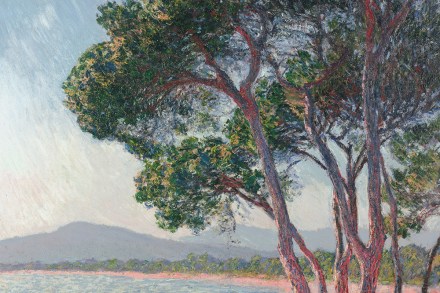
What a show at the Royal Academy. You go straight into a room of Cezannes and Renoirs and that is how it continues, with one coup de théâtre after another, at the hands of Monet, Signac, Braque, Matisse, Derain, Bonnard and more, all of them in thrall to the astonishing light and color of the Côte d’Azur. It hadn’t always been like that. These artists, Cezanne excepted, came from northern France and knew nothing about the southern coast. What changed it all was the completion of the Paris-Lyon-Méditerranée railway in 1860, which suddenly made this spectacular seaside accessible. Cezanne was from neighboring Provence, and he arrived on the coast before anyone else.
RA

A perfect little exhibition on the Isles of Scilly

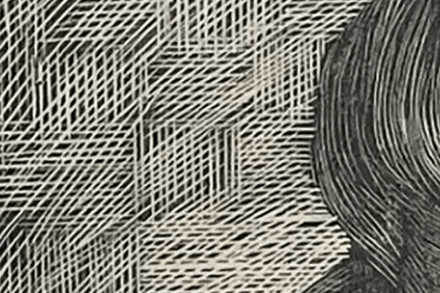
I was in the most southwesterly pub in Britain, the Turk’s Head, on the Scilly island of St. Agnes (population: 75) when I noticed a poster advertising a local exhibition of the work of “renowned artist and birdwatcher Hilda Quick, 1895-1978.” I had stumbled upon an artist with a wonderfully sharp line and an even sharper eye I had never heard of her, but her work on the poster, “The Pursuit of Art,” was compelling. A stylish wood engraving from the 1920s, it showed female art students drawing a male life model. This was the new equality Hilda Quick would have discovered when she left her native Penzance to attend the Central School of Arts and Crafts in London in 1919.

Why does anyone take Ai Weiwei seriously?

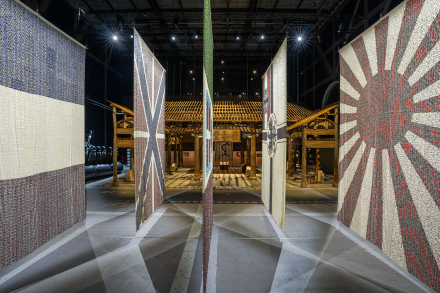
When Ai Weiwei (b.1957) arrived in Europe in 2015, fresh from state-imposed house arrest, he was greeted as a hero. Museums and galleries fell over themselves to host exhibitions devoted to the West’s new favorite dissident – even while he continued, mysteriously, to participate in Chinese art fairs. Nobody dared say it at the time, but his actual art – vast, chaotic installations and whimsical sculptures that drew on Chinese folklore – was even then just a bit dull. Soon enough, the artist was positioning himself as the voice of the global dispossessed, in the process (to borrow someone else’s phrase) morphing into a kind of Chinese Banksy. His work became self-aggrandizing in tone and ever more naff in form, in the process losing any trace of subtlety.

The Venice Biennale was just that bit worse than usual

The 61st Venice Biennale arrived freighted with portent. To cut a long story short: Russia and Israel were invited to exhibit, and the prize jurors resigned in protest. Then, on preview day, the city was hit by a storm of biblical force. I sat in the Stansted Wetherspoons for hours, oblivious to the fact that the Ryanair ahead of mine was taking a pummeling that ultimately landed it on the wrong side of the Adriatic. “It was terrifying,” a journalist colleague recounted. “And apparently, Bjork was on board, too.” The bad juju had set in last May when Koyo Kouoh, the program’s curator, dropped dead aged 57. The event was left rudderless, and with all due respect – it shows.

biennale

How to dress a queen

The problem with exhibiting costumes is well known. Should the mannequins be lifelike with human features, or faceless? What about trying a more surreal approach with Perspex or metals? This show of her late Majesty’s wardrobe opts for something more ghostly: hundreds of shoulderless, neckless, wristless, legless figures, floating magically in space, presented in cases at eye level, with others, higher, in serried ranks, like some gorgeously arrayed terracotta army. The unifying factor is that instantly recognizable royal silhouette – from the youthful wasp waist to the later fuller frame.

queen

A Tate show with dreamy, elusive power

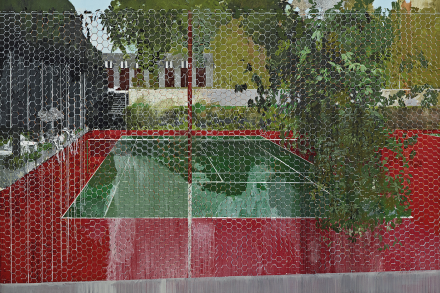
One of the miracles of art history is how painting, so often written off, keeps on coming back. Right now we are in the middle of just such a resurgence, and one sign of the current vitality of the medium is the emergence of painters such as Hurvin Anderson. Admittedly, Anderson – who was born in 1965 – has been emerging for a long time now. But, with the opening of a big retrospective at Tate Britain, his status as a major figure in modern British art is clear. Anderson is completely individual yet visibly connected to the tradition – indeed, to several traditions – and capable of creating huge, wall-filling canvases into which you can sink and float away, but which also make you think and feel.

This Hockney show is disorientingly enjoyable

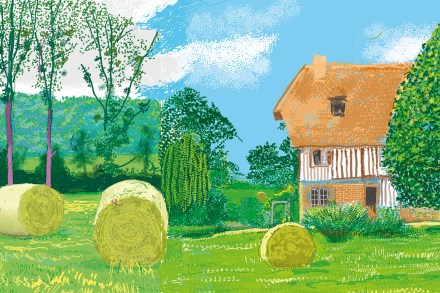
When so much contemporary art is riven with obscurity and angst, it is disorienting, at first, to encounter something as straightforwardly enjoyable as Hockney’s latest exhibition. Aged 88, the artist went out into his garden in Normandy with his iPad to make a visual diary of the year 2020. A hundred or so of the iPad sketches he made have been put together here, blended into a frieze, a walk-through panorama of the seasons rendered with Vivaldi-like virtuosity. As we move along the curve of this 90-meter frieze, we see nature through Hockney’s bright yellow spectacles. He distills the garden to its dramatic essences. The chill mist of winter is numinous, the dormant trees skeletal, the spring blossom riotously delicate, the blue sky bluer than blue.

hockney

Marvelous but repetitious: Gwen John – Strange Beauties reviewed

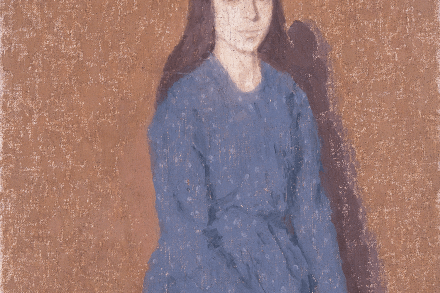
A pilgrimage to Cardiff Central, sorry, Caerdydd Canolog (according to the signage in the station, which also had my return train’s destination ‘Lundain Padd’ton’) to see the new Gwen John show. She is being lauded as Wales’s greatest artist, but she left Tenby at 18 in 1895, and never went back. After studying at the Slade she moved to Paris, fell in love with Rodin, and adopted the Catholic faith.