Drink

My adventures in rosé

During the festive season, I usually spend far too much time thinking and talking about politics. But the latest was an exception. One hostess fixed me with a gimlet eye and announced that she had forbidden any discussion of Israel/Palestine. At a recent dinner party, the table had been repeatedly banged, someone had stormed out and others were now on non-speaks. I quoted the late Clarissa Eden. During the Suez crisis, she felt that the Canal was running through her drawing-room. This girl gave a hearty nod in agreement. I was happy to agree with the ban, but declared my surprise. How could anyone be so sure of the solution? The most I could come up with was ruminative gloom.

Let’s hope for good cheer this Christmas

A couple of years ago, I saw a charming cartoon. A boy and a girl aged about seven were in an earnest conversation. ‘Of course I don’t believe in Father Christmas,’ said the boy. ‘But we’ve got to keep up the pretence for the sake of the parents.’ This Christmas, all over the world, many parents will be especially keen to dwell on the great festival’s innocent joys. Innocence: in many places the fear is that the glory of birth will give way to the massacre of the innocents. Like the shepherds, a large number of people are sore afraid. Unlike the shepherds, their fear has no relief at hand from the Heavenly Host. A lot of friends have been converging on London, not all of them with glad tidings.

The Swiss appetite for wine gives them a good name

A friend was in town, who rebuts two instances of dull conventional wisdom. The first is that although Swiss Germans may have many qualities – they make excellent bankers – they have no joie de vivre. The Calvinist heritage persists. Second, that the Swiss are an implacably martial race. Other armies, especially the British, use humour to palliate the rigours of serving. The Swiss would be appalled by such frivolity, which may explain why no one has been in a hurry to assail their mountains. There was a serious French restaurant across the border, so he borrowed a tank and set off In both respects, Nick Sillich is a triumphant exception. He is also a fellow who puts the trench into trencherman. That explains why he was the last Swiss soldier to invade France.

I hope David Cameron will find time to drink the odd good bottle

Back in 1989, a most unsatisfactory fellow called General Aoun started a civil war around Beirut in the hope of seizing control of the Maronite Christian portions of Lebanon. He ended up with political wreckage, which has endured. Château Berliquet 2015 is a fruity St Emilion that deserves to be better known During the fighting, I spent a few days cut off in the British ambassador’s summer residence, watching the battle going on below. We felt safer than we probably were, partly because Pauline Ramsay, the ambassador’s enchanting wife, tried to turn the crisis into a house party. So British: so best of British. We watched, helpless, as one block of flats was regularly hit by shells.

The world is a mess. Why not find escapism through wine? 

In most children’s stories, the good characters live happily ever after. Works suitable for older readers tend to greater realism. Even ‘Gaudeamus Igitur’, that most joyous of drinking songs, presses the case for carpe diem. ‘Get stuck in to your pleasures laddie,’ it seems to be saying, ‘before it is too late.’ With the world in such a mess – less carpe diem than dies irae – the case for a vinous route to escapism might seen persuasive. Housman seemed to think so. ‘Could man be drunk for ever,’ starts one poem, then all would be well. Not for long. ‘But men at whiles are sober/ And think by fits and starts/ And if they think they fasten/ Their hands upon their hearts.

It’s time to take Italian wine seriously 

Tuscany: earth has not anything to show more fair. The landscape is charming. The gentle hills seem to smile down upon humanity. The inhabitants give the impression that they were already civilised when we British barely had enough woad to paint our backsides blue. There are also the grapes. From early on, Tuscany sent its vinous plenitude to Rome. Today, it still does, and to Orbi as well as Urbi. There was a time when Italian wine was not taken seriously in the world, and Italians themselves seemed to concur with this patronising assessment. That is no longer the case. One of the most interesting intellectual disputes in vinous matters now concerns Italian wine. There was a time when Italian wine was not taken seriously.

Tories know how to find themselves a good drink

I feel old, and feelings are not always wrong, This eheu fugaces mood came on me at the Conservative party conference in Manchester. I realised that it was 46 years since I first attended this gathering, before the present Prime Minister was born and when his predecessor was barely old enough for Father Christmas. The trouble is that she still believes in him. Jeroboams loves nothing more than finding small growers who produce good bottles There have been changes in the near half-century. In the old days, the conference hotel was dominated by knights of the shire, or the grander esquires of the suburbs. They were all at least 55 and identically attired. If it was not Savile Row and Lobb it was something similar and almost as expensive, with a hint of eau de cologne grand cru.

You have to be truly incompetent to eat badly in Paris

Paris has enough great restaurants to maintain its claim to be the world capital of gastronomy. That said, Parisian residents insist that these days, it is possible to eat badly in their city. Yet I still think that this would require especial incompetence. In Brussels, a strong second in the pecking order, it would be even harder. There is a splendid establishment called Comme Chez Soi. Almost 100 years old, it has established a worldwide reputation without losing contact with its roots. The last time I was there, I observed a couple of ladies-who-lunch, Brussels fashion. There was no question of a watercress salad on a bed of lettuce leaves, washed down with Perrier water.

A perfect slice of Calabria 

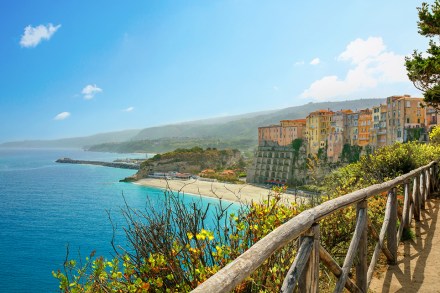
The Romans wrote the history, or at least the myths. But long before Romulus murdered Remus, the Mediterranean – the Great Sea – was the principal conduit of civilisation. The Greeks spread their wings across the wine-dark seas, to the extent that even later Romans accepted that much of southern Italy was actually Magna Graecia. The Greek settlements included the city of Sybaris. Although it was destroyed around 2,500 years ago, it has passed into the language. Sybaritic – the very word is expressive – denotes ease and pleasure, the beauties of nature amid the adornments of art and architecture: champagne and dancing girls. Sybaris is in Calabria, the toe of Italy. In more recent times, history has not been kind to the region.

What wine should you serve to a matador?

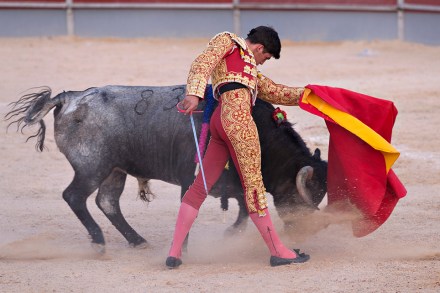
We were talking bulls. A friend of mine, Alexander Fiske-Harrison, is a remarkable character who can claim at least two distinctions. First, he must have been about the worst-behaved boy in the modern history of Eton College. He claims that this is an understatement and that he heads the role of infamy since the days of Henry VI. He was certainly put ‘on the Bill’ – that is, for a disciplinary interview with the headmaster – on 68 occasions. So he was fortunate that corporal punishment had been abolished before he arrived, though his career of rapscallionry was possibly not the strongest argument for its demise. A great wine, drawing on tradition and terroir as well as modern techniques He must have come close to expulsion.

Port is fashionable once again

I once drank some excellent port at Ted Heath’s table. The invitation came as a surprise, but it almost certainly had nothing to do with the monstre (un)sacré. The dinner took place during a Bournemouth party conference at the Close in Salisbury. Ted had an unofficial PPS, a then Tory MP called Robert Hughes. Rob had a sense of fun and mischief. There would have been little scope for either while he was enduring the sullen maunderings of the Incredible Sulk. Anyway, he was given a chance to amuse himself when asked to organise a dinner party. He included me. The young are being encouraged to drink port and even mix it – a criminal offence This would not have been Ted’s choice. I had never been polite about him in print, nor to him in person. But he was at one disadvantage.

The beauty of a serious Burgundy

It was the English summer at its most perverse. We were drinking Pimm’s while hoping against hope for better news from Old Trafford. As the clock ticked and the rain was unrelenting, one of our number emitted a groan which seemed to start from his boot soles. ‘Why can’t there be a bit of global warming in Manchester?’ The girls were growing restive. ‘I can just about put up with you lot discussing cricket, but not if it’s an excuse to talk about the weather’ was one eloquent complaint. A fair comment, so we changed the subject, while keeping a surreptitious weather eye on Manchester. All unavailing. The caravan of tension now moves on to the Oval. How much more can the human nervous system endure?

Where to drink Tuscany’s finest summer tipples

Some subjects invite an eternal recurrence. One such is Tuscany. The other day, I wrote about that glorious region: its mastery of la dolce vita, its almost effortless command of civilisation. Indeed, Tuscan civilisation is a tautology. Since then, I have paid a brief visit. There was only one shadow. How can one find the words to equal the subject matter? Wine was produced here long before we Brits had even discovered woad My host was Grahame McGirr, a successful banker who has always been fascinated by wine, which led him to buy a vineyard near Monte-pulciano. I commented on some of his wines after a tasting in London. They were impressive: promise, stimulated by ambition. He pressed me to report on the promise in situ – the things one does for friends.

What’s so super about Super Tuscans?

In Fellini’s La Dolce Vita, the hopes embodied in the title dissolve into grimness and black irony. It was all Mussolini’s fault. Despite the endless opportunities Italy offered for enjoyment, Fellini never trusted his own country, or his countrymen. He could not relax into dolce far niente. For decades, many Italian wine-makers churned outa mass-market product to sell cheaply Perhaps he should have spent more time in Tuscany, surely the most civilised region on earth. Venice may claim to be La Serenissima, but among Tuscany’s gentle hills, hill villages and glorious cities, nature and man are in a harmony so serene that one can almost hear the music of the spheres.

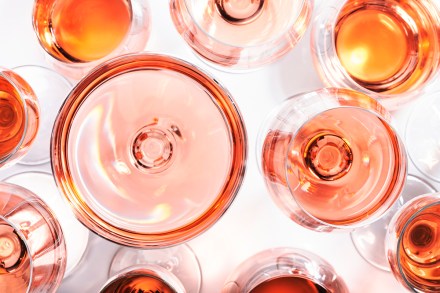
The beauty of rosé and roses

What an idyllic setting. We were amidst the joys of high summer in England, with just enough of a breeze to save us from the heat of the sun, and the further help of a swimming pool. Water without, wine within. We were also surrounded by roses, England’s flower, luxuriating in their beauty and innocence. Experts have applauded my friends’ rose-husbandry. It seemed to this non-expert that they have not merely created a good rose garden; they have triumphed with a great one. Yet other thoughts intruded. Godparents are supposed to abjure the devil. Might Satan not sue for breach of contract? Roses makes one think of Henry VIII. I have recently been reading C.J. Sansom: so much better than Hilary Mantel. His Henry is wholly convincing as a study of corruption and evil.

The Britishness of Bordeaux

Burgundy or Bordeaux? We were discussing that unending question during dinner over the weekend. I think that there is only one answer: ‘Yes.’ ‘But which, you clot?’ ‘Either. Better still, both.’ It is so much a matter of sentiment, and of which great bottle you have been lucky enough to drink most recently. But there is an argument, which is nothing to do with quality, that Bordeaux – claret – is more British. This is as true in North Britain as in England. There are various versions of a well-known piece of doggerel. My favourite is: ‘Proud and erect the Caledonian stood / Auld was his mutton but his claret good.

Tinta de Toro: the Spanish red that helped Columbus make waves

I am assured that this is not a legend. But a few years ago, an Irishman’s life was twice saved by a raging bull. The Irish fellow was running with the bulls at a town near Pamplona. He tripped and was virtually impaled. The bull’s horn went into one side of the chap’s stomach and out of the other. He was rushed to a neighbouring hospital, which was accustomed to bull wounds, and the surgeons saved his life. While they were doing so, the aeroplane that he should have been catching took off. There were no survivors. Fifteen years later, the Irishman developed gut rot. One doctor wondered whether scar tissue from the horn wound might be causing the problem. So the patient was opened up. Scar tissue was indeed present and was excised, as was pancreatic cancer at a very early stage.

The joy of real beer

England. Despite being a Scotsman, partly brought up in Ulster, I have taken so much Englishness for granted over so many years. So do most Englishmen, to at least as great an extent as the inhabitants of any other major country. But I hope that I am just enough of a historian to enquire about this for-grantedness, and to wonder how it happened. I had chosen a good place to ruminate. We were sitting in the garden of the Mayfly pub near Stockbridge in Hampshire, watching the river Test glide by almost saucily. I have occasionally tried – and failed – to catch a trout on such a chalk stream, and have indeed been given sceptical instructions on the subject by Jeremy Paxman: sceptical because he was certain that my heavy footfall would always frustrate my efforts.

The restorative qualities of a great martini

It was a perfect setting for a spring day, next to a 15th-century barn. Other walls and buildings had clearly recycled ancient masonry over the centuries. This was in Kent. Though not that far from Ashford station, it was a garden deep in the garden of England: l’Angleterre profonde. There are excellent local pubs, with absolutely no pop music, but proper hoppy beer as well as proper dogs, looking forward to the shooting season. There was also modernity, in the shape of the Pleasant Land distillery, which has the most up-to-date impressive-looking German kit. Vorsprung Durch Technik also applies to pot stills. The fellow who inspired all this is Sebastian Barnick.

In praise of Bellamy’s

Of all London districts, there is no more charming name than Mayfair. It makes one think of pretty shepherdesses, giggling and blushing as swains serenade them with garlands of spring flowers. But that would have been some time ago, even before the last nightingale sang in Berkeley Square. These days, the serenading would be courtesy of powerful sports cars, revving through the traffic to cock a snook at the cops. Yet there are survivals from a gentler era. Behind Berkeley Square in Bruton Place, you will find the Guinea Grill, which sounds cheerful and lives up to its name. Virtually next door is Bellamy’s, with more gastronomic ambition, but equally traditional and wholly reliable. In recent years, an elderly lady would sometimes arrive, without fuss or fanfare.