Drink

Resist the cult of ‘picky bits’

We are, according to Marks & Spencer, in ‘picky bits’ season. I cannot bear the tweeness of it all. M&S is surely mere days away from launching a ‘Paddington Bear picky bits picnic range’. In search for an antidote to such horrors, I go on my annual pilgrimage to Bouchon Racine, which starts on Westbourne Park Road at midday, sipping Beamish Irish stout in The Cow. It is reputed to be David Beckham’s favourite London pub and is one of an increasing number of English pubs piggybacking on the phenomenal appetite for Guinness by serving alternatives to the Black Stuff. Beamish and Murphy’s are popping up on taps across the capital and we are the better for it.

My fellow drinkers feel pity for Peter Mandelson

We had gathered to discuss wine, but lesser topics intervened. During the Suez crisis, Clarissa Eden complained that it seemed as if the Suez Canal was running through her drawing room. Today, it is more a matter of the Strait of Hormuz, but that is an undeniably important matter. No one could accuse Mandy of being a stainless character. But what you see is what you get Other subjects which are receiving huge coverage have lesser claims on our attention. An American who had just flown in raised one of them. ‘What has this guy Mandelson actually done?’ Rem acu tetigisti. There is a short answer. He has embarrassed the Prime Minister. But whose fault was that?

White port is the new G&T

Spring is here and, as the garden blooms, readers might find themselves reaching for the Pink Diesel to enjoy in the sunshine. But I have another idea: white port and tonic will make you thank God for inventing Portugal and being so good as to align it with England. The great promulgators of white port in Portugal nowadays can be found in the Symington Family Estates. In 1882, 19-year-old Andrew James Symington boarded a boat from Glasgow and headed for opportunities beyond the Clyde. On arrival in Portugal, he worked for Graham’s Port, before breaking out to do his own thing. Symington soon became one of the defining names in Portuguese wine production. A.J., as he’s known in the family, had such success that his descendants were able to acquire Graham’s in 1970.

Is it time for me to renounce the Devil?

As I spent much of January in dry dock in Tommy’s hospital (‘dry’ being doubly appropriate), other avocations were needed. One friend said that it sounded as if I had spent much of the time gazing at the glories of Barry and Pugin, reading poetry or teasing pretty nurses: all pleasant activities. But there was one disappointment. Geoffrey Elton helped to introduce the civilisation of the Rhineland to East Anglia Assuming that hospital wards were good stalking grounds for chaplains, I would have been happy to discuss the Trinity, the meaning of the first verse of St John’s Gospel, or whatever. But only one clergy creature appeared. There is a good old Scots word, ‘mouthless’ (pronounce ‘oo’); that poor fellow fitted the description.

Why are the British so snobby about prosecco?

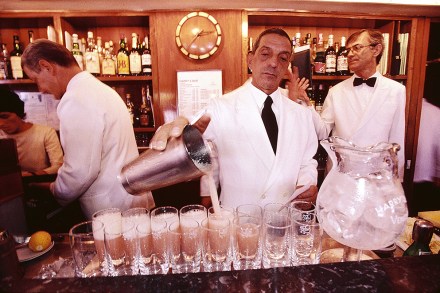
My late grandmother used to say that seeing Pope John Paul II descend by helicopter into Dublin’s Phoenix Park in 1979 felt like seeing God come down to Earth. I daresay I experienced something similar recently when I looked up from my tuna tartare to see Arrigo Cipriani smiling at me. For he sits at the head of what is now a global powerhouse of food and drink, with some two dozen venues worldwide, including London, New York and Hong Kong. But we are back where it all began. In Harry’s Bar, Venice, which Giuseppe Cipriani – Arrigo’s father – established in 1931 with a loan from a wealthy American called Harry Pickering.

Hell is Dry January

‘Earth has not anything to show more fair.’ I have always believed that the notion of a Dry January must have been launched on the world by von Sacher-Masoch: one of his more obscene fantasies. I would no more subject myself to it than to any of the other 11 months. They all deserve better. This year, however, malign fate intervened. On 3 January I was strolling along (as it happens, stone-cold sober) when I suddenly felt rotten. I sat on a fence to work out what was wrong and promptly passed out, falling a few feet while bumping and bashing on the way. A neighbour spotted the fall and dialled 999 virtually before I landed. A few days later, on the phone, he told me: ‘When I first saw you, mate, I thought you was fucking dead.

The secret to a good marriage is drink

Many years ago, when entertaining my then girlfriend (now wife) for our first Valentine’s Day, I spent a considerable amount of time and effort preparing an authentic beef bourguignon. With more than one bottle poured in during the slow-cooking process, it did not offer the lightness one might desire on such an occasion. After pushing it around the plate for an hour, she was less than delighted to then be presented with pudding – a sherry trifle. In the years since, not unreasonably, she has insisted on planning the menu. I have been left in charge of drink. For an excellent white wine, I would suggest Bodega del Abad’s San Salvador Godello 2021.

How to drink like you’re at the Savoy – from your sofa

There are two great American bars in London. One is perfect to escape the winter chill, the other to embrace summer sun. In winter, the American Bar at the Savoy – London’s oldest surviving cocktail bar – is ideal. There is a reason why this warm and welcoming spot has courted popularity for so long and is considered the spiritual home of modern mixology, at least in this country. In the summer months, head for the American Bar at the Stafford. There you can enjoy the large terrace just a stone’s throw from St James’s Street, where similarly skilled bar staff are able to mix up pretty much anything one desires. You know you’re in a great American bar when the bartenders are able to sling together on-menu or off-menu mixes while maintaining good conversation.

The quest for the perfect January red wine

There are different ways to approach the tyranny of Dry January. One is to drink in secret. Another is to indulge only on feast days. Personally I have always refused to make January a miserable and puritan month, which means finding excellent red wine to transition from Christmas exuberance to the long, drawn-out evenings of the new year. And so the quest to find the perfect January red begins. It should not be too expensive, but nor should it be a false economy. After the excesses of December, value is key. Readers are forgiven for pursuing a bargain in the January sales – we have all done it. But the truth is many discounted offerings represent exactly the kind of wines one should not be drinking. They are the rejects, the failures, the lesser vintages.

There’s nothing to fear from Madeira

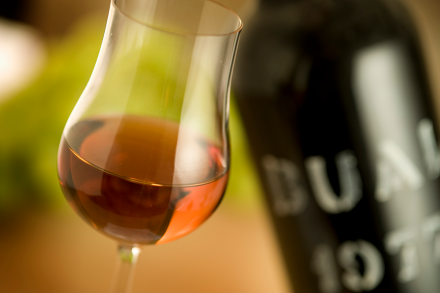
Perhaps because of the Flanders and Swann song in which a louche older gentleman tries to lure a younger lady to bed with Madeira wine, the drink has unfairly acquired a fusty image. While port and sherry have experienced a resurgence, Madeira remains underappreciated despite the fact it stands as a proud monument to the grand old Anglo-Portuguese alliance. One man, Jamie Allsopp, is intent on fighting a noble battle to promote the virtues of Madeira. And so to the Blue Stoops, Allsopp Brewery’s newish pub on Kensington Church Street, for their second annual Game and Madeira Dinner, named after the site in Burton-on-Trent where Jamie’s ancestors first brewed Allsopp’s Ale in 1730.

One of the joys of wine is the people who make it

Towards the end of the war, a young Guards officer met some Italian aristocrats. They had much in common. Robert Cecil was the heir to a marquessate. The Principe di Venosa’s daughter was married to an Italian marchese. Lifelong friendships have ensued down the recent generations. Nevertheless, the English family would be the first to concede that when it comes to generations, the Italians are a couple of centuries ahead. In 1385, Giovanni di Piero joined the Florentine winemakers’ guild. The easy movement between the Florentine bourgeoisie and the aristocracy helps to explain that great city’s long success: the Medici are the obvious example, as are the Antinori, who have been making wine for 26 generations, and are still gaining momentum.

A Frenchman who does not drink wine is a disgrace

The world is in an even greater mess than was apparent. I am not referring to Ukraine, Gaza, Sudan or other swamps of mayhem and misery, although they are bad enough. No: the new crisis is in France, and it has two malign and reinforcing aspects. First, large numbers of the younger French have given up drinking wine. It is not clear what they are substituting: Coca-Cola, perhaps. If so, God help us (and them). A Frenchman who does not drink wine is a disgrace to his history and heritage. After the liberation in 1944, and in order to punish collaborators, the new French government created a crime: indignité nationale. As it is presumably still on the statute book, it could surely be used to bring condemnation on those who collaborate with teetotalism, or Coke.

Wine to toast the fallen

Solemn, moving, serious: British. As silence fell and the wreaths were lain, even teenagers joined in the mood of reverence. Suddenly it did not matter what the gossip columns were saying about Andrew Mountbatten Windsor, or what latest mischief might arise from the Duchess of Sussex. The great ship of state and of history sailed on serenely. The sacrifices of a previous generation were saluted. They had paid the price for their Britishness. We, their successors, unworthy as we might feel, could at least salute them, especially as good bottles were about to be opened, to toast the fallen. Yet there was a problem far more important than princely indiscretions. We British won the war. Since then, we have defended the peace. Hard fighting is a tough business.

How to drink sake

There is a fellow called Anthony Newman who is fascinated by drink, as a consumer, a producer and an intellectual. That said, he spent some years supplying Australians with craft beer, which does not sound very intellectual. But he insists he paid for his own passage and was able to return without a ticket of leave. While living in Oz he visited Japan, and found himself captivated by many aspects – not least sake, the rice wine which is its national drink. Nearly 90 per cent of sake is consumed locally. Anthony decided the potential export market was enormous. I have heard it persuasively argued that Japan is the most complex of all the world’s great countries.

A sip of Israeli history

We were drinking Israeli wine as the talk ranged from frivolity to seriousness: from Donald Trump to the tragic paradoxes of the human condition. Some would claim we were discussing the same topic, yet this may not be the time to disrespect the US President. I once described Ariel Sharon as a bulldozer with a Ferrari engine. It was one of the many tragedies to have afflicted Israel/Palestine that just when he had decided to bulldoze for peace, he should have been stricken with a massive stroke. One reason I love being in Israel is that one is never more than 50 yards from an argument Now a new and mighty piece of earth-moving equipment is dominating the landscape.

Drink early, drink often

As readers will be aware, and without sounding too immodest, this column is absolutely committed to diversity. In an earlier era, that might have seemed unnecessary. A British oenophile did not need to search out bottles from great distances. He could merely take his pleasure from the first growths of Bordeaux and the grands crus of Burgundy, with perhaps a little dalliance on the Rhine or the Rhône. Nor was this only a British modus operandi. I covered the French election of 1981 from Burgundy (there were good political reasons for doing so, as well as other ones). The Burgundians knew that wine was made on the banks of the Gironde, but when I assured them the best of it was excellent, there was polite scepticism.

The glory of the Goring

Last weekend, I was in England: among two very diverse aspects of the nation. In recent months, every Saturday, central London has been plagued by demonstrations. I suppose that there must be a right to protest. But what about the right to mosey around Westminster and Whitehall without blocked roads and with any hope of peace and quiet? Last Saturday saw the largest manifestation of all: less of a protest than an English uprising – a flag-waving two-fingered revolt against the liberal intelligentsia. I kept well clear, having no wish to be caught up or kettled, and later there were attacks on the police. This should lead to jail sentences. Two conclusions could be drawn.

Is God a Thatcherite?

Autumn: surely one of the most beautiful words in the language. All the other seasons are expressive, almost even onomatopoeic, worthy of being serenaded by Vivaldi, but autumn has a gentle resonance. Mists and mellow fruitfulness, not to mention the grouse season. School and university accustomed most of us to think of the year beginning at the Michaelmas term rather than in January. This is reinforced now that parliament is back – though with Sir Stumbler in charge, it is more a matter of fogs and sour fruitlessness. That brings up memories of a different era, one which was immensely fruitful though never mellow. The 100th anniversary of Margaret Thatcher’s birth is approaching. I was having dinner with my old friend John O’Sullivan and of course we talked of the Lady.

Vodka that makes an excellent aperitif

Jack Gervaise-Brazier is a restless romantic. He was brought up on Guernsey, which filled him with a love of islands, but also a desire for wider horizons. As Jack was a head boy and a good historian and classicist, his schoolmasters assumed that he would move on to university and he was offered a place at Durham. Had he visited, he might have fallen under the seduction of its cathedral and other glories. As it was, he headed for a different City to pursue stockbroking and trading. Although he turned out to be a more than useful performer, he always intended to use this as a ladder, enabling him to start up his own ventures. These included a brewery on Guernsey and a rum company. But the restlessness persisted. This was all an interim.

North Uist’s whisky is one to watch

There are at least two Long Islands. One of them, eternally famous for The Great Gatsby, is a fascinating blend of glamour and meretriciousness. It is separated from the other one by 3,000 miles of ocean and a totally different culture. In this Long Island – actually about 70 islands of various sizes, also known as the Outer Hebrides – Sabbatarianism is frequent, but glamour and meretriciousness are as wholly absent as anywhere in Europe. Over many centuries, the Hebridean Long Island was often beset by conflict. Viking raiders, Scottish kings, great clan chiefs: all fought for supremacy. The Scottish Crown eventually won, though the clan chiefs exercised subsidiary kingships, until the old Highland order was broken after the defeat of Bonny Prince Charlie.