Columns

The Tories are risking their reputation as the party of law and order

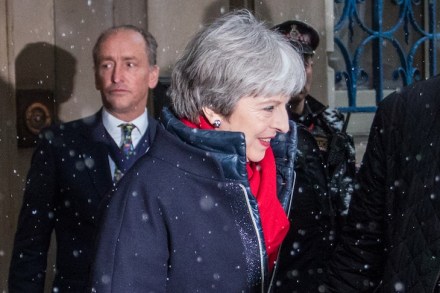
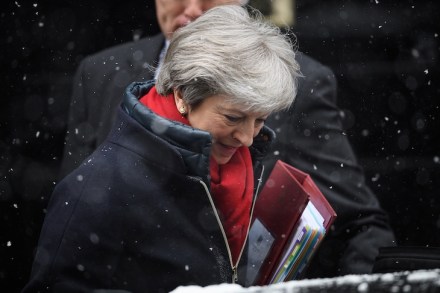
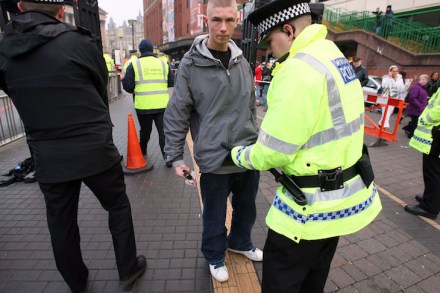
Theresa May’s Home Office record is normally off limits at cabinet. But when ministers discussed the government’s strategy for reducing violent crime on Tuesday, Boris Johnson took issue with what the Prime Minister regards as one of her key legacies: the dramatic reduction in stop and search. He argued that more stop and search was needed to deal with a spike in crime. What went unsaid — but what every-one around the cabinet table was acutely aware of — was that this was the opposite of Mrs May’s approach as Home Secretary. The exchange was pointed. ‘They irritate each other,’ one cabinet minister observed to me afterwards. They also have form on these matters.

I wish I had kept my Brummie accent. I’d be taken more seriously

‘No one wants to send their son to Eton any more,’ I learned from last week’s Spectator Schools supplement. It explained how parents who’d been privately educated themselves were increasingly reluctant to extend the privilege to their offspring; some because they can’t bear for their darling babies to board, others because the fees are way out of their reach, or because class prejudice is so entrenched these days it means their kids probably won’t get into Oxbridge.

The vlogging fantasy

My friend’s ten-year-old daughter has a new hobby. Like many of her school pals, she hopes to become a video blogger — a ‘vlogger’. She has started to record clips of herself for others to watch, share and ‘like’. She showed me a few, then gave me a list of famous vloggers to watch: JoJo Siwa, iJustine, Noodlerella, Zoella. Their names sounded so bizarre. But they are totally familiar to tweenage girls. Like an earnest marketing executive, my friend’s daughter then explained to me that it was all a matter of numbers. If her videos are viewed 40,000 times on YouTube, she can have adverts placed on them; 100,000, and companies would start sending her products to promote. One million and she’d be a bona fide YouTube star.

Our response to the nerve gas attack has been an act of self harm

There was a growling Russian maniac on the BBC’s Today programme last week, an MP from the United Russia party called Vitaly Milonov. Breathing rather heavily, as if he were pleasuring himself, Mr Milonov likened our country to Hitler’s Germany for having accused Russia over the attempted murder of Sergei Skripal and his daughter Yulia. At this point he was cut off by the presenter — rather a shame, I thought, at the time. I would have liked to hear Vitaly expand upon some of his other beliefs, such as homosexuals being responsible for the Ebola virus and Jews being Satanists. He also hates cyclists, so not all bad, then. If you wanted to conjure up a post-commie reactionary Russian pantomime villain, Vitaly is what you would end up with.

The Tory tax bombshell

The single most important domestic policy decision that the Conservatives must take is what to do about public spending. After the snap election went so wrong last year, many Tories rushed to blame ‘austerity’. Gavin Barwell, now Theresa May’s chief of staff, said this was one of the principal reasons he had lost his Croydon Central seat. Even the Chancellor, Philip Hammond, admitted that the public was weary of the long slog to balance the books. This belief — that the public has had enough of austerity — explains why the Tories aren’t behaving as governments traditionally do.

Why mass immigration explains the housing crisis

Ever since Theresa May’s clarion address of the UK’s housing shortage (and how many successive PMs have embarked on the same brave heave-ho?) countless comment pieces have addressed the real problem that drives the disjunction between supply and demand. Nimbyism. Complex, protracted planning permission. Developer land banking. Rich Chinese and Russians investing in unoccupied properties as three-dimensional bank accounts. Excessive protection of green belts. Second homeowners. Empty properties the state should confiscate. The catastrophic sell-off of social housing. A wilful confusion about what the word ‘affordable’ means. Yet when two statistics are out of whack, it behoves us to look at them both. All the above dysfunctions regard supply.

Lake Turkana, Kenya: postcard from the edge

As I write, a great gale is blowing in from Lake Turkana. The dry hills on the other side, always faint, have disappeared. Sheets of warm rain lash our tent, rollers crash on to the white sandy shore, huge pelicans struggle against the wind, the flamingos are gone, and fishermen like thin black sticks — Lowryesque — from the Turkana tribe can be seen streaking up the beach ferrying equipment from their now-beached wooden fishing canoe to a clump of doum palms where they’ll shelter. But nobody is cold. The lake feels like a tepid bath when we swim (where humans fish, the Nile crocodiles stay away), while the air temperature has plummeted within hours from about 45˚C (113˚F) to more like a muggy English summer.

A black and white issue

Last time I was in South Africa I spent two weeks deep in the Karoo, that desiccated wasteland in the Northern Cape which is home only to a handful of jackals, the occasional springbok and supporters of the Afrikaaner Resistance Movement. I had been visiting Orania, a smallish town in which no black people are allowed. Set up by the son-in-law of Hendrik Verwoerd, its existence now is very grudgingly protected by the South African government under regulations which preserve minority cultures — ah, the irony. I was doing a documentary, the gist being: ghastly, ghastly, racist white people. I have to admit that I, as a white supremacist bigot, was a little more equivocal about the issue than the rest of the crew, which is perhaps why the programme never got on TV.

The EU would regret punishing us

Last Monday, Theresa May’s chief of staff talked junior ministers through her Mansion House speech. Gavin Barwell was frank with them. The decision to stay in various EU agencies — and the commitment that UK regulatory standards for goods would remain ‘substantially similar’ to Europe’s — would make it harder to negotiate big trade deals with other countries. But he argued that the trade-off in access to the EU market made it worthwhile. In keeping with the current Tory truce over Brexit, no one in the room dissented. No. 10 believes that maintaining this peace is not just desirable, but essential.

What I learned about women from a burst water pipe

‘It’s always me who gets the worst of it,’ said the Fawn, surveying the wreckage caused by the burst water pipe. I did not disagree a) because I would have had my head bitten off and b) because it’s true. Though I wouldn’t say I was completely useless: who was the first to spot the water gushing through the ceiling of the guest bedroom, eh? And who was the first to find the stopcock using the time-honoured method of running up and down the stairs for ten minutes screaming: ‘Where the hell is the stopcock?’ But it’s probably fair to say that the Fawn bore — and continues to bear — the brunt of the crisis. In theory a burst water pipe ought to be largely in the male domain.

Girls should be taught how to spot a wrong ’un

We are becoming a nation of older mothers. The average age at which a woman has her first child is now 30, a fifth reach 45 without having a baby and the usual busybodies are in a flap. The government, which had anyway decided on compulsory relationship classes, thinks the answer lies in more of the same. If we only explain to 11-year-olds how hard it is to conceive at 40, the creep towards geriatric motherhood can be reversed. Expect your small daughter to bring home fertility awareness posters designed in PSHE, perhaps papier-mâché models of a deteriorating human egg. The busybodies aren’t wrong to worry. I first set about trying for a family just as youth was crumbling into middle-age and it was a very boring business.

The populist revolution has only just begun

Why aren’t children called Roger any more? I wondered this when reading about the sad death of Sir Roger Bannister. Coincidentally, the evening before, my young daughter had been watching The Great Escape and most of the Englishmen in it seemed to be called Roger. The only time you hear the name is in early episodes of Midsomer Murders, the ones produced before they were forced to have black people being killed in a ludicrous fashion alongside the whites, to demonstrate our commitment to equality. It does have an awkward connotation with sex — but then it always did, Roger having been a slang word for penis right back to the 17th century. I suppose it has simply drifted out of fashion, along with common decency, emotional continence and heterosexual marriage.

Which way, Mrs May?

For every action, there is an equal and opposite reaction. Every time Conservative Leavers speak up demanding a clean break with Brussels, those in the party who want a soft Brexit feel obliged to push back. The latest row has been provoked by a letter from the European Research Group — the most powerful Brexiteer bloc in the party. The letter urged Theresa May to deliver ‘full regulatory autonomy’ for the UK. It was taken by many on the soft Brexit wing of the party as a threat to pull support for her if she deviated from this objective. After all, it was signed by 62 MPs — more than it would take to call a vote of confidence in her leadership. So the soft Brexiteers retaliated.

The word ‘extremist’ has lost all meaning

A few years ago, in these pages, Matthew Parris defined Ukip as a party of extremists. Perhaps one of his llamas had just spat at him and he was feeling a little piqued. Or perhaps he actually meant it, I don’t know. Matthew decided Ukip was a party of extremists because its supporters, in some ectoplasmic sense, demonstrated a ‘spirit’ of extremism. It was less the individual policies of the party that were extreme, it was the avidity with which they were pursued by party members: ‘The spirit of Ukippery is paranoid.

The all give and no take of US taxes

Last week, the New York Times ran a very un-New-York-Times-y article, ‘Resentment Grows Over Who Gets Health Care Aid’. It contrasts two women in New Hampshire. Married with one child at 30, last year Gwen Hurd paid more than $11,000 for her family’s health insurance, purchased through the Affordable Care Act exchange. They had to shell out $6,300 per person — $18,900 — before the insurance kicked in. Both parents were working. Their pre-tax earnings just exceeded the $82,000 cut-off for government insurance subsidies. The couple dropped date night, and couldn’t save for retirement. A few miles away, single and living at home, an aspiring opera singer of 28 is careful to keep her earnings just below $15,000, so she continues to qualify for Medicaid.

It’s not all Twitter mobs – the internet can be a force for good

Few readerships of any intelligent national magazine will be more alive to the perils and downsides of 21st--century cyber-life than you, fellow Spectator readers. Many of you might share my use of the generalised expression ‘the internet’ for the whole damn thing — while not being quite sure what we’re referring to. Few, on the other hand, will be more likely to show a lively appreciation of community, locality, the sense of belonging and of place that even in this fast-paced and mobile age, our country at its best can still nurture. You might think those two dispositions make comfortable bedfellows.

Will Remainers ever learn to forgive?

When I mentioned on social media recently that I’d lost friends because of Brexit, I was quite surprised by the vehemence of the response. Lots of fellow Leavers had stories to tell about friends who now cut them dead or former clients who would no longer work with them. Many said they prefer to keep secret how they voted in the referendum for fear of the repercussions. This intolerance is especially bad if you’re a student. One undergraduate described to me how his politics professor had opened a lecture with a slide reading ‘Brexit is shit’ — apparently ‘to the cheers and adulation of the entire lecture theatre’.

Why are businesses so terrified of idiots?

I am boycotting Center Parcs. Admittedly, this is not going to have an enormous impact upon my life. It’s a bit like announcing with great pride and fervour that I am boycotting Clare Balding or Pakistan or goat’s cheese. All of those things I am perfectly able to live without and already do so. I will never eat goat’s cheese, visit Pakistan or watch Clare Balding. I did once visit Center Parcs, mind — about ten years ago. It was excruciatingly awful — the kids hated it as much as we did. Extortionately expensive, restrictive, boring and full of who I can only describe as ‘tossers’ cycling along tarmacked lanes through scrubby faux-woodland with their awful children shrieking in kind-of hanging baskets affixed to the back wheels.

The Tories’ dilemma: to spend or not to spend

While the rest of the country waits for this spring to arrive, in Westminster the talk is all of spring 2019. That’s when the United Kingdom formally leaves the European Union, and when a slew of cabinet ministers think the Tory leadership contest will begin in earnest. But something else will happen in the spring of next year that will be almost as important: the review setting out departmental spending from 2020 to 2023. It will reveal how the Conservatives intend to fight the next election: do they plan to take on Jeremy Corbyn with a no-new-taxes pledge or will their strategy be to say that they are increasing spending but more responsibly than Labour would?

A Brexit deal depends on Tory unity

In a hung parliament, recess takes on a particular importance for the government. It is a chance for ministers to travel, free from the fear that they might be called back for a crunch vote at any moment. Explaining to your European hosts, for instance, that you have to cancel all meetings with them and go home now, or else the government might fall, doesn’t send quite the right message. Helpful though it is, recess will get ministers only so far. Those doing the rounds of European capitals this week still don’t have a detailed Brexit position to sell to their counterparts. This is a problem. Next month’s European Council meeting is expected to set out the Commission’s mandate for the next stage of the negotiations, which will cover any UK-EU trade deal.