Columns

We don’t deserve capitalism

Next time there’s a terrorist atrocity in Britain, here’s one of the things that will happen in the immediate aftermath: the mob will look for a scapegoat, someone wholly innocent of the actual crime but who must nonetheless bear the burden of its impotent rage. Perhaps it will be a politician, usually Nigel Farage, though sometimes Donald Trump. More likely it will be Katie Hopkins or Tommy Robinson. They’ll say something robust and honest, most likely on Twitter. And instead of congratulating them on their courage in telling it like it is, the twitchfork mob will furiously brandish them as its Exhibit A — the hatemonger who created the atmosphere which made this terrible act possible.
The roots of Labour’s bigotry

Another word which has gained a new meaning in the present decade, along with ‘vulnerable’ and ‘diverse’: survivor. Once it meant a person who had been transported to Auschwitz but somehow came out alive. Or a person who had been involved in a terrible car crash but had escaped with only a broken neck. Today it means someone whose nipple was perhaps gently tweaked by a light entertainment star 40 years ago. Or someone who was mildly and almost certainly justifiably bullied at school. I’m also getting a little weary of the elephant in the room. It has become for me, when talking about transformative grammar, the elephant in the room. I heard a woman on Radio 4 say: ‘Well, the thing is, Sarah, there are so many elephants in the room.

Beware a Brexiteer who feels betrayed

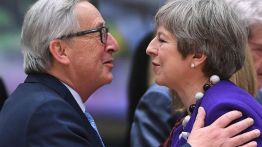
It is sometimes tempting to imagine that the Brexit negotiations will follow the course of a Sunday night TV drama: weeks of suspense, then everything is miraculously resolved with five minutes to go. Last December’s agreement was a case in point. Theresa May turned up to see Jean-Claude Juncker, the Commission President, expecting to do a deal; then the Irish border hit and the whole process seemed in danger. But the Prime Minister made a pre-dawn dash to Brussels just four days later and a deal was done. This has all added to Westminster’s sense that, ultimately, everything will be alright on the night. This means Westminster is underestimating the danger of the negotiations failing. In December, problems could be postponed.

The Home Office nearly deported my husband

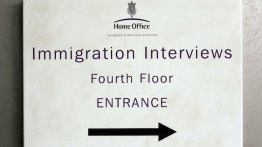
What I remember about preparing to leave for my husband’s appointment with the Home Office in Croydon in 2007 is hysteria. A tizzy was not unprecedented; in our household, it’s always the man who’s in a dither, seeing to last-minute primping and chronically unable to get out the door on time. But on this occasion I, too, was rattled, snapping impatiently as I double-checked an enormous bag of documents. A fair bit was at stake. An American, I had acquired my own Indefinite Leave to Remain (ILR) — a grand designation for ‘residency’ that only the British would coin — during a looser era of the Writers and Artists Visa, long ago eliminated. So the hoop-jumping that the Home Office had come to require for gaining the same status was new to me.

They say Enoch Powell had a fine mind. Hmm

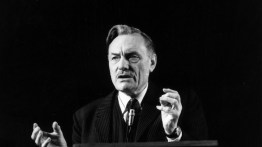
Enoch Powell has been in many minds this month. It’s the 50th anniversary of his famous ‘Rivers of Blood’ speech and I took part in a BBC radio programme discussing this — and hearing the speech itself read superbly by the actor, Ian McDiarmid. The small campaign against the very broadcasting of the speech fizzled out — not least, I think, because the ghastly text does Mr Powell no favours, and many of us who had never read it in its entirety were shocked not only by its tone but by its careless inaccuracy and faltering logic. Yet there’s been a widespread popular view that, agree or disagree with him, the man had a fine mind, a fastidious regard for facts, and courage.

Corbyn shows his true colours

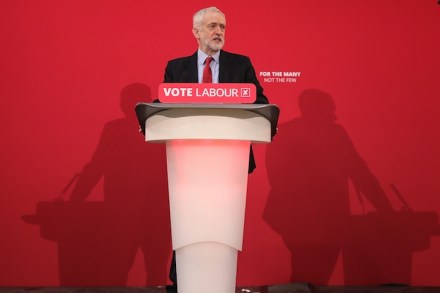
The Tories’ great worry after the last election was that they had effectively vaccinated the electorate against Jeremy Corbyn. They feared that the next time they tried to show that he was extreme, weak on national security and too friendly with the West’s enemies, voters would yawn and declare that they had heard it all before. They would be immune to any attacks on the Labour leader. Compounding this worry was the fear that Corbyn would present himself, as he had quite successfully during the general election campaign, as a more mainstream figure than he really is. If Corbyn had followed this ‘kindly grandad’ approach, the Conservatives would be in deep trouble right now. Labour’s moderates would also lack any obvious cause for complaint.

An odd new feeling has crept up on me: sympathy for the police

Spring has come to my local park in its usual way. First the magnolias, then the cherry blossom, then the little silver ampules which once held nitrous oxide scattered in the grass. On Sunday the kids appeared, not a gang exactly, more a swarm of teens, angry and unstable. A boy of about 14 raced a moped at breakneck speed around the toddler playground. ‘Can you stop?’ said a brave father. ‘You might run over a child.’ ‘Fuck you,’ said the boy. ‘And I’ll fuck your mother too.’ On the way home, another spring staple: a police helicopter hovering over the Essex Road and below it the remnants of a raid: five vans, six cars, 30-odd coppers in body armour and two BBC cameramen just packing up. Once I might have made fun of them.

Help! I’ve joined the cult of the sourdough breadmakers

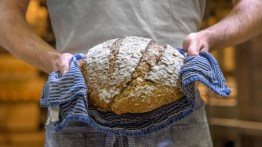
This ought to be the perfect time for a rant about how we’ve reached peak sourdough. It’s been all the rage for three or four years now and, really, someone needs to take a stand. As annoyingly overrated foodstuffs go, it’s up there with kimchi and goji berries and organic chia seeds: obsessively prepared by people with far too much beard, raved about in the Guardian and especially big in that epicentre of global communism, San Francisco. And it doesn’t even taste like bread — more like Mongolian yak’s yoghurt. Problem is, I can’t. Because, like Donald Sutherland at the end of Invasion of the Body Snatchers, I’ve been got.

Joking about vowels is a hate crime now

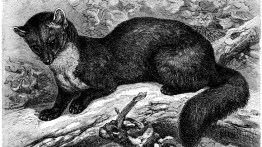
It took four days to actually see the pine marten in the flesh. We caught it on a trail cam on night two of our holiday as it scampered in an agreeably gamine manner for the food we’d left out. It ate better than us that week. By night three it had a choice of eggs (its favourite), peanut butter sandwiches and chopped-up frankfurters. All it needed was a nicely chilled Chablis. We sat in the dark for hours, waiting, until my wife said: ‘Fuck the malodorous little bastard, let’s watch TV.’ She is not much of one for wildlife really. And then it appeared, up on its hind legs crunching its way through the shell of an egg, tipping the yolk down its throat. Pale golden chest, long bushy tail, perky, impish face — we’d got our man.

A new world role for Britain

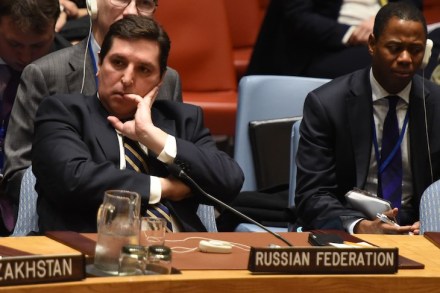
Britain’s imperial past distorts the debate about our place in the world, but not in the way that is commonly assumed. It is often asserted that claims about this country’s international importance are a form of nostalgia. It would be more accurate to say that Britain tends to underestimate its power because it is no longer the global hegemon. Britain might not be, in 1066 and All That terms, ‘top nation’ any more. On any objective reading, however, the United Kingdom is still an influential global player. It is a permanent member of the UN Security Council, the sixth largest economy in the world, a nuclear weapons state, a member of the world’s most powerful intelligence agreement and a cultural superpower.

Catastrophising is my idea of a good time

When, on a test of general knowledge, the highly educated score far worse than chimpanzees, university degrees may be overrated (definitely). But something more interesting may also be going on. According to the newly released Factfulness by Hans Rosling, we would-be smart people would improve our results on multiple-choice questions about the current state of the world (16 per cent) if we picked the answers at random (33 per cent). We all seem to think that humanity is in the toilet, and swirling more deeply into the sewer by the day. We’re wilfully blind to social progress. The more cheerful a host of indices look, the more belligerently we cling to the conviction that everything is getting worse.

I can never resist a trip to the rubbish dump

I was back at the tip on Sunday. I cannot help it. What art galleries or rock concerts or online porn are to some, Derby-shire County Council’s dump at Rowsley is to me. I can’t keep away. Any excuse will do, and on Sunday it was a bit of cardboard and a broken fan heater. Yes, yes, I know, they could have been saved up until there was enough rubbish to fill the bed of my old pickup truck, but … well, the stuff was already in the back and I was driving down the A6 anyway and the pull as I came within the magnetic field of this state-of-the-art recycling centre was just too much to resist. An invisible hand nudged mine into an indicate--left tweak on the lever, and we peeled off down the service road, my rubbish and I. The place was packed with addicts.

Moderate Labour MPs have nowhere to go

The case for Labour moderates leaving their party strengthens by the day. Jeremy Corbyn’s behaviour demonstrates that he is not going to change. His decision to attend a Seder with Jewdas, a fringe group who have claimed that the anti-Semitism scandal is being whipped up by his political opponents, shows how determined he is to stay in his own comfort zone. A poll showing that 80 per cent of Labour members think he’s doing a good job as leader highlights how impossible it would be to remove him. But a more interesting question than whether Labour moderates should go is what they should do once they have. One option would be to set themselves up as the Labour party-in-exile.

The DPP was never much cop

An interesting development for our police force, then. In future they do not have to believe everything someone tells them, in the manner of a particularly credulous village idiot. They may be allowed, possibly encouraged, to exhibit a degree of curiosity in their line of work — have a bit of a think about things, maybe even ask questions. I do hope they are able to cope. They have been institutionally cretinised for a long while now — ever since Alison Saunders was appointed Director of Public Prosecutions in 2013. She is stepping down when her contract comes to an end in October and is anxious to take up her new career opportunity as under-manager of a whelk stall in Cleethorpes (I think I’ve got that right).

Why it’s time to stop fetishising experts

Something extraordinary and largely unreported has just happened in a court in San Francisco. A federal judge has said that there is no Big Oil conspiracy to conceal the truth about climate change. In fact, Judge William Alsup — a Clinton appointment, so he can hardly be accused of right-wing bias — was really quite snarky with the plaintiffs who claimed there was such a conspiracy. The case was brought by the cities of San Francisco and Oakland, which have taken it upon themselves to sue the five big western oil majors — Chevron, ExxonMobil, Conoco-Phillips, BP and Royal Dutch Shell — for allegedly engaging in a Big Tobacco-style cover-up to conceal the harm of their products.

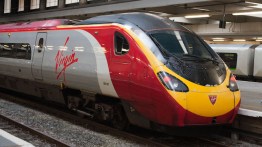
The deranged world of Virgin trains

Twelve minutes till the train. That had seemed like quite enough time as I approached the Virgin ticket machine. Two tickets, London King’s Cross to Durham: a 40-second job, then perhaps a coffee. I had felt, as I so often don’t, like a responsible mother and wife, comfortably in charge of logistics. Screen one set me back a bit. Virgin had changed the layout. Where was Durham? On screen two I felt the first rising bubbles of panic. Where was the option to buy an open return? The minutes floated by. Nothing became clearer. I felt the sort of lonely despair the old must feel when technology overtakes them. I said to my husband: ‘You do it.’ But after a while he said: ‘I can’t!

Labour MPs are suspicious of Corbyn again

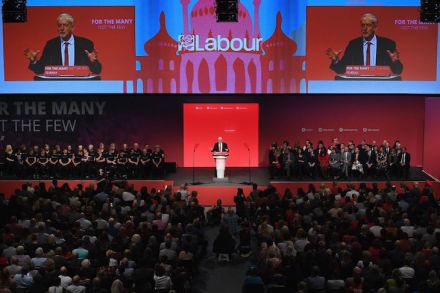
One of the mistakes Theresa May made in calling an early election was not anticipating the effect it would have on the Labour party. Up until April 2017, Labour had been noisily divided between the parliamentary party — the vast majority of whom had no confidence in its leadership — and Jeremy Corbyn whom they couldn’t remove because he had the backing of the membership. But the snap election changed this dynamic. Corbyn’s internal opponents nearly all went quiet once the campaign was announced. This wasn’t just tribal loyalty asserting itself. They wanted to make sure that Corbyn failed on his own terms — that there could be no stab-in-the-back narrative. They also felt there was little risk in keeping schtum.

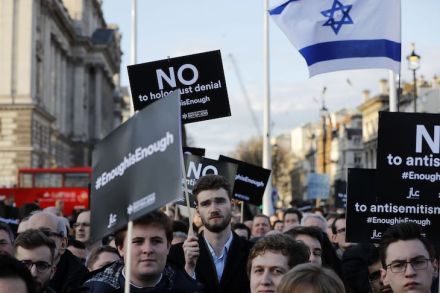
Labour, lizards and anti-Semitism

There’s a very funny moment in Jon Ronson’s book Them: Adventures with Extremists, part of which follows the New Age mental case David Icke on a tour of Canada. All the way across the great plains, Icke has been promulgating his thesis that we are the unwitting subjects of shape-shifting reptilian alien overlords. Aside from Ronson, a protestor has been following Icke, too — demonstrating outside each venue —convinced that when Icke says ‘shape-shifting reptilian overlords’ he really means ‘Jews’. Eventually, having heard Icke speak on perhaps a dozen occasions, Ronson asks the protestor, ‘Do you still think that when Icke says lizards, he means Jews?’ And the protester replies, a little crestfallen: ‘No.

Can you prove you’re not a racist?

After an essay in this month’s Prospect about literature and freedom of speech, it seems I was cited on Twitter as a ‘racist provocateur’. Now, I rather fancy being a ‘provocateur’. But as for the adjective… Someone can call you ‘stupid’, and that’s just one person’s opinion. It doesn’t seem true because a single childish naysayer has impugned your intellectual prowess. Yet hitherto, the tag ‘racist’ has tended to stick. And it’s self-verifying. Why ever would anyone call you a racist if you weren’t one? In our current climate of sensitivity about race (and everything else), finger-pointers wield enormous power.

The camp was calm. Then the river began to roar

When Rudolf Hess, Hitler’s deputy, ejected from the aeroplane he was flying solo to Scotland, he parachuted to the ground and, injured, was taken to the local police station. This was 1941 and he had come on a doomed mission to draw the United Kingdom into peace negotiations. Hess’s aim was to deliver his proposals to the 14th Duke of Hamilton, another keen aviator and the first man to fly over Mount Everest, whom he fancifully supposed might be sympathetic. Douglas Douglas-Hamilton met him, then flew straight to England to report to Churchill.