Columns

When therapy does more harm than good

In the churchyard by the church near my grandmother’s house, there’s a tombstone with an inscription that’s haunted me since I was a child. It marks the grave of a woman called Elizabeth who died, as I remember, in the 1920s. Elizabeth married young, had five babies in five years, then died well before she reached 30. The epitaph on her stone: ‘She did her duty.’ I often find myself thinking about Elizabeth and how different her cold and stoic age was to ours. I thought of her late last year as a slew of research revealed that an astonishing number of women, more than one in ten, screen positive for PTSD (post-traumatic stress disorder).


No, minister: the John Worboys case should stay closed

Hard cases make bad law. The release on parole of the ‘black cab rapist’, John Worboys, is a hard case. But ministers should not be panicked into throwing open parole board decision--making to public inspection. The police have blundered, the sentence was surely too lenient, and the failure to inform his victims was disgraceful. But it was not upon some careless whim that Parliament barred parole boards from giving reasons, and the new Justice Secretary, David Gauke, should think hard before reversing the interdiction. Much of the furore provoked by the release of this serial attacker of women after ten years in prison really arises not from the parole board’s decision but the original sentence and the flawed prosecution process which helped produce it.

Nine reasons to be cheerful this year

Since it’s the first week of the New Year I’m going to pretend the bad stuff isn’t happening and focus on the lovely, life--affirming things I learned (or relearned) last year. Here are some of them.   1. There is hope for the youth. Yes, I know we think they’re all grisly little Marxist snowflakes who are going to vote in Jeremy Corbyn, but this is largely a product of brainwashing and poor governance, rather than fundamental malignity. In fact, some of the kids I encountered last year have given me great hope: check out, for example, the two teenagers I interviewed for my podcast, Sebastian Shemirani and Steven Edginton.

Why cryptocurrencies are the answer

The craze for cryptocurrency can be explained by a host of factors: the allure of getting rich quick; the attraction of off-the-grid accountancy for malefactors like tax evaders and drug dealers (though Bitcoin is traceable); the glamour of the new. Despite blockchain currencies’ wild volatility thus far, I’d still posit that the more underlying attraction is to a reliable store of value. Bitcoin investors may not recognise their motivation as such, but the impulse behind computer-generated currency is revolutionary: to take the production and control of money away from government. Now that we live in a world of 100 per cent fiat currencies — backed by nothing — governments can print their hearts out, and they do.

How can any intelligent person have faith?

Ten years ago, I had a strange debate about faith with a famous Jesuit and an agnostic psychoanalyst in a monastery on a cliff-top in Syria. At the time I thought I’d made some valuable additions to the discussion. The notes I took then record my own contributions with horrible precision. Looking back on it, I was just an observer. The main players were Father Paolo Dall’Oglio, an Italian priest who’d made his life in the Middle East, and Bernard S., a highly regarded Jungian analyst: neat, Swiss, troubled. The scene of this chat was Deir Mar Musa, a 6th-century monastery that Fr Paolo had restored, perched high on a ridge in the foothills of the Anti-Lebanon Mountains.

‘And now for my next guest – Adolf Hitler!’

Having thoroughly enjoyed Graham Norton’s recent forensic cross-examination of Hillary Clinton on BBC1, I’m thrilled that the corporation intends to use Graham for yet further heavyweight political interviews. Here’s an exclusive preview of one coming up soon: GN: ‘Halllllllo! How lovely to see you all! I hope you’ve been behaving yourselves. [Audience titters.] Well, do we have a feast for you this evening — so let’s get started. My first guest needs no introduction. Probably the most famous man from the 20th century — ladies and gentleman, please welcome, Adolf Hitler!’ [Hitler makes his entrance, waves, shakes Graham’s hand and sits down next to him. Audience cheers wildly.

Mockery is good for the monarchy

Isn’t Meghan fabulous? Hasn’t she totally brought the monarchy into the 21st century? Doesn’t she make Kate look like such a square? We were so bored of Sloaney English roses, weren’t we? Meghan Markle is widely considered to be the best thing to have happened to the royal family — and Britain — in a long time. The newspapers are ecstatic, and not just the patriotic ones. There will be pictures, pictures and more pictures to come. Or fake pictures, if that’s what sells. The Sunday Sport recently ‘discovered’ a fake topless picture of Prince Harry’s squeeze, stuck it on the front page and ran with the headline ‘Harry’s Meghan in nude phone photo shock’.

A purity test for artists is the end of art

However we keep ourselves amused over the holidays this year, two sources of entertainment are off the docket. Amid the deluge of sexual misconduct allegations last month, the BBC dropped an Agatha Christie drama from its Christmas line-up after one of the actors, Ed Westwick, was accused of rape and sexual assault — which Westwick denies, slathering a layer of irony on the mystery’s title: Ordeal by Innocence. Mere hours before the scheduled premiere, the distributor of I Love You, Daddy refused to release the film, in anticipation of an ugly big reveal in the New York Times. The movie’s star, director, producer and writer, Louis C.K., now admits to having masturbated in front of multiple younger female comics (but hey, at least he asked first).

Leave Brexit alone and get on with governing

I return often to Cambridge and was there recently. Julian Glover, my partner, was talking to the History Society at Trinity about his new biography of Thomas Telford, the 18th-century roads, bridges and canals engineer. We spent the night at Trinity, and I had time to update my acquaintance with this fast-changing city. ‘Fast’ hardly does justice to the speed of change. ‘Silicon Fen’ may be a smart-Alecky sobriquet, but something huge is happening here, something very much of our time. Though the university nucleus remains reassuringly familiar, the river Cam sits at the centre of the biggest and most sustained expansion and boom I’ve ever seen in England.

If Damian Green lied I don’t blame him

I first viewed pornography at the age of 12, when a school friend showed me a magazine called, I think, Razzle. The centrefold was a naked lady with what appeared to be a large and potentially ferocious rodent between her legs — a coypu, perhaps, or a capybara. I had never seen anything like that before. ‘Look at that flunge!’ my friend enthused. I had never heard the word before, either — I think it was a kind of portmanteau of ‘clunge’ and ‘flange’, both words with which I was familiar. ‘I bet your gimmer hasn’t got one like that,’ he added, spitefully. Gimmer is rural Teesside slang for a girlfriend — derived, I think, from the Scottish word for a young female sheep.

The royals don’t exist, so they have my full support

Prince Harry does not exist and soon Meghan Markle will cease to exist too. None of the royal family exist. This truth, which has come to me rather late in life, has taught me how to stop worrying and love the monarchy. Despite my boyhood admiration for King Sobhuza II of Swaziland, I was always a bit of a republican. Not a tumbrils and guillotine kind, nor even, really, a campaigner for abolition, because as the decades have rolled it has become impossible not to feel respect for the Queen’s hard work; and besides, as the Australians have learned, there’s not a lot of point in removing the monarchy unless you can agree on the alternative. What alternatives suggest themselves?

If you voted Remain, you’ll never ‘get’ Trump

How do you defend Donald Trump without coming across like a rabid lunatic? This was my challenge as the only ‘out’ Trumpophile on a panel at the Dublin Festival of Politics last weekend. What made me especially trepidatious is that Ireland is even more painfully right-on than we are these days. It has ditched most of that Roman Catholicism and Cúchulainn and Yeats malarkey and become just another compliant satrapy of the ahistorical, cultureless, communitarian Brussels empire. Happily there are still one or two Irish who feel just as strongly as I do about what has been done to their wonderful country. There were about a dozen of them in the audience.

The Tories’ fate is in their hands

How will the Tory party remember 2017? Will it be the year it lost its majority, alienated key sections of the electorate and paved the way for a Jeremy Corbyn premiership? Or the year when uncertainty about Britain’s future relationship with the European Union peaked, when debt finally began to fall and the Tory party resisted the temptation of a Corn Laws-style split? We won’t know for several years. What we can say with confidence is that Brexit will prove key to determining which view of 2017 wins out. On Monday, Theresa May heads to Brussels for a meeting with the European Commission. Over lunch, she will set out what Britain is prepared to offer on the financial settlement, EU citizens’ rights and the Irish border.

Raising ‘awareness’ always ends in lunacy

The deaf are beginning to annoy me. They seem, paradoxically, more voluble than the blind. Perhaps this is because, understandably, deaf people suspect that their voices are not being heard. Which of course they are not, literally, by other deaf people — and in some cases this must lead to a state of suffocating paranoia. Anyway, the severely deaf American singer Mandy Harvey has received death threats from some of her country’s deaf community because she, er, sings — i.e., she is promoting a ‘hearing’ activity and is thus guilty of perpetuating something called ‘oralism’. It is always a pleasure to bring you a new ‘ism’ coined by a new tranche of enraged victims.

This EU ‘divorce bill’ is more like a ransom

A  ‘bill’ is not commonly subject to negotiation. It arrives after a customer has contracted for the purchase of goods or services, whose price — with the unique exception of American health care bills, which are more like muggings by gangs on mopeds — has been established in advance. For the average upstanding Briton, a bill is not a starting point, subject to haggling. It is something you pay. The Lisbon Treaty’s Article 50 makes no mention of paying financial liabilities in order to leave the EU. Once the post--referendum conversation turned immediately to the ‘divorce bill’, the May government’s big mistake from the off was bickering about its size. A better opening strategy would run not ‘How much?

The Irish gamble

Never has a European Council been so important to a British prime minister as this December’s is to Theresa May. In No. 10 there has long been a belief that if she can get ‘sufficient progress’ in the Brexit talks to move on to trade and the transition, it will provide her with a political adrenalin shot. This is why a reshuffle has been pencilled in for afterwards. But if she fails to achieve her aim at the December council, her premiership will be further destabilised. The trouble is that when it comes to Brexit, the Prime Minister tends to postpone talking to her cabinet until as late as possible. It was only this week that the cabinet’s new Brexit strategy committee discussed how much the UK was prepared to offer to move things on.

The era when you could love a car is over

There are four of us in this relationship: my partner and I, his horse and my truck. His horse is 12, my truck 18. I’m jealous of his horse. He’s beastly about my truck. In our household Julian has only to say ‘nitrogen dioxide’ over dinner and my jaw tightens. ‘Particulants’ saps my appetite. ‘Scrappage scheme’ will drive me from the table. But, yes, I cannot dispute it: my beloved machine is a filthy polluter. The grey 1999 Vauxhall Brava five-seater ‘king-cab’ pickup illuminates every red light on the Guardian environmentalist George Monbiot’s dashboard. It’s noisy, smelly and smoky, and it’s older-generation diesel. But it’s my faithful friend and has barely done 100,000 miles.

However you look at it, divorce is a disaster

I went to Relate once, the counselling service formerly known as the National Marriage Guidance Council. I wasn’t married at the time — this was about 25 years ago — but in a long-term relationship. Or at least it was long-term for me at the time. My girlfriend went with me and I rather hoped they might say to her: ‘Stop shagging that man called Raymond, you little whore.’ But they didn’t at all. They kind of noted the existence of Raymond in what seemed to be a slightly approving manner, and suggested it was probably for the best if we all moved on, separately, away from each other. Relate was founded in 1938 by a clergyman, Herbert Gray, who was worried about rising divorce rates. I think he believed this was a bad thing on the whole.

Wanted urgently: a Budget boost

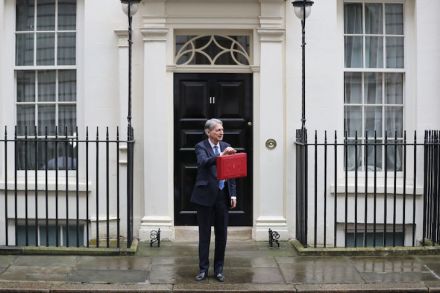
The Budget this Wednesday represents this government’s best, and perhaps its last, chance to regain the political initiative. Ever since the launch of the Tory election manifesto, Theresa May has been buffeted by the political weather. The past few weeks have been particularly bad. It hasn’t rained on her but poured, leaving her in urgent need of a Budget boost. Already this month, two cabinet ministers have had to resign. A third — who happens to be Theresa May’s most important ally — remains under Cabinet Office investigation. The Brexit optimism that followed her Florence speech is ebbing away.